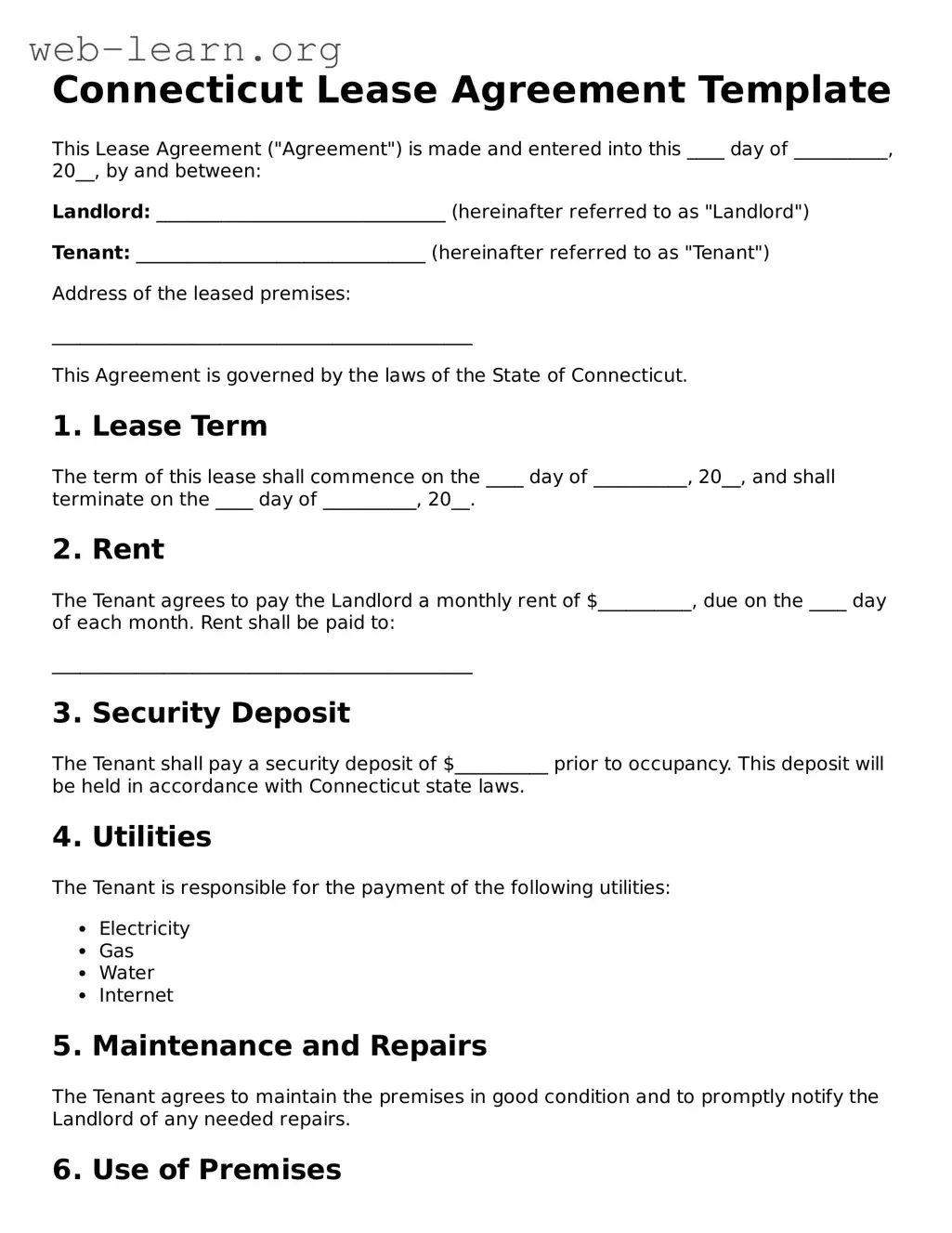
In Connecticut, the Lease Agreement form serves as a vital document that outlines the terms and conditions of a rental arrangement between landlords and tenants. This form encompasses essential details such as the duration of the lease, rental payment amounts, and due dates, ensuring both parties have a clear understanding of their obligations. It also specifies the security deposit requirements, maintenance responsibilities, and any restrictions on property use, fostering a harmonious living environment. Additionally, the agreement addresses procedures for lease termination and renewal, providing a roadmap for both landlords and tenants throughout their rental relationship. By clearly delineating these aspects, the Connecticut Lease Agreement form not only protects the rights of both parties but also promotes transparency and accountability in the rental process.
Connecticut Lease Agreement Template
This Lease Agreement ("Agreement") is made and entered into this ____ day of __________, 20__, by and between:
Landlord: _______________________________ (hereinafter referred to as "Landlord")
Tenant: _______________________________ (hereinafter referred to as "Tenant")
Address of the leased premises:
_____________________________________________
This Agreement is governed by the laws of the State of Connecticut.
1. Lease Term
The term of this lease shall commence on the ____ day of __________, 20__, and shall terminate on the ____ day of __________, 20__.
2. Rent
The Tenant agrees to pay the Landlord a monthly rent of $__________, due on the ____ day of each month. Rent shall be paid to:
_____________________________________________
3. Security Deposit
The Tenant shall pay a security deposit of $__________ prior to occupancy. This deposit will be held in accordance with Connecticut state laws.
4. Utilities
The Tenant is responsible for the payment of the following utilities:
5. Maintenance and Repairs
The Tenant agrees to maintain the premises in good condition and to promptly notify the Landlord of any needed repairs.
6. Use of Premises
The premises shall be used exclusively for residential purposes. The Tenant shall not engage in any illegal activities on the premises.
7. Termination
Either party may terminate this Agreement by providing written notice at least ____ days prior to the intended termination date.
8. Governing Law
This Agreement shall be governed by and construed in accordance with the laws of the State of Connecticut.
9. Signatures
IN WITNESS WHEREOF, the parties hereto have executed this Lease Agreement as of the day and year first above written.
Landlord Signature: ___________________________
Date: ___________________________
Tenant Signature: ___________________________
Date: ___________________________
| Fact Name | Details |
|---|---|
| Governing Law | The Connecticut Lease Agreement is governed by the Connecticut General Statutes. |
| Parties Involved | The lease agreement is made between the landlord and the tenant. |
| Property Description | The lease must include a clear description of the rental property. |
| Lease Duration | The duration of the lease can be fixed-term or month-to-month. |
| Rent Payment Terms | Details regarding rent amount, due date, and payment methods must be specified. |
| Security Deposit | The agreement should outline the amount and conditions for the security deposit. |
| Maintenance Responsibilities | Responsibilities for property maintenance should be clearly defined in the lease. |
| Termination Clause | The lease must include terms for termination by either party. |
| Dispute Resolution | Provisions for resolving disputes may be included in the lease agreement. |
| Local Ordinances | The lease must comply with local housing regulations and ordinances. |
Completing the Connecticut Lease Agreement form is a straightforward process. You will need to gather relevant information about the property, the landlord, and the tenant. This ensures that all necessary details are accurately captured. Follow these steps to fill out the form correctly.
Once the form is completed, review it carefully to ensure all information is accurate. Both parties should retain a copy for their records.
A Connecticut Lease Agreement is a legally binding contract between a landlord and a tenant. This document outlines the terms and conditions under which a tenant can rent a property. It typically includes details such as the rental amount, duration of the lease, security deposit requirements, and responsibilities of both parties.
A comprehensive Connecticut Lease Agreement should include the following key elements:
In Connecticut, lease agreements can vary in length. The most common lease duration is one year, but leases can be shorter or longer depending on the agreement between the landlord and tenant. Month-to-month leases are also popular, providing flexibility for both parties.
Yes, a lease can be terminated early in Connecticut, but specific conditions must be met. If a tenant wishes to break the lease, they should review the agreement for any early termination clauses. Generally, landlords may require written notice and may charge a fee. In some cases, tenants can legally break a lease due to issues like unsafe living conditions or domestic violence. It's important to communicate openly with the landlord and understand the terms of the lease.
When filling out the Connecticut Lease Agreement form, many individuals make common mistakes that can lead to confusion or legal issues down the line. One significant error is failing to include all necessary personal information. Landlords and tenants should provide full names, current addresses, and contact information. Missing details can create complications in communication or enforcement of the lease.
Another frequent oversight is neglecting to specify the lease term. Clearly stating the duration of the lease—whether it’s month-to-month or a fixed term—is crucial. Without this information, both parties may have different expectations, leading to misunderstandings about when the lease begins and ends.
Additionally, people often overlook the importance of listing all included amenities and services. This can include utilities, parking spaces, and maintenance responsibilities. If these details are vague or omitted, disputes may arise regarding who is responsible for certain costs or services.
Many individuals also fail to read the lease thoroughly before signing. This can result in agreeing to terms that may not be favorable. It’s essential to understand every clause, as it outlines the rights and responsibilities of both the landlord and tenant.
Another mistake is not documenting the condition of the property before moving in. Taking photos or making notes about the state of the rental can serve as evidence if any disputes occur regarding damages. Without this documentation, it becomes challenging to prove the original condition of the property.
People sometimes forget to include the security deposit amount and terms. Clearly stating how much is required, when it’s due, and the conditions for its return is vital. This helps prevent disagreements when the lease ends.
Furthermore, individuals may not properly outline the pet policy. If pets are allowed, specifying any restrictions, such as breed or size limitations, is necessary. Conversely, if pets are not permitted, this should be clearly stated to avoid future issues.
Another common error is failing to clarify the process for lease termination. Both parties should understand how to properly end the lease, including notice periods and any required documentation. A lack of clarity can lead to unexpected consequences when it’s time to move out.
Lastly, many people forget to include signatures and dates. A lease is not legally binding until both parties have signed it. Missing signatures can render the agreement void, leaving both parties unprotected. Ensuring that all required signatures are present is a crucial step in finalizing the lease agreement.
When entering into a lease agreement in Connecticut, there are several other forms and documents that can be essential for both landlords and tenants. These documents help clarify rights and responsibilities, ensure compliance with state laws, and provide additional protections. Here’s a list of commonly used forms that complement the Connecticut Lease Agreement:
Having these documents in place can help create a smoother rental experience. They provide clarity and protection for both landlords and tenants, ensuring that everyone understands their rights and obligations. It's always a good idea to consult with a legal professional to ensure all forms are completed accurately and comply with local laws.
When filling out the Connecticut Lease Agreement form, it is essential to follow certain guidelines to ensure accuracy and compliance. Here are ten important dos and don’ts to consider:
Misconceptions about the Connecticut Lease Agreement form can lead to confusion for both landlords and tenants. Here are eight common misunderstandings:
While it is highly recommended to have a written lease, oral agreements can be legally binding in Connecticut. However, proving the terms of an oral agreement can be difficult.
A lease agreement typically covers a longer term, usually one year, while a rental agreement is often month-to-month. The terms and conditions may differ significantly.
Landlords must provide reasonable notice before entering a tenant's unit, except in emergencies. This protects the tenant's right to privacy.
In Connecticut, security deposits are refundable, provided there are no damages beyond normal wear and tear. Landlords must return the deposit within a specific timeframe after the lease ends.
While many terms can be negotiated, some aspects, such as state laws and regulations, must be adhered to. Both parties should understand which terms can be adjusted.
Tenants may only withhold rent under specific circumstances, such as significant repairs not being made. It’s important to follow the proper legal process.
A lease agreement is not legally binding without the signatures of both parties. Both landlord and tenant must sign to confirm their acceptance of the terms.
Lease agreements can vary widely based on individual circumstances and preferences. Each agreement should be tailored to the specific rental situation.
When filling out and using the Connecticut Lease Agreement form, it is important to keep several key points in mind. Here are some essential takeaways:
By keeping these points in mind, you can ensure a smoother experience when filling out and using the Connecticut Lease Agreement form.
Lease Agreement Kansas - It can outline the responsibilities for property damages.
Alabama Lease Agreement - It can specify the process for conducting background checks on potential tenants.
Hawaii Residential Lease Agreement - It outlines procedures for handling disputes between landlord and tenant.