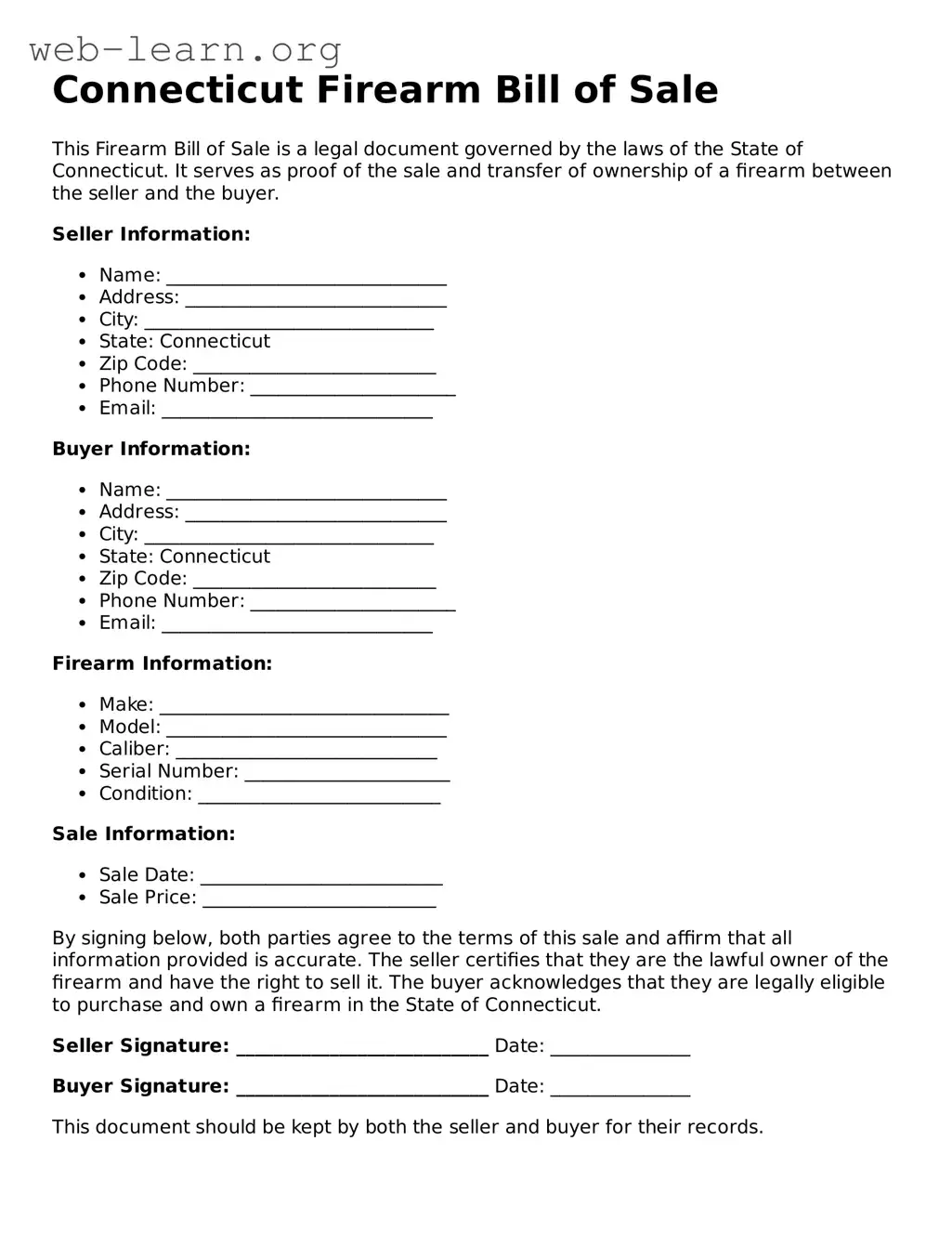
The Connecticut Firearm Bill of Sale form is an essential document for anyone looking to buy or sell a firearm in the state. This form serves as a legal record of the transaction, providing important details such as the names and addresses of both the buyer and seller, the date of the sale, and a description of the firearm being transferred. It also includes information about the firearm’s make, model, and serial number, ensuring that both parties have a clear understanding of what is being exchanged. By using this form, individuals can protect themselves and ensure compliance with state laws regarding firearm ownership. Additionally, the form may require the seller to affirm that they are legally allowed to sell the firearm, while the buyer must confirm their eligibility to purchase it. Overall, the Connecticut Firearm Bill of Sale form plays a crucial role in promoting responsible firearm transactions and safeguarding the rights of both buyers and sellers.
Connecticut Firearm Bill of Sale
This Firearm Bill of Sale is a legal document governed by the laws of the State of Connecticut. It serves as proof of the sale and transfer of ownership of a firearm between the seller and the buyer.
Seller Information:
Buyer Information:
Firearm Information:
Sale Information:
By signing below, both parties agree to the terms of this sale and affirm that all information provided is accurate. The seller certifies that they are the lawful owner of the firearm and have the right to sell it. The buyer acknowledges that they are legally eligible to purchase and own a firearm in the State of Connecticut.
Seller Signature: ___________________________ Date: _______________
Buyer Signature: ___________________________ Date: _______________
This document should be kept by both the seller and buyer for their records.
| Fact Name | Description |
|---|---|
| Purpose | The Connecticut Firearm Bill of Sale form serves as a legal document to record the sale and transfer of firearms between individuals. |
| Governing Law | This form is governed by Connecticut General Statutes, specifically Sections 29-33 and 29-36. |
| Required Information | Both the seller and buyer must provide their names, addresses, and identification details to complete the form. |
| Witness Requirement | A witness signature is not required for the bill of sale, but it is recommended for added legal protection. |
| Record Keeping | Both parties should keep a copy of the completed bill of sale for their records, ensuring a clear transaction history. |
| Legal Age | Both the seller and buyer must be at least 18 years old to legally transfer firearms in Connecticut. |
After obtaining the Connecticut Firearm Bill of Sale form, it is essential to complete it accurately to ensure all necessary information is documented. This form will serve as a record of the transaction, providing both the buyer and seller with proof of the sale.
Once the form is completed, both parties should keep a copy for their records. This will help in any future reference regarding the transaction.
What is a Firearm Bill of Sale in Connecticut?
A Firearm Bill of Sale is a legal document that records the sale or transfer of a firearm between parties. This document serves as proof of the transaction and includes important details such as the buyer's and seller's information, the firearm's description, and the date of the sale.
Is a Bill of Sale required for firearm transactions in Connecticut?
While it is not legally required to have a Bill of Sale for all firearm transactions in Connecticut, it is highly recommended. This document provides protection for both the buyer and seller by documenting the transfer of ownership and ensuring that both parties have a record of the transaction.
What information should be included in a Firearm Bill of Sale?
A comprehensive Firearm Bill of Sale should include the following information:
Can I create my own Firearm Bill of Sale?
Yes, individuals can create their own Firearm Bill of Sale. However, it is important to ensure that all required information is included and that the document is signed by both parties. Using a template can help ensure that all necessary details are covered.
Do I need to have the Bill of Sale notarized?
Notarization is not a requirement for a Firearm Bill of Sale in Connecticut. However, having the document notarized can add an extra layer of authenticity and may be beneficial in case of future disputes.
What should I do with the Bill of Sale after the transaction?
Both the buyer and seller should keep a copy of the Firearm Bill of Sale for their records. This document may be needed for future reference, especially if any legal questions arise regarding the ownership or transfer of the firearm.
Are there any restrictions on who can sell or buy a firearm in Connecticut?
Yes, there are restrictions. Individuals must be at least 18 years old to purchase a firearm. Additionally, certain individuals, such as those with felony convictions or restraining orders, may be prohibited from buying or possessing firearms. It is crucial to verify eligibility before completing a sale.
What happens if the firearm is later found to be stolen?
If a firearm sold is later found to be stolen, the seller may be held liable. It is advisable for both parties to check the firearm's status before the sale. The buyer can contact local law enforcement to verify that the firearm is not listed as stolen.
Can a Firearm Bill of Sale be used in court?
Yes, a Firearm Bill of Sale can be used as evidence in court to establish ownership and the terms of the sale. It is important that the document is properly completed and signed to ensure its validity.
Where can I obtain a Firearm Bill of Sale form?
Firearm Bill of Sale forms can be found online through various legal websites, or they may be available at local gun shops. It is important to use a form that complies with Connecticut laws to ensure its effectiveness.
Filling out the Connecticut Firearm Bill of Sale form can be straightforward, but many individuals make mistakes that can lead to complications. One common error is failing to provide complete information about the firearm. Buyers and sellers must include details such as the make, model, and serial number. Omitting any of this information can render the form invalid.
Another frequent mistake involves incorrect dates. It’s essential to ensure that the date of the transaction is accurate. An incorrect date can create confusion and may lead to legal issues later on. Double-checking the date before submitting the form can save time and trouble.
Many people overlook the necessity of both parties' signatures. The form requires the signatures of both the buyer and the seller to be legally binding. If either party fails to sign, the document may not hold up in court, should any disputes arise.
In addition, using illegible handwriting can be a significant issue. Clarity is crucial on legal documents. If the information is difficult to read, it may cause misunderstandings or disputes. Taking the time to write clearly can prevent potential problems down the line.
Another mistake involves not providing proper identification. Both parties should include a valid form of ID to verify their identities. Failure to do so can complicate the sale and may even lead to legal repercussions.
Some individuals neglect to review the entire form before submission. Skimming through the document can result in overlooked errors or missing information. A thorough review ensures that all necessary details are present and correct.
Additionally, individuals may not keep a copy of the completed form for their records. Retaining a copy is essential for future reference and can be beneficial if any issues arise regarding the sale.
Misunderstanding the laws surrounding firearm sales can also lead to mistakes. It's vital to be aware of the specific regulations in Connecticut. Ignorance of the law does not exempt anyone from compliance, so staying informed is crucial.
Finally, rushing through the process can lead to numerous errors. Taking the time to fill out the form carefully and accurately can prevent complications later. Patience is key when dealing with legal documents.
When engaging in the sale or transfer of firearms in Connecticut, several documents may accompany the Firearm Bill of Sale form. These documents help ensure compliance with state laws and provide necessary information for both parties involved in the transaction. Below is a list of common forms and documents that are often used alongside the Firearm Bill of Sale.
Using these documents in conjunction with the Firearm Bill of Sale helps to create a transparent and legally compliant transaction. Always consider consulting with a legal expert to ensure that all forms are completed correctly and that the sale adheres to state and federal laws.
The Firearm Bill of Sale form serves as a crucial document in the transfer of firearm ownership. It has similarities with several other legal documents that facilitate the transfer of property or rights. Below are eight documents that share characteristics with the Firearm Bill of Sale:
When filling out the Connecticut Firearm Bill of Sale form, it’s essential to follow specific guidelines to ensure accuracy and legality. Here’s a list of things you should and shouldn’t do:
Following these guidelines can help make the process smoother and ensure compliance with state regulations.
Understanding the Connecticut Firearm Bill of Sale form is essential for anyone involved in the buying or selling of firearms in the state. However, several misconceptions can lead to confusion. Here are eight common misunderstandings:
By clearing up these misconceptions, individuals can navigate the process of buying and selling firearms in Connecticut more confidently and responsibly.
When filling out and using the Connecticut Firearm Bill of Sale form, keep the following key points in mind:
Arkansas Firearm Bill of Sale - Can be used to verify the legality of the firearm's ownership.
Gun Bill of Sale Template - It is advisable to keep a copy of the Bill of Sale for your records.