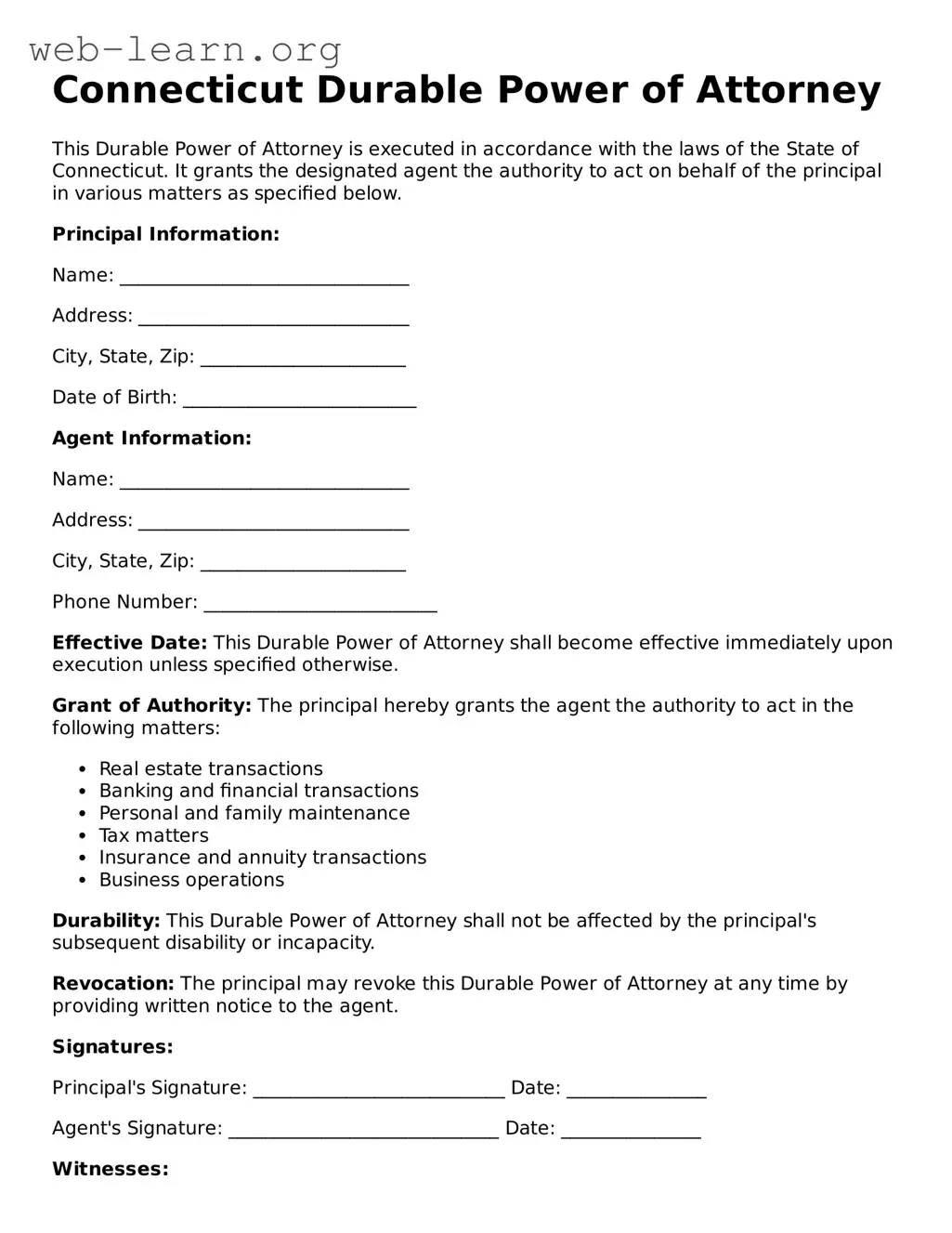
In Connecticut, the Durable Power of Attorney (DPOA) form plays a crucial role in estate planning and personal decision-making. This legal document allows individuals, known as principals, to designate an agent or attorney-in-fact to manage their financial and legal affairs when they are unable to do so themselves. The DPOA remains effective even if the principal becomes incapacitated, providing peace of mind during uncertain times. Key aspects of this form include the specific powers granted to the agent, which can range from managing bank accounts to making healthcare decisions, depending on the principal's wishes. Additionally, the DPOA must be executed with certain formalities, such as being signed in the presence of a witness and notarized, to ensure its validity. Understanding the nuances of the Connecticut Durable Power of Attorney form is essential for anyone looking to safeguard their interests and ensure that their affairs are handled according to their preferences in the event of incapacity.
Connecticut Durable Power of Attorney
This Durable Power of Attorney is executed in accordance with the laws of the State of Connecticut. It grants the designated agent the authority to act on behalf of the principal in various matters as specified below.
Principal Information:
Name: _______________________________
Address: _____________________________
City, State, Zip: ______________________
Date of Birth: _________________________
Agent Information:
Name: _______________________________
Address: _____________________________
City, State, Zip: ______________________
Phone Number: _________________________
Effective Date: This Durable Power of Attorney shall become effective immediately upon execution unless specified otherwise.
Grant of Authority: The principal hereby grants the agent the authority to act in the following matters:
Durability: This Durable Power of Attorney shall not be affected by the principal's subsequent disability or incapacity.
Revocation: The principal may revoke this Durable Power of Attorney at any time by providing written notice to the agent.
Signatures:
Principal's Signature: ___________________________ Date: _______________
Agent's Signature: _____________________________ Date: _______________
Witnesses:
Witness 1 Name: _______________________________
Witness 1 Signature: __________________________ Date: _______________
Witness 2 Name: _______________________________
Witness 2 Signature: __________________________ Date: _______________
Notary Public:
State of Connecticut
County of _______________________________
Subscribed and sworn to before me this ______ day of __________, 20__.
Notary Public Signature: ___________________________
My Commission Expires: ___________________________
| Fact Name | Details |
|---|---|
| Definition | A Durable Power of Attorney in Connecticut allows an individual to designate another person to make financial decisions on their behalf, even if they become incapacitated. |
| Governing Law | This form is governed by the Connecticut General Statutes, specifically Section 1-42 and Section 1-43. |
| Durability | The "durable" aspect ensures that the authority remains effective during periods of incapacity, unlike a standard power of attorney that becomes void under such circumstances. |
| Revocation | The principal can revoke the Durable Power of Attorney at any time, as long as they are mentally competent. |
| Notarization Requirement | In Connecticut, the Durable Power of Attorney must be signed by the principal in the presence of a notary public to be valid. |
After obtaining the Connecticut Durable Power of Attorney form, it's important to ensure that all sections are completed accurately. This document allows you to designate someone to make decisions on your behalf. Follow these steps carefully to fill out the form properly.
Once the form is filled out and signed, keep it in a safe place. Share copies with your attorney-in-fact and any relevant financial institutions or healthcare providers. This ensures that your wishes will be honored when needed.
What is a Durable Power of Attorney in Connecticut?
A Durable Power of Attorney is a legal document that allows you to appoint someone to manage your financial affairs and make decisions on your behalf, even if you become incapacitated. This means that if you are unable to make decisions due to illness or injury, the person you designated can still act for you.
Who can be appointed as an agent under this form?
In Connecticut, you can appoint any competent adult as your agent. This could be a family member, a friend, or a trusted advisor. However, it’s essential to choose someone you trust completely, as they will have significant authority over your financial matters.
What powers does the agent have?
The agent can handle a variety of financial matters, which may include:
However, you can specify limitations on these powers in the document if you wish.
Does the Durable Power of Attorney need to be notarized?
Yes, in Connecticut, the Durable Power of Attorney must be signed in the presence of a notary public to be legally valid. This ensures that the document is authentic and that you were of sound mind when you signed it.
Can I revoke a Durable Power of Attorney?
Absolutely. As long as you are still mentally competent, you can revoke a Durable Power of Attorney at any time. You should do this in writing and inform your agent of the revocation to avoid any confusion.
What happens if I become incapacitated and have not set up a Durable Power of Attorney?
If you become incapacitated without a Durable Power of Attorney in place, your loved ones may have to go through a court process to appoint a guardian or conservator to manage your affairs. This can be time-consuming and costly, so having a Durable Power of Attorney is often recommended to avoid such complications.
Is a Durable Power of Attorney effective immediately?
Typically, a Durable Power of Attorney can be effective immediately upon signing, unless you specify a different start date in the document. Some people choose to make it effective only upon their incapacitation. It’s important to clearly outline your intentions in the document.
Filling out the Connecticut Durable Power of Attorney form can be a straightforward process, but many individuals make common mistakes that can lead to complications later on. One frequent error is failing to specify the powers granted to the agent. It is essential to clearly outline what decisions the agent can make on behalf of the principal. Without this clarity, the agent may face limitations in acting effectively when needed.
Another common mistake is not signing the document in the presence of a notary public or witnesses, as required by Connecticut law. This step is crucial for ensuring the document's validity. If the form lacks proper signatures, it may not hold up in legal situations, leaving the principal without the intended protections.
Many people also overlook the importance of choosing a reliable and trustworthy agent. Selecting someone without considering their ability to handle the responsibilities can lead to conflicts or mismanagement. It is advisable to discuss the role with the chosen agent beforehand to ensure they are willing and able to serve.
In addition, individuals often forget to review the form for completeness. Missing information, such as dates or personal details, can create ambiguity. Ensuring that all sections are filled out accurately helps prevent misunderstandings down the line.
Another mistake involves not updating the Durable Power of Attorney when circumstances change. Life events, such as a change in health or a shift in relationships, may necessitate a revision of the document. Failing to keep it current can result in outdated powers being granted, which may not align with the principal's current wishes.
Lastly, people sometimes neglect to inform relevant parties about the existence of the Durable Power of Attorney. It is beneficial to share this information with family members, healthcare providers, and financial institutions. Transparency can help avoid confusion and ensure that the agent can act promptly when required.
When creating a Connecticut Durable Power of Attorney, it's essential to consider additional documents that can complement your estate planning. These documents help ensure your wishes are honored and your affairs are managed according to your preferences.
By considering these documents alongside your Connecticut Durable Power of Attorney, you can create a comprehensive plan that addresses your health care, financial, and estate planning needs. This proactive approach helps ensure your wishes are honored and provides peace of mind for you and your loved ones.
The Durable Power of Attorney (DPOA) form is a crucial legal document that allows one person to make decisions on behalf of another, particularly regarding financial and medical matters. Several other documents serve similar purposes, each with its own nuances. Here’s a list of eight documents that share similarities with the Durable Power of Attorney:
Understanding these documents can help individuals make informed decisions about their legal and financial affairs. Each serves a unique purpose but shares the fundamental goal of ensuring that a person's wishes are respected and that their interests are protected.
When filling out the Connecticut Durable Power of Attorney form, it’s important to follow certain guidelines to ensure everything is completed correctly. Here’s a list of things you should and shouldn’t do:
Many people have misunderstandings about the Connecticut Durable Power of Attorney form. Here are six common misconceptions:
When considering the Connecticut Durable Power of Attorney form, several important points should be noted to ensure its proper use and effectiveness.
By adhering to these key takeaways, individuals can effectively utilize the Connecticut Durable Power of Attorney form to safeguard their interests and ensure their financial and legal matters are managed according to their wishes.
Ny Statutory Power of Attorney - Appointing an agent through this document can help avoid family disputes over your affairs.
Arkansas Durable Power of Attorney Form - It can be tailored to grant specific powers or broad authority to your agent.