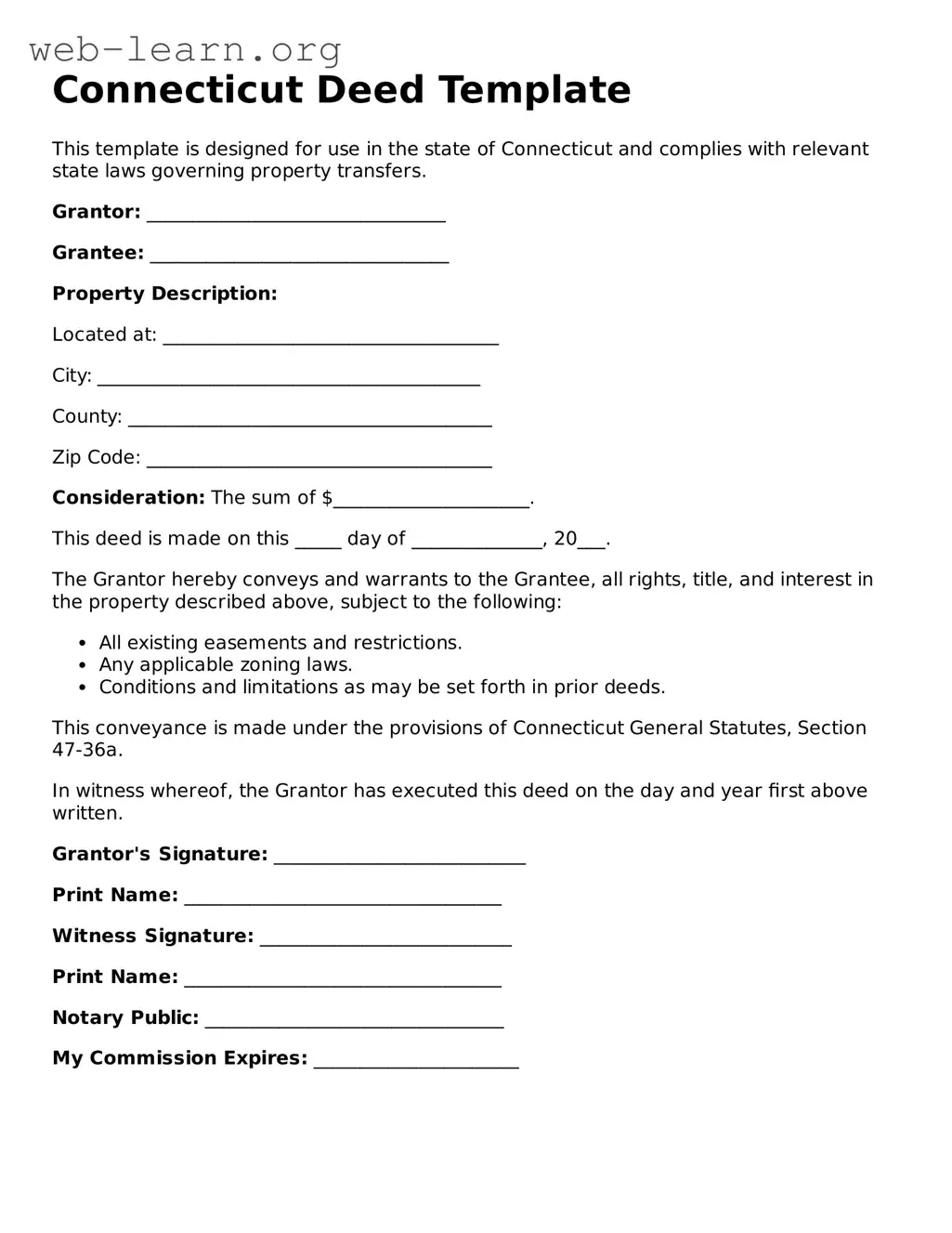
The Connecticut Deed form is a crucial legal document that facilitates the transfer of property ownership from one party to another within the state. This form encompasses various essential elements, including the names of the parties involved, a detailed description of the property, and the terms of the transfer. It is vital for ensuring that the transaction is clear and legally binding. The document typically includes information about the type of deed being executed, such as a warranty deed or a quitclaim deed, each serving different purposes and offering varying levels of protection to the buyer. Additionally, the form requires the signature of the grantor, as well as notarization to verify the authenticity of the transaction. Understanding the nuances of the Connecticut Deed form is essential for both buyers and sellers, as it helps prevent disputes and ensures a smooth transfer process. With this knowledge, individuals can navigate the complexities of property transactions with confidence and clarity.
Connecticut Deed Template
This template is designed for use in the state of Connecticut and complies with relevant state laws governing property transfers.
Grantor: ________________________________
Grantee: ________________________________
Property Description:
Located at: ____________________________________
City: _________________________________________
County: _______________________________________
Zip Code: _____________________________________
Consideration: The sum of $_____________________.
This deed is made on this _____ day of ______________, 20___.
The Grantor hereby conveys and warrants to the Grantee, all rights, title, and interest in the property described above, subject to the following:
This conveyance is made under the provisions of Connecticut General Statutes, Section 47-36a.
In witness whereof, the Grantor has executed this deed on the day and year first above written.
Grantor's Signature: ___________________________
Print Name: __________________________________
Witness Signature: ___________________________
Print Name: __________________________________
Notary Public: ________________________________
My Commission Expires: ______________________
| Fact Name | Details |
|---|---|
| Governing Law | The Connecticut Deed form is governed by Connecticut General Statutes, Title 47. |
| Types of Deeds | Connecticut recognizes several types of deeds, including warranty deeds and quitclaim deeds. |
| Recording Requirements | Deeds must be recorded in the town where the property is located to be effective against third parties. |
| Signature Requirement | The grantor must sign the deed in the presence of a witness or a notary public. |
Once you have the Connecticut Deed form in hand, it's important to ensure all information is accurate and complete. This will help facilitate the transfer of property ownership smoothly and legally. Follow these steps carefully to fill out the form correctly.
After filling out the form, it will need to be submitted to the local town clerk or recorder’s office for recording. This step is crucial to ensure the deed is officially recognized and the property transfer is legally binding.
What is a Connecticut Deed form?
A Connecticut Deed form is a legal document used to transfer ownership of real property in the state of Connecticut. It outlines the details of the transaction, including the names of the parties involved, a description of the property, and any conditions related to the transfer. This form is essential for ensuring that the transfer is recognized by the state and protects the rights of both the buyer and the seller.
What types of Deed forms are available in Connecticut?
Connecticut recognizes several types of Deeds, including:
How do I complete a Connecticut Deed form?
To complete a Connecticut Deed form, follow these steps:
Is a notary required for a Connecticut Deed form?
Yes, a notary public must witness the signing of the Deed form in Connecticut. This step is crucial as it helps verify the identities of the parties involved and ensures that the document is executed voluntarily. A notarized deed is more likely to be accepted by the local clerk’s office and provides additional legal protection.
What are the recording requirements for a Connecticut Deed?
Once the Deed form is completed and signed, it must be recorded with the town clerk in the municipality where the property is located. Recording the deed serves as public notice of the transfer and protects the grantee's rights. There may be a recording fee, and it is advisable to check with the local clerk's office for specific requirements and procedures.
Filling out a deed form in Connecticut is a crucial step in transferring property ownership. However, many individuals make common mistakes that can lead to delays or complications in the process. Understanding these pitfalls can help ensure a smoother transaction.
One frequent mistake is failing to provide complete and accurate property descriptions. A deed must clearly identify the property being transferred. Omitting details such as the street address, parcel number, or boundaries can create confusion and legal issues down the line.
Another common error is neglecting to include the names of all parties involved in the transaction. Both the grantor (the person transferring the property) and the grantee (the person receiving the property) must be clearly listed. If any names are missing or spelled incorrectly, it could invalidate the deed.
Many individuals also overlook the requirement for signatures. The grantor must sign the deed for it to be legally binding. In some cases, witnesses may also be needed, depending on the type of deed being used. Failing to sign or have the necessary witnesses can render the document ineffective.
In addition, people often forget to date the deed. Including the date is essential, as it establishes when the transfer of ownership took place. Without a date, there may be disputes regarding the timing of the transaction.
Another mistake is not considering the appropriate type of deed to use. Connecticut recognizes several types of deeds, such as warranty deeds and quitclaim deeds. Each serves different purposes and offers varying levels of protection. Choosing the wrong type can lead to unintended consequences.
Some individuals may also fail to check for existing liens or encumbrances on the property. Before transferring ownership, it is important to ensure that there are no outstanding debts or claims against the property. Ignoring this step can lead to legal complications for the new owner.
Additionally, people often neglect to record the deed with the appropriate town clerk's office. Recording the deed is essential for establishing public notice of the property transfer. Without this step, the new owner's rights may not be fully protected.
Another oversight involves not providing proper identification for all parties involved. When filling out the deed, it is important to include identification details, such as Social Security numbers or tax identification numbers. This information helps verify the identities of those involved in the transaction.
Lastly, individuals may underestimate the importance of consulting with a professional. While it is possible to fill out a deed form independently, seeking guidance from a real estate attorney or a knowledgeable professional can help avoid mistakes and ensure compliance with local laws.
When engaging in real estate transactions in Connecticut, the Deed form is a crucial document. However, it is often accompanied by several other forms and documents that serve various purposes. Understanding these additional documents can help streamline the process and ensure that all legal requirements are met.
Each of these documents plays a vital role in ensuring a smooth and legally compliant real estate transaction in Connecticut. Being aware of them can help buyers and sellers navigate the complexities of property transfers with greater confidence.
The Deed form is an important document in property transactions, but it shares similarities with several other legal documents. Here’s a list of nine documents that are comparable to the Deed form, along with a brief explanation of each:
Understanding these documents can help clarify the roles they play in property transactions and how they relate to the Deed form.
When filling out the Connecticut Deed form, it’s important to follow certain guidelines to ensure accuracy and compliance. Here’s a list of what to do and what to avoid:
Understanding the Connecticut Deed form is essential for anyone involved in property transactions. However, several misconceptions can lead to confusion. Here are seven common misconceptions:
Different types of deeds serve various purposes. For instance, warranty deeds provide guarantees about the property title, while quitclaim deeds transfer ownership without any guarantees.
While notarization is often recommended, it is not always a requirement for the deed to be legally binding in Connecticut. However, having a notary can help avoid disputes.
Although legal assistance can be beneficial, individuals can prepare their own deeds. It's important to ensure that all necessary information is included.
Deeds can be amended or revoked, but this process requires specific legal steps. Understanding how to do this is crucial for property owners.
Deeds are also necessary for transfers between family members, gifts, or changes in ownership structure, such as adding a spouse to the title.
In Connecticut, it is mandatory to file a deed with the town clerk's office to ensure public record and protect ownership rights.
In some cases, property transfers can occur through other legal instruments, such as trusts or wills, which may not require a new deed.
By clarifying these misconceptions, individuals can navigate property transactions more effectively and ensure they are well-informed throughout the process.
When filling out and using the Connecticut Deed form, it is essential to understand the following key points:
What Does a House Deed Look Like in Ny - Deeds can vary by state, so local laws should be reviewed carefully.
Quitclaim Deed Georgia - Deeds are a key component of the real estate closing process.