Homepage Blank Connecticut Custody Application Form
Outline

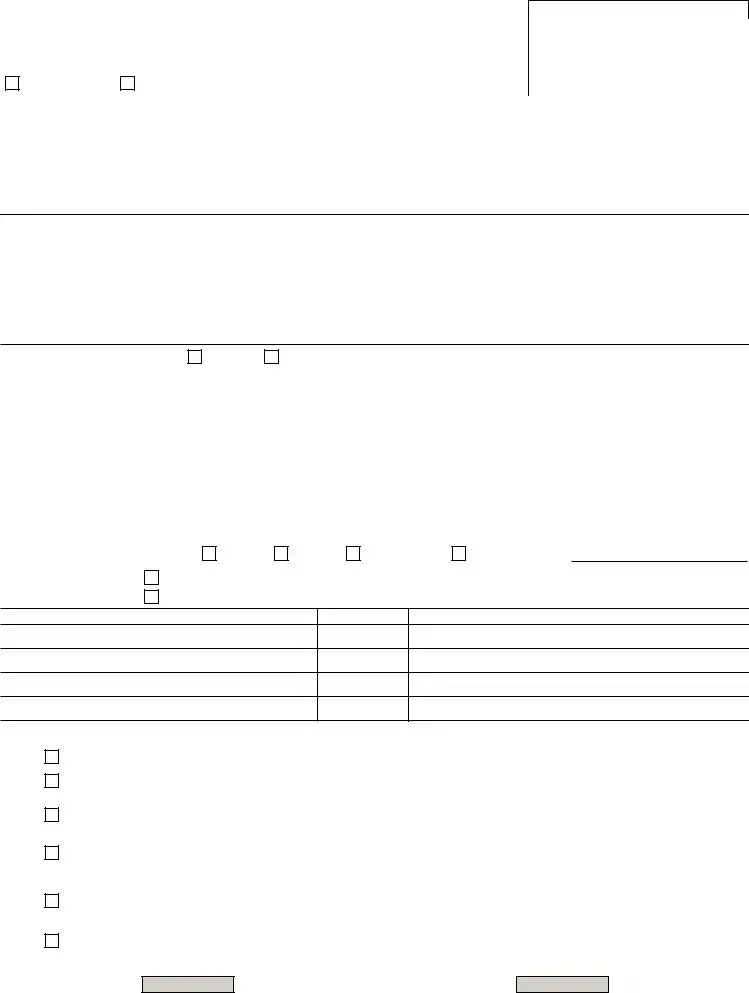
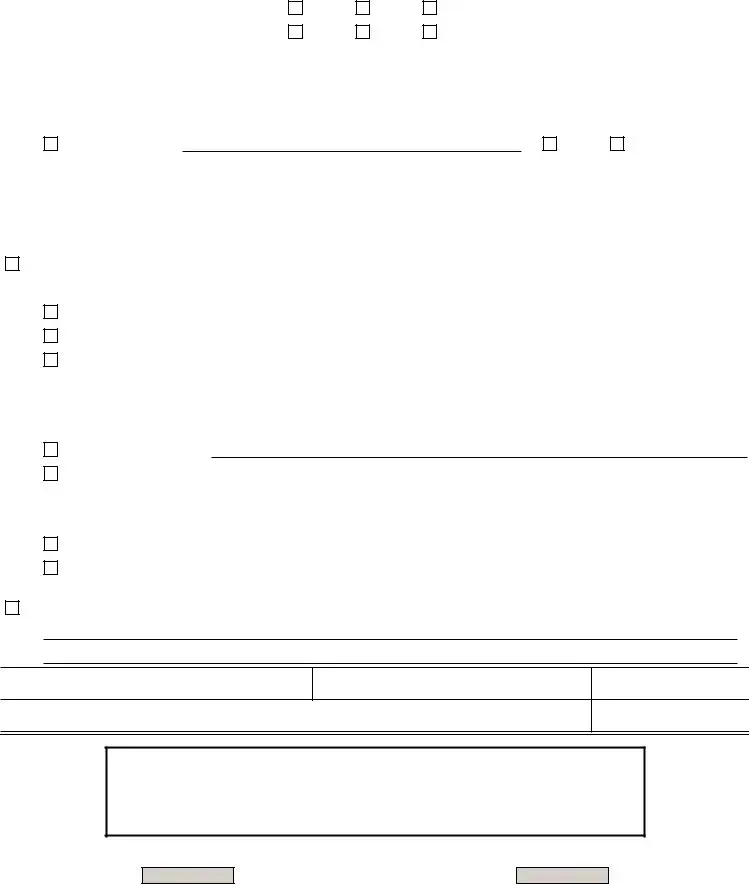
The Connecticut Custody Application form is a crucial document for parents seeking legal custody or visitation rights for their children. This form, officially titled "Application — Parent," is used to initiate custody or visitation applications in the Superior Court of Connecticut. When completing the form, applicants must check either the "Custody" or "Visitation" box and provide detailed information about themselves, the child or children involved, and the other parent or guardian. Alongside the application, several supporting documents must be attached, including the Order to Attend Hearing, Notice of Automatic Court Orders, and Affidavit Concerning Children. It is essential to demonstrate a legal relationship with the child by submitting appropriate evidence, such as a birth certificate or court order. Additionally, the form includes sections to specify the type of custody or visitation sought, and it requires applicants to indicate Connecticut's jurisdiction over the case. This ensures that the court has the authority to make decisions based on the child's best interests. For grandparents or third parties wishing to seek visitation, a different form is available. Understanding the requirements and properly completing the Connecticut Custody Application form can significantly impact the outcome of custody or visitation proceedings.
Sample - Connecticut Custody Application Form

Page 1 of 2
Use for visitation
applications
Use for custody
applications
a.
b.
c.
Connecticut is the home state of the child (or children) at the time of the filing of this case.
The child (or children) has (or have) lived in Connecticut for the past 6 months, or from birth if the child (or children)
is (or are) younger than 6 months old.
The child (or children) lived in Connecticut for at least 6 months but was (or were) taken from Connecticut less than
6 months ago by a person claiming custody, and a parent or guardian continues to live here.
The child (or children) and at least one parent have a significant connection to Connecticut, and there is substantial
evidence in Connecticut concerning the child's (or children's) present or future care, protection, training, and
personal relationships.
The child (or children) is (or are) in Connecticut now and has (or have) been abandoned, or there is an emergency
affecting the child's (or children's) well-being.
No other state has an interest in hearing this case, and it is in the best interest of the child (or children) for a
Connecticut court to hear the case.
4. Connecticut has the authority to decide this case and should decide this case because: (Select all that apply)
CUSTODY/VISITATION
APPLICATION — PARENT
JD-FM-161 Rev. 1-20
C.G.S. §§ 46b-56, 46b-61;
P.B. §§ 25-3, 25-4, 25-5
1. I am the child or children's
3. I want: (Select one)
Child's name (First, middle, last)
Date of birth
2. The respondent(s) is/are the:
Instructions
1. Check the “Custody” or “Visitation” box above, and complete pages 1 and 2 of this form. Attach the Order to Attend Hearing (form JD-FM-162),
Notice of Automatic Court Orders (form JD-FM-158), and Affidavit Concerning Children (form JD-FM-164).
2. By the first date that this case appears on a court docket (the first scheduled date for this case), you must file the accompanying document(s)
listed in number 1 below that apply to you and that prove an existing legal relationship between the parent(s) and the child or children. You must
redact (remove) any personal identifying information, as defined by Section 4-7 of the Connecticut Practice Book, from these documents.
3. If you are a grandparent or a third party (not a legal parent), and you want to file for visitation with the child or children, use the Verified Petition
for Visitation — Grandparents & Third Parties (form JD-FM-221).
(Attach additional sheets if necessary)
Name(s) of parent(s) or guardian(s) (First, middle initial, last)
STATE OF CONNECTICUT
SUPERIOR COURT
www.jud.ct.gov
d.
e.
f.
Docket numberJudicial District of
At (Town)
Applicant's name (Last, first, middle initial) Respondent's name (Last, first, middle initial)
Additional respondent's name (If applicable) (Last, first, middle initial)
Mother Father
Mother Father Grandparent
Other: (Specify)
custody of the child (or children) listed below
visitation rights with the child (or children) listed below
Court use only
*APPLCUS* *APPLVIS*
APPLCUS APPLVIS
By the first scheduled date for this case, I will file the applicable accompanying document(s) from this list that prove an
existing legal relationship between the parent(s) and the child or children named in this application with any personal
identifying information, as defined by Section 4-7 of the Connecticut Practice Book, redacted (removed):
• A copy of a birth certificate naming me as one of the parents;
• A copy of a properly executed (finalized) acknowledgement of paternity;
• A court order or decree naming me as a legally responsible parent (including an adoptive parent);
• A gestational agreement giving me parental rights (see Section 7-36 of the Connecticut General Statutes);
• Document(s) showing that the child or children was/were born during my marriage; or
• Any other evidence that I think is sufficient (enough) to convince the court that I am a legal parent of the child or
children.
Other parent's name (If other parent is not the respondent)(Last, first, middle initial) Other parent's address (If other parent is not the respondent)
VisitationCustody
JD-FM-161 Rev. 1-20
Page 2 of 2
If you checked yes for Financial Support and/or HUSKY, send a copy of this Application, Order to Attend Hearing, Notice
of Automatic Court Orders, and any other document filed with this application to the Office of the Attorney General,
165 Capitol Avenue, Hartford, CT 06106, and file the Certification of Notice (form JD-FM-175) with the court clerk.
5. The applicant, respondent, or any child (or children) listed has (or have) received financial support and/or HUSKY from
the State of Connecticut:
6. The applicant, respondent, or any child (or children) listed has (or have) received financial support from a city or town in
Connecticut: (Select one)
Claim for Relief
Signature of Applicant or Petitioner
If you checked yes, send a copy of this Application, Order to Attend Hearing, Notice of Automatic Court Orders, and any
other document filed with this application to the City or Town Clerk of the city or town providing assistance, and file the
Certification of Notice (form JD-FM-175) with the court clerk.
Regarding decision-making responsibility:
For Custody: (The Applicant asks the Court for custody orders) (Select all that apply)
Print name of person signing at left Date signed
Address
Telephone (Area code first)
Yes No Do not know
Yes No Do not know
Yes (City or town):
No Do not know
Sole legal custody
Joint legal custody
A parenting responsibility plan, which includes a plan for the parental decision-making regarding the minor child (or
And
Regarding physical custody:
Primary residence with:
A parental physical access schedule and/or visitation
Child Support
Regarding child support: (If custody application — includes cash medical, health insurance, unreimbursed medical
expenses, and qualifying child care)
For Visitation: (The Applicant asks the Court for visitation orders as follows)
ADA NOTICE
The Judicial Branch of the State of Connecticut complies with the Americans with
Disabilities Act (ADA). If you need a reasonable accommodation in accordance with the
ADA, contact a court clerk or an ADA contact person listed at www.jud.ct.gov/ADA.
An order for the educational support of my child (or children) for post-high school education or training under
Section 46b-56c of the Connecticut General Statutes.
children)
Additional Instructions:
• If you are the mother or father and want custody, go to Number 5 below, and continue from there.
• If you are the mother or father and want visitation, go to the Claim For Relief section below, and continue from there.
Financial Support: (Select one)
HUSKY Health Insurance: (Select one)

Form Information

Fact Name Description
Form Title The form is titled "Custody/Visitation Application — Parent" and is designated as JD-FM-161.
Governing Laws This form is governed by Connecticut General Statutes (C.G.S.) §§ 46b-56, 46b-61 and Practice Book (P.B.) §§ 25-3, 25-4, 25-5.
Purpose of the Form It is used for applying for custody or visitation rights regarding a child or children.
Required Attachments Applicants must attach several documents, including the Order to Attend Hearing (JD-FM-162) and the Affidavit Concerning Children (JD-FM-164).
Filing Deadline All accompanying documents must be filed by the first scheduled court date for the case.
Eligibility for Visitation Grandparents or third parties wishing to seek visitation must use the Verified Petition for Visitation — Grandparents & Third Parties (form JD-FM-221).

Detailed Guide for Filling Out Connecticut Custody Application

After completing the Connecticut Custody Application form, the next steps involve submitting the form along with any required documents to the appropriate court. This process ensures that your application is officially recognized and begins the legal proceedings regarding custody or visitation rights.

  1. Determine whether you are applying for custody or visitation and check the corresponding box at the top of the form.
  2. Fill out pages 1 and 2 of the form, providing your personal information and details about the child or children involved.
  3. Attach the necessary documents:
    • Order to Attend Hearing (form JD-FM-162)
    • Notice of Automatic Court Orders (form JD-FM-158)
    • Affidavit Concerning Children (form JD-FM-164)
  4. By the first court date, file any additional documents that prove your legal relationship to the child or children. Ensure that any personal identifying information is redacted as required.
  5. If you are a grandparent or third party seeking visitation, complete the Verified Petition for Visitation — Grandparents & Third Parties (form JD-FM-221) instead.
  6. Provide the names and addresses of all parties involved, including the other parent and any additional respondents if applicable.
  7. Indicate whether you are the mother or father of the child or children.
  8. Specify your request: custody or visitation rights, and provide details about the child or children.
  9. Explain why Connecticut has the authority to decide your case by selecting all applicable reasons listed on the form.
  10. If applicable, indicate whether you or the child has received financial support or HUSKY from the State of Connecticut and provide the necessary documentation.
  11. Complete the Claim for Relief section, indicating your requests regarding custody, visitation, and child support.
  12. Sign and date the application, ensuring all information is accurate and complete.

Obtain Answers on Connecticut Custody Application

  1. What is the purpose of the Connecticut Custody Application form?

    The Connecticut Custody Application form is used to request custody or visitation rights concerning a child or children. Parents, grandparents, or third parties can utilize this form to initiate legal proceedings in family court. It helps establish the legal relationship between the applicant and the child, ensuring that the court has the necessary information to make informed decisions regarding custody and visitation matters.

  2. Who should fill out this form?

    This form is intended for parents seeking custody or visitation rights for their children. Additionally, grandparents or other third parties wishing to request visitation must use a different form called the Verified Petition for Visitation — Grandparents & Third Parties (form JD-FM-221).

  3. What documents need to be attached when submitting the application?

    When submitting the Connecticut Custody Application, you must attach several documents, including:

    • Order to Attend Hearing (form JD-FM-162)
    • Notice of Automatic Court Orders (form JD-FM-158)
    • Affidavit Concerning Children (form JD-FM-164)

    These documents help provide context and support for your application.

  4. How do I prove my legal relationship to the child?

    You must provide evidence that establishes your legal relationship to the child or children. Acceptable documents include:

    • A copy of the child’s birth certificate naming you as a parent
    • A finalized acknowledgment of paternity
    • A court order designating you as a legally responsible parent
    • Any other relevant documents that demonstrate your legal standing

    Make sure to redact any personal identifying information from these documents.

  5. What if I am not the biological parent of the child?

    If you are not the biological parent but wish to seek visitation, you will need to use the Verified Petition for Visitation — Grandparents & Third Parties (form JD-FM-221). This form is specifically designed for individuals who do not have legal parental status but still wish to maintain a relationship with the child.

  6. How does the court determine jurisdiction for the case?

    The court will determine jurisdiction based on several factors, including:

    • If Connecticut is the home state of the child at the time of filing
    • Whether the child has lived in Connecticut for the past six months
    • Connections to Connecticut that support the child’s care and protection

    These criteria help ensure that the case is heard in the appropriate jurisdiction.

  7. What should I do if I receive financial support or HUSKY?

    If you or the child has received financial support or HUSKY health insurance from the State of Connecticut, you must notify the Office of the Attorney General. This includes sending a copy of your application and related documents. Additionally, you will need to file a Certification of Notice (form JD-FM-175) with the court clerk.

  8. What types of custody can I request?

    You can request different types of custody arrangements, including:

    • Sole legal custody: One parent has the exclusive right to make decisions for the child.
    • Joint legal custody: Both parents share decision-making responsibilities.
    • Physical custody: Where the child will primarily reside.

    These options allow the court to tailor custody arrangements to fit the best interests of the child.

  9. Is there a specific format for the application?

    Yes, the application must be filled out using the Connecticut Custody Application form (JD-FM-161). It includes sections for personal information, the nature of the request (custody or visitation), and supporting documentation. Ensure that all required fields are completed accurately to avoid delays in processing your application.

  10. How can I ensure my application is processed smoothly?

    To ensure a smooth application process, follow these steps:

    • Complete the form accurately and thoroughly.
    • Attach all required documents.
    • Redact any personal identifying information from your submissions.
    • File the application by the first scheduled court date.

    Taking these steps can help facilitate a timely response from the court.

Common mistakes

Filling out the Connecticut Custody Application form can be a daunting task, and mistakes can lead to delays or complications in your case. One common error is not selecting the appropriate box for custody or visitation. This initial step is crucial, as it determines the direction of your application. If you fail to check the correct option, the court may not process your application properly, causing unnecessary setbacks.

Another frequent mistake is neglecting to include all required accompanying documents. The application specifies that you must attach forms such as the Order to Attend Hearing and the Affidavit Concerning Children. Omitting these documents can result in the court rejecting your application outright. It's essential to double-check that you have all necessary paperwork before submitting your form.

Many applicants also overlook the need to redact personal identifying information from their documents. This requirement is outlined in Section 4-7 of the Connecticut Practice Book. Failing to remove sensitive information can lead to privacy violations and may even affect the outcome of your case. Always ensure that any personal details are appropriately redacted to protect your privacy.

Some people mistakenly believe that they can submit the application without proof of an existing legal relationship with the child. The form requires evidence such as a birth certificate or court order. Without this proof, the court may not recognize your legal standing, which is vital for custody or visitation rights. Make sure to gather and include all necessary documentation to support your claim.

Another error involves misunderstanding the jurisdictional requirements. Applicants must demonstrate that Connecticut has the authority to decide the case. If you fail to check the relevant boxes that apply to your situation, the court may determine that it does not have jurisdiction, resulting in a dismissal of your application. Carefully review the jurisdictional criteria and ensure you meet at least one of the conditions listed.

Lastly, some individuals do not pay attention to the financial support questions on the application. If you or the child has received financial assistance from the state, you must indicate this accurately. Failing to disclose this information could lead to complications later in the process. Always be truthful and thorough when answering these questions to avoid potential legal issues.

Documents used along the form

The Connecticut Custody Application form serves as a critical starting point for individuals seeking custody or visitation rights. Alongside this form, several other documents are commonly required to ensure that the application is complete and properly filed. Each of these documents plays a specific role in the custody or visitation process, providing necessary information and legal context.

  • Order to Attend Hearing (JD-FM-162): This document notifies involved parties of the scheduled court hearing. It outlines the date, time, and location where the parties must appear to discuss the custody or visitation application.
  • Notice of Automatic Court Orders (JD-FM-158): This notice informs parties of the automatic court orders that take effect upon the filing of a custody application. It details the obligations of both parents regarding the child’s welfare during the proceedings.
  • Affidavit Concerning Children (JD-FM-164): This affidavit provides the court with essential information about the children involved, including their living arrangements, schooling, and any relevant history that may affect custody decisions.
  • Verified Petition for Visitation — Grandparents & Third Parties (JD-FM-221): This petition is specifically for grandparents or other third parties seeking visitation rights. It outlines the relationship to the child and the reasons for requesting visitation.
  • Certification of Notice (JD-FM-175): This certification confirms that all necessary parties have been notified of the application and any related documents. It is important for maintaining transparency in the process.
  • Birth Certificate: A copy of the child’s birth certificate is often required to establish the legal relationship between the parent and child. It serves as proof of parentage.
  • Acknowledgment of Paternity: This document is used to confirm the legal acknowledgment of paternity, which is essential for establishing custody rights.
  • Court Order or Decree: Any existing court orders that pertain to custody or parental rights should be submitted. This includes orders from previous custody cases or adoption decrees.

Each of these documents is integral to the custody application process in Connecticut. They help ensure that the court has a comprehensive understanding of the situation, which is crucial for making informed decisions that prioritize the best interests of the child.

Similar forms

The Connecticut Custody Application form is similar to several other legal documents used in family law matters. Each of these documents serves a specific purpose related to custody and visitation issues. Below is a list of five documents that share similarities with the Connecticut Custody Application form:

  • Verified Petition for Visitation — Grandparents & Third Parties (form JD-FM-221): This form is used by grandparents or third parties seeking visitation rights with a child. Like the custody application, it requires proof of a legal relationship and aims to establish visitation rights.
  • Order to Attend Hearing (form JD-FM-162): This document is attached to the custody application and outlines the requirement for parties to attend a court hearing. It shares the goal of facilitating court proceedings regarding custody or visitation matters.
  • Notice of Automatic Court Orders (form JD-FM-158): This notice informs parties of automatic orders that take effect upon the filing of a custody application. It is similar in that it helps ensure all parties understand their rights and responsibilities during the process.
  • Affidavit Concerning Children (form JD-FM-164): This affidavit provides information about the child or children involved in the custody case. Like the custody application, it is essential for establishing the context of the custody or visitation request.
  • Certification of Notice (form JD-FM-175): This form is used to certify that relevant parties have been notified of the proceedings. It aligns with the custody application in ensuring that all necessary parties are informed and can participate in the process.

Dos and Don'ts

When filling out the Connecticut Custody Application form, it is important to follow specific guidelines to ensure that your application is complete and accurate. Here are some helpful tips on what to do and what to avoid:

  • Do check the appropriate box for custody or visitation at the top of the form.
  • Do complete all required sections on pages 1 and 2 of the form.
  • Do attach all necessary documents, such as the Order to Attend Hearing and Affidavit Concerning Children.
  • Do ensure that any personal identifying information is redacted from your documents.
  • Do file the application and accompanying documents by the first scheduled court date.
  • Don't forget to specify if you are a grandparent or third party seeking visitation.
  • Don't submit incomplete forms or missing documents, as this may delay your case.
  • Don't include unnecessary personal information that is not relevant to the custody or visitation request.
  • Don't ignore the requirement to send copies of your application to the Office of the Attorney General if applicable.

By following these guidelines, you can help streamline the process and improve your chances of a favorable outcome in your custody or visitation case.

Misconceptions

Understanding the Connecticut Custody Application form is crucial for parents and guardians navigating custody and visitation issues. However, several misconceptions can lead to confusion. Here are eight common misunderstandings:

  • It’s only for parents. Many believe that only biological parents can use this form. In reality, grandparents and third parties can also apply for visitation rights using a different form.
  • Filing is optional. Some think that submitting the form is optional. However, if you want the court to consider your custody or visitation request, filing is necessary.
  • All documents must be submitted at once. There’s a misconception that all supporting documents must be submitted with the application. While it’s important to provide necessary documents, you can file them by the first scheduled court date.
  • Only the mother can apply for custody. Many people believe that only mothers have the right to apply for custody. In fact, both parents have equal rights under the law to seek custody.
  • Visitation rights are automatically granted. Some assume that if they apply for visitation, it will be granted without question. The court must evaluate the request based on the best interests of the child.
  • Legal representation is required. There’s a belief that you need a lawyer to fill out the form. While legal advice can be helpful, individuals can complete the application on their own.
  • The process is quick and easy. Many think that once the form is submitted, the process will be swift. In reality, custody cases can take time, and multiple hearings may be necessary.
  • Personal information can be included. Some individuals mistakenly believe they can include all personal information in their documents. It’s essential to redact any identifying information to protect privacy.

Clarifying these misconceptions can help ensure that individuals are better prepared when dealing with custody and visitation matters in Connecticut. Always consider seeking guidance if you have questions about the process.

Key takeaways

  • Begin by selecting either the “Custody” or “Visitation” option at the top of the form. Complete the required pages accordingly.

  • Attach necessary documents such as the Order to Attend Hearing, Notice of Automatic Court Orders, and Affidavit Concerning Children to your application.

  • Ensure that you file the required documents that demonstrate a legal relationship with the child by the first court date.

  • Redact any personal identifying information from the documents you submit, as outlined in Section 4-7 of the Connecticut Practice Book.

  • If you are a grandparent or a third party seeking visitation, use the Verified Petition for Visitation form.

  • Clearly state your relationship to the child, selecting from options such as Mother, Father, or others.

  • Indicate your request for either custody or visitation rights and provide the child’s information as needed.

  • Explain why Connecticut has jurisdiction over the case, selecting all applicable reasons.

  • If applicable, notify the Office of the Attorney General and local city or town clerk if financial support has been received.