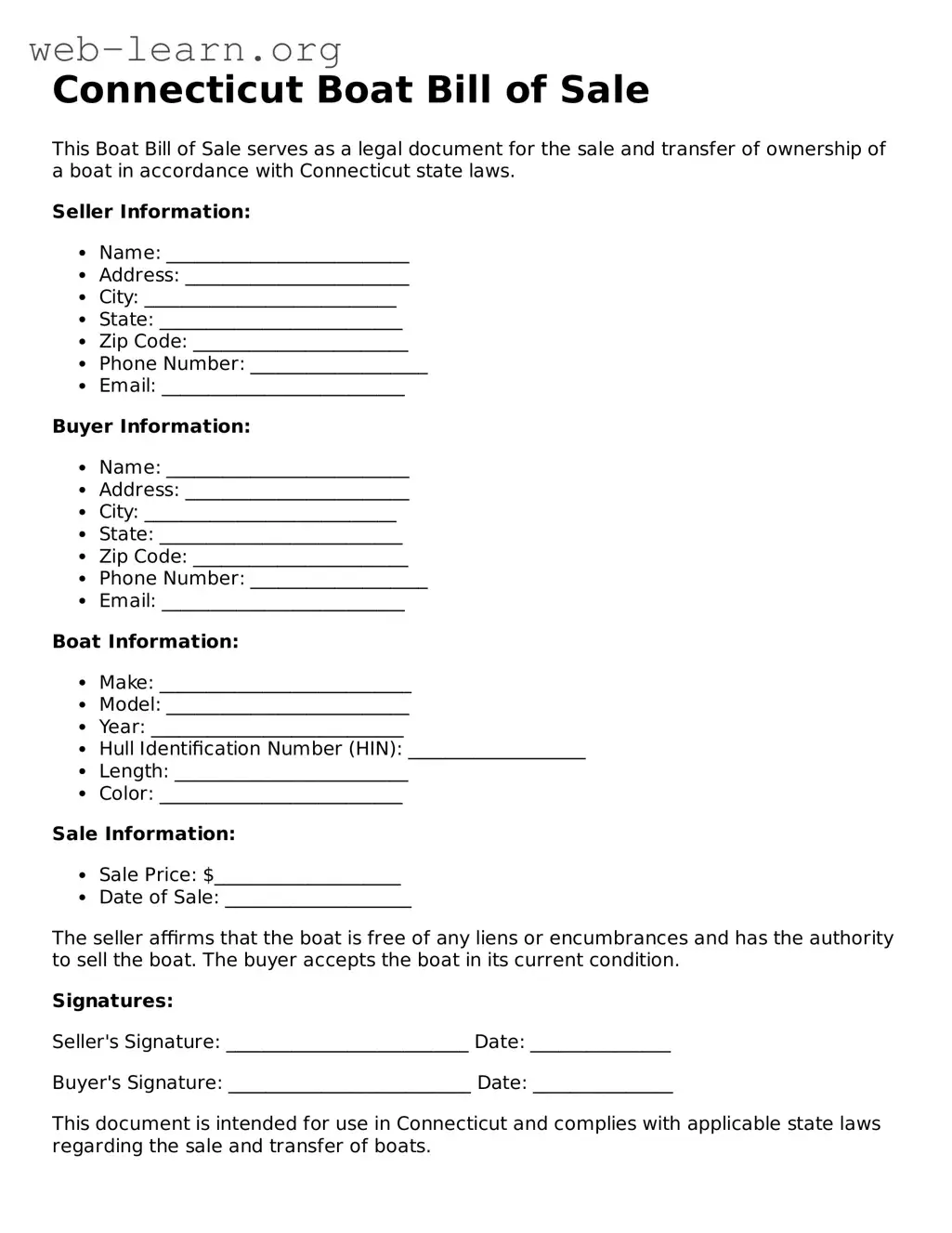
When buying or selling a boat in Connecticut, having a Boat Bill of Sale form is essential for a smooth transaction. This document serves as a legal record of the sale, providing crucial information about the vessel, the buyer, and the seller. It typically includes details such as the boat's make, model, year, and hull identification number, which helps to clearly identify the specific watercraft being transferred. Additionally, the form outlines the sale price and the date of the transaction, ensuring both parties are on the same page regarding the terms of the sale. Signatures from both the buyer and seller are required, solidifying the agreement and making it official. This form not only protects the interests of both parties but also aids in the registration process with the state, making it a vital component of boat ownership in Connecticut.
Connecticut Boat Bill of Sale
This Boat Bill of Sale serves as a legal document for the sale and transfer of ownership of a boat in accordance with Connecticut state laws.
Seller Information:
Buyer Information:
Boat Information:
Sale Information:
The seller affirms that the boat is free of any liens or encumbrances and has the authority to sell the boat. The buyer accepts the boat in its current condition.
Signatures:
Seller's Signature: __________________________ Date: _______________
Buyer's Signature: __________________________ Date: _______________
This document is intended for use in Connecticut and complies with applicable state laws regarding the sale and transfer of boats.
| Fact Name | Description |
|---|---|
| Purpose | The Connecticut Boat Bill of Sale form serves as a legal document that records the sale and transfer of ownership of a boat from one party to another. |
| Required Information | This form typically requires details such as the buyer's and seller's names, addresses, the boat's make, model, year, and Hull Identification Number (HIN). |
| Governing Laws | The sale of boats in Connecticut is governed by state laws, specifically the Connecticut General Statutes Title 15, Chapter 13. |
| Notarization | While notarization is not always required, having the Bill of Sale notarized can provide an additional layer of security and legitimacy to the transaction. |
| Registration Requirement | After completing the sale, the buyer must register the boat with the Connecticut Department of Energy and Environmental Protection (DEEP) to legally operate it on state waters. |
Once you have the Connecticut Boat Bill of Sale form ready, you'll need to fill it out accurately to ensure a smooth transfer of ownership. This document will serve as proof of sale between the buyer and seller.
What is a Boat Bill of Sale in Connecticut?
A Boat Bill of Sale is a legal document that serves as proof of the transfer of ownership of a boat from one party to another. This document outlines essential details about the boat, the seller, and the buyer, ensuring that both parties have a clear understanding of the transaction. In Connecticut, it is particularly important for registering the boat with the state.
Why do I need a Boat Bill of Sale?
Having a Boat Bill of Sale is crucial for several reasons. First, it protects both the buyer and the seller by documenting the transaction. Second, it is often required for registering the boat with the Connecticut Department of Energy and Environmental Protection (DEEP). Lastly, it can serve as proof of ownership in case of disputes or legal issues in the future.
What information should be included in the Boat Bill of Sale?
The Boat Bill of Sale should include the following information:
Including all this information ensures that the document is complete and legally binding.
Do I need to have the Boat Bill of Sale notarized?
In Connecticut, notarization is not a requirement for a Boat Bill of Sale. However, having the document notarized can add an extra layer of security and authenticity. It can help prevent disputes by confirming that both parties willingly entered into the agreement.
Can I use a generic Boat Bill of Sale form?
While you can use a generic Boat Bill of Sale form, it is recommended to use a form specifically designed for Connecticut. This ensures that all necessary state-specific information is included, making the document valid for registration and legal purposes.
What should I do after completing the Boat Bill of Sale?
After completing the Boat Bill of Sale, both the buyer and seller should keep a copy for their records. The buyer will need to present this document to the Connecticut DEEP when registering the boat. Additionally, it’s a good idea to follow up with the seller to confirm that the transfer of ownership has been recorded.
Is there a fee associated with registering my boat after the sale?
Yes, there is typically a fee for registering a boat in Connecticut. The fee varies based on the size and type of the boat. It’s best to check with the Connecticut DEEP for the most current fee schedule and any additional requirements needed for registration.
What if I have more questions about the Boat Bill of Sale?
If you have further questions about the Boat Bill of Sale or the process of buying or selling a boat in Connecticut, consider reaching out to the Connecticut DEEP or consulting a legal professional. They can provide you with detailed information and guidance tailored to your specific situation.
When completing the Connecticut Boat Bill of Sale form, many individuals encounter common pitfalls that can lead to confusion or even legal issues down the line. One of the most frequent mistakes is failing to provide accurate information about the vessel. It's essential to include the correct hull identification number, make, model, and year of the boat. Missing or incorrect details can complicate the registration process.
Another common error is neglecting to include the sale price. This figure is crucial for both the buyer and seller, as it helps establish the value of the boat for tax purposes. Omitting this information can result in complications during the transfer of ownership and potential disputes later on.
Many people also forget to sign the form. Both the seller and the buyer must provide their signatures to validate the transaction. Without these signatures, the document may not be legally binding, which could lead to issues if either party decides to contest the sale.
Additionally, some individuals overlook the importance of including the date of the sale. This date is vital for establishing when the transfer of ownership occurred. It can affect everything from tax obligations to insurance coverage, so be sure to include it.
Another mistake is not providing adequate identification for both parties involved in the transaction. It's important to include the full names and addresses of both the buyer and seller, as well as their driver's license numbers or other forms of identification. This information helps verify the identities of those involved and can prevent fraud.
People often fail to keep a copy of the completed Boat Bill of Sale. Retaining a copy for personal records is a smart practice. This document serves as proof of the transaction and can be important if any issues arise in the future.
In some cases, individuals may not understand the implications of not having the bill of sale notarized. While notarization is not always required, having a notary public witness the signing can add an extra layer of security and legitimacy to the transaction.
Another mistake is rushing through the form without reading the instructions carefully. Each section is designed to capture specific information, and skipping over details can lead to errors. Take the time to review the form thoroughly before submitting it.
Finally, some people assume that the Boat Bill of Sale is a one-size-fits-all document. However, each sale may have unique circumstances that require additional information or specific wording. Tailoring the form to fit the particular transaction can help ensure that all necessary details are captured.
When buying or selling a boat in Connecticut, several important documents complement the Boat Bill of Sale. These documents help ensure a smooth transaction and provide necessary information for both parties involved. Below is a list of commonly used forms that can accompany the Boat Bill of Sale.
Having these forms ready can streamline the buying or selling process and ensure compliance with state regulations. Always check for any additional requirements specific to your situation or local jurisdiction.
When filling out the Connecticut Boat Bill of Sale form, it’s essential to ensure accuracy and clarity. Here are some important dos and don’ts to keep in mind:
Many people have misunderstandings about the Connecticut Boat Bill of Sale form. Here are eight common misconceptions clarified:
Understanding these misconceptions can help ensure a smooth transaction when buying or selling a boat in Connecticut.
When filling out and using the Connecticut Boat Bill of Sale form, it is essential to keep several key points in mind. Understanding these can help ensure a smooth transaction and proper documentation.
By following these guidelines, individuals can navigate the process of buying or selling a boat in Connecticut with greater ease and confidence.
Arkansas Boat Bill of Sale - The form can help clarify any verbal agreements made during the sale process.
Michigan Watercraft Bill of Sale - Important for ensuring transparency in the sale transaction.