When buying or selling an all-terrain vehicle (ATV) in Connecticut, having a properly completed bill of sale is essential for both parties involved in the transaction. This document serves as a legal record that outlines the details of the sale, including the vehicle's make, model, year, and Vehicle Identification Number (VIN). It also captures the names and addresses of both the seller and the buyer, ensuring that there is clarity regarding ownership transfer. Additionally, the bill of sale typically includes the sale price, the date of the transaction, and any warranties or conditions that may apply. By documenting these important details, the form not only protects the interests of both parties but also facilitates a smoother registration process with the state. Understanding the nuances of this form can help ensure that the transaction is completed efficiently and legally, providing peace of mind to everyone involved.
Connecticut ATV Bill of Sale
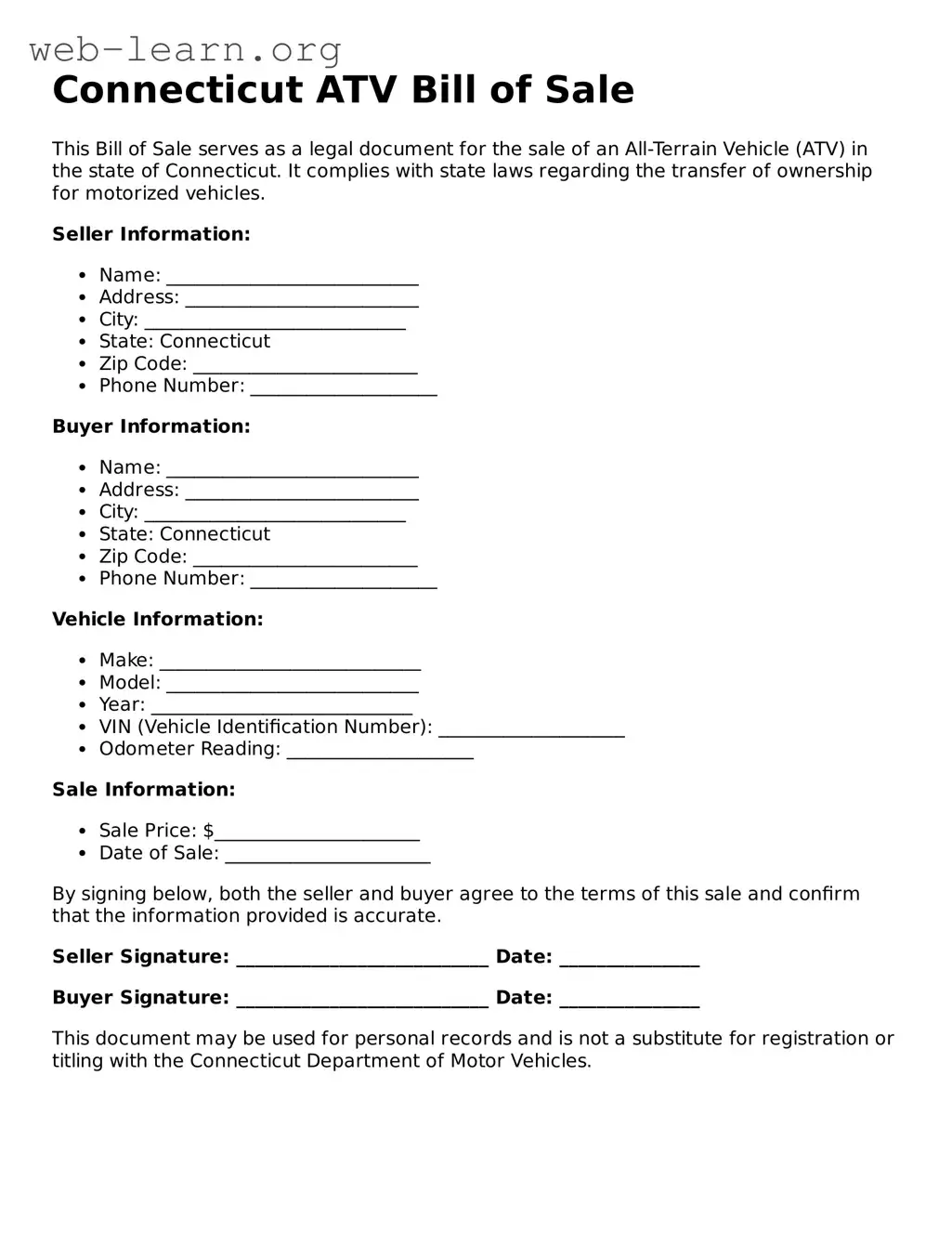
This Bill of Sale serves as a legal document for the sale of an All-Terrain Vehicle (ATV) in the state of Connecticut. It complies with state laws regarding the transfer of ownership for motorized vehicles.
Seller Information:
Buyer Information:
Vehicle Information:
Sale Information:
By signing below, both the seller and buyer agree to the terms of this sale and confirm that the information provided is accurate.
Seller Signature: ___________________________ Date: _______________
Buyer Signature: ___________________________ Date: _______________
This document may be used for personal records and is not a substitute for registration or titling with the Connecticut Department of Motor Vehicles.
| Fact Name | Description |
|---|---|
| Purpose | The Connecticut ATV Bill of Sale form serves as a legal document to record the sale and transfer of ownership of an all-terrain vehicle (ATV). |
| Governing Law | The sale of ATVs in Connecticut is governed by state laws regarding vehicle sales and transfers, specifically under Connecticut General Statutes. |
| Required Information | Essential details include the buyer's and seller's names, addresses, and signatures, along with the ATV's make, model, year, and Vehicle Identification Number (VIN). |
| Notarization | While notarization is not mandatory, it can provide an additional layer of verification and protection for both parties. |
| Sales Tax | Buyers may be required to pay sales tax on the purchase price when registering the ATV with the state. |
| Record Keeping | Both the buyer and seller should keep a copy of the completed Bill of Sale for their records and future reference. |
| Transfer of Title | The Bill of Sale is often used in conjunction with the transfer of the ATV's title, which must be completed to finalize ownership. |
| Legal Protection | This document provides legal protection for both the buyer and seller in case of disputes regarding the sale. |
Once you have the Connecticut ATV Bill of Sale form in hand, you are ready to fill it out. This document will serve as a record of the sale and transfer of ownership for the all-terrain vehicle. Completing the form accurately is crucial for both the buyer and the seller, ensuring that all necessary information is documented correctly.
After completing the form, both parties should retain a copy for their records. This documentation will be important for any future transactions or legal matters related to the ATV.
An ATV Bill of Sale is a legal document that records the transfer of ownership of an all-terrain vehicle (ATV) from one person to another in Connecticut. This document serves as proof of the transaction and includes important details about the ATV, the buyer, and the seller.
Having an ATV Bill of Sale is essential for several reasons:
The ATV Bill of Sale typically includes:
In Connecticut, notarization of the ATV Bill of Sale is not required, but it is a good practice. Having the document notarized can add an extra layer of security and authenticity to the transaction.
Yes, you can create your own ATV Bill of Sale. Ensure that it includes all necessary information and meets the requirements outlined by the state. Alternatively, you can use templates available online to simplify the process.
If the ATV has a lien, it is important to disclose this on the Bill of Sale. The seller should ensure that the lien is paid off before completing the sale. This protects the buyer from potential legal issues down the line.
Yes, when registering an ATV in Connecticut, the Bill of Sale is often required. It helps the state verify ownership and ensures that all sales are properly documented.
It is advisable to keep a copy of the ATV Bill of Sale for at least as long as you own the vehicle. If you sell the ATV, retain it for a few years after the sale in case any questions or disputes arise.
When filling out the Connecticut ATV Bill of Sale form, individuals often overlook several important details that can lead to complications later on. One common mistake is failing to include the correct date of the sale. This date is crucial as it establishes when the transaction took place and can affect ownership records. Always ensure that the date is accurate and clearly written.
Another frequent error involves not providing complete seller and buyer information. Both parties' names, addresses, and contact details must be included. Omitting any of this information can lead to misunderstandings or disputes about the transaction. Double-check to make sure all information is filled out completely.
Some people neglect to include the vehicle identification number (VIN) of the ATV. The VIN is essential for identifying the specific vehicle being sold. Without it, the bill of sale may not be considered valid. Always verify that the VIN is correct and matches the ATV being sold.
Additionally, individuals sometimes forget to specify the purchase price. This figure is necessary for both parties to understand the terms of the sale. Leaving this blank can create confusion later. Clearly state the amount in a straightforward manner.
Another common mistake is not signing the document. Both the seller and buyer must sign the bill of sale for it to be legally binding. Without signatures, the document lacks authenticity. Ensure that both parties sign in the designated areas.
People may also fail to keep a copy of the completed bill of sale. It is important for both the buyer and seller to retain a copy for their records. This document serves as proof of the transaction and can be useful in case of future disputes. Always make copies before finalizing the sale.
Some individuals overlook the need for witnesses or notarization. While not always required, having a witness or notarizing the bill of sale can add an extra layer of protection. It may help to validate the transaction if questions arise later. Consider this option for added security.
Lastly, many people do not review the form for errors before submitting it. Simple mistakes, such as typos or incorrect information, can lead to issues down the line. Take the time to carefully review the entire document before finalizing it. A thorough check can save time and prevent potential problems.
When purchasing or selling an ATV in Connecticut, several other forms and documents can be useful alongside the ATV Bill of Sale. Each of these documents serves a specific purpose, ensuring a smooth transaction and proper registration.
Having these documents ready can streamline the buying or selling process of an ATV in Connecticut. Each form plays a crucial role in ensuring that the transaction is legal and that both parties are protected.
When filling out the Connecticut ATV Bill of Sale form, it is important to be careful and thorough. Here are some guidelines to follow:
Following these steps will help ensure a smooth transaction. Careful attention to detail can prevent misunderstandings later on.
When dealing with the Connecticut ATV Bill of Sale form, several misconceptions can arise. Understanding these can help individuals navigate the process more effectively. Below are six common misconceptions:
By clarifying these misconceptions, individuals can ensure a smoother transaction process and protect their interests when buying or selling an ATV in Connecticut.
When filling out and using the Connecticut ATV Bill of Sale form, it’s important to keep several key points in mind. Here are some essential takeaways:
Title Transfer Oregon - Encourages both parties to read and agree to terms before signing.
Florida Trailer Title - Useful for both private sales and dealership transactions involving ATVs.