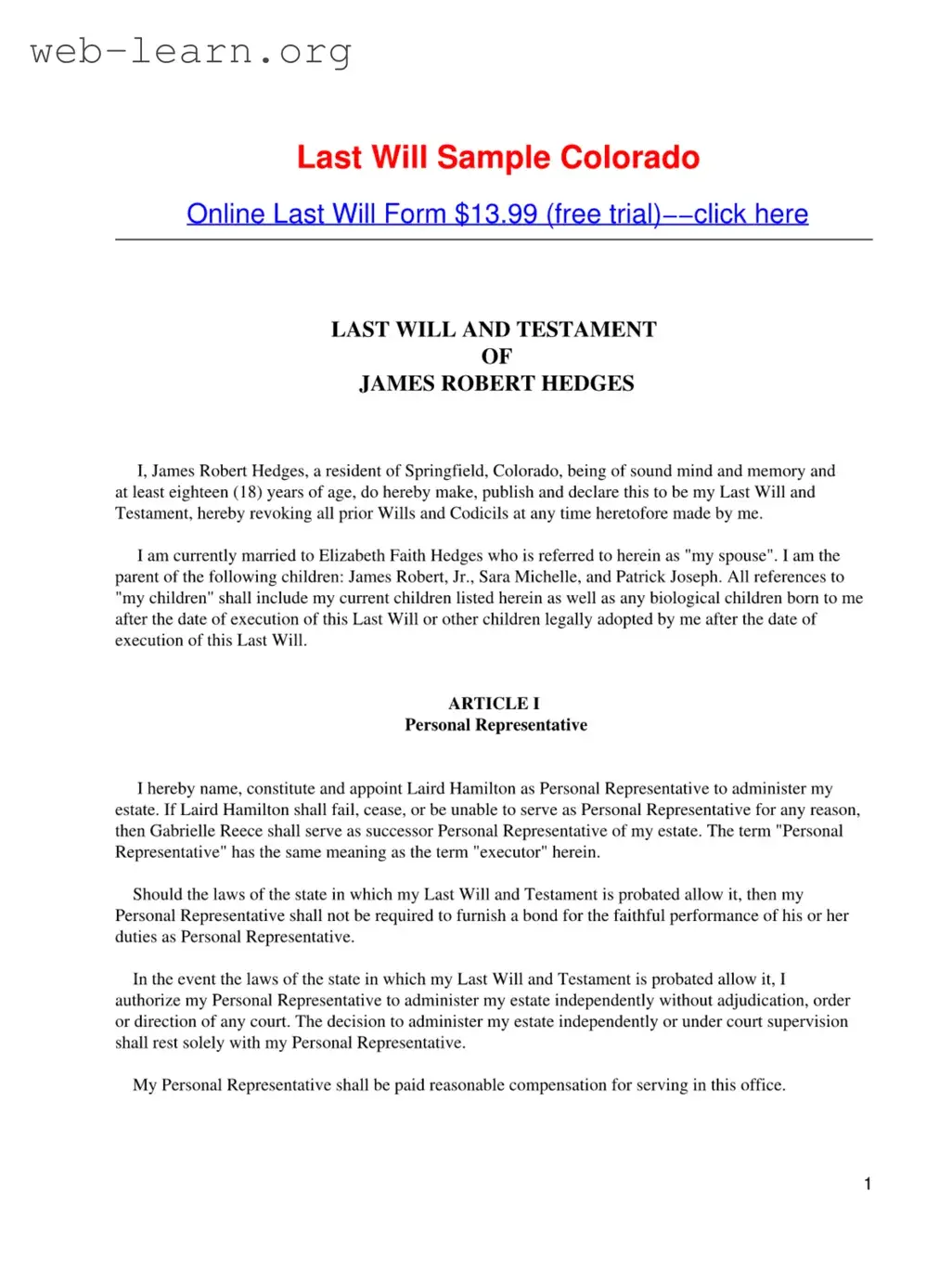
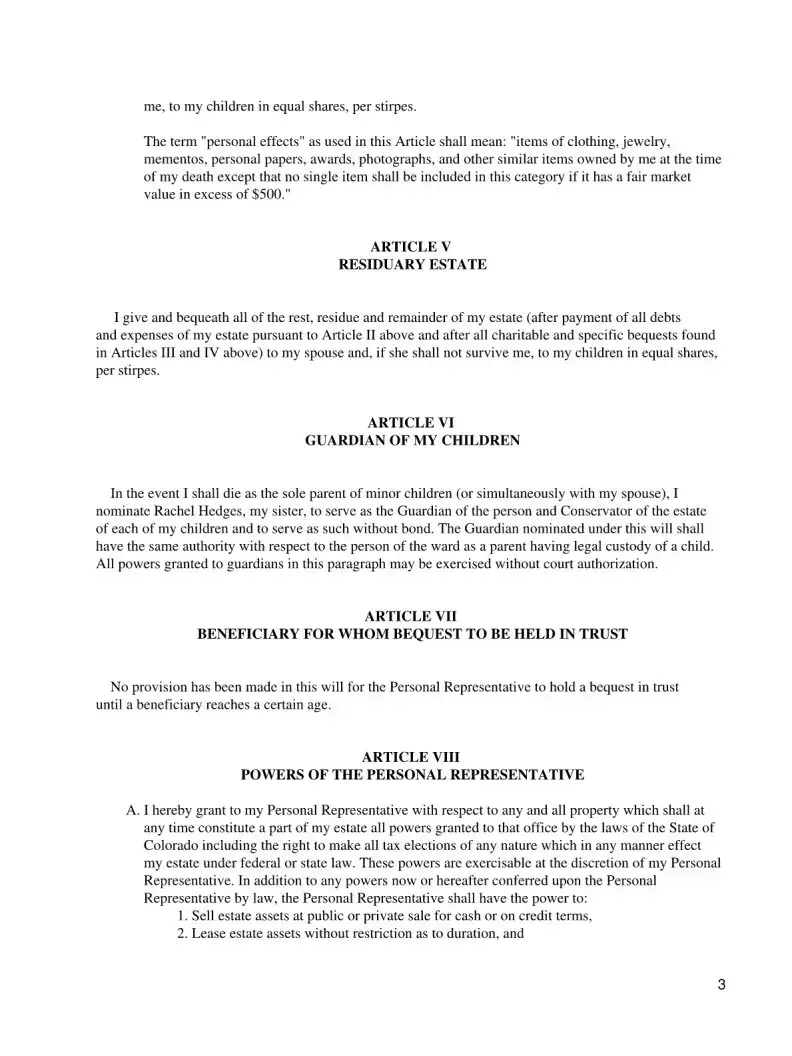
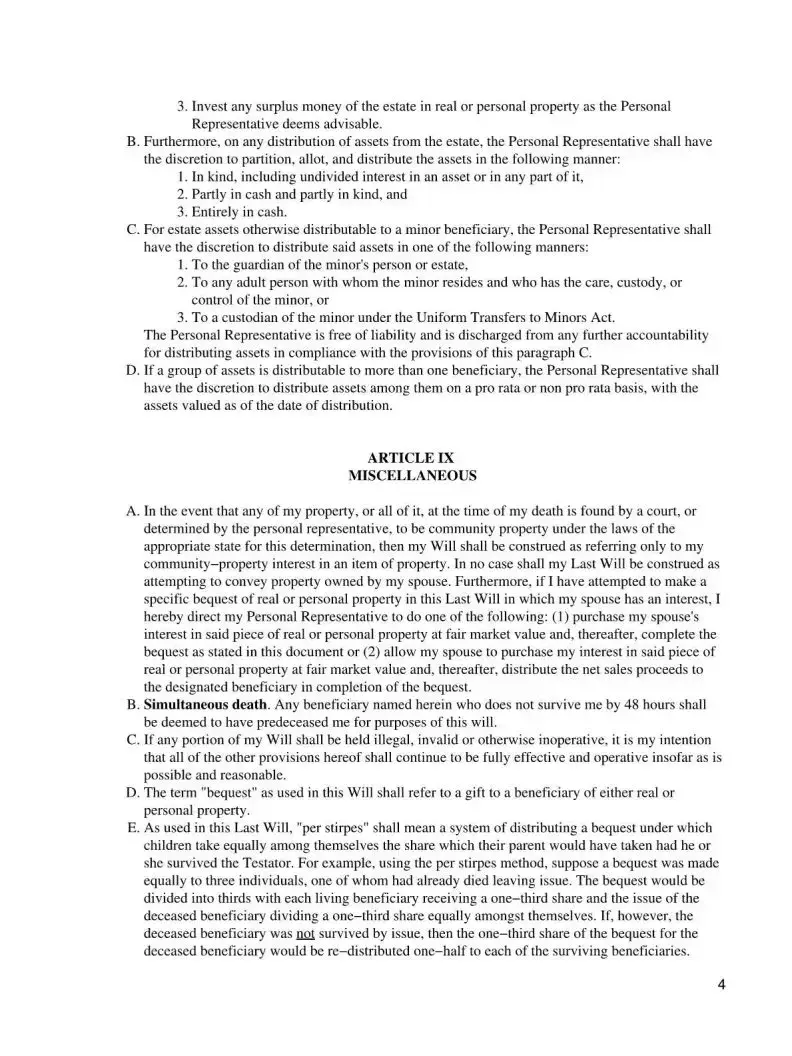
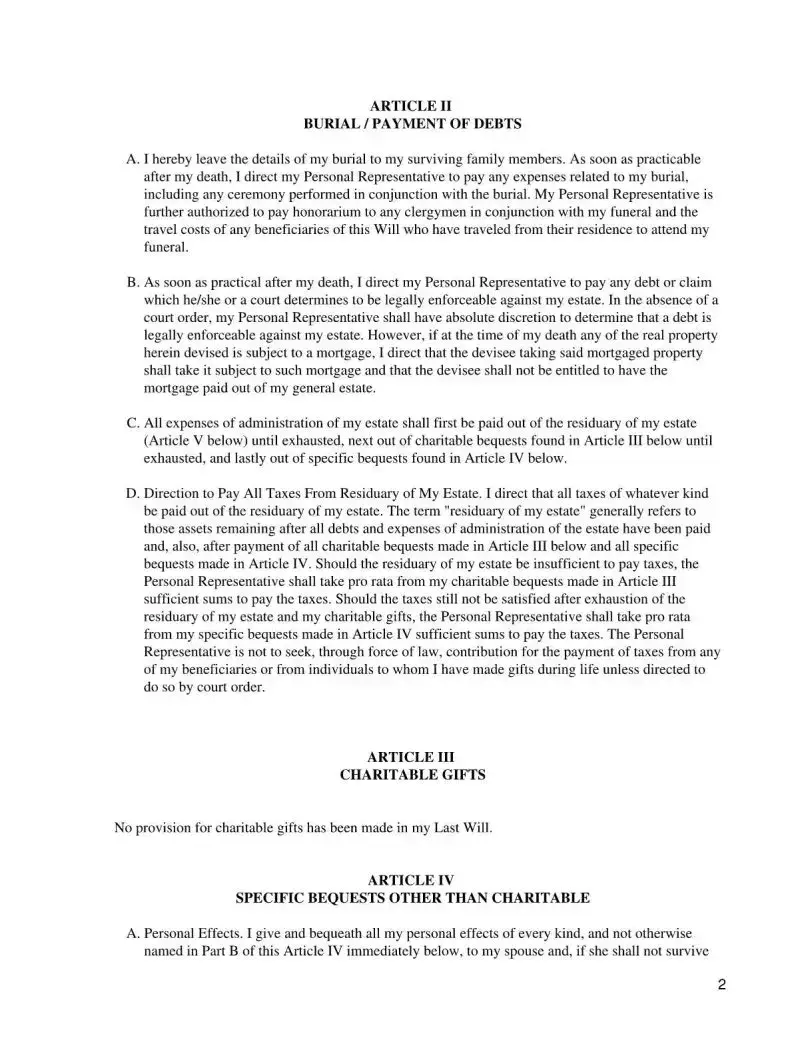
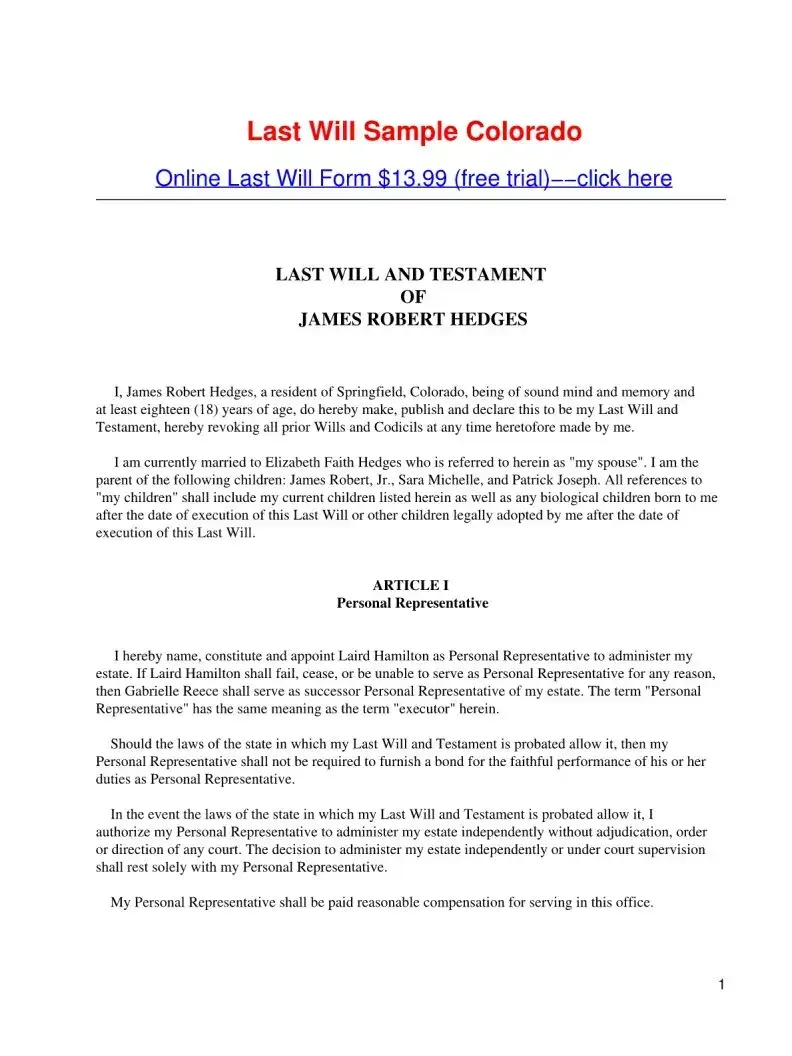
The Colorado Will form serves as a crucial document for individuals wishing to outline their wishes regarding the distribution of their estate after death. This form allows residents to specify their intentions clearly, ensuring that their assets are managed and distributed according to their preferences. The will begins by identifying the testator, who is the person creating the will, and revokes any prior wills. It includes essential sections such as the appointment of a Personal Representative, who is responsible for administering the estate, and provisions for burial expenses and payment of debts. The will also outlines how personal effects and specific bequests are to be distributed among heirs, including spouses and children. Furthermore, it designates guardianship for minor children, should the need arise, and grants the Personal Representative various powers to manage the estate effectively. Overall, the Colorado Will form provides a comprehensive framework for individuals to express their final wishes and ensure that their loved ones are cared for according to their desires.


| Fact Name | Description |
|---|---|
| Legal Age Requirement | In Colorado, individuals must be at least eighteen years old to create a valid will. |
| Revocation of Prior Wills | A new will automatically revokes any previous wills and codicils made by the testator. |
| Personal Representative | The testator can appoint a Personal Representative, also known as an executor, to manage the estate. |
| Bond Requirement | In Colorado, the Personal Representative may not need to post a bond if the will allows it. |
| Discretion in Debt Payment | The Personal Representative has the discretion to determine which debts are enforceable against the estate. |
| Burial Expenses | Burial expenses are to be paid by the Personal Representative as soon as practical after the testator's death. |
| Charitable Gifts | No provisions for charitable gifts were included in this will, indicating the testator's intent. |
| Residue Distribution | After debts and specific bequests are paid, the remaining estate is distributed to the spouse and children. |
| Guardian Nomination | The testator can nominate a guardian for minor children, who will not need to post bond. |
| Powers of the Personal Representative | The Personal Representative has broad powers, including selling or leasing estate assets without court approval. |
Filling out the Colorado Will form is a crucial step in ensuring your wishes are clearly documented. This form allows you to specify how your assets will be distributed after your passing and appoint individuals to manage your estate. Follow these steps carefully to complete the form accurately.
After completing the form, ensure that it is stored safely and that your Personal Representative and family members are aware of its location. Consider consulting a legal professional for further guidance to ensure compliance with state laws.
What is a Colorado Will form?
A Colorado Will form is a legal document that outlines how an individual wishes to distribute their assets after their death. It can specify who will manage the estate, how debts and taxes will be paid, and who will receive particular items or assets. This form must meet specific state requirements to be considered valid.
Who can create a Will in Colorado?
In Colorado, any person who is at least eighteen years old and of sound mind can create a Will. This means they must understand the nature of the document they are signing and the implications of their decisions regarding asset distribution.
What are the requirements for a valid Will in Colorado?
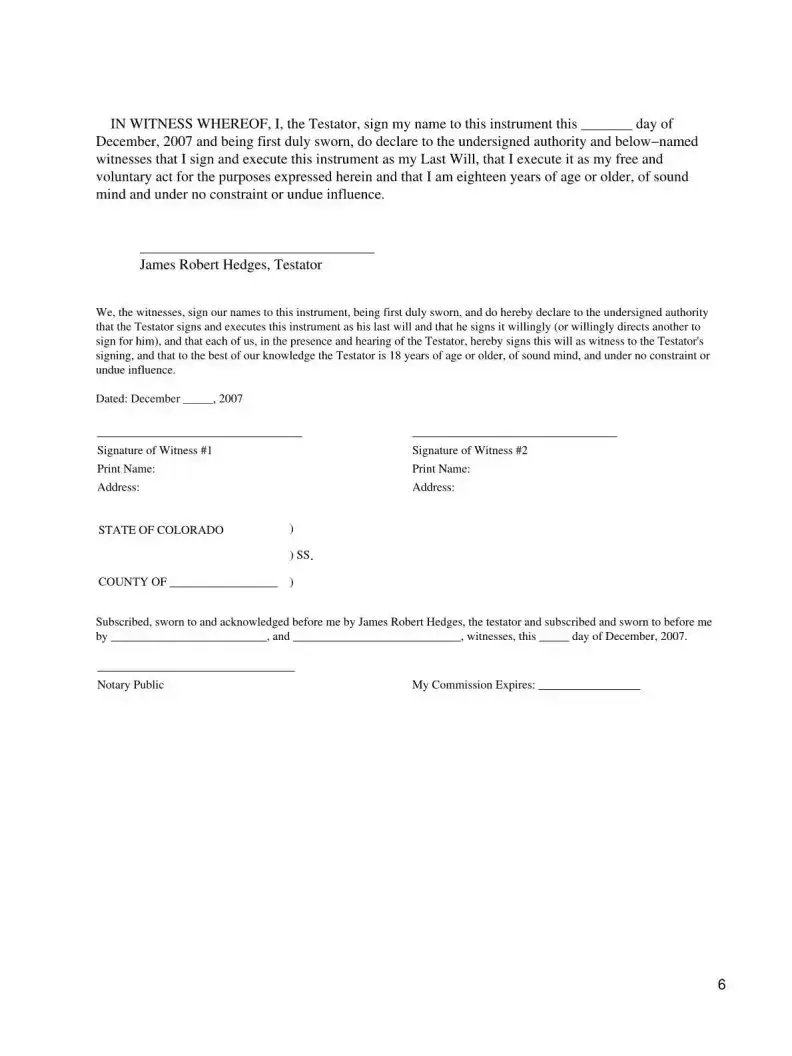
For a Will to be valid in Colorado, it must be in writing and signed by the person making the Will (the testator). Additionally, it must be witnessed by at least two individuals who are not beneficiaries of the Will. These witnesses must also sign the document in the presence of the testator.
Can I change my Will after it has been created?
Yes, you can change your Will at any time while you are alive and of sound mind. This can be done by creating a new Will that revokes the previous one or by adding a codicil, which is an amendment to the existing Will. It is important to follow the same legal requirements for signing and witnessing when making changes.
What happens if I die without a Will in Colorado?
If you die without a Will, your estate will be distributed according to Colorado's intestacy laws. This means that your assets will be divided among your closest relatives, which may not align with your wishes. Having a Will allows you to specify your preferences for asset distribution.
Who should I appoint as my Personal Representative?
Your Personal Representative, also known as an executor, is responsible for managing your estate after your death. It is advisable to choose someone you trust, such as a family member or close friend, who is organized and capable of handling financial matters. You can also appoint a professional, like an attorney or accountant, if preferred.
What are specific bequests and how do they work?
Specific bequests refer to particular items or amounts of money that you designate to certain individuals in your Will. For example, you might leave a specific piece of jewelry to a family member. These bequests are fulfilled before distributing the remainder of your estate, ensuring that your designated gifts are honored.
Can I include charitable gifts in my Will?
Yes, you can include charitable gifts in your Will. You may specify a certain amount of money or particular assets to be given to charitable organizations. This can be a meaningful way to support causes that are important to you, and it may also provide tax benefits for your estate.
What is the residuary estate?
The residuary estate refers to the portion of your estate that remains after all debts, expenses, and specific bequests have been paid. This is typically the bulk of your estate and can be distributed according to your wishes as outlined in your Will. It is important to clearly state how you want this portion to be allocated to your beneficiaries.
Filling out a Colorado Will form is a significant step in ensuring that one's wishes are honored after death. However, many individuals make common mistakes that can lead to complications for their loved ones. Understanding these pitfalls can help create a more effective and legally sound document.
One frequent error is failing to clearly identify beneficiaries. When individuals list their heirs or beneficiaries, they may use vague terms or nicknames. For example, referring to "my children" without specifying their full names can create confusion. In Colorado, it is essential to provide complete names and relationships to avoid disputes. Clarity prevents misunderstandings and ensures that the intended individuals receive their rightful shares of the estate.
Another mistake is neglecting to appoint a Personal Representative or failing to choose a suitable one. The Personal Representative is responsible for managing the estate and ensuring that the Will is executed according to the deceased's wishes. If no representative is named, the court may appoint someone, which may not align with the deceased's preferences. Selecting someone trustworthy and capable can help streamline the process and reduce potential conflicts.
Additionally, individuals often overlook the importance of signing and dating the Will correctly. In Colorado, a Will must be signed by the testator (the person making the Will) and witnessed by at least two individuals who are not beneficiaries. Failing to meet these requirements can render the Will invalid. A properly executed Will not only reflects the testator's intentions but also adheres to state laws, providing peace of mind for all parties involved.
Finally, many people forget to update their Wills after significant life changes, such as marriage, divorce, or the birth of a child. A Will that does not reflect current circumstances can lead to unintended consequences. For instance, if a person remarries but does not update their Will, the new spouse may not be included in the distribution of assets, potentially causing family disputes. Regularly reviewing and updating the Will ensures that it accurately represents the testator's wishes and family dynamics.
When creating a Colorado Will, several other documents may be necessary to ensure that your estate is managed and distributed according to your wishes. These documents complement the will and address specific aspects of estate planning. Below are five commonly used forms and documents.
Incorporating these documents into your estate plan can provide clarity and protection for your loved ones. Each document serves a unique purpose and helps to ensure that your wishes are honored during difficult times.
When filling out the Colorado Will form, there are important dos and don’ts to consider. Following these guidelines can help ensure that your will is valid and reflects your wishes.
Understanding the Colorado Will form is crucial for anyone looking to create a legally binding last will and testament. However, several misconceptions often arise. Here are ten common misconceptions about the Colorado Will form, along with clarifications:
By dispelling these misconceptions, individuals can better navigate the process of creating a will that reflects their wishes and complies with Colorado law.
When filling out and using the Colorado Will form, keep these key takeaways in mind: