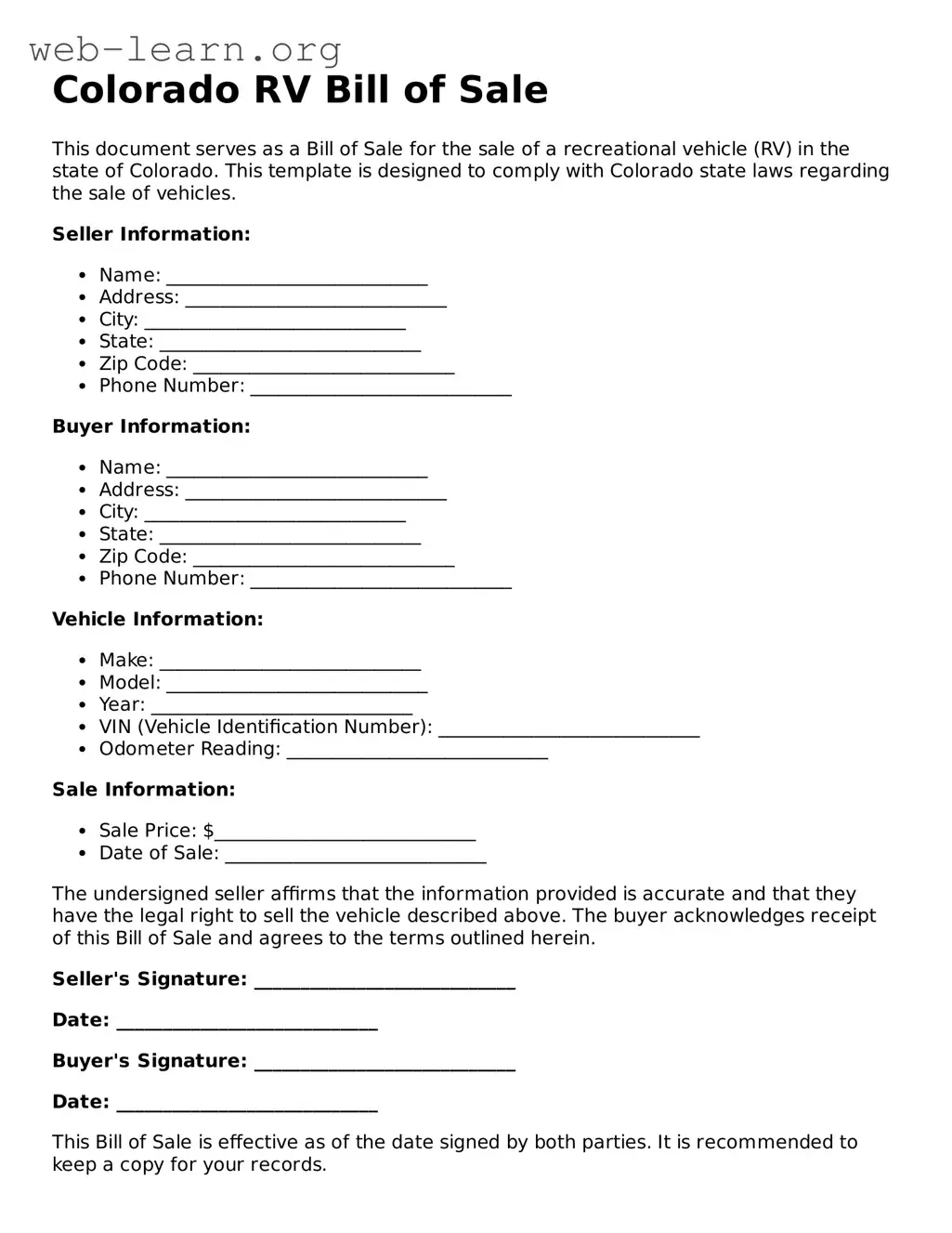
When it comes to purchasing or selling a recreational vehicle (RV) in Colorado, having the right documentation is essential for a smooth transaction. The Colorado RV Bill of Sale form serves as a crucial legal document that protects both the buyer and the seller. This form outlines important details such as the names and addresses of both parties, a description of the RV including its make, model, year, and Vehicle Identification Number (VIN), and the sale price. Additionally, it often includes information about any warranties or disclosures related to the vehicle, ensuring that both parties are aware of the vehicle's condition at the time of sale. By properly completing and signing this form, both the buyer and seller can establish clear ownership and transfer rights, which is particularly important for future registration and potential title transfers. Understanding the significance of this form can help prevent disputes and provide peace of mind throughout the transaction process.
Colorado RV Bill of Sale
This document serves as a Bill of Sale for the sale of a recreational vehicle (RV) in the state of Colorado. This template is designed to comply with Colorado state laws regarding the sale of vehicles.
Seller Information:
Buyer Information:
Vehicle Information:
Sale Information:
The undersigned seller affirms that the information provided is accurate and that they have the legal right to sell the vehicle described above. The buyer acknowledges receipt of this Bill of Sale and agrees to the terms outlined herein.
Seller's Signature: ____________________________
Date: ____________________________
Buyer's Signature: ____________________________
Date: ____________________________
This Bill of Sale is effective as of the date signed by both parties. It is recommended to keep a copy for your records.
| Fact Name | Details |
|---|---|
| Purpose | The Colorado RV Bill of Sale form is used to document the sale of a recreational vehicle in Colorado. |
| Governing Law | The sale of RVs in Colorado is governed by the Colorado Revised Statutes, particularly Title 42, which covers vehicles. |
| Buyer and Seller Information | The form requires the names and addresses of both the buyer and the seller. |
| Vehicle Description | Details about the RV, such as make, model, year, and Vehicle Identification Number (VIN), must be included. |
| Sale Price | The final sale price of the RV must be clearly stated on the form. |
| Date of Sale | The date when the transaction takes place should be recorded. |
| Signatures Required | Both the buyer and seller must sign the document to make it legally binding. |
| Notarization | While not required, having the form notarized can provide additional legal protection. |
| Record Keeping | Both parties should keep a copy of the completed bill of sale for their records. |
| Transfer of Ownership | This form is essential for transferring ownership and registering the RV with the state. |
After obtaining the Colorado RV Bill of Sale form, it is essential to accurately complete it to ensure a smooth transaction. This document will serve as a record of the sale and may be required for registration purposes.
Once the form is completed, it is advisable to keep a copy for personal records. The buyer may need this document for registration and titling purposes in Colorado.
What is a Colorado RV Bill of Sale?
A Colorado RV Bill of Sale is a legal document that records the sale and transfer of ownership of a recreational vehicle (RV) in the state of Colorado. This form serves as proof of the transaction between the buyer and the seller.
Why do I need a Bill of Sale for my RV?
The Bill of Sale is essential for several reasons:
What information is required on the Bill of Sale?
The Bill of Sale should include:
Is the Bill of Sale required for registration in Colorado?
Yes, the Bill of Sale is typically required when registering your RV in Colorado. It serves as proof that you are the rightful owner of the vehicle.
Do I need to have the Bill of Sale notarized?
While notarization is not mandatory for a Colorado RV Bill of Sale, it is recommended. Having it notarized adds an extra layer of authenticity to the document.
Can I use a generic Bill of Sale form?
While you can use a generic Bill of Sale form, it is advisable to use a Colorado-specific form. This ensures that all state requirements are met and helps avoid any legal issues.
What if the RV has a lien?
If there is a lien on the RV, it is crucial to address it before the sale. The seller should provide a lien release, and the Bill of Sale should reflect that the lien has been cleared.
How do I obtain a Colorado RV Bill of Sale form?
You can obtain a Colorado RV Bill of Sale form from various sources, including:
What should I do after completing the Bill of Sale?
After completing the Bill of Sale, both the buyer and seller should keep a copy for their records. The buyer should also take the document to the DMV to register the RV in their name.
Can I cancel the sale after signing the Bill of Sale?
Once the Bill of Sale is signed, it generally constitutes a binding agreement. Cancelling the sale may require mutual consent from both parties, depending on the terms outlined in the document.
Filling out the Colorado RV Bill of Sale form can be straightforward, but many people make common mistakes that can lead to complications. One frequent error is failing to provide complete information about the RV. This includes not listing the Vehicle Identification Number (VIN), make, model, and year. Omitting any of these details can create confusion and may delay the registration process.
Another common mistake is not including the sale price of the RV. This information is crucial for tax purposes and helps establish the value of the transaction. If the sale price is left blank or inaccurately stated, it can lead to issues with the Department of Motor Vehicles (DMV) when transferring ownership.
Many individuals also overlook the importance of both the buyer's and seller's signatures. Both parties must sign the form to validate the sale. If either signature is missing, the document may be considered incomplete, which can result in problems during the registration process.
Additionally, some people forget to date the Bill of Sale. The date of the transaction is essential for record-keeping and for establishing when ownership changes hands. Without a date, the form may be deemed invalid.
Another mistake is not keeping a copy of the completed Bill of Sale. It’s important for both the buyer and seller to retain a copy for their records. This document serves as proof of the transaction and can be necessary for future reference, especially if any disputes arise.
Misunderstanding the payment method can also lead to issues. If the payment method is not clearly stated, it can create confusion regarding whether the transaction was completed. It's best to specify if the payment was made in cash, check, or another form.
Some individuals fail to check for accuracy after filling out the form. Simple typos or errors can cause significant problems. Double-checking all information before submission can help avoid unnecessary complications.
In addition, neglecting to include any necessary disclosures about the RV can be a mistake. If there are known issues with the vehicle, these should be disclosed to the buyer. Transparency helps build trust and can prevent future disputes.
Finally, not understanding the local requirements for the Bill of Sale can lead to mistakes. Each state may have specific regulations regarding the sale of vehicles. Familiarizing oneself with Colorado’s requirements can help ensure the form is filled out correctly.
When completing a transaction involving an RV in Colorado, several forms and documents may accompany the RV Bill of Sale. Each of these documents serves a specific purpose in ensuring a smooth transfer of ownership and compliance with state regulations.
Each of these documents plays a vital role in the RV sale process. Ensuring that all necessary forms are completed and submitted can help prevent future disputes and facilitate a seamless transfer of ownership.
The RV Bill of Sale form is an important document for transferring ownership of a recreational vehicle. It shares similarities with several other documents used in various transactions. Here are nine documents that are similar to the RV Bill of Sale:
Each of these documents plays a crucial role in ensuring a clear and legal transfer of ownership, just like the RV Bill of Sale.
When filling out the Colorado RV Bill of Sale form, it is essential to follow specific guidelines to ensure accuracy and compliance. Here are eight key actions to take and avoid.
Following these guidelines will help ensure a smooth transaction and protect both parties involved.
When dealing with the Colorado RV Bill of Sale form, several misconceptions can arise. Understanding these misconceptions is crucial for anyone looking to buy or sell an RV in Colorado. Here are eight common misunderstandings:
By clearing up these misconceptions, buyers and sellers can navigate the RV transaction process more effectively and ensure that they are fully protected under Colorado law.
Filling out and using the Colorado RV Bill of Sale form is an important step in the buying and selling process of recreational vehicles. Here are some key takeaways to consider:
Travel Trailer Bill of Sale - Important for tracking the RV’s history and ownership changes.
Where Do I Get a Bill of Sale - Helps avoid disputes by clearly outlining the terms of sale.
Do You Need a Bill of Sale in Florida - Provides a formal structure for what is often an informal transaction.