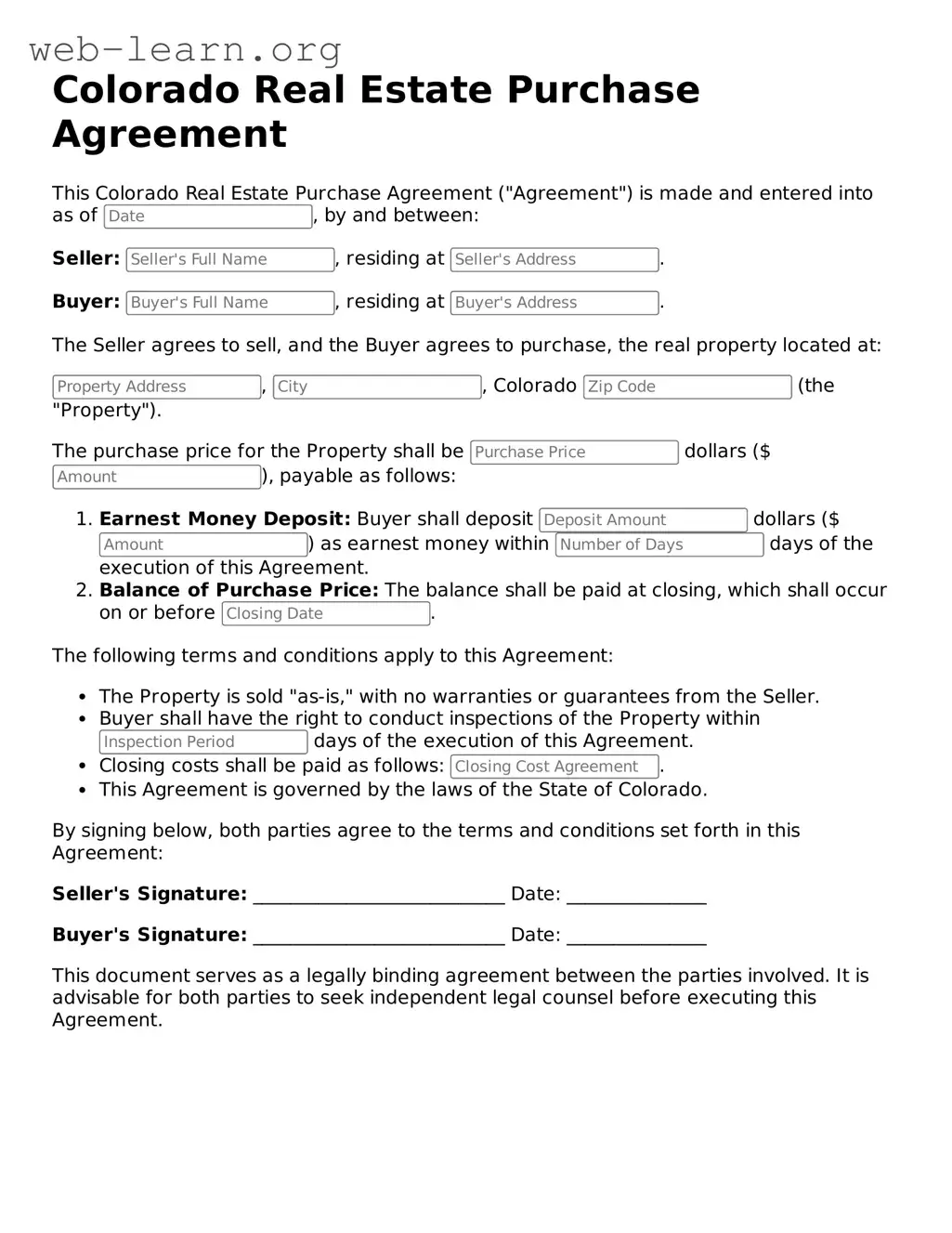
The Colorado Real Estate Purchase Agreement form is a crucial document in the home buying and selling process, serving as a binding contract between the buyer and seller. This form outlines essential details such as the purchase price, financing terms, and the specific property being sold. It also includes contingencies, which are conditions that must be met for the sale to proceed, such as home inspections or the buyer securing a mortgage. Additionally, the agreement specifies the closing date, which is when ownership of the property is officially transferred, and details any included fixtures or personal property. The clarity and comprehensiveness of this form help protect the interests of both parties, ensuring that all terms are clearly defined and agreed upon. Understanding the components of the Colorado Real Estate Purchase Agreement is vital for anyone involved in a real estate transaction, as it lays the groundwork for a successful and legally sound transfer of property.
Colorado Real Estate Purchase Agreement
This Colorado Real Estate Purchase Agreement ("Agreement") is made and entered into as of , by and between:
Seller: , residing at .
Buyer: , residing at .
The Seller agrees to sell, and the Buyer agrees to purchase, the real property located at:
, , Colorado (the "Property").
The purchase price for the Property shall be dollars ($), payable as follows:
The following terms and conditions apply to this Agreement:
By signing below, both parties agree to the terms and conditions set forth in this Agreement:
Seller's Signature: ___________________________ Date: _______________
Buyer's Signature: ___________________________ Date: _______________
This document serves as a legally binding agreement between the parties involved. It is advisable for both parties to seek independent legal counsel before executing this Agreement.
| Fact Name | Details |
|---|---|
| Governing Law | The Colorado Real Estate Purchase Agreement is governed by the laws of the State of Colorado. |
| Standardized Form | This agreement is often used as a standardized form, making it easier for buyers and sellers to understand the terms. |
| Essential Components | It typically includes essential components such as purchase price, financing terms, and closing date. |
| Contingencies | Buyers can include contingencies, like home inspections or financing, to protect their interests. |
| Signature Requirement | For the agreement to be legally binding, it must be signed by both the buyer and the seller. |
Completing the Colorado Real Estate Purchase Agreement form is a crucial step in the home buying process. After filling out the form, it will be submitted to the seller for review and negotiation. It is important to ensure that all information is accurate and clearly stated to avoid potential misunderstandings.
What is a Colorado Real Estate Purchase Agreement?
A Colorado Real Estate Purchase Agreement is a legal document that outlines the terms and conditions of a real estate transaction. It is used when a buyer wants to purchase property from a seller. This agreement details the purchase price, property description, contingencies, and other important terms.
What key elements are included in the agreement?
The agreement typically includes:
Do I need a real estate agent to use this form?
No, you do not need a real estate agent to use the Colorado Real Estate Purchase Agreement. However, having a professional can help ensure that all details are properly addressed and that your interests are protected throughout the transaction.
What happens after the agreement is signed?
Once both parties sign the agreement, it becomes legally binding. The buyer will typically submit an earnest money deposit, and the closing process will begin. This process includes inspections, appraisals, and securing financing, leading up to the final closing date.
Can the terms of the agreement be changed?
Yes, the terms of the agreement can be changed if both parties agree to the modifications. Any changes should be documented in writing and signed by both the buyer and seller to ensure clarity and enforceability.
What if there are disputes regarding the agreement?
If disputes arise, the parties should first attempt to resolve the issue through communication. If that fails, mediation or arbitration may be options before resorting to litigation. It's advisable to seek legal counsel if disputes cannot be resolved amicably.
Is it necessary to have a lawyer review the agreement?
While it is not mandatory, having a lawyer review the Colorado Real Estate Purchase Agreement can provide peace of mind. A legal professional can ensure that the document meets all legal requirements and protects your interests in the transaction.
Filling out the Colorado Real Estate Purchase Agreement form is a critical step in the home buying process. However, many individuals make common mistakes that can lead to complications down the line. One frequent error is failing to provide accurate property descriptions. Buyers often assume that the address alone is sufficient, but a detailed description of the property, including boundaries and any included fixtures, is essential. Without this clarity, disputes may arise regarding what is actually being sold.
Another mistake involves overlooking the financing details. Buyers sometimes neglect to specify the type of financing they plan to use, whether it be conventional, FHA, or VA loans. This omission can create confusion and delays in the transaction process. Lenders require specific information to process loans efficiently, and failing to provide it can result in unnecessary complications.
Additionally, many people forget to include contingencies in their agreements. Contingencies are conditions that must be met for the sale to proceed, such as home inspections or financing approvals. Without these protections, buyers may find themselves locked into a purchase that is not in their best interest. It is crucial to outline these contingencies clearly to safeguard against potential issues.
Another common oversight is the failure to review and understand the timelines associated with the agreement. Each phase of the transaction, from the acceptance of the offer to the closing date, has specific deadlines. Missing these deadlines can jeopardize the deal. Buyers should be vigilant in tracking these dates to ensure a smooth transaction.
Finally, many individuals do not seek legal advice before submitting the agreement. While it may seem straightforward, real estate transactions can be complex. Consulting with a knowledgeable attorney can help identify potential pitfalls and ensure that all aspects of the agreement are in the buyer's best interest. Taking this step can provide peace of mind and enhance the likelihood of a successful transaction.
When engaging in a real estate transaction in Colorado, several forms and documents complement the Colorado Real Estate Purchase Agreement. These documents help clarify terms, protect parties involved, and ensure compliance with state regulations. Below is a list of commonly used forms in conjunction with the purchase agreement.
These documents play a crucial role in the real estate transaction process. They provide necessary information and protections for both buyers and sellers, ensuring a smoother closing experience. It is important to review each document carefully and understand its implications before proceeding with a real estate transaction.
The Real Estate Purchase Agreement is a vital document in the process of buying and selling property. It outlines the terms and conditions agreed upon by the buyer and seller. Several other documents serve similar purposes in real estate transactions. Below are four documents that share similarities with the Real Estate Purchase Agreement:
When filling out the Colorado Real Estate Purchase Agreement form, it’s important to be careful and thorough. Here are five things you should and shouldn’t do:
Understanding the Colorado Real Estate Purchase Agreement form can be challenging, leading to several misconceptions. Here are five common misunderstandings:
While signing the agreement indicates intent, it often requires additional steps, such as acceptance by the seller and potential contingencies, to become fully binding.
Homebuyers and sellers can fill out the agreement themselves. However, having an agent can provide valuable guidance and ensure all necessary details are included.
While many terms can be negotiated, some elements, like state regulations and certain conditions, must be adhered to, limiting flexibility in those areas.
Each agreement can vary based on the specifics of the transaction, including property type, buyer and seller needs, and local market conditions.
Changes can be made to the agreement before it is finalized. Amendments may be necessary as negotiations progress or new information arises.
When filling out and using the Colorado Real Estate Purchase Agreement form, keep these key takeaways in mind:
Purchasing Agreements - Includes a clause for the buyer's right to request repairs before closing.
Agreement of Sale Hawaii - Specifies any included fixtures or personal property in the sale.