In Colorado, a prenuptial agreement serves as a valuable tool for couples preparing for marriage. This legal document outlines the financial rights and responsibilities of each partner, ensuring clarity and protection for both parties. It addresses key aspects such as the division of property, management of debts, and spousal support in the event of a divorce or separation. By establishing these terms before tying the knot, couples can mitigate potential conflicts and misunderstandings down the road. Furthermore, a well-drafted prenuptial agreement can help safeguard individual assets and provide peace of mind, allowing partners to focus on building their life together. Understanding the intricacies of the Colorado Prenuptial Agreement form is essential for anyone considering this proactive approach to marriage planning.
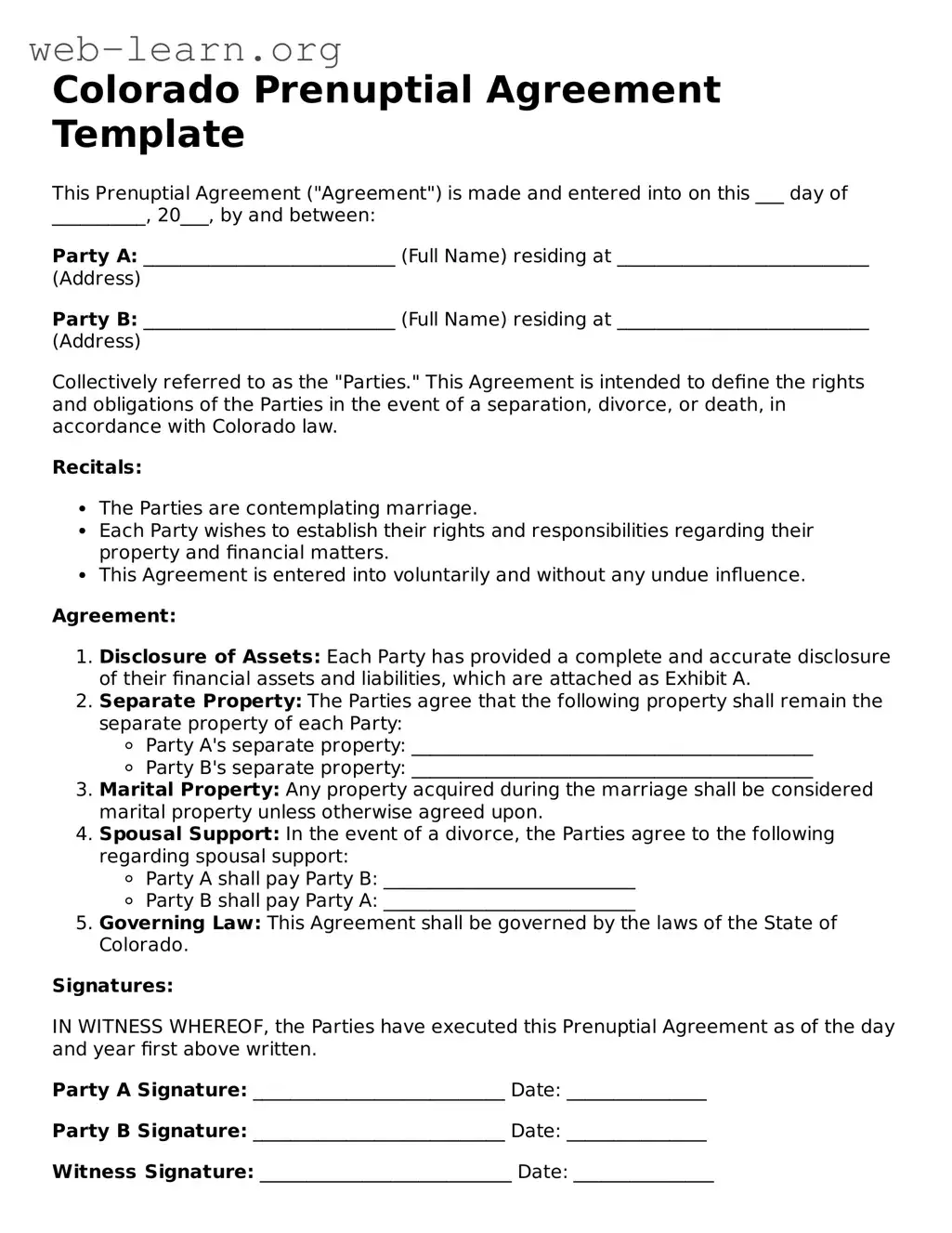
Colorado Prenuptial Agreement Template
This Prenuptial Agreement ("Agreement") is made and entered into on this ___ day of __________, 20___, by and between:
Party A: ___________________________ (Full Name) residing at ___________________________ (Address)
Party B: ___________________________ (Full Name) residing at ___________________________ (Address)
Collectively referred to as the "Parties." This Agreement is intended to define the rights and obligations of the Parties in the event of a separation, divorce, or death, in accordance with Colorado law.
Recitals:
Agreement:
Signatures:
IN WITNESS WHEREOF, the Parties have executed this Prenuptial Agreement as of the day and year first above written.
Party A Signature: ___________________________ Date: _______________
Party B Signature: ___________________________ Date: _______________
Witness Signature: ___________________________ Date: _______________
Witness Signature: ___________________________ Date: _______________
| Fact Name | Description |
|---|---|
| Definition | A prenuptial agreement in Colorado is a contract between two individuals before marriage that outlines the division of assets and financial responsibilities in the event of divorce or separation. |
| Governing Law | Colorado Revised Statutes, Title 14, Article 2, Part 3 governs prenuptial agreements in Colorado. |
| Enforceability | For a prenuptial agreement to be enforceable, it must be in writing and signed by both parties. Oral agreements are not valid. |
| Full Disclosure | Both parties must provide full and fair disclosure of their financial situations for the agreement to be considered valid. |
| Independent Counsel | It is advisable for each party to seek independent legal counsel to ensure that their rights are protected and that they fully understand the agreement. |
| Modification | A prenuptial agreement can be modified or revoked at any time by mutual consent, but any changes must also be in writing. |
Filling out the Colorado Prenuptial Agreement form is an important step for couples considering marriage. This document outlines how assets and debts will be handled in the event of a divorce or separation. Following the steps below will help ensure that the form is completed accurately and thoroughly.
What is a prenuptial agreement?
A prenuptial agreement, often called a prenup, is a legal document that outlines how assets and debts will be handled in the event of a divorce or separation. It can address various issues, such as property division, spousal support, and financial responsibilities during the marriage. In Colorado, these agreements are recognized and can help couples establish clear expectations before tying the knot.
Why should I consider a prenuptial agreement in Colorado?
There are several reasons to consider a prenup. If either partner has significant assets, a family business, or children from a previous relationship, a prenuptial agreement can protect those interests. It can also provide peace of mind, allowing both partners to discuss financial matters openly and honestly before marriage. In Colorado, a prenup can simplify the divorce process, should it occur.
What should be included in a Colorado prenuptial agreement?
While every prenup is unique, some common elements include:
It’s essential to tailor the agreement to your specific circumstances and needs.
How do I create a valid prenuptial agreement in Colorado?
To create a valid prenuptial agreement in Colorado, both parties must voluntarily agree to its terms. The agreement should be in writing and signed by both partners. It's advisable to have separate legal representation to ensure that both parties fully understand their rights and obligations. This step can help prevent claims of coercion or unfairness later on.
Can a prenuptial agreement be changed or revoked?
Yes, a prenuptial agreement can be modified or revoked at any time, as long as both parties agree to the changes. To make it official, any amendments must also be in writing and signed by both partners. It’s important to keep communication open and revisit the agreement periodically, especially after significant life events, such as the birth of a child or a substantial change in financial status.
What happens if we don’t have a prenuptial agreement?
If a couple does not have a prenuptial agreement, Colorado law will determine how assets and debts are divided in the event of a divorce. This could lead to unexpected outcomes, especially if one partner has significantly more assets than the other. Without a prenup, the court will follow state laws, which may not align with the couple's wishes.
Is a prenuptial agreement enforceable in Colorado?
Yes, prenuptial agreements are generally enforceable in Colorado, provided they meet certain legal standards. The agreement must be fair, entered into voluntarily, and not unconscionable. Courts will examine the circumstances under which the agreement was signed, including whether both parties had adequate legal representation and whether there was full disclosure of assets.
How much does it cost to create a prenuptial agreement in Colorado?
The cost of creating a prenuptial agreement can vary widely based on several factors, including the complexity of the agreement and the attorney's fees. On average, couples might expect to pay anywhere from a few hundred to several thousand dollars. Investing in a well-drafted prenup can save both parties time and money in the long run, especially if a divorce occurs.
Filling out a prenuptial agreement form in Colorado can be a daunting task. Couples often approach this process with excitement and hope for their future, but mistakes can easily occur. One common error is failing to fully disclose assets and liabilities. Transparency is crucial in these agreements. If one party omits significant financial information, it can lead to disputes later on. A complete and honest disclosure ensures that both parties understand each other’s financial situations, which is essential for a fair agreement.
Another frequent mistake is overlooking the importance of legal advice. While it might be tempting to fill out the form without consulting a lawyer, doing so can be a costly error. Each individual’s circumstances are unique, and a legal expert can provide guidance tailored to specific needs. They can help clarify complex terms and ensure that the agreement complies with state laws. Without proper legal counsel, couples risk creating an agreement that may not hold up in court.
Additionally, some individuals underestimate the significance of clarity in the language used within the agreement. Vague terms can lead to misunderstandings and disputes in the future. It’s essential to articulate intentions clearly and define any terms that might be open to interpretation. Using precise language helps both parties know exactly what to expect, which can prevent conflicts later on.
Lastly, a common pitfall is neglecting to revisit and update the agreement over time. Life circumstances change—new jobs, children, or financial shifts can all impact the relevance of a prenuptial agreement. Couples should regularly review their agreement to ensure it reflects their current situation. By doing so, they can maintain a sense of security and mutual understanding, reinforcing the foundation of their relationship.
When preparing for a marriage, a prenuptial agreement is just one of several important documents to consider. Each of these documents serves a unique purpose, ensuring that both parties are protected and informed. Below is a list of forms and documents commonly used alongside a Colorado prenuptial agreement.
Each of these documents plays a vital role in ensuring that both parties are adequately protected and informed throughout the marriage and beyond. It is advisable to consult with a legal professional to ensure that all necessary documents are in order and tailored to your specific needs.
When considering a prenuptial agreement in Colorado, it’s essential to approach the process thoughtfully. Here’s a list of things you should and shouldn’t do when filling out the form:
Following these guidelines can help you create a solid foundation for your future together. A well-prepared prenuptial agreement can provide peace of mind and clarity for both partners.
When considering a prenuptial agreement in Colorado, several misconceptions can cloud understanding. It's important to clarify these points to ensure that couples approach the process with the right information. Here are four common misconceptions:
Understanding these misconceptions can help couples navigate their options more effectively. A well-informed approach can lead to healthier discussions and a stronger foundation for marriage.
Filling out a prenuptial agreement form in Colorado is an important step for couples considering marriage. Here are some key takeaways to keep in mind:
By keeping these points in mind, couples can create a solid foundation for their marriage, ensuring that both partners feel secure and understood.
California Prenup - This document helps couples clarify their assets and debts prior to tying the knot.
Arizona Prenup - A prenup can clarify financial responsibilities during the marriage.
Indiana Prenup - The agreement can help manage debts acquired during the marriage.