The Colorado Motor Vehicle Bill of Sale form serves as a crucial document in the process of buying or selling a vehicle within the state. This form captures essential information about the transaction, including the names and addresses of both the buyer and the seller, the vehicle's identification details, and the sale price. It also outlines any warranties or guarantees provided by the seller, which can protect the buyer after the sale is completed. Additionally, the form includes a section for the seller to disclose any existing liens on the vehicle, ensuring that the buyer is aware of any financial obligations tied to the vehicle. By documenting the transfer of ownership, the Bill of Sale helps to establish legal proof of the transaction, which can be important for registration and title transfer purposes. Proper completion of this form is vital to ensure a smooth and legally sound transfer of ownership, making it an indispensable part of vehicle transactions in Colorado.
Colorado Motor Vehicle Bill of Sale
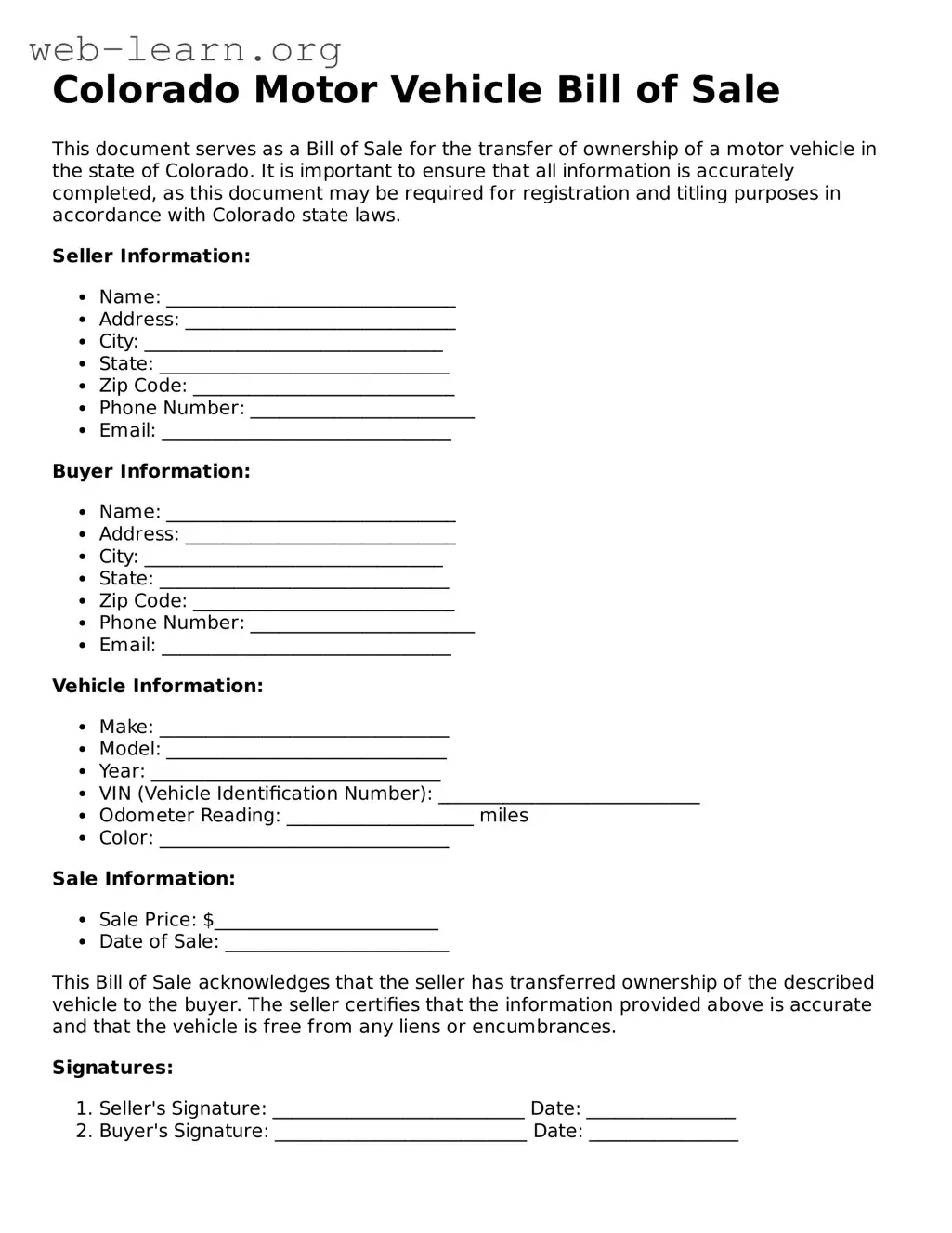
This document serves as a Bill of Sale for the transfer of ownership of a motor vehicle in the state of Colorado. It is important to ensure that all information is accurately completed, as this document may be required for registration and titling purposes in accordance with Colorado state laws.
Seller Information:
Buyer Information:
Vehicle Information:
Sale Information:
This Bill of Sale acknowledges that the seller has transferred ownership of the described vehicle to the buyer. The seller certifies that the information provided above is accurate and that the vehicle is free from any liens or encumbrances.
Signatures:
It is advisable for both parties to retain a copy of this Bill of Sale for their records. This document may be required for future reference or in the event of a dispute.
| Fact Name | Description |
|---|---|
| Purpose | The Colorado Motor Vehicle Bill of Sale form is used to document the sale of a motor vehicle between a buyer and a seller. |
| Governing Law | The form is governed by Colorado Revised Statutes, Title 42, Article 6, which pertains to motor vehicles. |
| Required Information | The form must include details such as the vehicle identification number (VIN), make, model, year, and odometer reading. |
| Signatures | Both the seller and buyer must sign the document to validate the transaction. |
| Notarization | While notarization is not required, it is recommended for added legal protection. |
| Use for Registration | The completed Bill of Sale can be used to register the vehicle with the Colorado Department of Revenue. |
| Record Keeping | It is advisable for both parties to keep a copy of the Bill of Sale for their records. |
Once you have the Colorado Motor Vehicle Bill of Sale form ready, it’s time to fill it out. This document will help you and the buyer have a clear record of the transaction. Make sure to have all necessary information at hand before you begin.
After completing the form, make copies for both parties. This ensures everyone has a record of the sale. Keep the original safe for your records.
What is a Colorado Motor Vehicle Bill of Sale?
A Colorado Motor Vehicle Bill of Sale is a legal document that records the sale of a vehicle between a buyer and a seller. This form includes important details such as the vehicle's identification number (VIN), make, model, year, and the sale price. It serves as proof of the transaction and can be used for registration and title transfer purposes.
Is a Bill of Sale required in Colorado?
While a Bill of Sale is not legally required for every vehicle transaction in Colorado, it is highly recommended. This document provides a clear record of the sale, protecting both the buyer and seller in case of disputes. Additionally, it may be necessary for the buyer to register the vehicle with the state.
What information should be included in the Bill of Sale?
The Bill of Sale should include the following information:
Can I create my own Bill of Sale?
Yes, you can create your own Bill of Sale as long as it includes all the necessary information. However, using a standard form can help ensure that you don’t miss any important details. Various templates are available online, and many local DMV offices offer official forms.
How do I complete the Bill of Sale?
To complete the Bill of Sale, both the buyer and seller should fill out their respective sections, providing accurate and complete information. After filling out the form, both parties should sign it. It is advisable to keep a copy for your records.
Do I need to have the Bill of Sale notarized?
In Colorado, notarization of the Bill of Sale is not required. However, having it notarized can add an extra layer of security and authenticity to the document. This can be beneficial if any disputes arise in the future.
What do I do with the Bill of Sale after the sale?
After the sale, the buyer should keep the Bill of Sale as proof of ownership. The seller may also want to keep a copy for their records. The buyer will need to present the Bill of Sale when registering the vehicle with the Colorado Department of Motor Vehicles (DMV).
Can I use a Bill of Sale for a vehicle that is being gifted?
Yes, a Bill of Sale can be used for a gifted vehicle. In this case, the sale price may be listed as "gift" or "zero dollars." It is still important to document the transfer of ownership to avoid any future complications.
What if there are liens on the vehicle?
If there are liens on the vehicle, the seller must disclose this information to the buyer. The Bill of Sale should indicate that the vehicle is being sold with a lien. It is crucial for the buyer to ensure that the lien is satisfied before completing the sale, as this could affect their ownership rights.
Where can I obtain a Colorado Motor Vehicle Bill of Sale form?
You can obtain a Colorado Motor Vehicle Bill of Sale form from various sources. The Colorado Department of Motor Vehicles (DMV) website offers downloadable forms. Additionally, many local DMV offices have physical copies available. Online legal services also provide templates that can be customized for your needs.
When individuals set out to complete the Colorado Motor Vehicle Bill of Sale form, mistakes can easily occur. One common error is failing to provide accurate vehicle identification information. This includes the Vehicle Identification Number (VIN), make, model, and year of the vehicle. Omitting or miswriting any of these details can lead to complications when registering the vehicle.
Another frequent mistake is not including the correct purchase price. The form requires the seller to state the agreed-upon amount for the vehicle. If this figure is missing or incorrect, it could result in issues with tax assessments or future ownership disputes.
Many people also overlook the importance of signatures. Both the buyer and seller must sign the document for it to be legally binding. Without these signatures, the bill of sale may not be recognized by the state, leading to potential legal challenges.
Some individuals mistakenly believe that a bill of sale is not necessary when transferring ownership of a vehicle. In Colorado, having a bill of sale is crucial, as it serves as proof of the transaction. Failing to complete this form can create problems when the new owner attempts to register the vehicle.
Inaccurate dates are another common issue. The form requires the date of the sale, and entering the wrong date can complicate the transfer process. This detail is vital for both parties, as it establishes the timeline of ownership.
People sometimes forget to include the odometer reading at the time of sale. This information is essential, as it helps to verify the vehicle's mileage and can impact its value. Not providing this detail can raise questions about the vehicle's history.
Additionally, some individuals fail to check for any liens on the vehicle. If a vehicle has an outstanding lien, the seller must disclose this information. Not doing so can lead to legal repercussions for the seller and can affect the buyer's ownership rights.
Another mistake involves not keeping a copy of the completed bill of sale. Both parties should retain a copy for their records. This document serves as a crucial reference in case of future disputes or questions about the transaction.
People may also neglect to include their contact information on the form. Providing a phone number or email address can be helpful for future correspondence between the buyer and seller, especially if any issues arise after the sale.
Finally, a lack of attention to detail when filling out the form can lead to various errors. It is essential to read each section carefully and ensure that all information is accurate and complete. Taking the time to double-check the form can save both parties from potential headaches down the line.
When buying or selling a vehicle in Colorado, the Motor Vehicle Bill of Sale form is an essential document. However, several other forms and documents are often used in conjunction with it to ensure a smooth transaction. Below is a list of these important documents, each serving a unique purpose in the vehicle transfer process.
Having these documents ready can help streamline the process of buying or selling a vehicle in Colorado. It's always a good idea to check local regulations to ensure compliance and avoid any potential issues during the transaction.
When filling out the Colorado Motor Vehicle Bill of Sale form, it is essential to ensure accuracy and completeness. Here are five important things to consider:
By following these guidelines, you can help ensure a smooth and successful transaction when buying or selling a vehicle in Colorado.
The Colorado Motor Vehicle Bill of Sale form is an essential document for anyone buying or selling a vehicle in Colorado. However, several misconceptions surround this form that can lead to confusion. Here are four common misconceptions:
Understanding these misconceptions can help ensure a smooth vehicle transaction in Colorado. Properly completing and utilizing the Motor Vehicle Bill of Sale form is essential for both buyers and sellers.
When it comes to buying or selling a vehicle in Colorado, the Motor Vehicle Bill of Sale form is an essential document. Here are some key takeaways to keep in mind:
By understanding these key points, you can navigate the process of buying or selling a vehicle in Colorado with greater ease and confidence.
Illinois Bill of Sale Template - The form may specify whether the vehicle is being sold "as-is" or with any guarantees.
Indiana Car Title - It can include additional clauses regarding warranties or conditions of the vehicle at the time of sale.
Free Printable Bill of Sale for Car Georgia - It can help avoid misunderstandings about the sale agreement.