When renting a property in Colorado, a well-structured lease agreement is essential for both landlords and tenants. This document outlines the terms and conditions of the rental arrangement, ensuring that both parties understand their rights and responsibilities. Key elements typically included in the Colorado Lease Agreement form encompass the duration of the lease, the amount of rent due, and the payment schedule. Additionally, it addresses security deposits, maintenance responsibilities, and rules regarding pets or alterations to the property. Clear communication is vital, and this form serves as a foundational tool to prevent misunderstandings and disputes. By establishing a mutual understanding of expectations, both landlords and tenants can foster a positive rental experience. Understanding these components is crucial for anyone entering into a lease agreement in Colorado, as it promotes transparency and accountability throughout the rental period.
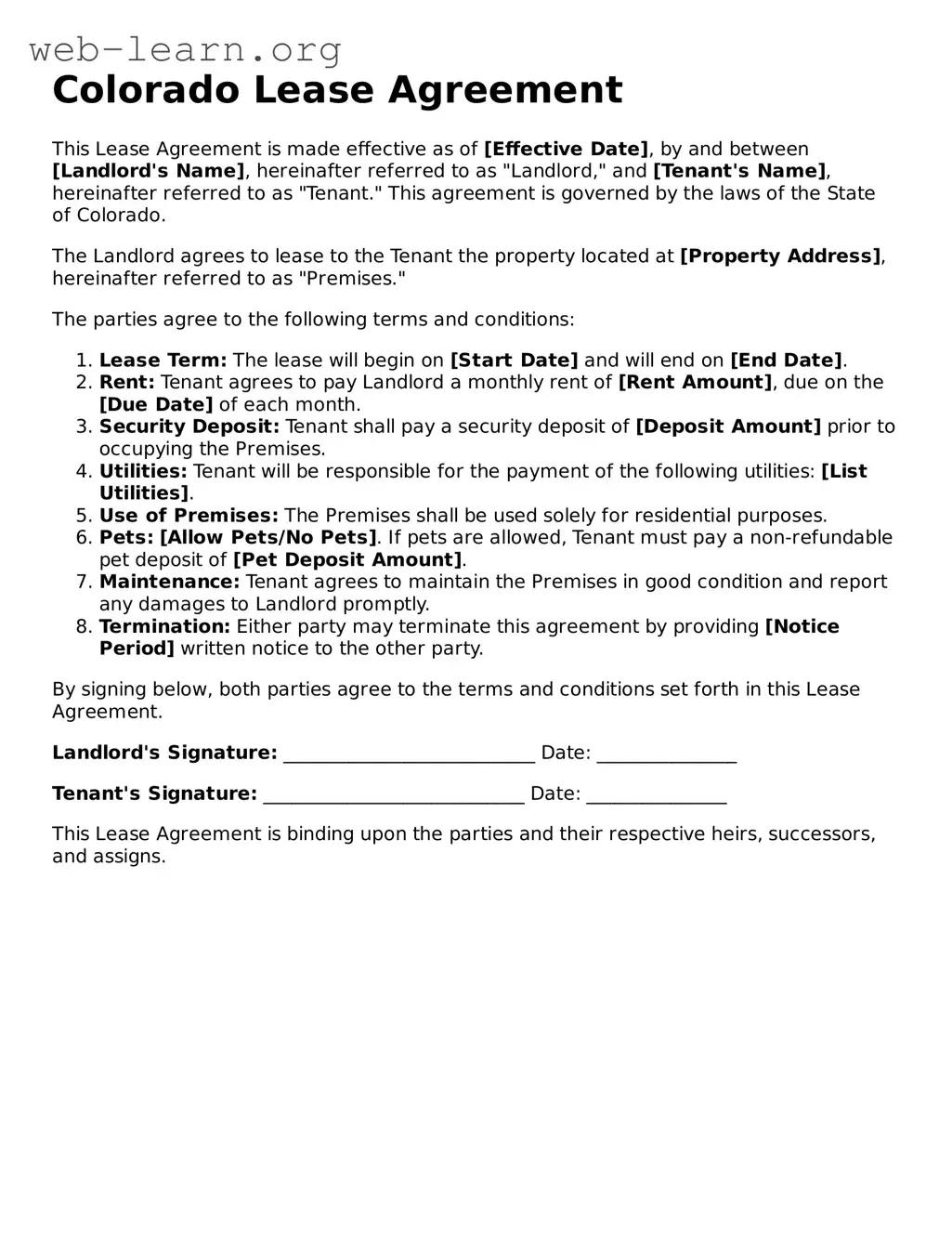
Colorado Lease Agreement
This Lease Agreement is made effective as of [Effective Date], by and between [Landlord's Name], hereinafter referred to as "Landlord," and [Tenant's Name], hereinafter referred to as "Tenant." This agreement is governed by the laws of the State of Colorado.
The Landlord agrees to lease to the Tenant the property located at [Property Address], hereinafter referred to as "Premises."
The parties agree to the following terms and conditions:
By signing below, both parties agree to the terms and conditions set forth in this Lease Agreement.
Landlord's Signature: ___________________________ Date: _______________
Tenant's Signature: ____________________________ Date: _______________
This Lease Agreement is binding upon the parties and their respective heirs, successors, and assigns.
| Fact Name | Description |
|---|---|
| Purpose | The Colorado Lease Agreement form is used to outline the terms of a rental agreement between a landlord and a tenant. |
| Governing Laws | This lease agreement is governed by the Colorado Revised Statutes, specifically Title 38, Article 12. |
| Duration | The lease can be for a fixed term or month-to-month, depending on the agreement between the parties. |
| Security Deposit | Landlords in Colorado can require a security deposit, typically not exceeding one month's rent, which must be returned within 60 days after the lease ends. |
| Disclosure Requirements | Landlords must provide certain disclosures, including information about lead-based paint if the property was built before 1978. |
Completing the Colorado Lease Agreement form requires careful attention to detail. This document outlines the terms and conditions for renting a property. Follow the steps below to ensure that all necessary information is accurately provided.
After completing the form, review all entries for accuracy. Both parties should keep a copy for their records. This step ensures that everyone understands their rights and responsibilities under the lease.
What is a Colorado Lease Agreement form?
A Colorado Lease Agreement form is a legal document that outlines the terms and conditions under which a landlord rents out property to a tenant. This agreement typically includes details such as the rental amount, duration of the lease, responsibilities of both parties, and any specific rules regarding the use of the property.
Who needs a Lease Agreement in Colorado?
Both landlords and tenants should utilize a Lease Agreement in Colorado. For landlords, this document serves to protect their property and clarify expectations. For tenants, it provides security and outlines their rights and responsibilities during the rental period.
What are the key components of a Colorado Lease Agreement?
A comprehensive Lease Agreement should include:
How long is a typical lease term in Colorado?
Lease terms in Colorado can vary widely. Common durations include one year, six months, or month-to-month agreements. The chosen term should reflect the needs and preferences of both the landlord and the tenant.
Can a Lease Agreement be modified?
Yes, a Lease Agreement can be modified. However, any changes should be documented in writing and signed by both parties to ensure that they are legally binding. Verbal agreements or informal changes are generally not enforceable.
What happens if a tenant breaks the lease?
If a tenant breaks the lease, they may be subject to penalties as outlined in the agreement. This could include losing their security deposit or being responsible for rent payments until a new tenant is found. It is important for tenants to review the lease for specific terms related to early termination.
Are there any specific laws governing Lease Agreements in Colorado?
Yes, Colorado has specific laws that govern Lease Agreements. These laws address issues such as security deposits, eviction processes, and tenant rights. It is advisable for both landlords and tenants to familiarize themselves with these regulations to ensure compliance.
What should a tenant do if they have a dispute with their landlord?
In the event of a dispute, tenants should first attempt to communicate directly with their landlord to resolve the issue amicably. If that fails, they may consider mediation or legal action, depending on the situation. Keeping thorough records of all communications and agreements can be helpful in these circumstances.
Where can I find a Colorado Lease Agreement template?
Templates for Colorado Lease Agreements can be found online through various legal websites, or they may be available at local real estate offices. It is important to ensure that any template used complies with Colorado state laws and meets the specific needs of the rental situation.
Filling out the Colorado Lease Agreement form can be a straightforward process, but many individuals make common mistakes that can lead to complications down the road. One prevalent error is failing to include all necessary parties in the agreement. It's crucial to list all tenants and landlords involved. Omitting a name can create confusion about responsibilities and rights.
Another frequent mistake is neglecting to specify the lease term. Whether it’s a month-to-month arrangement or a year-long lease, clarity is essential. Without this detail, misunderstandings may arise regarding the duration of the rental agreement, potentially leading to disputes.
People often overlook the importance of detailing the rent amount and payment terms. Simply stating the rent is not enough; it should include when payments are due and acceptable methods of payment. This ensures that both parties have a clear understanding of financial expectations.
Additionally, failing to address security deposits can lead to significant issues. The lease should clearly outline the amount of the deposit, conditions for its return, and any deductions that may be made. Without this information, tenants may feel uncertain about their rights regarding their deposit.
Another mistake involves not including maintenance responsibilities. The lease should specify who is responsible for repairs and maintenance. This clarity can prevent future disputes between landlords and tenants about who is accountable for what.
People sometimes forget to include pet policies, which can be a major source of conflict. If pets are allowed, the lease should detail any associated fees or restrictions. Conversely, if pets are not allowed, this should be clearly stated to avoid misunderstandings.
Many individuals also fail to read the entire lease before signing. It’s vital to understand all terms and conditions, as they can significantly impact the rental experience. Skimming through the document can lead to unintentional agreements to unfavorable terms.
Lastly, not keeping a copy of the signed lease is a common oversight. Both parties should retain a signed copy for their records. This ensures that everyone has access to the same information and can refer back to it if questions arise.
When entering into a rental agreement in Colorado, several forms and documents complement the Colorado Lease Agreement. These documents help clarify terms, protect rights, and ensure a smooth rental experience for both landlords and tenants. Below is a list of commonly used forms that may accompany the lease agreement.
Utilizing these forms alongside the Colorado Lease Agreement can facilitate clear communication and establish mutual understanding between landlords and tenants. Each document plays a vital role in ensuring that both parties are aware of their rights and responsibilities throughout the rental process.
Rental Agreement: Similar to a lease, a rental agreement outlines the terms under which a property is rented. It typically covers the duration of the rental, payment terms, and responsibilities of both the landlord and tenant.
Sublease Agreement: This document allows a tenant to rent out their leased property to another person. It includes similar terms as a lease, ensuring that the original tenant remains responsible to the landlord.
Property Management Agreement: This agreement is between a property owner and a management company. It details the management company's responsibilities, including tenant relations and property maintenance, akin to a lease's focus on tenant obligations.
Commercial Lease: This type of lease is for business premises. Like a residential lease, it specifies terms such as rent, duration, and responsibilities, but it is tailored for commercial use.
Month-to-Month Agreement: This agreement allows for a rental arrangement that can be terminated with short notice. It shares similarities with a lease but offers more flexibility in duration.
Lease Option Agreement: This document gives a tenant the right to purchase the property after a certain period. It combines elements of a lease with potential homeownership, detailing terms for both renting and buying.
Roommate Agreement: This is a contract between individuals sharing a rental space. It outlines responsibilities and expectations, similar to a lease, but focuses on the relationship between roommates.
When filling out the Colorado Lease Agreement form, it is important to follow certain guidelines to ensure that the process goes smoothly. Here are six things to keep in mind:
Following these guidelines can help prevent misunderstandings and disputes in the future.
When it comes to lease agreements in Colorado, there are several misconceptions that can lead to confusion for both landlords and tenants. Understanding these common myths can help you navigate the rental process more smoothly. Here’s a breakdown of nine misconceptions surrounding the Colorado Lease Agreement form:
By debunking these misconceptions, both landlords and tenants can ensure a smoother rental experience and foster a better understanding of their rights and responsibilities under Colorado law.
When filling out and using the Colorado Lease Agreement form, keep these key takeaways in mind:
By following these takeaways, both landlords and tenants can ensure a smoother leasing process and minimize potential conflicts.
Hawaii Residential Lease Agreement - It details the obligations of both parties concerning property access and privacy.
Alabama Lease Agreement - It often includes a clause about the landlord's right to increase rent after the lease term.