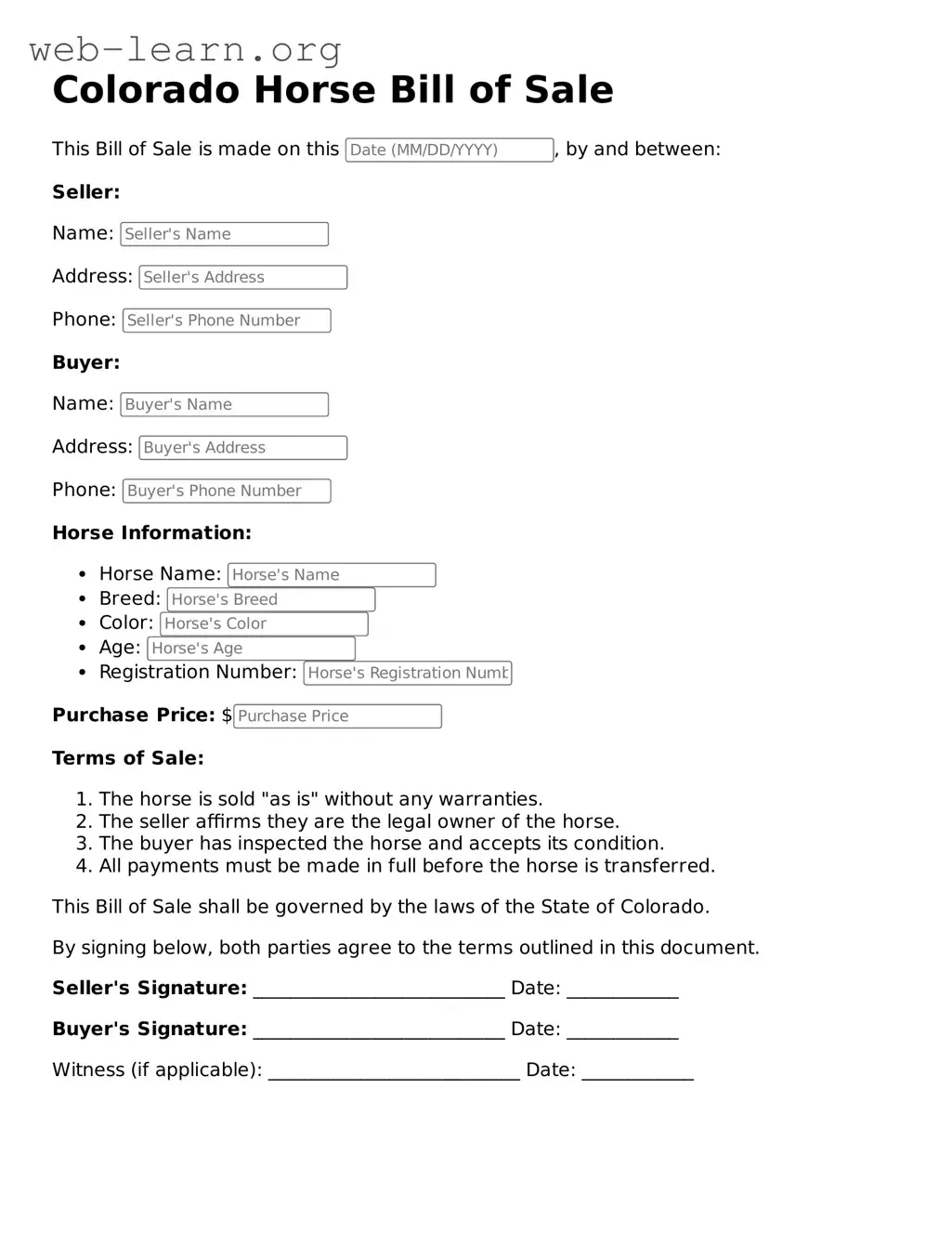
The Colorado Horse Bill of Sale form serves as an essential document in the equine community, facilitating the transfer of ownership for horses. This form captures crucial details such as the horse's description, including breed, age, and registration number, ensuring that both the seller and buyer have a clear understanding of the transaction. It also outlines the sale price and any terms agreed upon by the parties involved. Importantly, the form includes a section for both parties to sign, which formalizes the agreement and provides legal protection in case of disputes. Additional provisions may address warranties or health guarantees, further safeguarding the interests of the buyer. Understanding the components of this form is vital for anyone looking to buy or sell a horse in Colorado, as it helps ensure a smooth and transparent transaction.
Colorado Horse Bill of Sale
This Bill of Sale is made on this , by and between:
Seller:
Name:
Address:
Phone:
Buyer:
Name:
Address:
Phone:
Horse Information:
Purchase Price: $
Terms of Sale:
This Bill of Sale shall be governed by the laws of the State of Colorado.
By signing below, both parties agree to the terms outlined in this document.
Seller's Signature: ___________________________ Date: ____________
Buyer's Signature: ___________________________ Date: ____________
Witness (if applicable): ___________________________ Date: ____________
| Fact Name | Description |
|---|---|
| Purpose | The Colorado Horse Bill of Sale form serves as a legal document to transfer ownership of a horse from one party to another. |
| Governing Law | This form is governed by Colorado state law, specifically under the Uniform Commercial Code (UCC) as it pertains to the sale of goods. |
| Parties Involved | The document typically includes details about the seller and the buyer, ensuring both parties are clearly identified. |
| Horse Description | A thorough description of the horse being sold is required, including breed, age, color, and any identifying marks. |
| Purchase Price | The form must specify the purchase price agreed upon by both parties for the horse. |
| As-Is Clause | Many Colorado Horse Bill of Sale forms include an "as-is" clause, indicating that the buyer accepts the horse in its current condition. |
| Signatures | Both the seller and buyer must sign the document to validate the transaction, making it legally binding. |
| Date of Sale | The date of the transaction must be included, marking when the ownership transfer takes effect. |
| Record Keeping | It is advisable for both parties to keep a copy of the signed Bill of Sale for their records, serving as proof of the transaction. |
After gathering all necessary information, you’re ready to fill out the Colorado Horse Bill of Sale form. This process will ensure that both the buyer and seller have a clear record of the transaction, protecting everyone's interests.
Once the form is completed, keep a copy for your records and provide the buyer with their copy. This ensures that both parties have proof of the transaction.
What is a Colorado Horse Bill of Sale form?
The Colorado Horse Bill of Sale form is a legal document that serves as proof of the sale and transfer of ownership of a horse. It outlines the details of the transaction, including the buyer's and seller's information, the horse's description, and the sale price. This form is essential for establishing clear ownership and can help prevent disputes in the future.
Why is it important to use a Bill of Sale for a horse?
Using a Bill of Sale is crucial for several reasons. Firstly, it provides a written record of the transaction, which can be important for both the buyer and the seller. Secondly, it protects both parties by clearly stating the terms of the sale. Lastly, it can serve as proof of ownership if any legal issues arise later, such as disputes over the horse's ownership or health issues.
What information should be included in the form?
A complete Colorado Horse Bill of Sale should include the following information:
Do I need to have the Bill of Sale notarized?
While notarization is not required for a Horse Bill of Sale in Colorado, it is highly recommended. Having the document notarized adds an extra layer of authenticity and can help prevent disputes about the validity of the sale. It can also be beneficial if you ever need to prove ownership in the future.
Can I create my own Horse Bill of Sale?
Yes, you can create your own Horse Bill of Sale. However, it is essential to ensure that all necessary information is included and that the document complies with Colorado state laws. Using a template can help streamline the process and ensure that you do not miss any critical details.
What if I sell the horse without a Bill of Sale?
Selling a horse without a Bill of Sale can lead to complications. Without this document, it may be challenging to prove ownership if disputes arise. Additionally, the absence of a Bill of Sale can complicate the transfer of registration papers or health records. It is always advisable to have a Bill of Sale to protect both parties involved.
Is there a specific format for the Colorado Horse Bill of Sale?
While there is no specific format mandated by Colorado law, the Bill of Sale should be clear and comprehensive. It should include all pertinent information and be easy to read. Many templates are available online that can help you structure the document correctly.
How long should I keep the Bill of Sale?
It is advisable to keep the Bill of Sale for as long as you own the horse, and even after selling it. Retaining a copy can be useful for future reference, especially if any issues arise regarding ownership or the horse's health. Keeping it in a safe place ensures that you have access to it when needed.
When filling out the Colorado Horse Bill of Sale form, individuals often encounter several common pitfalls that can lead to complications down the line. One frequent mistake is the omission of essential details about the horse being sold. Buyers and sellers should ensure that they include the horse's name, breed, age, color, and any identifying markings. Without this information, the transaction may lack clarity, potentially leading to disputes.
Another mistake involves failing to accurately record the purchase price. The form should clearly state the agreed-upon amount. Inaccurate pricing can create confusion and may affect the legality of the transaction. Both parties should double-check this figure to avoid misunderstandings.
Some individuals neglect to include the date of the sale. This information is crucial, as it establishes when ownership of the horse officially changes hands. Without a date, tracking the transaction may become challenging, especially if any issues arise later.
Additionally, not providing the seller's and buyer's contact information can hinder communication. Both parties should include full names, addresses, and phone numbers. This ensures that any follow-up questions or issues can be addressed promptly and effectively.
Moreover, people often forget to sign the document. A bill of sale is not valid without the signatures of both the seller and the buyer. This step confirms that both parties agree to the terms outlined in the form. Neglecting this can render the agreement unenforceable.
Many also overlook the importance of including any warranties or guarantees. If the seller offers assurances regarding the horse's health or behavior, these should be clearly stated on the form. This protects both parties and clarifies expectations regarding the horse's condition.
In some cases, individuals may not keep a copy of the completed bill of sale. Retaining a copy is essential for record-keeping and can be beneficial if any disputes arise in the future. Both parties should ensure they have access to a signed version of the document.
Lastly, failing to check for accuracy in spelling and details can lead to complications. Errors in names, addresses, or other vital information can complicate ownership verification. It is advisable to review the form thoroughly before finalizing the sale.
When engaging in the sale or purchase of a horse in Colorado, it is important to have all necessary documentation in order to ensure a smooth transaction. Along with the Horse Bill of Sale form, several other forms and documents may be required or recommended to protect both the buyer and seller. Here are five commonly used documents in conjunction with the Horse Bill of Sale:
Having these documents prepared and properly filled out can facilitate a clear and legally sound transaction. It is always advisable to consult with a legal professional or an expert in equine law to ensure all necessary paperwork is in order before finalizing the sale.
The Horse Bill of Sale form serves as a crucial document in equine transactions. It shares similarities with several other documents used in various types of sales and transfers. Here are nine documents that resemble the Horse Bill of Sale:
Understanding these documents can help clarify the importance of the Horse Bill of Sale in equine transactions and its role in ensuring a smooth transfer of ownership.
When filling out the Colorado Horse Bill of Sale form, it is important to follow certain guidelines to ensure the process goes smoothly. Here are some do's and don'ts to consider:
When it comes to the Colorado Horse Bill of Sale form, several misconceptions can lead to confusion among buyers and sellers alike. Understanding the realities surrounding this document is essential for a smooth transaction. Here are six common misconceptions:
By dispelling these misconceptions, both buyers and sellers can navigate the process with greater confidence and clarity. A well-executed Bill of Sale serves as a crucial document in ensuring a smooth transition of ownership.
When engaging in the sale or purchase of a horse in Colorado, utilizing the Horse Bill of Sale form is essential. This document serves as a legal record of the transaction and provides protection for both parties involved. Here are key takeaways to consider:
By following these guidelines, individuals can navigate the process of buying or selling a horse with greater confidence and clarity.
Free Printable Printable Horse Bill of Sale - Buyers should verify the horse’s health history before finalizing the Horse Bill of Sale.
Horse Bill of Sale - The document can be used to establish a chain of ownership.