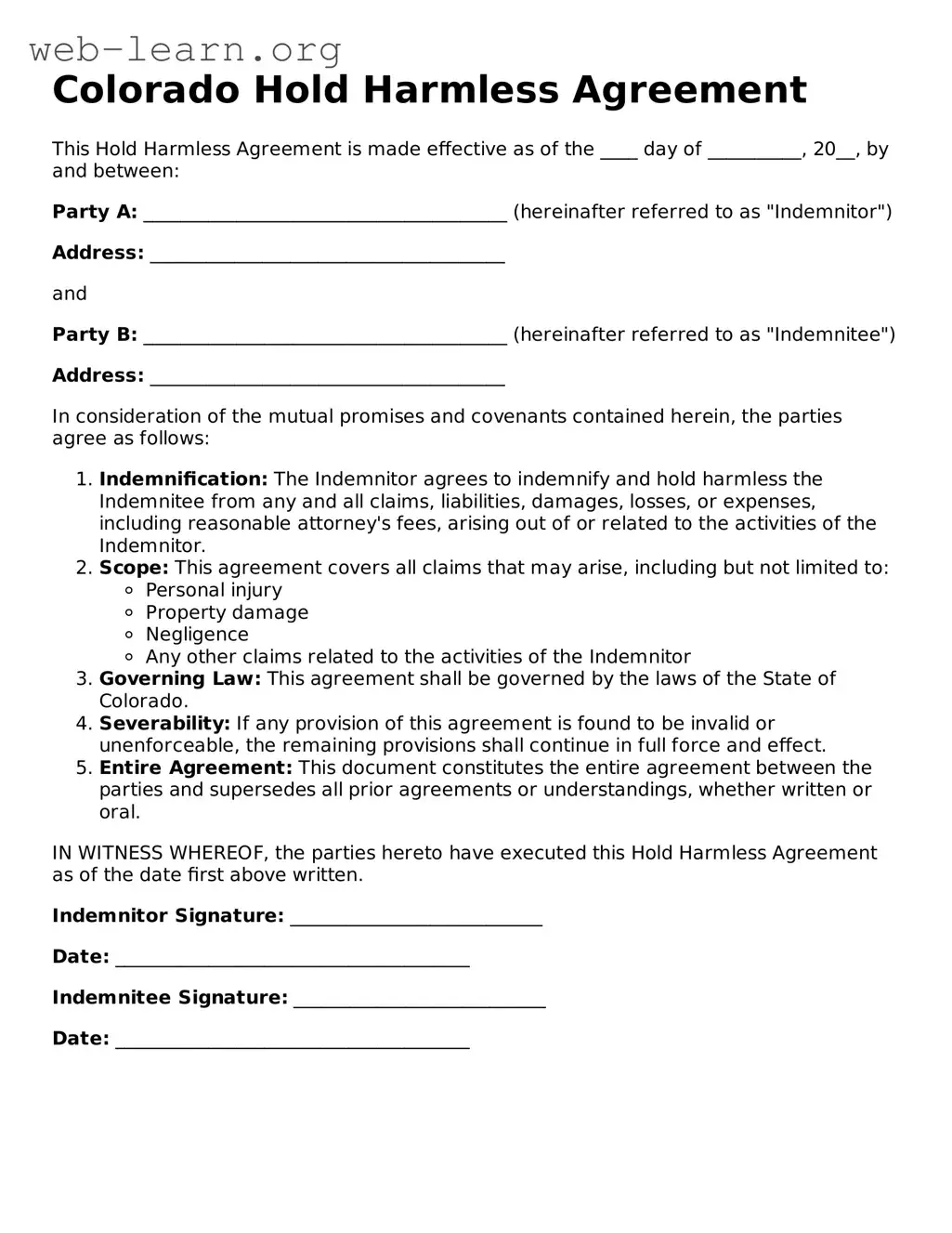
The Colorado Hold Harmless Agreement form serves as an important legal document designed to protect one party from liability for certain actions or incidents that may occur during a specified activity or event. This agreement is commonly used in various situations, such as when individuals or organizations engage in activities that could potentially lead to injury or damage, like hosting events, participating in recreational activities, or using property owned by another party. By signing this form, one party agrees to assume responsibility for any risks involved, thereby shielding the other party from legal claims or financial burdens that may arise. It typically includes essential elements such as the identification of the parties involved, a clear description of the activities covered, and specific language detailing the extent of the liability waiver. Understanding the nuances of this agreement is crucial for anyone considering its use, as it can significantly impact legal rights and responsibilities in the event of an unforeseen incident.
Colorado Hold Harmless Agreement
This Hold Harmless Agreement is made effective as of the ____ day of __________, 20__, by and between:
Party A: _______________________________________ (hereinafter referred to as "Indemnitor")
Address: ______________________________________
and
Party B: _______________________________________ (hereinafter referred to as "Indemnitee")
Address: ______________________________________
In consideration of the mutual promises and covenants contained herein, the parties agree as follows:
IN WITNESS WHEREOF, the parties hereto have executed this Hold Harmless Agreement as of the date first above written.
Indemnitor Signature: ___________________________
Date: ______________________________________
Indemnitee Signature: ___________________________
Date: ______________________________________
| Fact Name | Description |
|---|---|
| Purpose | The Colorado Hold Harmless Agreement is designed to protect one party from liability for damages or injuries that may occur during a specific activity or event. |
| Governing Law | This agreement is governed by Colorado state law, ensuring that it adheres to local legal standards and requirements. |
| Parties Involved | Typically, the agreement involves two parties: the indemnitor (the party providing protection) and the indemnitee (the party being protected). |
| Scope of Liability | The agreement usually outlines the specific activities or events for which liability is being waived, making it clear what is covered. |
| Enforceability | For the agreement to be enforceable, it must be clear, concise, and voluntarily agreed upon by both parties. |
| Limitations | Colorado law may impose limitations on the enforceability of hold harmless agreements, especially in cases of gross negligence or willful misconduct. |
| Common Uses | This form is often used in various contexts, including recreational activities, construction projects, and events where risk is involved. |
Filling out the Colorado Hold Harmless Agreement form is a straightforward process. Once completed, you will be ready to submit it as required. Follow these steps carefully to ensure accuracy.
What is a Hold Harmless Agreement?
A Hold Harmless Agreement is a legal document in which one party agrees to not hold another party responsible for any potential losses, damages, or liabilities that may arise during a specific activity or event. In Colorado, this agreement is often used in various contexts, including construction projects, rental agreements, and recreational activities.
Why would I need a Hold Harmless Agreement in Colorado?
This agreement helps protect individuals and businesses from legal claims. If you are organizing an event or providing a service, having participants sign a Hold Harmless Agreement can minimize your liability. It is particularly useful in situations where there is a risk of injury or property damage.
Who should sign a Hold Harmless Agreement?
Typically, the party providing the service or hosting the event will ask participants or clients to sign the agreement. This can include contractors, event organizers, property owners, and recreational activity providers. It is essential that all parties involved understand the terms before signing.
Are there any specific requirements for a Hold Harmless Agreement in Colorado?
While Colorado does not have strict requirements for Hold Harmless Agreements, it is important that the document is clear and specific. It should outline the scope of the agreement, the parties involved, and the activities covered. Additionally, it is advisable to have the agreement signed voluntarily and without coercion.
Can a Hold Harmless Agreement be enforced in Colorado?
Yes, a Hold Harmless Agreement can be enforced in Colorado, provided it is properly drafted and executed. Courts generally uphold these agreements as long as they are reasonable and do not violate public policy. However, certain limitations may apply, especially in cases of gross negligence or intentional misconduct.
What should I include in a Hold Harmless Agreement?
Essential elements of a Hold Harmless Agreement include:
Including these components helps ensure that the agreement is comprehensive and legally sound.
Is legal advice necessary when drafting a Hold Harmless Agreement?
While it is possible to create a Hold Harmless Agreement without legal assistance, consulting with a legal professional is highly recommended. A lawyer can help ensure that the agreement complies with Colorado law and adequately protects your interests.
Can I modify a Hold Harmless Agreement after it has been signed?
Modifying a Hold Harmless Agreement after it has been signed is generally possible, but it requires the consent of all parties involved. Any changes should be documented in writing and signed by all parties to avoid confusion or disputes later on.
When filling out the Colorado Hold Harmless Agreement form, individuals often overlook critical details that can lead to misunderstandings or legal issues. One common mistake is failing to provide accurate information about the parties involved. It is essential to clearly identify all parties to the agreement, including full names and contact information. Incomplete or incorrect details can render the agreement ineffective and complicate any potential claims.
Another frequent error is neglecting to specify the scope of the agreement. The Hold Harmless Agreement should outline the activities or situations for which one party is agreeing to assume liability. Without this clarity, it may lead to disputes over what is covered under the agreement. Parties should take the time to clearly define the terms to avoid ambiguity.
Many people also forget to read the entire document thoroughly before signing. Skimming through the terms can result in misunderstandings regarding the responsibilities and liabilities being assumed. It is crucial to understand the implications of the agreement fully. Taking the time to read and comprehend each section helps ensure that all parties are on the same page.
Lastly, individuals sometimes overlook the importance of having the agreement witnessed or notarized. While not always required, having a third party verify the signatures can add an extra layer of protection and legitimacy to the document. This step can be particularly important if the agreement is ever called into question. Ensuring that all procedural aspects are followed can help safeguard against future disputes.
A Colorado Hold Harmless Agreement is a useful tool for protecting parties from liability. However, it often works best in conjunction with other important documents. Below is a list of forms and documents that you may encounter alongside the Hold Harmless Agreement.
Using these documents together with a Colorado Hold Harmless Agreement can enhance protection and clarity for all parties involved. It's always wise to consult with a legal professional to ensure that all forms meet your specific needs and comply with local laws.
A Hold Harmless Agreement is a legal document that outlines the responsibilities of parties involved in a particular activity, ensuring that one party is protected from liability caused by the actions of another. There are several other documents that serve similar purposes. Here are four examples:
When filling out the Colorado Hold Harmless Agreement form, it’s important to approach the task with care. This document is designed to protect parties from legal liability, so accuracy is key. Here are some essential dos and don’ts to keep in mind:
By following these guidelines, you can help ensure that the Hold Harmless Agreement is filled out correctly and serves its intended purpose. Protect yourself and others by being diligent and informed throughout the process.
The Colorado Hold Harmless Agreement form is often misunderstood. Misconceptions can lead to confusion about its purpose and implications. Here are six common misconceptions:
Understanding these misconceptions is crucial for anyone considering the use of a Hold Harmless Agreement in Colorado. Clarity about its purpose and limitations can help individuals and organizations navigate potential risks more effectively.
When filling out and using the Colorado Hold Harmless Agreement form, it is essential to keep several key points in mind:
What Is a Hold Harmless Agreement - The agreement can protect against claims arising from accidents or injuries.
Are Hold Harmless Agreements Enforceable - The document serves as a clear record of the parties' intentions regarding liability.
What Is a Hold Harmless Agreement - Hold Harmless Agreements can be reviewed periodically to ensure they remain relevant.
Hold Harmless Agreement - It allows parties to engage in activities with a clear understanding of liability issues.