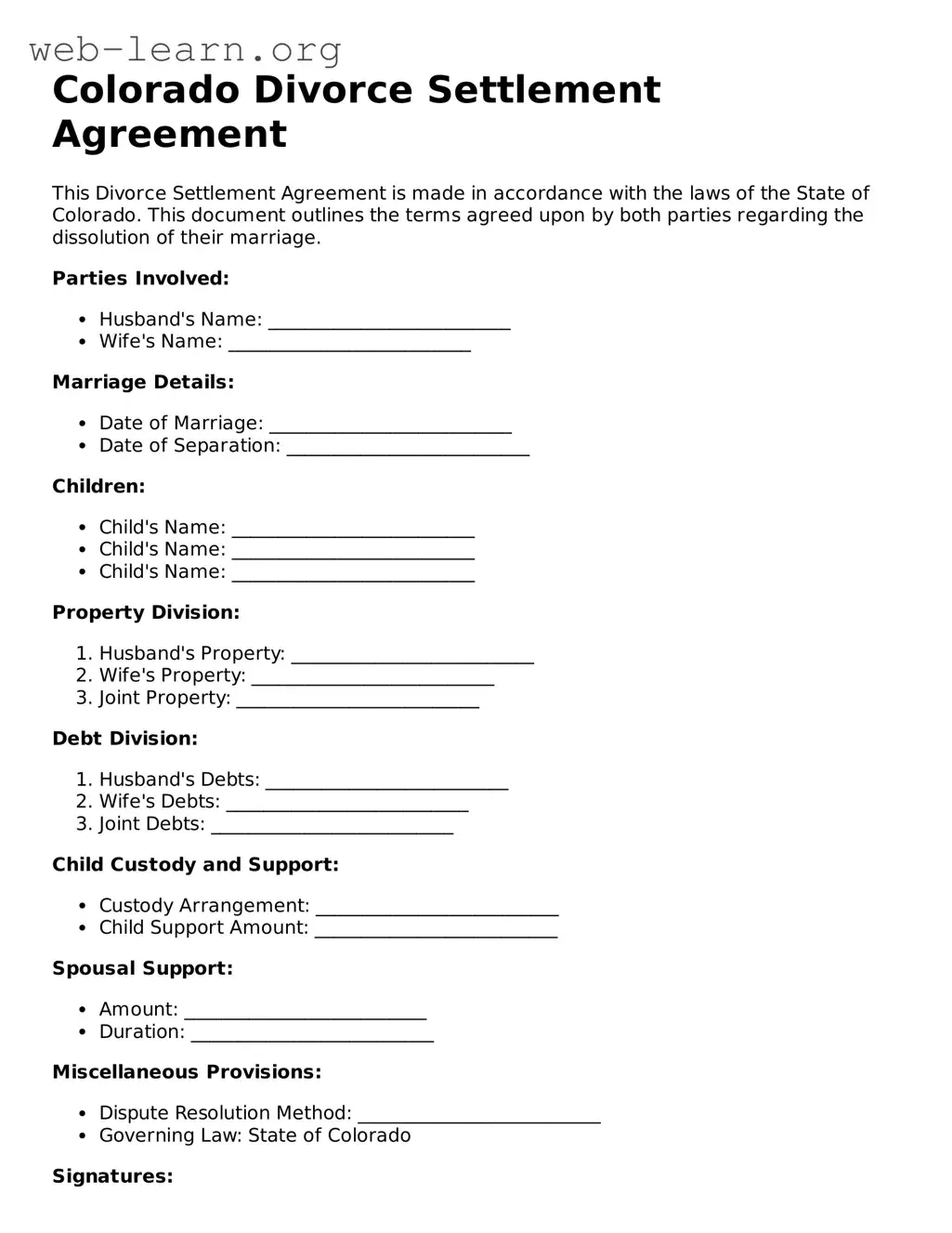
The Colorado Divorce Settlement Agreement form serves as a crucial document for couples navigating the dissolution of their marriage. This form outlines the terms agreed upon by both parties regarding the division of assets and debts, child custody arrangements, and support obligations. It provides a framework for how property will be divided, ensuring that both individuals understand their rights and responsibilities. Additionally, it addresses matters related to child support and visitation, which are vital for families with children. By detailing these agreements, the form helps prevent future disputes and provides clarity for both parties. Completing this form accurately is essential for a smooth divorce process, as it must be submitted to the court for approval. Understanding the components of this agreement can significantly ease the emotional and logistical challenges often associated with divorce proceedings.
Colorado Divorce Settlement Agreement
This Divorce Settlement Agreement is made in accordance with the laws of the State of Colorado. This document outlines the terms agreed upon by both parties regarding the dissolution of their marriage.
Parties Involved:
Marriage Details:
Children:
Property Division:
Debt Division:
Child Custody and Support:
Spousal Support:
Miscellaneous Provisions:
Signatures:
Husband's Signature: __________________________ Date: _______________
Wife's Signature: __________________________ Date: _______________
This agreement is intended to be a fair and equitable resolution of the issues arising from the divorce. Both parties acknowledge that they have had the opportunity to seek independent legal advice.
| Fact Name | Description |
|---|---|
| Purpose | The Colorado Divorce Settlement Agreement form outlines the terms agreed upon by both spouses regarding the division of assets, debts, and any child-related issues during a divorce. |
| Governing Law | This form is governed by Colorado Revised Statutes, specifically Title 14, Article 10, which addresses divorce and dissolution of marriage. |
| Mutual Agreement | Both parties must sign the form to indicate their mutual consent to the terms laid out in the agreement. |
| Filing Requirement | The completed and signed agreement must be submitted to the court as part of the divorce proceedings for it to be legally recognized. |
| Modification | Once filed, the agreement can be modified only by mutual consent of both parties, typically requiring a formal court process. |
After obtaining the Colorado Divorce Settlement Agreement form, you will need to fill it out carefully. This form is essential for outlining the terms of your divorce settlement. Make sure to have all relevant information on hand to ensure a smooth process.
Once you have completed the form, you will need to file it with the appropriate court. Be sure to check for any additional documents that may be required during the filing process.
What is a Colorado Divorce Settlement Agreement?
A Colorado Divorce Settlement Agreement is a legal document that outlines the terms of a divorce between two parties. It details how assets, debts, child custody, and support will be divided. This agreement is crucial as it helps to ensure that both parties are on the same page and can prevent future disputes.
Who needs a Divorce Settlement Agreement?
Anyone going through a divorce in Colorado should consider creating a Divorce Settlement Agreement. It is particularly important for couples with children, shared property, or significant assets. Having a clear agreement can help facilitate a smoother divorce process and provide clarity for both parties.
How do I create a Divorce Settlement Agreement?
Creating a Divorce Settlement Agreement involves several steps:
It may be beneficial to consult with a legal professional to ensure that the agreement complies with Colorado law.
Is the Divorce Settlement Agreement legally binding?
Yes, once both parties sign the Divorce Settlement Agreement and it is approved by the court, it becomes legally binding. This means that both parties are required to adhere to its terms. Failing to comply can result in legal consequences.
Can I modify the Divorce Settlement Agreement after it is signed?
Yes, modifications can be made to the Divorce Settlement Agreement after it is signed, but both parties must agree to the changes. It is advisable to document any modifications formally and have them signed by both parties to avoid future disputes.
What happens if we cannot reach an agreement?
If the parties cannot reach an agreement, the case may go to court. A judge will then make decisions regarding asset division, custody, and support based on the evidence presented. This process can be lengthy and may result in outcomes that neither party prefers.
Do I need a lawyer to draft a Divorce Settlement Agreement?
While it is not legally required to have a lawyer, consulting with one can be very beneficial. A lawyer can help ensure that the agreement is fair, comprehensive, and legally sound. They can also provide guidance on any potential pitfalls and assist with negotiations.
Where can I find a Colorado Divorce Settlement Agreement form?
Colorado Divorce Settlement Agreement forms can be found online through various legal websites, or you may obtain them from the Colorado Judicial Branch website. Additionally, local courthouses may have forms available. Always ensure that you are using the most current version of the form.
Filling out the Colorado Divorce Settlement Agreement form can be a daunting task. Many people make mistakes that can lead to complications down the road. One common error is not fully understanding the terms of the agreement. Each section is important, and overlooking even a small detail can have significant consequences. Take your time to read through the entire document, ensuring you grasp what each clause means.
Another frequent mistake is failing to provide complete information. Whether it’s financial details or personal information, every piece of data is crucial. Incomplete forms can lead to delays in the divorce process. Double-check all entries to ensure nothing is missing. This attention to detail can save you from unnecessary complications later.
Many individuals also underestimate the importance of accurate financial disclosures. It's vital to list all assets and debts honestly. Hiding information or providing inaccurate figures can lead to legal repercussions. Remember, transparency is key in divorce proceedings. Being upfront about your financial situation fosters trust and can ease the negotiation process.
Another mistake is neglecting to address child custody and support arrangements adequately. If children are involved, it’s essential to outline custody details clearly. Vague terms can lead to misunderstandings and conflicts in the future. Make sure to discuss and agree upon these arrangements thoroughly before finalizing the agreement.
People often overlook the necessity of including a comprehensive property division. Failing to specify how assets will be divided can lead to disputes later on. It’s important to be clear about who gets what. Consider creating a list of all marital property and debts to avoid ambiguity.
Additionally, many individuals rush through the signature process. Signing without fully understanding the implications of the agreement can be a costly mistake. Take a moment to review the entire document, ensuring you are comfortable with every aspect before signing. It’s your right to seek clarification on any points that are unclear.
Another common error is not considering future changes. Life circumstances can shift, and it’s wise to include provisions for modifications in the agreement. Think about how changes in income, employment, or living situations might affect child support or custody arrangements. Planning for the future can prevent complications later on.
Lastly, some people fail to seek legal advice. While it may seem tempting to navigate the process alone, having a knowledgeable professional can provide invaluable guidance. An attorney can help you understand your rights and obligations, ensuring that your interests are protected. Investing in legal advice can save you time, stress, and potential financial loss.
When navigating a divorce in Colorado, several documents often accompany the Divorce Settlement Agreement. Each of these forms plays a crucial role in ensuring that all aspects of the divorce are addressed properly. Below is a list of common documents that may be needed.
Having these documents prepared and organized can significantly streamline the divorce process. Ensure that all forms are completed accurately to avoid delays and complications.
When filling out the Colorado Divorce Settlement Agreement form, it's important to approach the process thoughtfully. Here are some key do's and don'ts to keep in mind:
By following these guidelines, you can help ensure that your Divorce Settlement Agreement is completed correctly and efficiently.
When navigating the divorce process in Colorado, many individuals encounter the Divorce Settlement Agreement form. Unfortunately, several misconceptions can lead to confusion and potential issues. Here are seven common misconceptions about this important document:
Understanding these misconceptions can help individuals approach the divorce process with clarity and confidence. It is essential to take the time to comprehend the significance of the Divorce Settlement Agreement and to seek guidance when necessary.
When filling out and using the Colorado Divorce Settlement Agreement form, it's essential to keep several key points in mind to ensure a smooth process. Here are some important takeaways:
Taking these steps can help ensure that your Divorce Settlement Agreement is properly prepared and submitted, facilitating a more efficient divorce process.
How Long Do You Have to Be Married to Get Half of Everything in Illinois - The form can help ensure that both parties are on the same page.
Is Indiana a Community Property State - The agreement can include clauses for dispute resolution, such as mediation.
Divorce Templates - Ultimately, the Divorce Settlement Agreement is about creating a fair path forward for both parties involved.