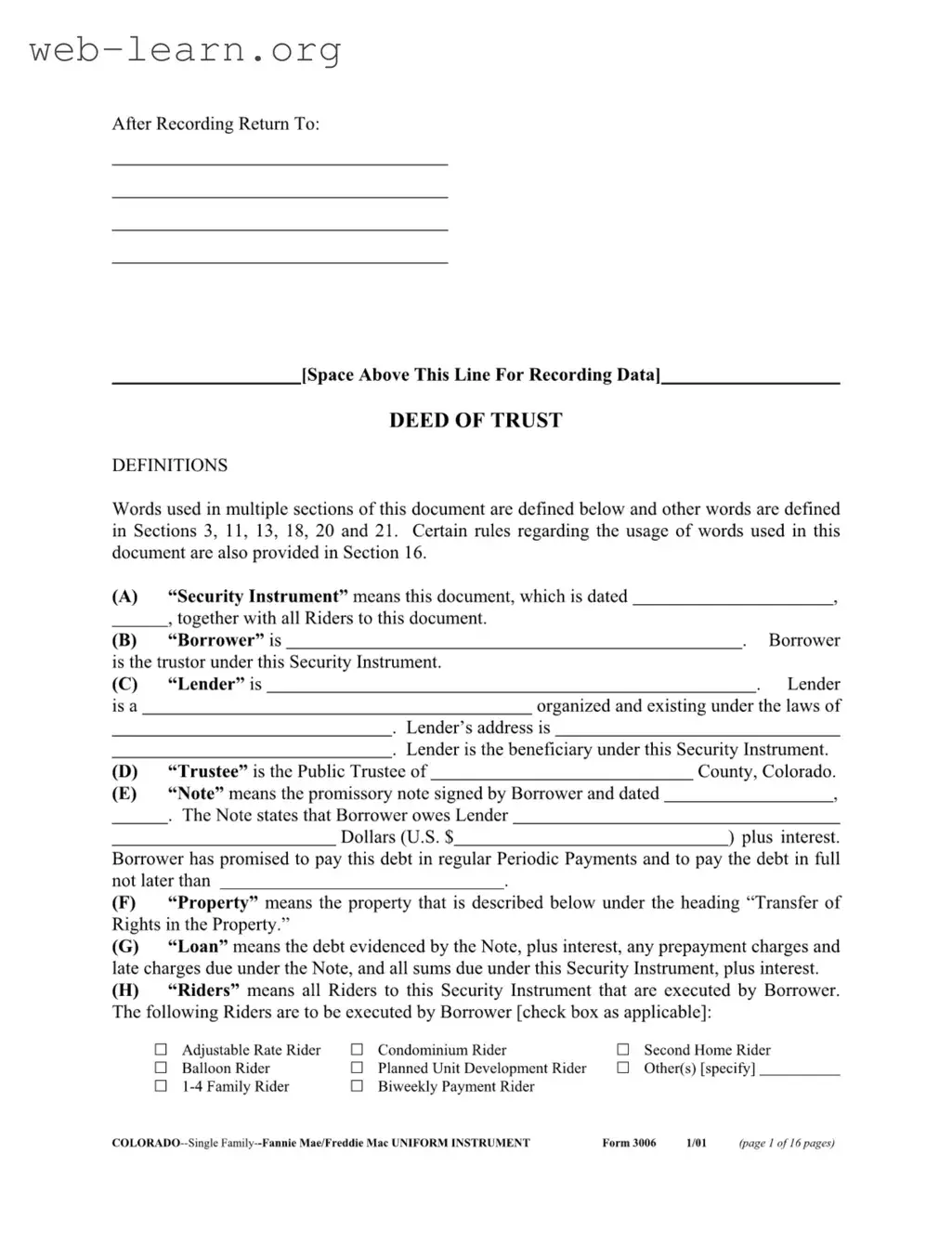
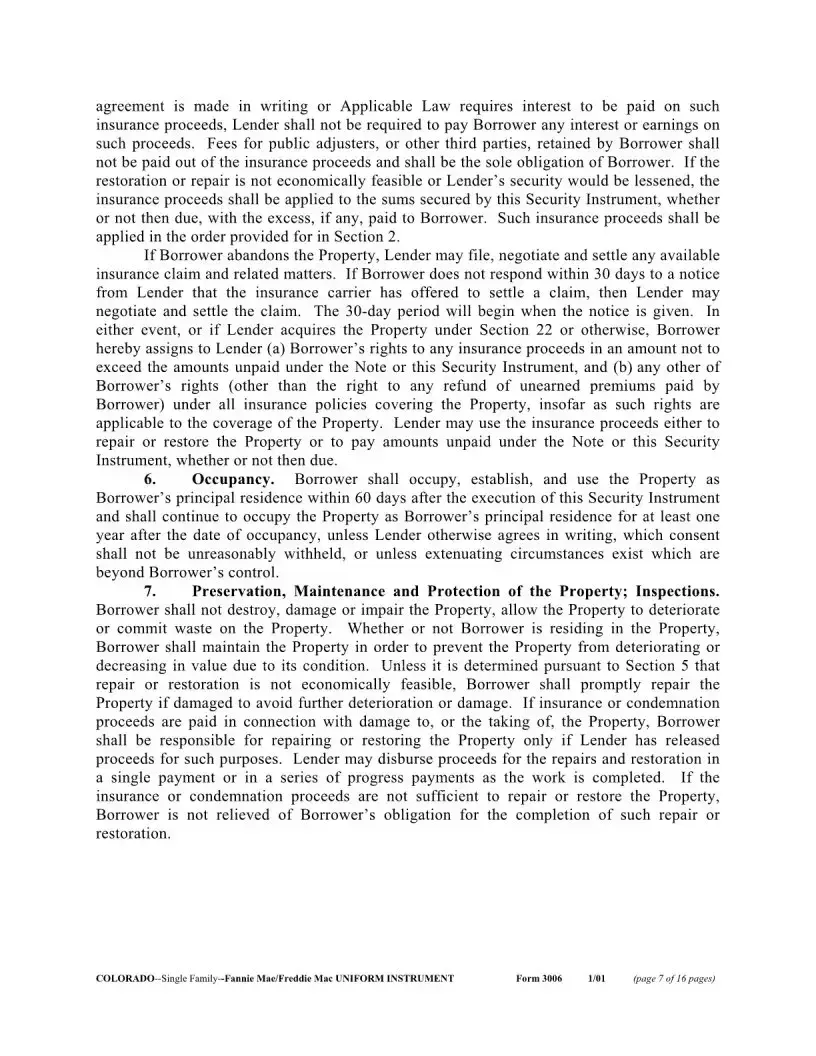
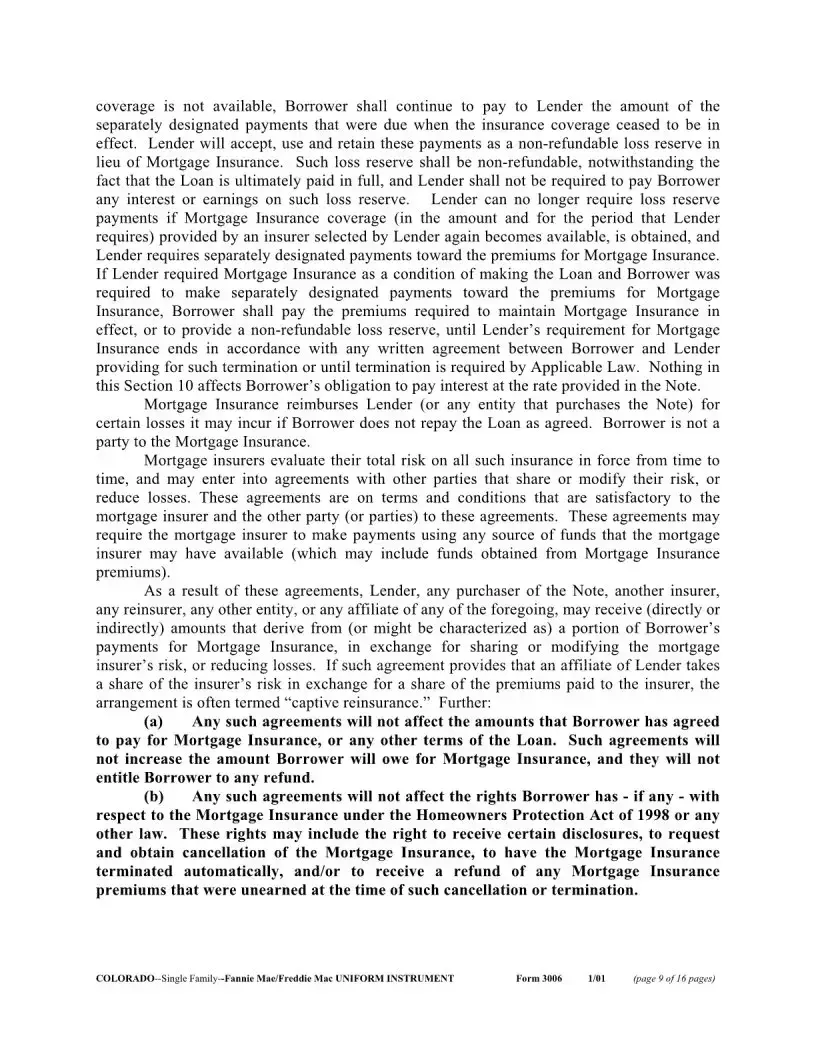
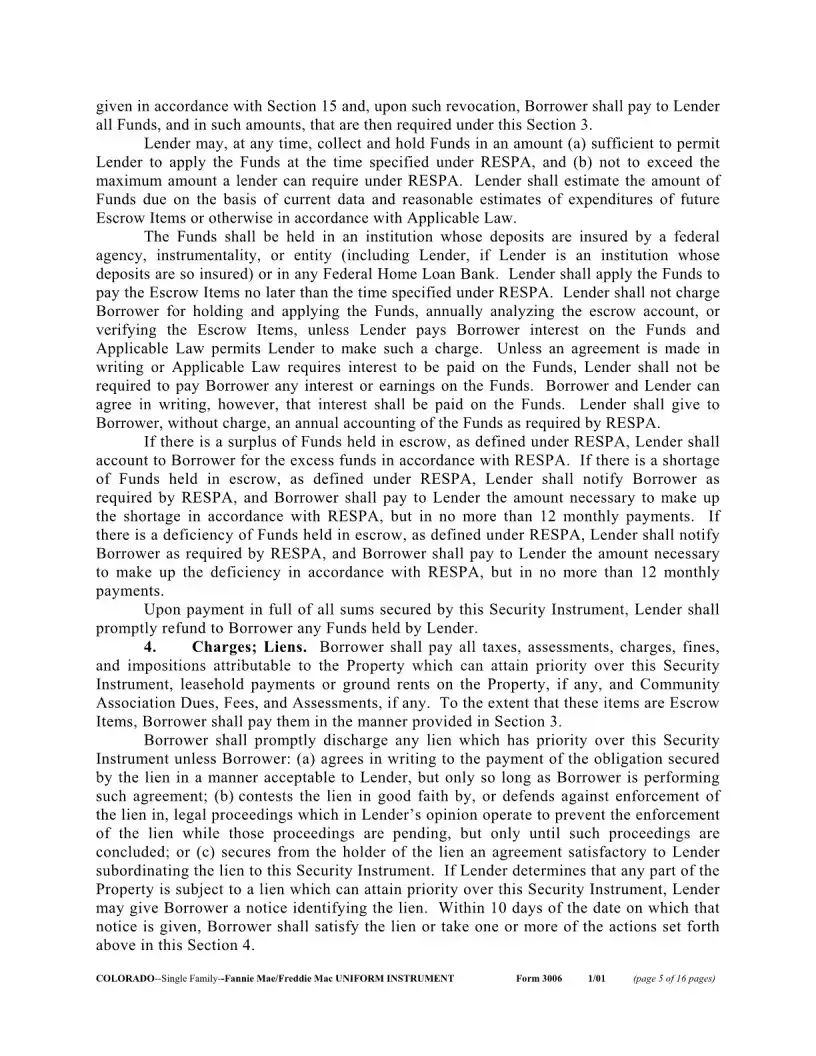
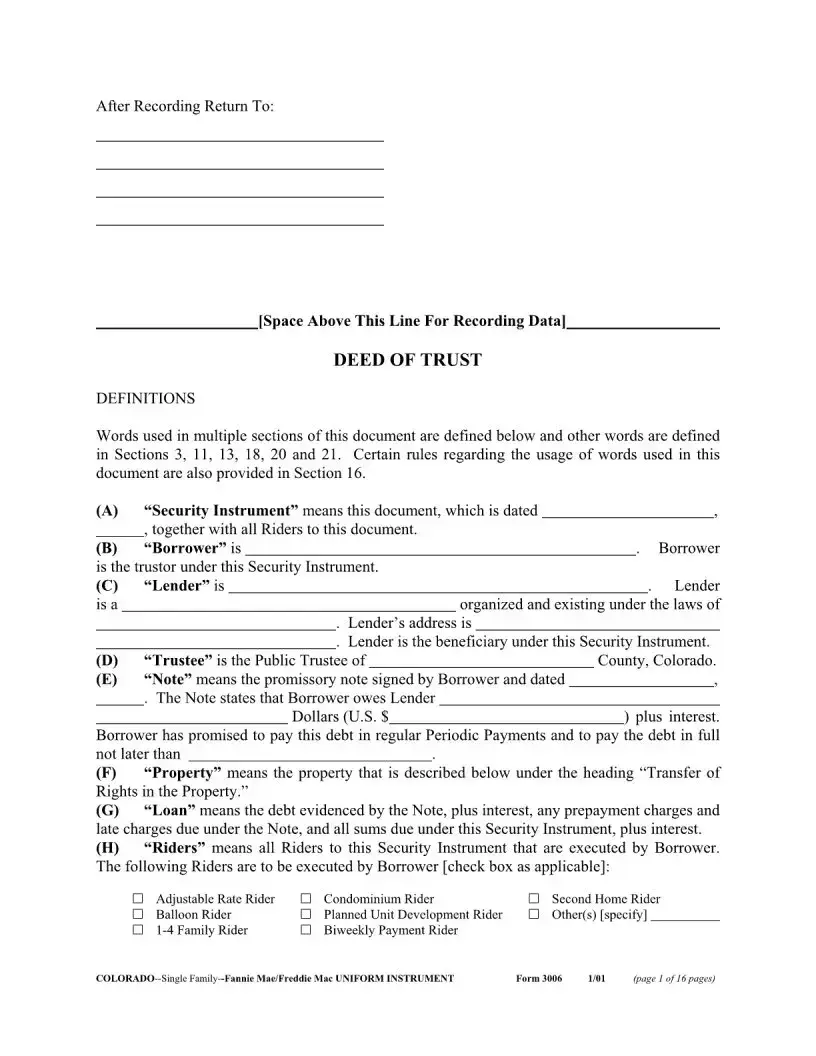
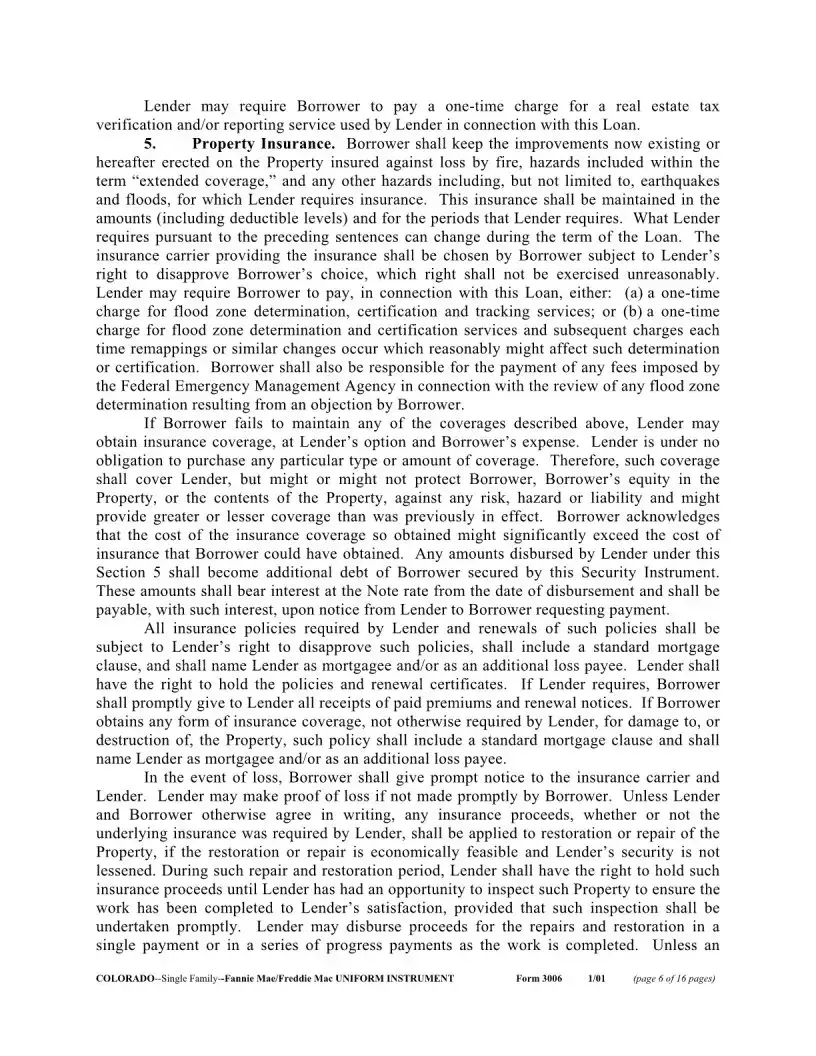
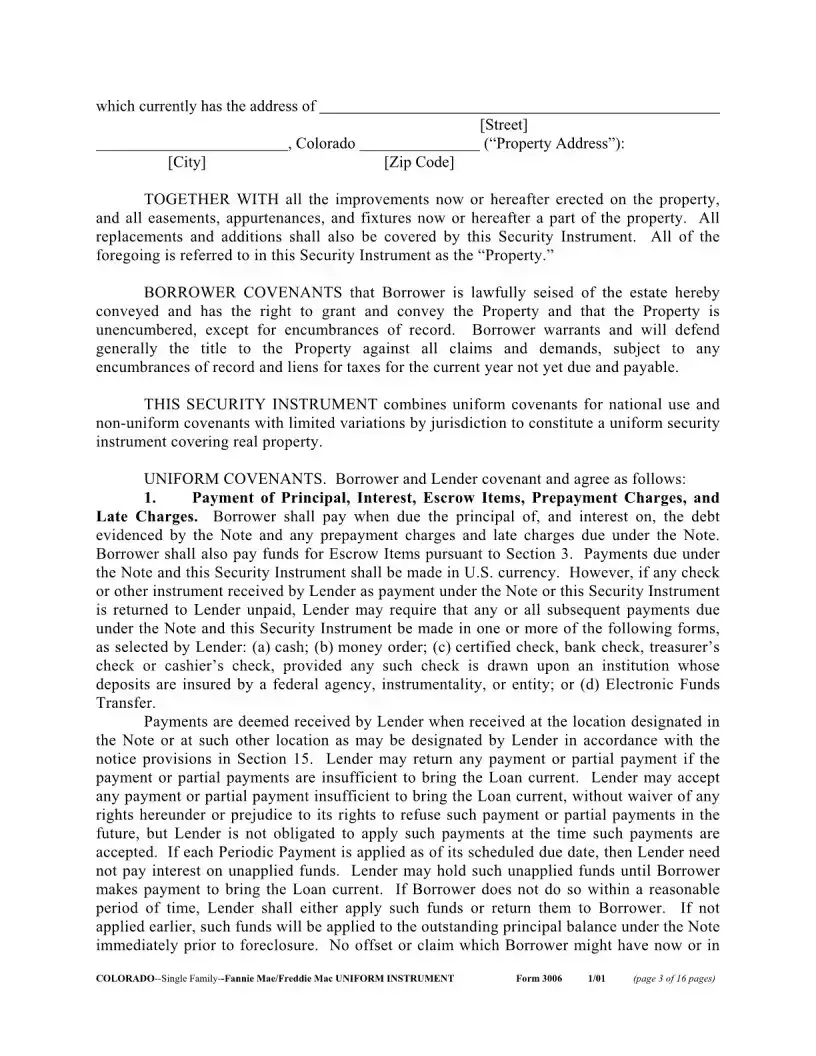
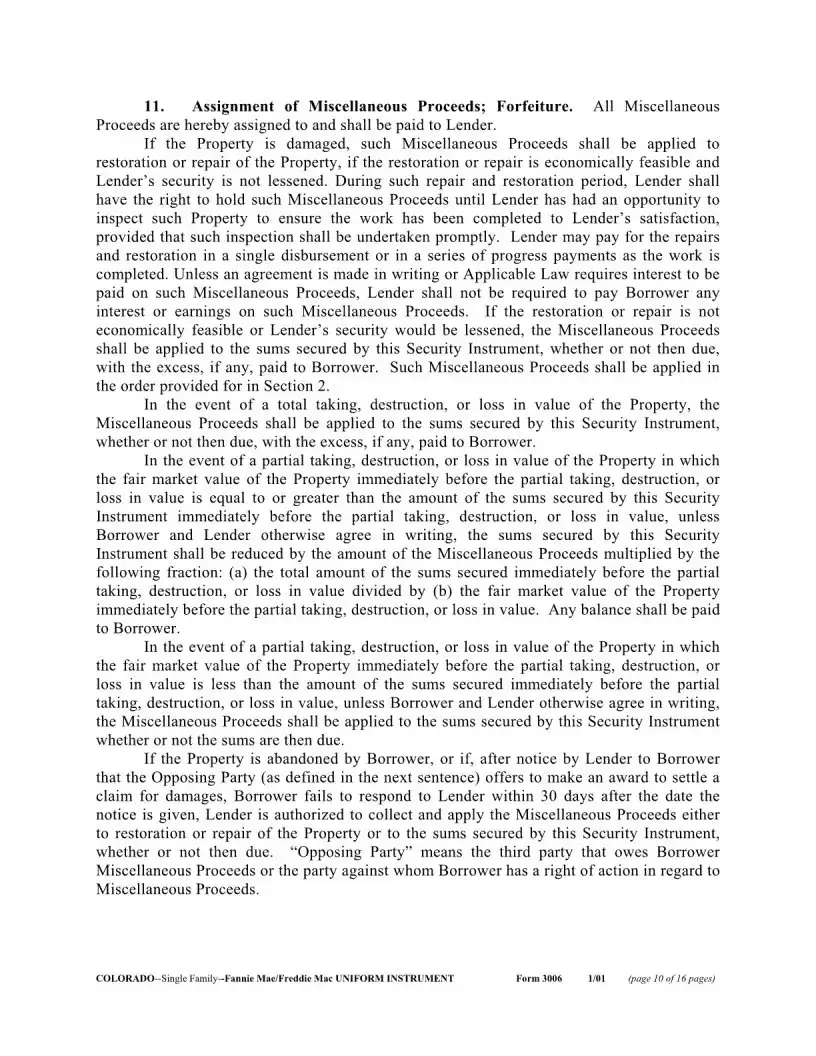
The Colorado 3006 form is a crucial document in the realm of real estate transactions, specifically serving as a deed of trust. This form outlines the agreement between the borrower, lender, and trustee, establishing the legal framework for securing a loan against real property. Key elements of the form include definitions of important terms such as "Borrower," "Lender," and "Trustee," which clarify the roles of each party involved in the transaction. The form also details the property being financed, including its address and any improvements or fixtures that may be included. Additionally, it addresses the obligations of the borrower, such as making timely payments of principal, interest, and any applicable fees. Various riders may be included, allowing for specific conditions or agreements related to the loan. The Colorado 3006 form ensures compliance with federal and state laws, particularly the Real Estate Settlement Procedures Act (RESPA), which governs certain aspects of mortgage lending. By clearly outlining the rights and responsibilities of all parties, this form serves as a vital tool for protecting both the lender's interests and the borrower's rights throughout the life of the loan.
| Fact Name | Description |
|---|---|
| Form Purpose | The Colorado 3006 form is a Deed of Trust used to secure a loan by creating a lien on real property in Colorado. |
| Governing Law | This form is governed by Colorado state law, specifically the Colorado Revised Statutes Title 38, Article 30. |
| Borrower Definition | The term "Borrower" refers to the trustor under the Security Instrument, who is responsible for repaying the loan. |
| Lender Definition | The "Lender" is the entity providing the loan, and it holds the beneficial interest in the Security Instrument. |
| Trustee Role | The "Trustee" is typically the Public Trustee of the county where the property is located, acting on behalf of the Lender. |
| Property Description | The "Property" is defined as the real estate described in the document, which serves as collateral for the loan. |
| Riders Inclusion | The form allows for various Riders to be included, such as Adjustable Rate Rider or Condominium Rider, which modify the terms of the loan. |
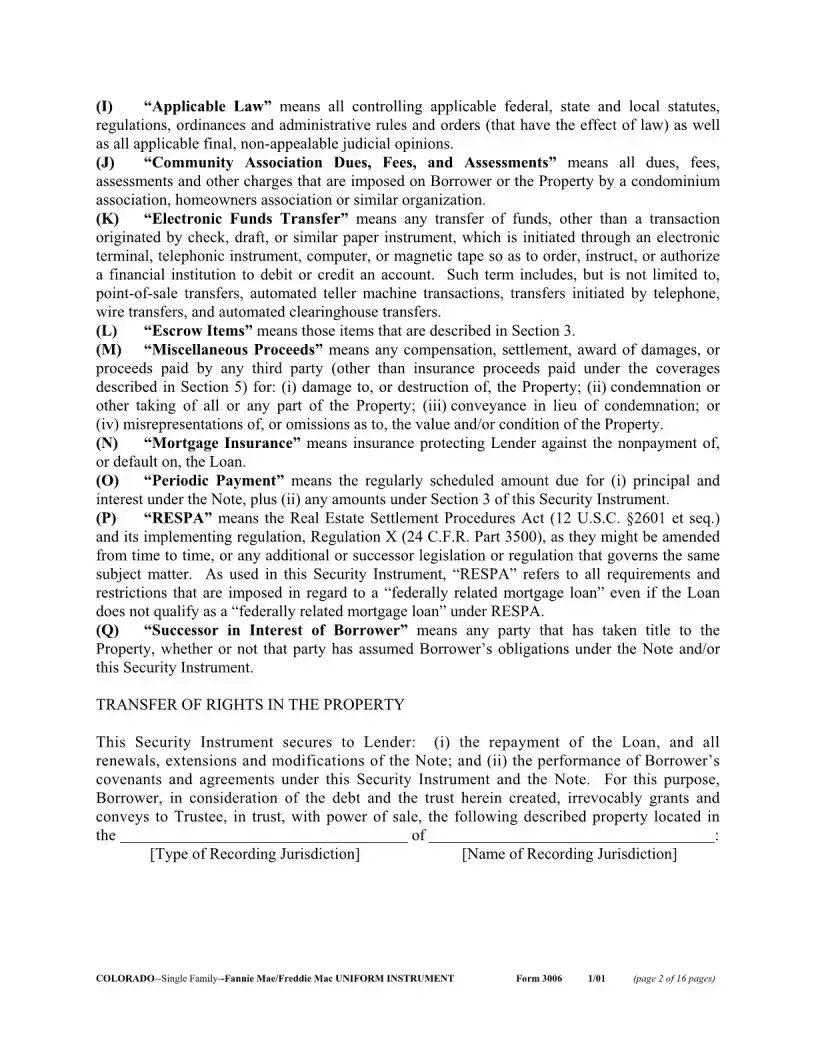
| RESPA Compliance | The form adheres to the Real Estate Settlement Procedures Act (RESPA), ensuring transparency in the loan process. |
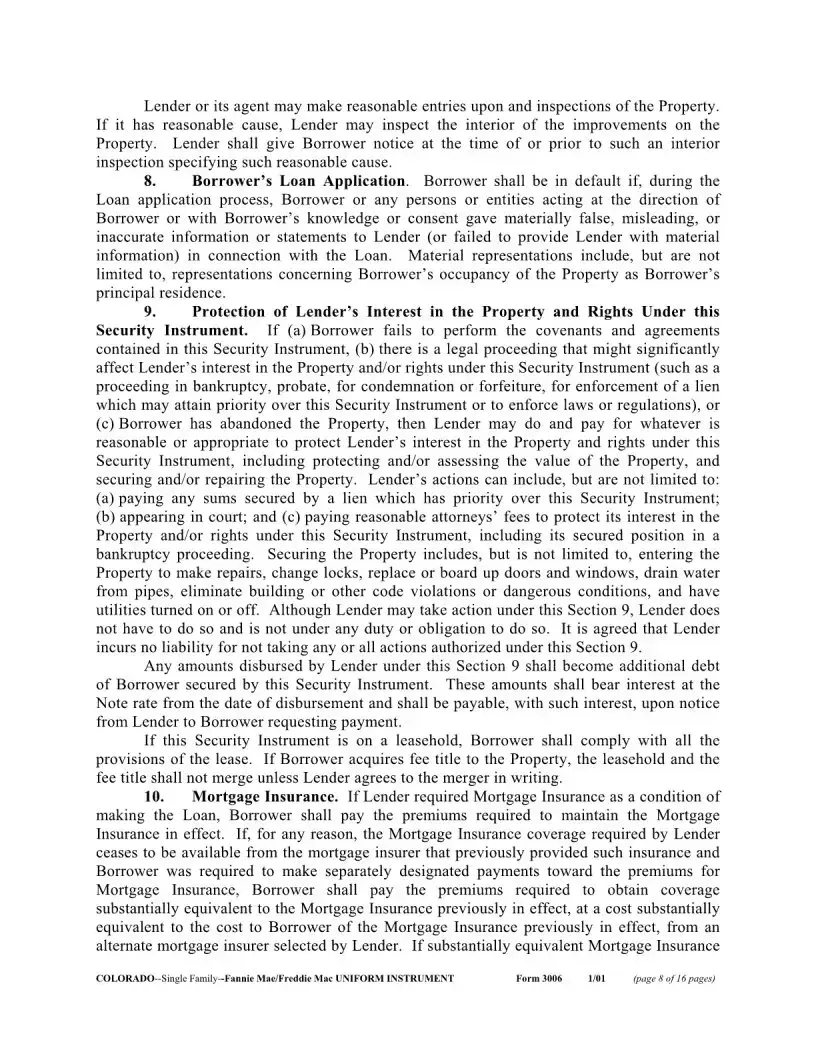
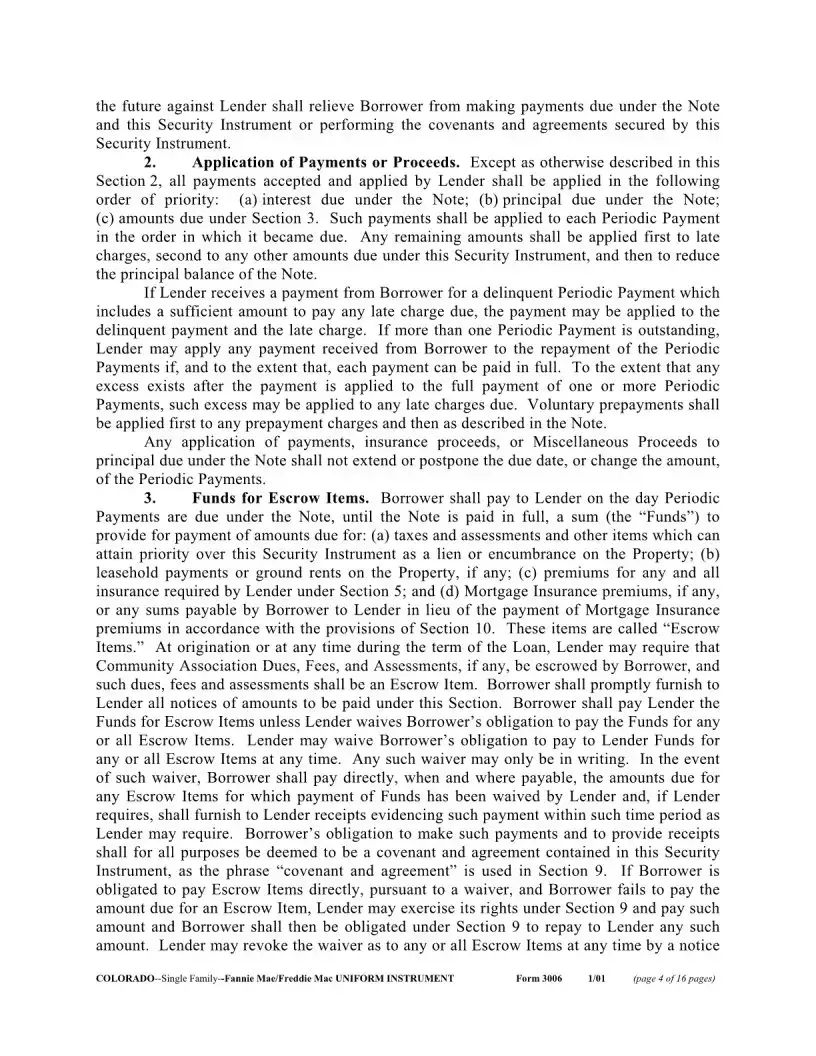
| Periodic Payments | Borrowers are required to make regular Periodic Payments that include principal and interest, as outlined in the Note. |
| Transfer of Rights | The Security Instrument secures the Lender's rights to repayment of the loan and the performance of the Borrower's obligations. |
Filling out the Colorado 3006 form requires careful attention to detail. This form is crucial for establishing the terms of a deed of trust. Ensure you have all necessary information ready before you begin. Follow the steps outlined below to complete the form accurately.
After completing the form, review all entries for accuracy. Once verified, submit the form to the appropriate recording office in Colorado. Keep a copy for your records.
What is the Colorado 3006 form?
The Colorado 3006 form is a legal document known as a Deed of Trust. It secures a loan by granting the lender a security interest in the property being financed. This form is essential for real estate transactions in Colorado, ensuring that both the borrower and lender have clear agreements regarding the loan terms and property rights.
Who are the parties involved in the Colorado 3006 form?
There are typically three parties involved in the Colorado 3006 form:
What does "Property" refer to in the form?
The term "Property" in the Colorado 3006 form refers to the real estate being financed. This includes not just the land, but also any improvements, fixtures, and easements associated with the property. The specific address and legal description of the property are included in the document.
What are "Riders" in the context of the Colorado 3006 form?
Riders are additional provisions or amendments that can be attached to the Deed of Trust. They address specific terms or conditions related to the loan or property. Examples include an Adjustable Rate Rider or a Condominium Rider. Borrowers may need to check applicable boxes to indicate which riders apply to their situation.
What are the borrower's obligations under the Colorado 3006 form?
The borrower has several key obligations, including:
What happens if the borrower defaults on the loan?
If the borrower defaults, the lender has the right to initiate foreclosure proceedings. This process allows the lender to recover the owed amount by selling the property. The trustee plays a crucial role in this process, as they hold the legal title to the property until the loan is fully paid.
What is "RESPA" and how does it relate to the Colorado 3006 form?
RESPA stands for the Real Estate Settlement Procedures Act. It regulates the closing process for federally related mortgage loans. The Colorado 3006 form must comply with RESPA requirements, ensuring that borrowers receive necessary disclosures and protections during the loan process.
Can the terms of the Colorado 3006 form be modified after signing?
Yes, the terms can be modified, but any changes must be documented through a formal amendment or modification agreement. Both parties must agree to the changes, and they should be recorded to ensure clarity and enforceability.
How can I obtain a copy of the Colorado 3006 form?
The Colorado 3006 form can typically be obtained from local county clerks' offices, legal document providers, or online legal resources. It is crucial to ensure that you are using the most current version of the form, as laws and regulations may change.
Filling out the Colorado 3006 form can be a straightforward process, but many people make common mistakes that can lead to delays or complications. One frequent error is failing to provide complete information in the designated fields. For instance, leaving out the date or the names of the Borrower and Lender can create confusion and may require the form to be redone.
Another mistake involves incorrect property descriptions. The form requires precise details about the property, including the address and legal description. Omitting this information or providing inaccurate details can result in legal issues down the line. It is essential to double-check that all property information is accurate and complete.
Many individuals also overlook the importance of signing the form. A signature is required from all parties involved, including the Borrower and the Lender. If any signature is missing, the form may be deemed invalid. Thus, it is crucial to ensure that all required signatures are present before submission.
Additionally, people often neglect to check the appropriate boxes for Riders that apply to their situation. The form includes various Riders that may affect the terms of the loan. Failing to indicate which Riders are applicable can lead to misunderstandings about the obligations and rights of the parties involved.
Inaccurate financial details represent another common pitfall. Borrowers should ensure that the loan amount and interest rates are correctly stated. Mistakes in these figures can have significant financial implications and may result in delays in processing the form.
Furthermore, individuals frequently misunderstand the term "Escrow Items." It is vital to specify any escrow items accurately, as these can include taxes and insurance. Misrepresentation or omission of these items can lead to future disputes and complications.
People also tend to overlook the importance of reviewing the entire form before submission. A thorough review can help identify any missing information or errors. Taking the time to read through the document can save significant time and hassle later on.
Another common mistake is not keeping a copy of the completed form. It is essential to retain a copy for personal records. This can provide clarity and serve as a reference if any questions or issues arise in the future.
Lastly, individuals sometimes fail to consult with a professional when needed. While the form is designed for self-completion, seeking assistance can help ensure accuracy and compliance with all legal requirements. This can be particularly beneficial for those unfamiliar with the process.
The Colorado 3006 form, commonly known as the Deed of Trust, is a crucial document in real estate transactions. It outlines the relationship between the borrower, lender, and trustee while securing a loan with the property as collateral. Alongside this form, several other documents are often required to ensure a comprehensive understanding of the terms and obligations involved in the transaction. Below are five such documents that are frequently used in conjunction with the Colorado 3006 form.
Understanding these documents can greatly enhance the clarity of the real estate transaction process. Each plays a vital role in protecting the interests of both the borrower and lender, ensuring that all parties are aware of their rights and responsibilities. Familiarity with these forms fosters a smoother transaction and helps prevent potential disputes down the line.
The Colorado 3006 form, which is a deed of trust, shares similarities with several other important documents in real estate transactions. Here are six documents that are comparable to the Colorado 3006 form, along with explanations of how they are similar:
When filling out the Colorado 3006 form, it's important to follow certain guidelines to ensure accuracy and compliance. Here are four things you should and shouldn't do:
Understanding the Colorado 3006 form is essential for both borrowers and lenders. However, several misconceptions can lead to confusion. Here are four common misconceptions:
While it is a type of mortgage document, the Colorado 3006 form is specifically a Deed of Trust. This means it involves three parties: the borrower, the lender, and the trustee. It serves to secure the loan against the property, which is a critical distinction.
In reality, the Riders are essential components of the Colorado 3006 form. They detail specific terms and conditions that may apply to the loan, such as adjustable rates or specific property types. Ignoring these can lead to misunderstandings about the loan's obligations.
The term "Trustee" in the Colorado 3006 form typically refers to the Public Trustee of the county. This is a government official responsible for overseeing the trust and ensuring the proper execution of the Deed of Trust. This distinction is crucial for understanding the role of the Trustee in the process.
This form is subject to various federal regulations, including the Real Estate Settlement Procedures Act (RESPA). Compliance with RESPA is mandatory, even if the loan does not qualify as a federally related mortgage loan. This means borrowers and lenders must be aware of their rights and obligations under these laws.