Entering college often means sharing a living space with someone new, which can be both exciting and challenging. To foster a positive living environment, many students turn to the College Roommate Agreement form. This document serves as a helpful tool for roommates to discuss and establish expectations regarding various aspects of their shared life. Key areas covered in the agreement include guidelines for cleanliness, quiet hours, and guest policies. By openly addressing these topics, roommates can prevent misunderstandings and conflicts down the line. Additionally, the form can include provisions for shared responsibilities, such as dividing household chores and managing shared expenses. Ultimately, the College Roommate Agreement is about creating a respectful and harmonious living situation, allowing both individuals to thrive academically and socially during their college years.
College Roommate Agreement
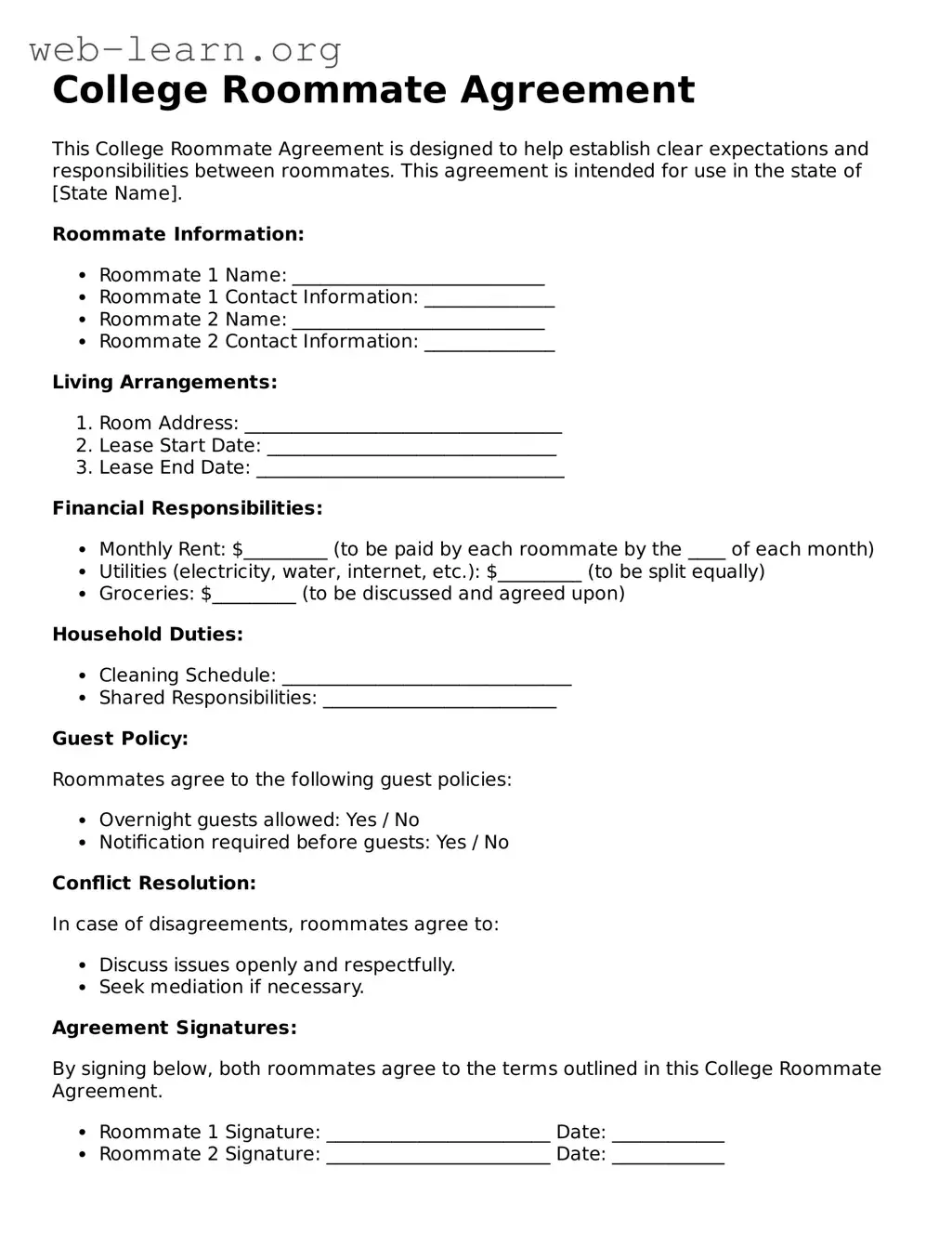
This College Roommate Agreement is designed to help establish clear expectations and responsibilities between roommates. This agreement is intended for use in the state of [State Name].
Roommate Information:
Living Arrangements:
Financial Responsibilities:
Household Duties:
Guest Policy:
Roommates agree to the following guest policies:
Conflict Resolution:
In case of disagreements, roommates agree to:
Agreement Signatures:
By signing below, both roommates agree to the terms outlined in this College Roommate Agreement.
| Fact Name | Description |
|---|---|
| Purpose | The College Roommate Agreement form helps roommates establish rules and expectations for living together, promoting a harmonious living environment. |
| Contents | Typically includes sections on shared responsibilities, quiet hours, guests, cleaning schedules, and conflict resolution methods. |
| State-Specific Forms | Some states may have specific guidelines or templates that align with local laws regarding tenant rights and responsibilities. |
| Governing Law | In many states, roommate agreements are governed by general contract law, but specific tenant laws may apply depending on the jurisdiction. |
| Enforceability | While not legally binding in all cases, having a signed agreement can help resolve disputes and provide clarity on agreed-upon terms. |
Filling out the College Roommate Agreement form is straightforward. This form will help you and your roommate establish clear expectations for living together. Follow these steps to complete it accurately.
What is the purpose of the College Roommate Agreement form?
The College Roommate Agreement form serves as a tool for students living together in a shared space to establish clear expectations and guidelines. By discussing and documenting preferences regarding various aspects of living together, roommates can foster a harmonious environment. This includes agreements on cleanliness, noise levels, guests, and shared responsibilities.
How should roommates fill out the agreement?
Roommates should sit down together to discuss each section of the agreement. Open communication is key. Each person should express their preferences and concerns, ensuring that everyone feels heard. Once all sections are discussed, both roommates should sign the document to indicate their mutual understanding and commitment to the agreed-upon terms.
What topics are typically covered in the agreement?
The agreement generally includes various important topics, such as:
By addressing these topics, roommates can minimize potential conflicts and misunderstandings.
What should roommates do if issues arise after signing the agreement?
If conflicts or misunderstandings occur after the agreement has been signed, it is crucial for roommates to revisit the document together. Open dialogue is essential. They should discuss the specific issue at hand and, if necessary, amend the agreement to better reflect their current needs and circumstances. Flexibility and willingness to adapt can lead to better living conditions.
Is the College Roommate Agreement form legally binding?
No, the College Roommate Agreement form is not legally binding. It is intended to serve as a guideline for roommates to navigate their shared living situation. While it can help establish expectations, it does not have legal standing. The primary goal is to promote communication and cooperation among roommates, thereby enhancing their living experience.
Filling out the College Roommate Agreement form is an important step in establishing a harmonious living situation. However, many students make common mistakes that can lead to misunderstandings and conflicts later on. One frequent error is failing to communicate openly with roommates before completing the form. It’s essential to discuss preferences and expectations together to ensure everyone is on the same page.
Another mistake often seen is not being specific enough in the agreement. For instance, vague terms like “clean” or “quiet” can lead to differing interpretations. Instead, it’s helpful to define what “clean” means—whether it involves taking out the trash weekly or vacuuming every other day. This clarity can prevent disputes down the line.
Some students overlook the importance of including all necessary sections of the agreement. Each part serves a purpose, whether it addresses shared responsibilities, guest policies, or study times. Skipping sections can leave critical issues unaddressed, leading to confusion or resentment later on.
Additionally, many individuals fail to revisit the agreement after some time has passed. Situations change, and what worked at the beginning of the semester may not be effective later on. Regularly checking in and updating the agreement as needed helps maintain a positive living environment.
Not involving all roommates in the decision-making process is another common pitfall. If one person fills out the form without input from others, it can create feelings of exclusion or resentment. Engaging everyone in discussions fosters a sense of teamwork and shared responsibility.
Lastly, neglecting to keep a copy of the completed agreement can lead to complications. If disagreements arise, having a written record to refer back to can help clarify expectations and responsibilities. It’s always a good idea to ensure that each roommate has access to the finalized document.
The College Roommate Agreement form is an essential document for establishing clear expectations between roommates. However, it is often accompanied by several other forms and documents that help facilitate a smooth living experience. Below is a list of these related documents, each serving a unique purpose.
These documents complement the College Roommate Agreement by addressing various aspects of shared living. Together, they create a framework that promotes communication, responsibility, and harmony among roommates.
The College Roommate Agreement form shares similarities with several other documents that outline expectations and responsibilities in shared living situations. Below is a list of these documents, detailing how they relate to the College Roommate Agreement.
When filling out the College Roommate Agreement form, it’s important to approach the task thoughtfully. This document can set the tone for your living situation and help establish clear expectations. Here are seven things you should and shouldn't do:
By following these guidelines, you can foster a respectful and harmonious living environment. Open communication and mutual understanding are key to a successful roommate relationship.
Many students enter college with preconceived notions about the College Roommate Agreement form. Understanding the facts can help create a smoother living situation. Here are five common misconceptions:
Understanding these misconceptions can lead to a more harmonious living experience in college. Open communication and flexibility are key components of successful roommate relationships.
Filling out a College Roommate Agreement form can help establish a harmonious living environment. Here are some key takeaways to consider:
Using the College Roommate Agreement form effectively can lead to a more enjoyable and cooperative living experience. By addressing potential issues upfront, both roommates can foster a positive relationship throughout the academic year.
Photobooth Rental Contract - Includes a clause for unforeseen circumstances affecting the rental.
Booth Rental Contract - The agreement addresses maintenance and cleanliness expectations.
Written Notice of Not Renewing Lease - It provides a timeline for tenants to vacate the property.