When navigating the complexities of real estate transactions, timing can be everything. Delays can arise for various reasons, from financing issues to unexpected repairs, making it essential to have a plan in place. The Closing Date Extension Addendum form serves as a crucial tool for buyers and sellers who find themselves needing to adjust their closing timeline. This form allows both parties to agree on a new closing date, ensuring that the transaction remains on track while accommodating any unforeseen circumstances. By clearly outlining the new closing date and any associated terms, this addendum helps to maintain clarity and prevent misunderstandings. It also provides a written record of the agreement, which can be vital should any disputes arise later. Understanding how to effectively utilize this form can lead to a smoother closing process, ultimately benefiting everyone involved in the transaction.
Closing Date Extension Addendum
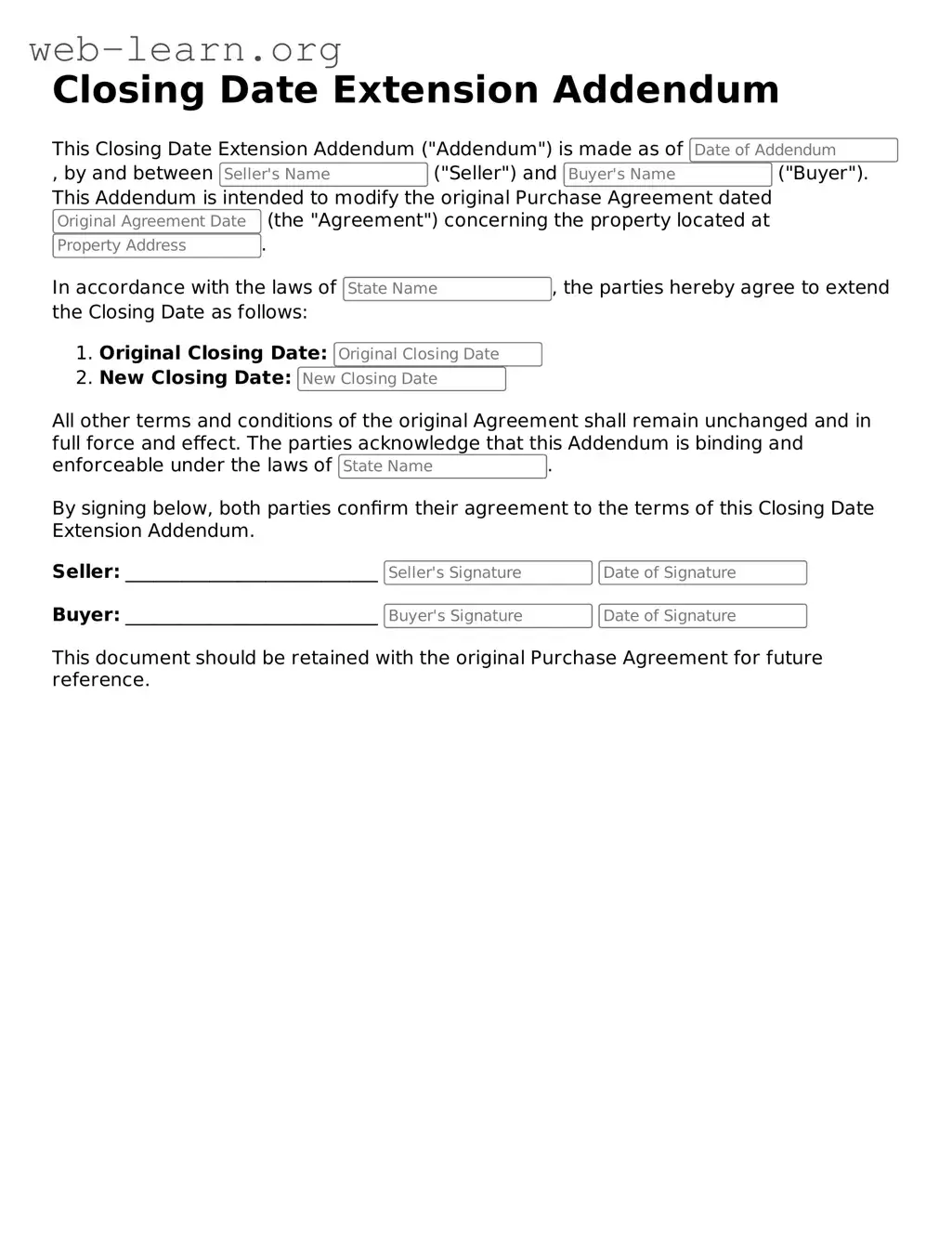
This Closing Date Extension Addendum ("Addendum") is made as of , by and between ("Seller") and ("Buyer"). This Addendum is intended to modify the original Purchase Agreement dated (the "Agreement") concerning the property located at .
In accordance with the laws of , the parties hereby agree to extend the Closing Date as follows:
All other terms and conditions of the original Agreement shall remain unchanged and in full force and effect. The parties acknowledge that this Addendum is binding and enforceable under the laws of .
By signing below, both parties confirm their agreement to the terms of this Closing Date Extension Addendum.
Seller: ___________________________
Buyer: ___________________________
This document should be retained with the original Purchase Agreement for future reference.
| Fact Name | Description |
|---|---|
| Purpose | The Closing Date Extension Addendum is used to extend the closing date of a real estate transaction. |
| Parties Involved | This addendum is typically signed by both the buyer and the seller. |
| Governing Law | The governing law varies by state; for example, California law applies in California transactions. |
| Form Requirement | In many states, this addendum is not mandatory but is highly recommended to avoid confusion. |
| Time Frame | The addendum specifies a new closing date, which should be agreed upon by both parties. |
| Consequences of Not Using | Failure to use this addendum may lead to disputes regarding the closing date. |
| Signature Requirement | Both parties must sign and date the addendum for it to be legally binding. |
After obtaining the Closing Date Extension Addendum form, it is important to complete it accurately to ensure that all parties are informed of the new closing date. Follow the steps below to fill out the form correctly.
What is a Closing Date Extension Addendum?
A Closing Date Extension Addendum is a document used in real estate transactions to extend the closing date of a property sale. This addendum is typically signed by both the buyer and the seller when unforeseen circumstances prevent the closing from occurring on the originally agreed date. It outlines the new closing date and any other relevant terms that may need adjustment.
When should I use a Closing Date Extension Addendum?
This addendum should be used when either party recognizes that the original closing date cannot be met. Common reasons for needing an extension include:
It is important to communicate any potential delays as soon as possible to avoid complications.
How do I complete the Closing Date Extension Addendum?
To complete the addendum, both parties must agree on a new closing date. The form typically includes:
Once filled out, both parties should sign and date the addendum. It’s advisable to keep a copy for your records and provide one to all involved parties.
Is the Closing Date Extension Addendum legally binding?
Yes, once signed by both the buyer and the seller, the Closing Date Extension Addendum is legally binding. This means that both parties are obligated to adhere to the new terms outlined in the document. If either party fails to comply, it could lead to legal consequences, so it's crucial to ensure that both sides are in agreement before signing.
When filling out the Closing Date Extension Addendum form, individuals often overlook important details that can lead to complications. One common mistake is failing to specify the new closing date clearly. Without a precise date, it can create confusion for all parties involved. This can result in misunderstandings and potential delays in the closing process.
Another frequent error is neglecting to obtain all necessary signatures. The addendum requires the consent of both the buyer and the seller. If one party does not sign, the extension may not be legally enforceable. It is essential to ensure that all required signatures are present before submitting the form.
People sometimes forget to include the reason for the extension. While it may seem unnecessary, providing a brief explanation can help clarify the situation for all parties. This transparency can foster better communication and understanding, reducing the likelihood of disputes later on.
Additionally, individuals may not pay attention to the terms of the original contract. The extension should not conflict with any existing agreements. Ignoring these terms can lead to legal issues down the line. It is crucial to review the original contract carefully before completing the addendum.
Finally, many fail to keep a copy of the completed form. Retaining a copy is important for personal records and can serve as a reference in case any questions arise in the future. Without documentation, it may be challenging to prove what was agreed upon if disputes occur.
When dealing with real estate transactions, several documents often accompany the Closing Date Extension Addendum form. These documents help clarify terms and protect the interests of all parties involved. Below is a list of commonly used forms that you may encounter.
Understanding these documents can make the closing process smoother. Each form plays a vital role in ensuring that all parties are on the same page and that the transaction proceeds without complications.
When filling out the Closing Date Extension Addendum form, it is essential to follow certain guidelines to ensure accuracy and compliance. Here are eight important dos and don'ts:
Misconception 1: The Closing Date Extension Addendum is only for buyers.
This form can be used by both buyers and sellers. If either party needs more time to finalize the sale, they can agree to extend the closing date.
Misconception 2: Using this addendum is a sign of a failed transaction.
Extending the closing date is often a normal part of the home buying process. It can happen for various reasons, such as financing delays or inspections taking longer than expected.
Misconception 3: The addendum must be signed in person.
While it is common to sign documents in person, electronic signatures are usually acceptable. This makes it easier for all parties to agree to the new closing date.
Misconception 4: Once signed, the new closing date cannot be changed again.
It is possible to extend the closing date multiple times if both parties agree. Communication is key to making these adjustments smoothly.
When using the Closing Date Extension Addendum form, keep these key points in mind:
Agreement to Release Earnest Funds - The release can occur due to various reasons, including buyer withdrawal.
Real Estate Contract Termination Letter - It can clarify any misunderstandings regarding the status of the property.
Share Acquisition Agreement - It may specify how disputes will be handled if they arise after the sale.