In the world of real estate transactions, timing is everything. Buyers and sellers often find themselves in situations where the original closing date may no longer be feasible due to various reasons, such as financing delays, inspections, or unexpected life events. This is where the Closing Date Extension Addendum Form comes into play. This essential document allows parties involved in a real estate deal to formally agree on extending the closing date, ensuring that both sides have the necessary time to fulfill their obligations. By detailing the new closing timeline and any conditions that may apply, the form provides clarity and protects the interests of all parties involved. It serves as a written record of the agreed-upon changes, minimizing the potential for misunderstandings or disputes later on. Understanding how to properly use this addendum can facilitate smoother transactions and foster better communication between buyers, sellers, and their respective agents.
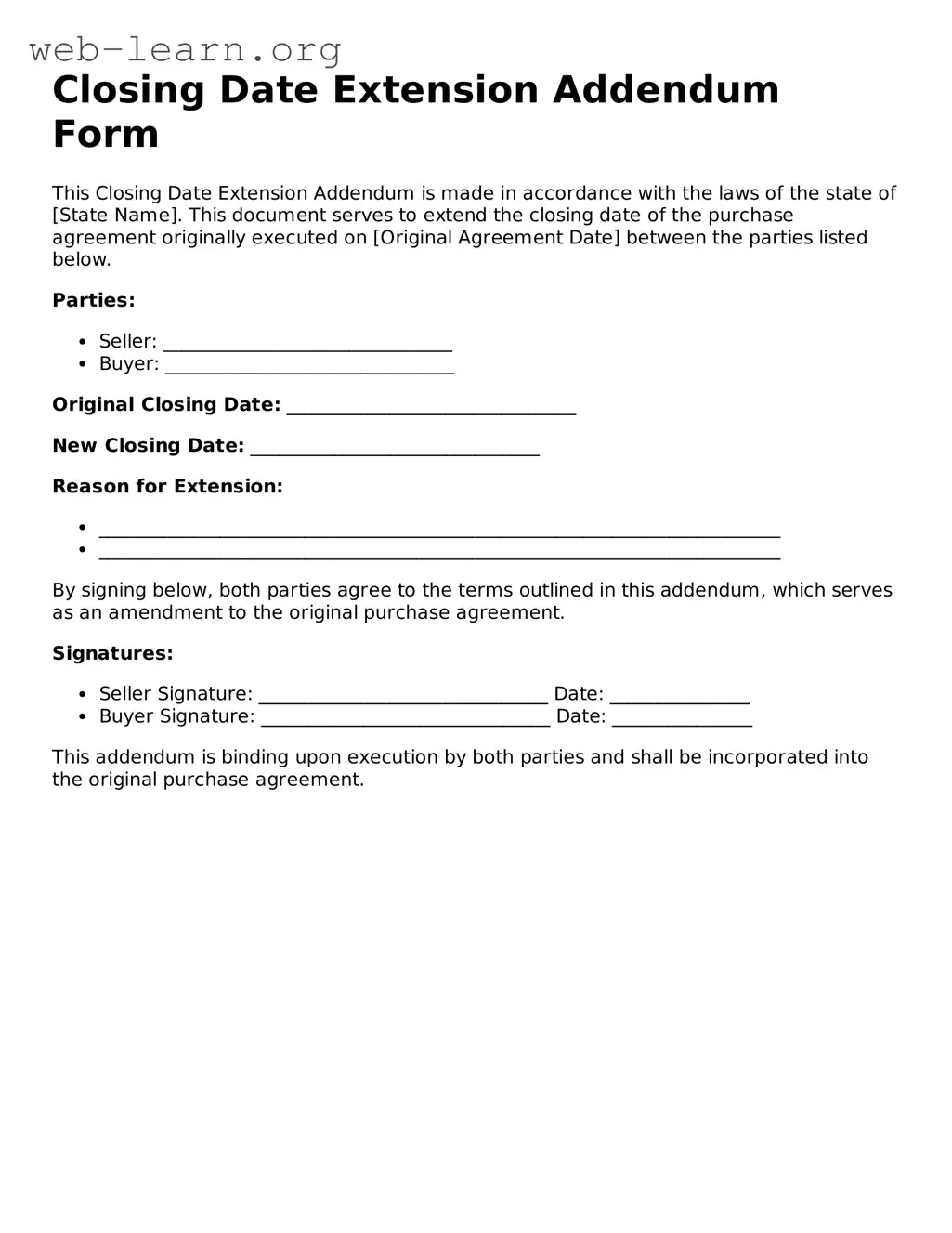
Closing Date Extension Addendum Form
This Closing Date Extension Addendum is made in accordance with the laws of the state of [State Name]. This document serves to extend the closing date of the purchase agreement originally executed on [Original Agreement Date] between the parties listed below.
Parties:
Original Closing Date: _______________________________
New Closing Date: _______________________________
Reason for Extension:
By signing below, both parties agree to the terms outlined in this addendum, which serves as an amendment to the original purchase agreement.
Signatures:
This addendum is binding upon execution by both parties and shall be incorporated into the original purchase agreement.
| Fact Name | Description |
|---|---|
| Purpose | The Closing Date Extension Addendum Form is used to extend the closing date of a real estate transaction, allowing more time for parties to complete necessary steps before finalizing the sale. |
| Parties Involved | This form is typically signed by both the buyer and the seller, ensuring that all parties agree to the new closing date. |
| State-Specific Variations | Different states may have unique versions of this form, reflecting local laws and practices. For instance, California and Texas have their own specific requirements. |
| Governing Laws | The use of this form is governed by real estate laws specific to each state. For example, California Civil Code § 1624 outlines the requirements for real estate transactions in California. |
| Importance of Timeliness | Filing this addendum in a timely manner is crucial. It helps avoid complications that could arise from missing the original closing date. |
Once you have gathered the necessary information, you can proceed to fill out the Closing Date Extension Addendum Form. This form is essential for documenting any changes to the closing date of a real estate transaction. Follow these steps carefully to ensure accuracy and completeness.
With the form filled out and signed, you can now proceed to submit it to the relevant parties, ensuring everyone is informed of the updated closing date. This helps maintain clear communication throughout the transaction process.
What is the Closing Date Extension Addendum Form?
The Closing Date Extension Addendum Form is a document used in real estate transactions. It allows parties involved in a sale to officially extend the closing date of the transaction. This extension can be necessary for various reasons, such as delays in financing, inspections, or other contingencies that need to be resolved before the sale can finalize.
When should I use this form?
You should use the Closing Date Extension Addendum Form when both the buyer and seller agree to postpone the original closing date. This agreement should be documented to protect the interests of both parties. If unforeseen circumstances arise that prevent the closing from occurring on the scheduled date, this form is essential to formalize the new timeline.
What information is required to complete the form?
To complete the form, you will need to provide:
Ensuring that all required information is filled out accurately is crucial to avoid any confusion later on.
Is there a limit to how many times I can extend the closing date?
There is no specific legal limit on the number of times you can extend the closing date. However, each extension should be justified and agreed upon by both parties. Frequent extensions may indicate underlying issues that need to be addressed. It's advisable to communicate openly about any concerns to ensure a smooth transaction process.
When filling out the Closing Date Extension Addendum Form, it’s important to pay close attention to details. One common mistake is failing to include all required parties' signatures. Without the necessary signatures, the form may not be considered valid, which can lead to complications later in the process. Ensure that everyone involved reviews and signs the document.
Another frequent error is neglecting to specify a new closing date. Leaving this section blank can create confusion and uncertainty. It is crucial to clearly state the new date to avoid misunderstandings and ensure all parties are aligned.
Additionally, some individuals forget to provide a reason for the extension. While it may seem unnecessary, including a brief explanation can help clarify the situation for all parties involved. This transparency fosters trust and can prevent potential disputes.
People often overlook the importance of checking for accuracy in the details provided. Simple mistakes, such as typos or incorrect dates, can lead to significant issues down the line. Double-check all information before submitting the form to ensure everything is correct.
Another mistake is submitting the form without confirming that all parties have agreed to the extension. It’s essential to communicate with everyone involved to confirm their understanding and acceptance of the new terms. This step can prevent any surprises and promote a smoother transaction.
Finally, some may forget to keep a copy of the completed form for their records. Documentation is vital in any contractual agreement. Retaining a copy ensures that all parties have access to the agreed terms, which can be referenced in the future if necessary.
The Closing Date Extension Addendum Form is often used in real estate transactions to modify the original closing date agreed upon by the buyer and seller. In addition to this form, several other documents may be utilized to ensure a smooth transaction process. Each of these documents serves a specific purpose and helps clarify the terms of the agreement between the parties involved.
These documents collectively contribute to a comprehensive understanding of the transaction and help protect the interests of all parties involved. Proper management of these forms is essential for a successful closing process.
The Closing Date Extension Addendum Form serves a specific purpose in real estate transactions, but it shares similarities with several other documents. Understanding these similarities can enhance clarity in real estate dealings. Below are four documents that are akin to the Closing Date Extension Addendum Form:
When filling out the Closing Date Extension Addendum Form, it's important to approach the task with care. Here are four things you should and shouldn't do to ensure a smooth process.
The Closing Date Extension Addendum Form is often misunderstood. Here are seven common misconceptions about this important document:
Understanding these misconceptions can lead to better communication and smoother transactions when dealing with closing date extensions.
Filling out and using the Closing Date Extension Addendum Form can be a straightforward process if you keep a few key points in mind. Here are some important takeaways:
By following these guidelines, you can ensure that the extension process goes smoothly and that all parties are on the same page.