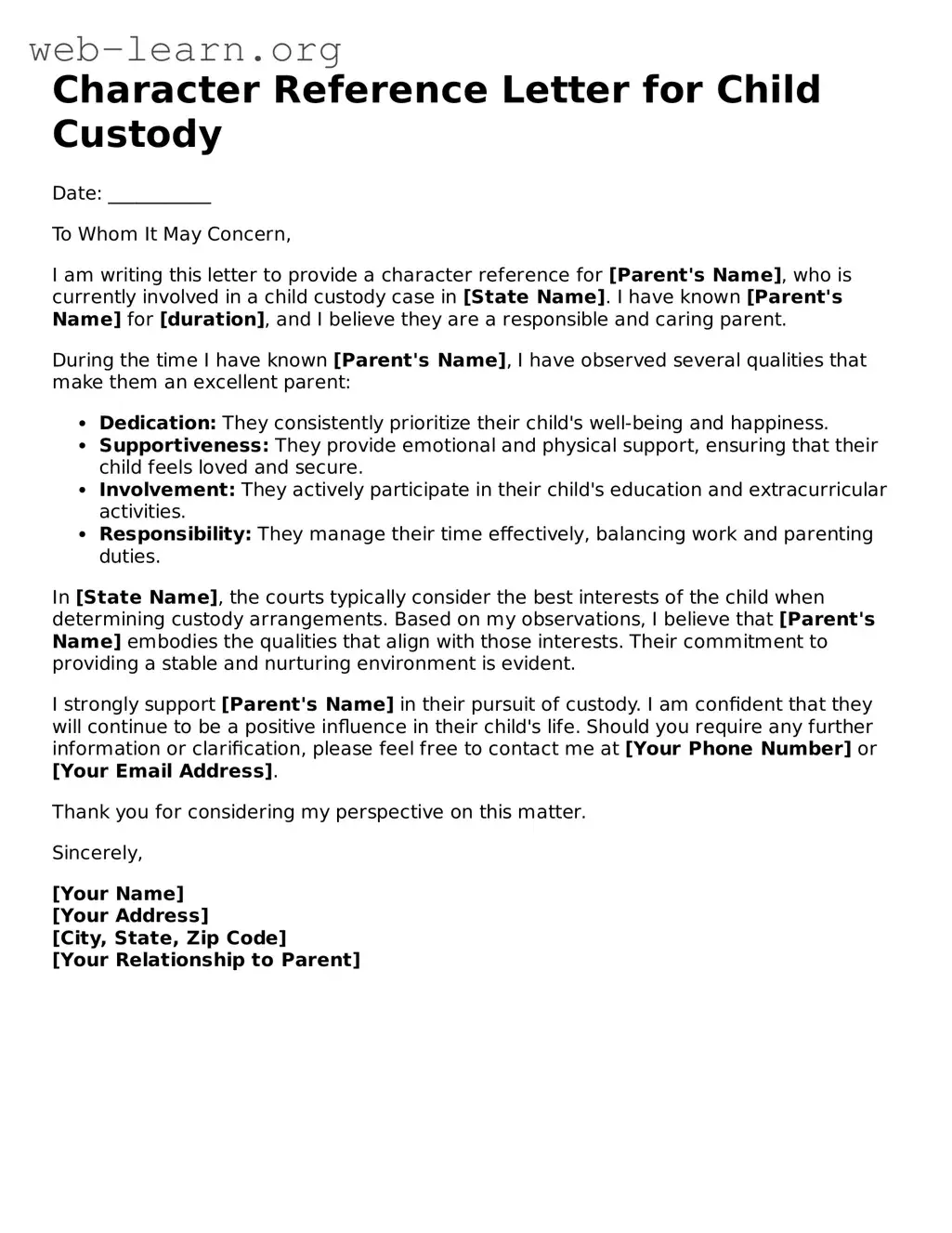
When navigating the complexities of child custody arrangements, a Character Reference Letter can play a pivotal role in influencing the court's decision. This letter serves as a testament to a parent’s or guardian's character, providing insight into their parenting abilities and overall suitability for custody. It is typically written by friends, family members, or colleagues who can vouch for the individual’s integrity, reliability, and commitment to the child's well-being. The letter should highlight specific examples of the parent’s involvement in the child's life, their parenting style, and any positive attributes that make them a responsible caregiver. It is crucial that the letter is sincere and detailed, as it can significantly impact the outcome of custody proceedings. By presenting a well-crafted Character Reference Letter, individuals can strengthen their case and demonstrate their dedication to providing a stable and nurturing environment for their child.
Character Reference Letter for Child Custody
Date: ___________
To Whom It May Concern,
I am writing this letter to provide a character reference for [Parent's Name], who is currently involved in a child custody case in [State Name]. I have known [Parent's Name] for [duration], and I believe they are a responsible and caring parent.
During the time I have known [Parent's Name], I have observed several qualities that make them an excellent parent:
In [State Name], the courts typically consider the best interests of the child when determining custody arrangements. Based on my observations, I believe that [Parent's Name] embodies the qualities that align with those interests. Their commitment to providing a stable and nurturing environment is evident.
I strongly support [Parent's Name] in their pursuit of custody. I am confident that they will continue to be a positive influence in their child's life. Should you require any further information or clarification, please feel free to contact me at [Your Phone Number] or [Your Email Address].
Thank you for considering my perspective on this matter.
Sincerely,
[Your Name]
[Your Address]
[City, State, Zip Code]
[Your Relationship to Parent]
| Fact Name | Description |
|---|---|
| Purpose | A character reference letter for child custody provides insight into a parent's character and parenting abilities, helping the court make informed decisions. |
| Format | Typically, the letter is written in a formal format, including the writer's contact information, date, and a salutation. |
| Content | The letter should include specific examples of the parent's behavior, interactions with the child, and overall character traits. |
| Length | While there is no strict length requirement, one to two pages is generally considered appropriate. |
| Who Can Write | Friends, family members, teachers, or community members who know the parent well can provide valuable insights. |
| State-Specific Forms | Some states may have specific guidelines or forms for character reference letters. Check local family court rules for details. |
| Governing Laws | In many states, family law governs custody arrangements. For example, California Family Code § 3011 outlines factors the court considers. |
| Submission | The letter should be submitted to the court as part of the custody case documentation, often during the custody hearing. |
| Confidentiality | Writers should be aware that the letter may become part of the public record, and sensitive information should be handled carefully. |
Completing the Character Reference Letter for Child Custody form is a crucial step in supporting a child's best interests during custody proceedings. This letter serves as a testament to the character and parenting abilities of the individual involved. Follow the steps below to ensure the form is filled out correctly and effectively.
After completing the form, review it for clarity and accuracy. This ensures that your message is conveyed effectively and supports the child’s best interests in the custody case.
A Character Reference Letter for Child Custody is a document that supports a parent's or guardian's case in a custody dispute. This letter is typically written by someone who knows the parent well, such as a friend, family member, or colleague. It highlights the parent's qualities, parenting skills, and overall character, helping the court understand why that parent should have custody of the child.
Anyone who has a positive relationship with the parent seeking custody can write a character reference letter. This includes friends, family members, teachers, coaches, or community leaders. The key is that the writer should be able to provide specific examples of the parent's character and their relationship with the child.
The letter should include:
While there is no strict length requirement, a character reference letter should generally be one to two pages long. It should be concise yet comprehensive enough to convey the necessary information effectively. The goal is to provide a clear picture of the parent’s character without overwhelming the reader.
While there is no formal template, the letter should be typed and formatted professionally. It should include the date, the writer's name and contact information, a salutation, the body of the letter, and a closing statement. Using a respectful tone and clear language is essential to ensure the message is understood.
No, the letter should not be submitted anonymously. The court needs to know who is providing the reference, as the writer may be called upon to testify if necessary. Including the writer's name and contact information adds credibility to the letter.
The character reference letter can significantly influence the custody decision. It provides the court with insights into the parent’s character and parenting abilities. However, it is just one piece of evidence among many that the court will consider. The overall best interest of the child remains the primary focus in custody decisions.
Filling out a Character Reference Letter for Child Custody can be a daunting task, and it’s easy to make mistakes that could impact the outcome of a custody case. One common error is failing to provide specific examples of the parent’s character. Instead of vague statements, it is crucial to share concrete instances that showcase the parent’s nurturing qualities, reliability, and ability to provide a stable environment.
Another mistake is overlooking the importance of the letter's tone. The letter should convey a sense of respect and professionalism. Using informal language or a casual tone can undermine the seriousness of the situation. It’s essential to strike a balance between being personal and maintaining a respectful demeanor.
People often forget to include their relationship to the parent. This information provides context to the reader about the writer’s perspective. Without this, the letter may lack credibility. Clearly stating how long you have known the parent and in what capacity can strengthen the letter’s impact.
Additionally, some individuals make the mistake of focusing too much on negative aspects of the other parent. While it’s important to highlight the positive traits of the parent you are supporting, dwelling on the shortcomings of the other party can come across as spiteful. The goal should be to present the parent in a positive light without engaging in negative comparisons.
Another frequent oversight is neglecting to proofread the letter. Grammatical errors and typos can detract from the message and suggest a lack of effort. A well-written letter reflects the seriousness of the matter and shows that the writer cares about the child’s well-being.
Some people fail to tailor the letter to the specific needs of the custody case. Each situation is unique, and it’s essential to address the particular circumstances at hand. Generic letters that do not consider the specific needs of the child or the family situation may not be taken seriously by the court.
Moreover, individuals sometimes forget to include their contact information. This is crucial, as the court may wish to follow up for further clarification or to ask additional questions. Providing a phone number or email address ensures that the court can reach out if necessary.
Another common mistake is not being honest. While it may be tempting to exaggerate or embellish, honesty is paramount. Courts value authenticity, and any perceived dishonesty can damage the credibility of the letter.
Finally, some writers overlook the importance of timing. Submitting the letter too late in the process can diminish its relevance. It’s vital to ensure that the letter is submitted in a timely manner, allowing it to be considered as part of the overall case.
When navigating the complexities of child custody cases, having the right documents on hand can make a significant difference. Alongside the Character Reference Letter for Child Custody, several other forms and documents are often required to support your case. Below is a list of essential documents that can aid in presenting a comprehensive view of your situation.
Gathering these documents can help paint a fuller picture of your situation, providing the court with the necessary information to make informed decisions. Each document plays a vital role in ensuring that the child's best interests are prioritized during custody proceedings.
The Character Reference Letter for Child Custody form serves a specific purpose in family law, but it shares similarities with several other documents. Here are four documents that are comparable:
When filling out a Character Reference Letter for Child Custody form, it is important to follow certain guidelines to ensure the letter is effective and appropriate. Below is a list of things to do and avoid:
Misconceptions about the Character Reference Letter for Child Custody can lead to misunderstandings during custody proceedings. Below are seven common misconceptions, along with explanations to clarify them.
When filling out and using the Character Reference Letter for Child Custody form, keep these key takeaways in mind: