When facing a court appearance, the support of friends, family, or colleagues can make a significant difference. A Character Letter for Court serves as a powerful tool to present a person's character and background to the judge. This letter provides insight into the individual's personality, values, and contributions to the community. It can highlight their positive traits, such as honesty, responsibility, and compassion, which may influence the court's perception. Typically, the letter should include specific examples that illustrate the person's character, helping to create a more comprehensive picture. Additionally, it is essential to ensure the letter is respectful and sincere, as the tone can impact how the judge receives the information. By understanding the importance of this document, individuals can better prepare to advocate for someone they care about in a legal setting.
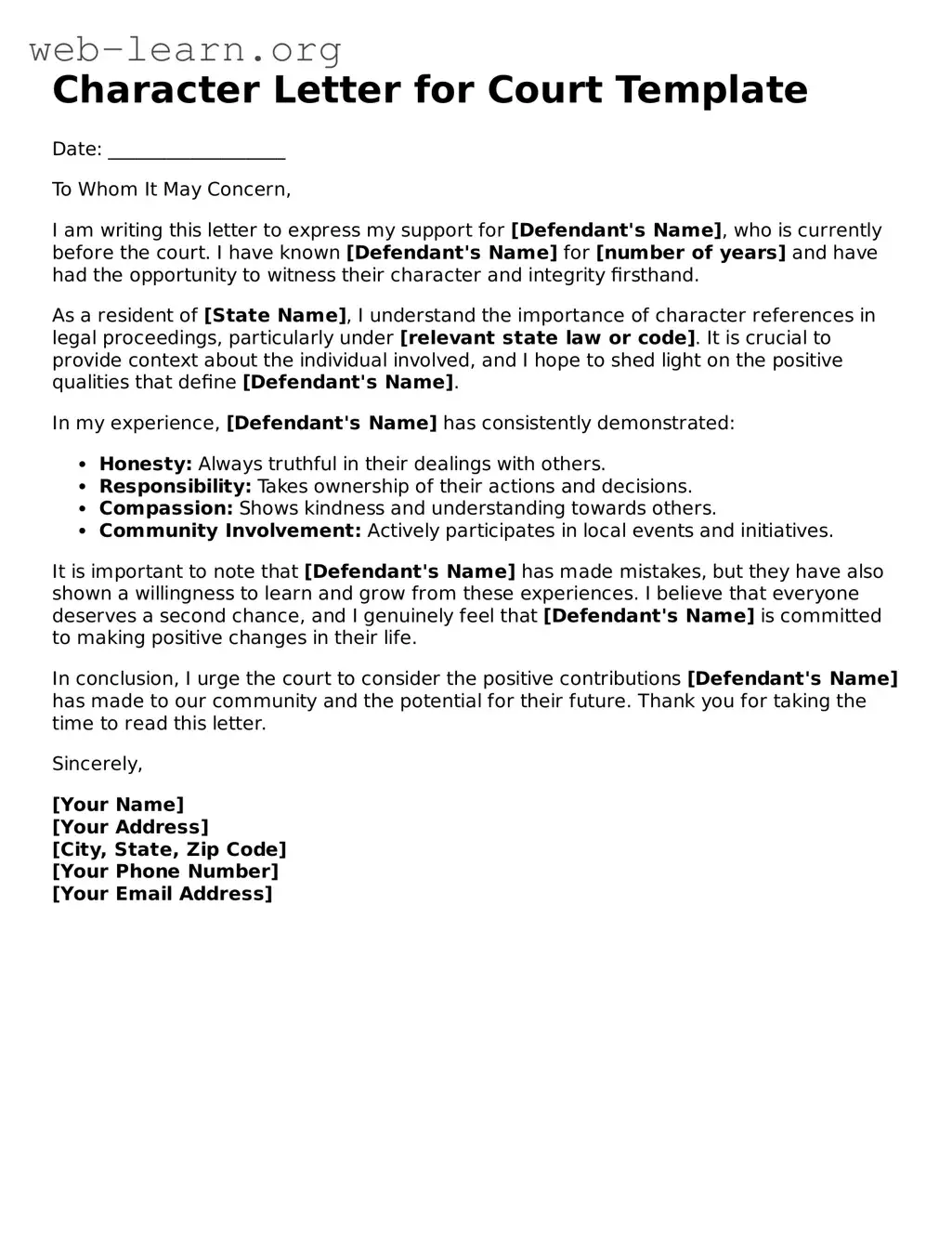
Character Letter for Court Template
Date: ___________________
To Whom It May Concern,
I am writing this letter to express my support for [Defendant's Name], who is currently before the court. I have known [Defendant's Name] for [number of years] and have had the opportunity to witness their character and integrity firsthand.
As a resident of [State Name], I understand the importance of character references in legal proceedings, particularly under [relevant state law or code]. It is crucial to provide context about the individual involved, and I hope to shed light on the positive qualities that define [Defendant's Name].
In my experience, [Defendant's Name] has consistently demonstrated:
It is important to note that [Defendant's Name] has made mistakes, but they have also shown a willingness to learn and grow from these experiences. I believe that everyone deserves a second chance, and I genuinely feel that [Defendant's Name] is committed to making positive changes in their life.
In conclusion, I urge the court to consider the positive contributions [Defendant's Name] has made to our community and the potential for their future. Thank you for taking the time to read this letter.
Sincerely,
[Your Name]
[Your Address]
[City, State, Zip Code]
[Your Phone Number]
[Your Email Address]
| Fact Name | Description |
|---|---|
| Purpose | A Character Letter for Court is used to provide the court with insight into a person's character, typically in support of a defendant. |
| Format | The letter should be written in a formal business format, including the sender's contact information, date, and recipient's address. |
| Content | It should include specific examples of the individual's character traits and behavior that demonstrate their good character. |
| Length | Typically, the letter should be one page long, concise yet informative. |
| Signature | The letter must be signed by the author, adding credibility to the claims made about the individual’s character. |
| State-Specific Forms | Some states may have specific requirements or forms for character letters. Check local court rules for details. |
| Governing Laws | In many jurisdictions, character letters are governed by local rules of evidence and court procedures. |
| Submission | These letters can be submitted to the court before a hearing or trial, often as part of a sentencing package. |
Filling out a Character Letter for Court can feel daunting, but breaking it down into manageable steps makes the process smoother. This letter serves as a personal testament to someone's character and can play a significant role in court proceedings. Here’s how to complete the form effectively.
After completing the form, ensure you have all the necessary copies and any additional documentation required for court. Submitting it on time is crucial, as it helps convey the message effectively during the proceedings.
What is a Character Letter for Court?
A Character Letter for Court is a written statement that provides insight into a person's character. It is typically submitted to a judge during legal proceedings to help them understand the individual's personality, behavior, and reputation. This letter can support a defendant or a witness by highlighting positive traits and experiences.
Who can write a Character Letter?
Anyone who knows the individual well can write a Character Letter. This includes friends, family members, employers, colleagues, or community leaders. The writer should have a good understanding of the person’s character and be able to provide specific examples that illustrate their positive qualities.
What should be included in the letter?
The letter should include:
How long should the Character Letter be?
Generally, a Character Letter should be one page long. It should be concise and to the point, ensuring that the most important information is communicated clearly. A letter that is too lengthy may lose the reader's attention.
Is there a specific format to follow?
While there is no strict format, the letter should be typed and professionally presented. It should include the date, the recipient's name (if known), and a formal greeting. The body of the letter should be well-organized, and it should end with a courteous closing and the writer's signature.
Can a Character Letter impact the court's decision?
Yes, a Character Letter can have an impact on the court's decision. It provides the judge with a personal perspective on the individual, which can influence their understanding of the case. Positive letters can help portray the person in a favorable light, potentially affecting sentencing or other outcomes.
When should the Character Letter be submitted?
The Character Letter should be submitted as early as possible in the legal process. Ideally, it should be included with other court documents before the hearing. This allows the judge to consider it while reviewing the case.
Can multiple Character Letters be submitted?
Yes, multiple Character Letters can be submitted. Having several letters from different people can provide a more comprehensive view of the individual’s character. However, it is important to ensure that each letter adds unique insights and does not simply repeat the same information.
Are there any risks in writing a Character Letter?
Writers should be honest in their letters. If the letter contains exaggerated claims or false information, it could backfire. It’s essential to stick to facts and personal experiences. Additionally, the writer should be aware that their letter may be read in court, so they should maintain a respectful tone.
Filling out a Character Letter for Court can be a critical task for individuals involved in legal proceedings. However, several common mistakes can undermine the effectiveness of the letter. One prevalent error is failing to address the letter correctly. It is essential to include the appropriate court information and recipient details. Omitting this information can lead to confusion and may even result in the letter not being considered by the judge.
Another mistake is not providing specific examples of the individual’s character. General statements such as "He is a good person" lack the necessary detail to make an impact. Instead, the letter should include anecdotes or situations that illustrate the person's qualities and behavior. This specificity helps the court understand the individual’s character in a more profound way.
Many people also overlook the importance of maintaining a respectful tone throughout the letter. Using informal language or slang can detract from the letter's seriousness. A formal and respectful tone conveys the writer's sincerity and the importance of the matter at hand.
Additionally, some individuals make the mistake of writing excessively long letters. Brevity is key. A concise letter that gets straight to the point is more likely to hold the reader's attention. Aim for clarity and focus on the most relevant information to avoid losing the judge’s interest.
Another common error is failing to proofread the letter before submission. Typos and grammatical errors can create a negative impression. A well-written letter reflects the writer's attention to detail and respect for the court process. Taking the time to review the letter can prevent these simple yet impactful mistakes.
Moreover, individuals often neglect to include their relationship to the person in question. Stating how long and in what capacity the writer knows the individual provides context for the character assessment. This information helps the court evaluate the credibility of the letter.
Lastly, some people forget to sign and date the letter. A signature adds authenticity and formality to the document. Without it, the letter may be seen as incomplete. Ensuring that the letter is signed and dated is a small but crucial step in the process.
When preparing for court, a Character Letter can be an important document that helps convey personal insights about a defendant's character. However, it is often accompanied by other forms and documents that support the case. Below is a list of some commonly used documents that may enhance the effectiveness of a Character Letter.
Including these documents alongside the Character Letter can create a more comprehensive view of the defendant's situation. Each piece of information helps the court make a well-informed decision, potentially leading to a more favorable outcome.
When preparing a Character Letter for Court, it's essential to approach the task with care and consideration. This letter can significantly impact the outcome of a case. Here’s a list of things you should and shouldn’t do while filling out the form.
By following these guidelines, you can create a powerful Character Letter that effectively supports the individual in court. Remember, your words can make a difference.
Understanding the Character Letter for Court form can be challenging. Here are six common misconceptions that people often have:
By addressing these misconceptions, individuals can better understand the role of character letters in court proceedings and how to craft them effectively.
When preparing a Character Letter for Court, it’s essential to understand its purpose and how to use it effectively. Here are some key takeaways to guide you through the process:
By keeping these points in mind, you can create a Character Letter that effectively supports the individual in their court case.