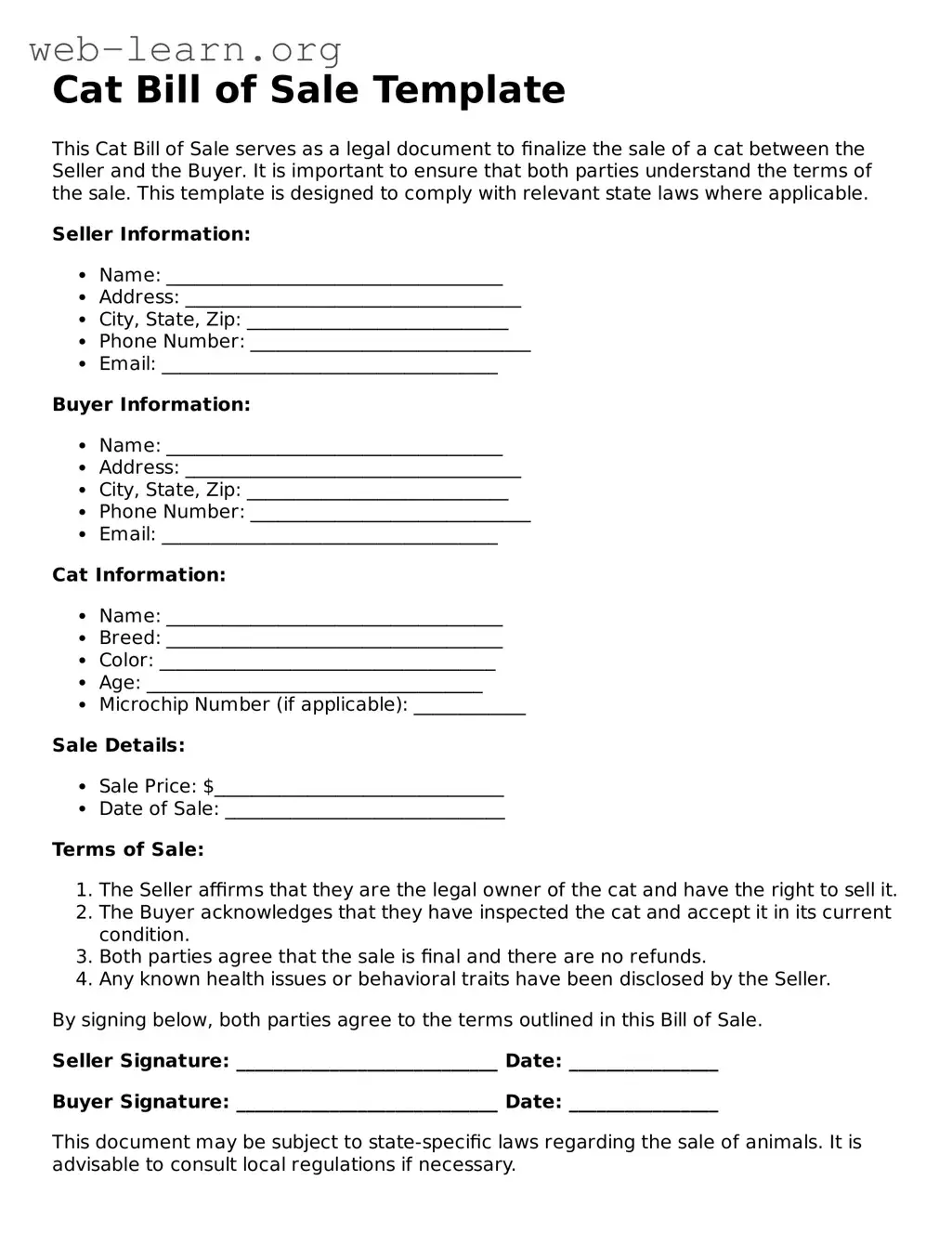
The Cat Bill of Sale form serves as a vital document in the transfer of ownership for felines, ensuring that both the seller and buyer are protected during the transaction. This form typically includes essential details such as the names and addresses of both parties, a description of the cat being sold—including breed, age, and any distinguishing features—and the sale price. Additionally, it often outlines any warranties or guarantees regarding the cat's health, vaccination status, and temperament. By providing a clear record of the transaction, the form helps prevent disputes and misunderstandings between the parties involved. Furthermore, it may include provisions for the return of the cat under specific circumstances, adding an extra layer of security for both the buyer and seller. Overall, the Cat Bill of Sale form is an important tool that facilitates responsible pet ownership and fosters trust in the buying and selling process.
Cat Bill of Sale Template
This Cat Bill of Sale serves as a legal document to finalize the sale of a cat between the Seller and the Buyer. It is important to ensure that both parties understand the terms of the sale. This template is designed to comply with relevant state laws where applicable.
Seller Information:
Buyer Information:
Cat Information:
Sale Details:
Terms of Sale:
By signing below, both parties agree to the terms outlined in this Bill of Sale.
Seller Signature: ____________________________ Date: ________________
Buyer Signature: ____________________________ Date: ________________
This document may be subject to state-specific laws regarding the sale of animals. It is advisable to consult local regulations if necessary.
| Fact Name | Description |
|---|---|
| Purpose | The Cat Bill of Sale form is used to document the sale and transfer of ownership of a cat from one party to another. |
| Parties Involved | The form requires the names and contact information of both the seller and the buyer. |
| Cat Description | It includes details about the cat, such as breed, age, color, and any distinguishing features. |
| Purchase Price | The agreed-upon price for the cat must be clearly stated in the form. |
| Governing Law | In most states, the sale of pets is governed by local animal control laws and general contract laws. |
| Signatures | Both parties must sign and date the form to make the sale legally binding. |
After obtaining the Cat Bill of Sale form, you'll need to complete it accurately to ensure a smooth transfer of ownership. This document serves as proof of the sale and should be filled out carefully. Follow the steps below to fill out the form correctly.
Once you have completed the form, make sure both parties retain a copy for their records. This will help in any future discussions or potential disputes regarding the sale.
A Cat Bill of Sale form is a legal document used to transfer ownership of a cat from one party to another. This form provides essential details about the transaction, including the names of the seller and buyer, the cat's description, and the sale price.
This document serves as proof of ownership and can help prevent disputes in the future. It also provides a record of the transaction for both the seller and the buyer. Having a written agreement can clarify responsibilities regarding the cat's care and any warranties provided by the seller.
The form typically includes:
Yes, once both parties sign the document, it becomes a legally binding contract. This means that both the seller and buyer are obligated to uphold the terms outlined in the agreement. However, it is advisable to check local laws to ensure compliance with specific regulations regarding pet sales.
Yes, you can create your own Cat Bill of Sale. Ensure that it includes all necessary information and is clear and concise. However, using a template can help ensure that you cover all important details and legal requirements.
Templates for a Cat Bill of Sale can be found online through various legal websites, pet adoption organizations, or local animal shelters. These templates often provide a good starting point and can be customized to fit your specific needs.
When completing a Cat Bill of Sale form, individuals often overlook important details, leading to potential complications. One common mistake is failing to provide accurate information about the cat being sold. This includes not only the cat's name but also its breed, age, and any identifying characteristics. Incomplete or incorrect descriptions can cause confusion and disputes later on.
Another frequent error is neglecting to include the seller's and buyer's full names and contact information. This information is crucial for establishing a clear record of the transaction. Without accurate contact details, it may be challenging to resolve any future issues that arise regarding the sale.
Many individuals also forget to specify the sale price of the cat. Omitting this detail can create misunderstandings between the buyer and seller, especially if payment arrangements are not clearly outlined. It is essential to document the agreed-upon price to avoid potential disputes.
In some cases, sellers do not include any relevant health information about the cat. This can be a significant oversight, particularly if the cat has had recent veterinary visits or vaccinations. Providing this information not only protects the buyer but also enhances the seller's credibility.
Another mistake involves not obtaining the necessary signatures. Both parties must sign the Bill of Sale to validate the transaction. Without these signatures, the document may not hold up in the event of a dispute, leaving both parties vulnerable.
Additionally, individuals often fail to make copies of the completed Bill of Sale. Retaining a copy for personal records is essential. This ensures that both parties have access to the same information and can refer back to it if needed.
Lastly, some people do not take the time to read the form thoroughly before submission. Understanding all the terms and conditions is vital. Rushing through the process can lead to overlooking critical elements that could affect the sale.
When completing a Cat Bill of Sale, there are several other forms and documents that can be helpful in ensuring a smooth transaction. Each of these documents serves a specific purpose and can provide additional protection for both the buyer and seller. Here’s a brief overview of some commonly used forms:
Having these documents on hand can make the process of buying or selling a cat much easier and more organized. They help clarify expectations and protect everyone involved in the transaction.
When filling out a Cat Bill of Sale form, it is essential to approach the task with care and attention to detail. Here are some guidelines to help ensure the process goes smoothly.
Following these do's and don'ts can help facilitate a clear and effective transaction between the seller and buyer.
When it comes to the Cat Bill of Sale form, several misconceptions can lead to confusion among pet buyers and sellers. Understanding these misconceptions is crucial for a smooth transaction. Here are seven common misunderstandings:
Many people believe that a Cat Bill of Sale has no legal standing. In fact, it serves as a record of the transaction and can be used in court if disputes arise.
Some assume that only purebred cats require a bill of sale. However, this document is beneficial for any cat sale, regardless of breed.
There is a misconception that a bill of sale is only necessary for high-value transactions. In reality, it is wise to use one for any sale to document the exchange.
Some believe that the Cat Bill of Sale primarily benefits the seller. In truth, it also protects the buyer by providing proof of ownership and details of the transaction.
Many think that creating a bill of sale requires legal expertise. In fact, it is a straightforward form that can be easily completed with basic information.
Some people feel that gifting a cat eliminates the need for a bill of sale. However, documenting the gift can still clarify ownership and intentions.
There is a belief that the Cat Bill of Sale is only important in specific jurisdictions. However, it is a useful document across the United States, regardless of state laws.
Understanding these misconceptions can help ensure that both buyers and sellers are adequately protected during the transaction process.
When filling out and using the Cat Bill of Sale form, there are several important points to keep in mind. Here are key takeaways that can help ensure a smooth transaction.
Following these guidelines can help ensure that the process of buying or selling a cat is clear and straightforward. It is vital to take these steps seriously to protect everyone involved.
Firearm Bill of Sale Pdf - The document can help ensure that all local regulations are followed during the sale.