Homepage Blank California Wic Form
Outline

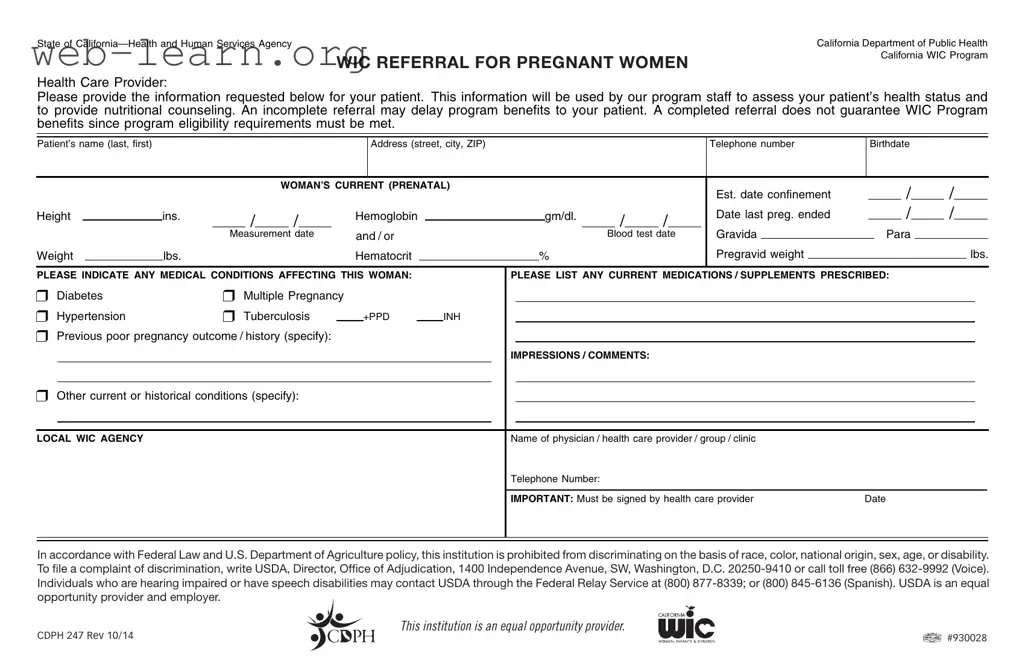
The California WIC form plays a vital role in supporting pregnant and postpartum women as they navigate their nutritional needs. This form is designed for healthcare providers to collect essential information about their patients, ensuring that they receive the appropriate benefits from the Women, Infants, and Children (WIC) program. Key details required include the patient's name, contact information, and specific health measurements such as height, weight, and hemoglobin levels. Additionally, the form prompts providers to note any medical conditions that may affect the woman's health or pregnancy outcomes. This information is crucial for assessing eligibility and providing tailored nutritional counseling. It is important to remember that while a completed referral can expedite the process, it does not guarantee program benefits, as eligibility criteria must still be met. The WIC program is dedicated to serving all eligible women, and the form is a significant first step in ensuring they receive the assistance they need.


Sample - California Wic Form

#930028
CDPH 247 Rev 10/14
This institution is an equal opportunity provider.
State of California—Health and Human Services Agency
WIC REFERRAL FOR PREGNANT WOMAN
Please provide the information requested below for your patient. This information will be used by our program staff to assess your patient’s health status and
to provide nutritional counseling. An incomplete referral may delay program benefits to your patient. A completed referral does not guarantee WIC Program
benefits since program eligibility requirements must be met.
Health Care Provider:
Patient’s name (last, first) Address (street, city, ZIP) Telephone number Birthdate
WOMAN’S CURRENT (PRENATAL)
PLEASE INDICATE ANY MEDICAL CONDITIONS AFFECTING THIS WOMAN: PLEASE LIST ANY CURRENT MEDICATIONS / SUPPLEMENTS PRESCRIBED:
IMPRESSIONS / COMMENTS:
IMPORTANT: Must be signed by health care provider
LOCAL WIC AGENCY Name of physician / health care provider / group / clinic
Telephone Number:
Date
Est. date confinement
Date last preg. ended
Gravida
Para
Pregravid weight lbs.
/ /
/ /
Height ins.
Weight
lbs.
/ /
Measurement date
/ /
Blood test date
Hemoglobin gm/dl.
Hematocrit
%
and / or
Diabetes
Hypertension
Previous poor pregnancy outcome / history (specify):
Other current or historical conditions (specify):
Multiple Pregnancy
Tuberculosis
+PPD INH
California Department of Public Health
California WIC Program
CDPH10
WIC REFERRAL FOR PREGNANT WOMEN
In accordance with Federal Law and U.S. Department of Agriculture policy, this institution is prohibited from discriminating on the basis of race, color, national origin, sex, age, or disability.
To file a complaint of discrimination, write USDA, Director, Office of Adjudication, 1400 Independence Avenue, SW, Washington, D.C. 20250-9410 or call toll free (866) 632-9992 (Voice).
Individuals who are hearing impaired or have speech disabilities may contact USDA through the Federal Relay Service at (800) 877-8339; or (800) 845-6136 (Spanish). USDA is an equal
opportunity provider and employer.
#930028
CDPH 247 Rev 10/14
This institution is an equal opportunity provider.
State of California—Health and Human Services Agency
California฀WIC฀Program
WIC REFERRAL FOR POSTPARTUM / BREASTFEEDING WOMAN
Please provide the information requested below for your patient. This information will be used by our program staff to assess your patient’s health status and
to provide nutritional counseling. An incomplete referral may delay program benefits to your patient. A completed referral does not guarantee WIC Program
benefits since program eligibility requirements must be met.
Health Care Provider:
Patient’s name (last, first) Address (street, city, ZIP code) Telephone number Birthdate
WOMAN’S CURRENT (After Delivery)
LOCAL WIC AGENCY
PLEASE INDICATE ANY MEDICAL CONDITIONS AFFECTING THIS WOMAN. PLEASE LIST ANY CURRENT MEDICATIONS/SUPPLEMENTS PRESCRIBED:
IMPRESSIONS / COMMENTS:
IMPORTANT: Must be signed by health care provider
Name of physician / health care provider / group / clinic
Telephone number:
Date
Height ins.
Weight
lbs.
Hemoglobin
gm/dl.
Hematocrit
%
and/or
/ /
Measurement date
/ /
Blood test date
C-Section
Diabetes
Hypertension
Tuberculosis
Other conditions occurring during this pregnancy or delivery
(specify):
Other current or historical medical conditions (specify):
+PPD INH
PREGNANCY OUTCOME
/ /
Delivery date
1.
2.
Please describe any medical conditions affecting the infant(s):
Full-Term
Preterm
(37 wks.)
Sm. Gest.
Age
Fetal
Loss Stillbirth
Sex
Sex
Birth weight
Birth weight
Birth length
Birth length
CDPH10/10
California Department of Public Health
OSP฀09฀116409
WIC REFERRAL FOR POSTPARTUM/BREASTFEEDING WOMEN
In accordance with Federal Law and U.S. Department of Agriculture policy, this institution is prohibited from discriminating on the basis of race, color, national origin, sex, age, or disability.
To file a complaint of discrimination, write USDA, Director, Office of Adjudication, 1400 Independence Avenue, SW, Washington, D.C. 20250-9410 or call toll free (866) 632-9992 (Voice).
Individuals who are hearing impaired or have speech disabilities may contact USDA through the Federal Relay Service at (800) 877-8339; or (800) 845-6136 (Spanish). USDA is an equal
opportunity provider and employer.

Form Information

Fact Name Description
Governing Law The California WIC form is governed by the California WIC Program regulations, which are part of the California Code of Regulations, Title 7, Section 400.
Purpose This form is used to refer pregnant and postpartum women to the WIC program for nutritional counseling and health assessments.
Patient Information Essential patient details such as name, address, telephone number, and birthdate must be provided for effective assessment.
Medical Conditions Healthcare providers must indicate any medical conditions affecting the woman, which may include diabetes, hypertension, or previous pregnancy outcomes.
Eligibility Completing the form does not guarantee WIC benefits; eligibility requirements must still be met by the patient.
Equal Opportunity Statement The form includes a statement affirming that the WIC program does not discriminate based on race, color, national origin, sex, age, or disability.

Detailed Guide for Filling Out California Wic

Completing the California WIC form is an essential step in ensuring that women receive the nutritional support they need during pregnancy and postpartum. The information collected on this form will be used by WIC program staff to evaluate eligibility and provide appropriate services. It is important to fill out the form accurately to avoid any delays in benefits.

  1. Begin by entering the patient's name in the format of last name followed by first name.
  2. Provide the patient's complete address, including street, city, and ZIP code.
  3. Fill in the patient's telephone number for contact purposes.
  4. Record the patient's birthdate in the specified format.
  5. For current measurements, enter the patient's height in inches.
  6. Input the patient's weight in pounds.
  7. Indicate the hemoglobin level in grams per deciliter and the measurement date.
  8. Provide the hematocrit percentage.
  9. Estimate the date of confinement (due date) and record it.
  10. Document the date when the last pregnancy ended.
  11. Fill in the gravida and para numbers to indicate the number of pregnancies and births.
  12. Record the pregravid weight in pounds.
  13. Check any medical conditions affecting the woman, such as diabetes or hypertension, and specify if needed.
  14. List any current medications or supplements that have been prescribed.
  15. Provide any additional impressions or comments regarding the patient's health.
  16. Enter the name of the local WIC agency.
  17. Include the name of the physician or healthcare provider, along with their contact number.
  18. Ensure the form is signed and dated by the healthcare provider to validate the information.

Obtain Answers on California Wic

  1. What is the purpose of the California WIC form?

    The California WIC form is designed to gather important health information about pregnant and postpartum women. Health care providers fill out this form to help the WIC program assess the health status of their patients. This assessment is crucial for providing appropriate nutritional counseling and support.

  2. Who needs to fill out the WIC form?

    Health care providers, such as physicians or clinics, are responsible for completing the WIC form. The information must be accurate and complete to avoid delays in program benefits for the patient. Patients themselves do not fill out this form.

  3. What information is required on the form?

    The form requires several details, including:

    • Patient’s name, address, and telephone number
    • Date of birth
    • Current height and weight
    • Hemoglobin and hematocrit levels
    • Medical conditions affecting the woman
    • Current medications or supplements
    • Pregnancy outcome details, if applicable

    Providing complete information is essential for the WIC program to determine eligibility.

  4. Does completing the WIC form guarantee benefits?

    No, a completed WIC form does not guarantee benefits. While it is a necessary step, the WIC program has specific eligibility requirements that must be met. The program staff will review the information provided to determine if the patient qualifies.

  5. What should I do if I encounter issues while filling out the form?

    If you face any challenges while completing the WIC form, it’s best to reach out to the local WIC agency for assistance. They can provide guidance on how to fill out the form correctly and answer any questions you may have.

  6. What happens if the form is incomplete?

    An incomplete WIC form can lead to delays in program benefits for the patient. It is crucial to ensure that all sections of the form are filled out accurately before submission. This helps the WIC program assess eligibility and provide timely support.

Common mistakes

Filling out the California WIC form can be straightforward, but many people make common mistakes that can delay benefits. One significant error is leaving out essential information. When details like the patient’s name, address, or birthdate are missing, it creates unnecessary delays. Always double-check that every required field is filled out completely.

Another frequent mistake is incorrect measurement entries. For example, entering the wrong height or weight can lead to inaccurate assessments. Make sure to use standard units, such as inches for height and pounds for weight. This ensures that the information is clear and usable by program staff.

Sometimes, individuals forget to provide medical conditions affecting the woman. This section is crucial for assessing eligibility and health needs. If there are any known conditions, they should be clearly listed. Omitting this information can impact the support the patient receives.

Additionally, people often overlook the importance of the signature. The form must be signed by a healthcare provider to be valid. Without this signature, the referral will not be processed. Always confirm that the signature is present before submission.

Another mistake is not including the date of the last pregnancy or the estimated date of confinement. This information helps WIC staff understand the patient's current situation better. Accurate dates ensure that the program can offer the right support at the right time.

Many also fail to specify current medications or supplements prescribed. This detail is vital for the health and safety of both the mother and child. Listing all medications helps in providing appropriate nutritional counseling and support.

Lastly, some individuals do not read the instructions carefully. Each section of the form has specific requirements. Taking a moment to review the guidelines can prevent many of these common mistakes. Ensuring accuracy on the WIC form can make a significant difference in the support a patient receives.

Documents used along the form

The California WIC form is an essential document for pregnant and postpartum women seeking nutritional support through the Women, Infants, and Children (WIC) program. However, several other forms and documents often accompany this primary referral form. Each of these documents serves a specific purpose in the application and eligibility assessment process.

  • WIC Eligibility Checklist: This document helps determine if an applicant meets the WIC program's income and residency requirements. It outlines the necessary criteria for eligibility, making it easier for potential participants to assess their qualifications.
  • Medical Referral Form: Health care providers complete this form to refer patients to the WIC program. It includes information about the patient's medical history, current health conditions, and nutritional needs, ensuring that WIC staff can provide tailored support.
  • Income Verification Documents: Applicants must submit proof of income to establish eligibility. This may include pay stubs, tax returns, or other financial statements that confirm the household's income level.
  • Proof of Residency: To qualify for WIC, applicants need to provide documentation showing they reside in California. This can include utility bills, rental agreements, or government correspondence that includes the applicant's name and address.
  • Identity Verification Form: This document confirms the identity of the applicant and their children. Acceptable forms of identification may include a driver's license, birth certificate, or social security card.
  • Nutrition Assessment Form: A nutritionist or dietitian may use this form to evaluate the dietary habits and nutritional needs of the applicant. It helps in creating personalized nutrition plans and counseling sessions.
  • Breastfeeding Support Form: For postpartum women, this form assesses the mother’s breastfeeding status and any challenges she may be facing. It allows WIC staff to provide appropriate resources and support for breastfeeding mothers.
  • Client Rights and Responsibilities Form: This document outlines the rights and responsibilities of WIC participants. It ensures that applicants are informed about their entitlements and obligations while receiving WIC services.

Understanding these accompanying documents can streamline the application process for the WIC program. By being prepared with the necessary forms, applicants can enhance their chances of receiving timely support and benefits tailored to their nutritional needs.

Similar forms

The California WIC form is designed to gather essential health information for pregnant and postpartum women participating in the Women, Infants, and Children (WIC) program. Several other documents serve similar purposes in different contexts. Below is a list of five documents that share similarities with the California WIC form:

  • Health Insurance Portability and Accountability Act (HIPAA) Authorization Form: This document allows healthcare providers to share a patient’s medical information with third parties. Like the WIC form, it requires personal details and specific health information to ensure that the patient receives appropriate care.
  • Patient Intake Form: Often used in medical offices, this form collects demographic and health information from new patients. Similar to the WIC form, it assesses health status and identifies any conditions that may affect care.
  • Referral Form for Specialists: This document is used when a primary care provider refers a patient to a specialist. It includes patient information and medical history, paralleling the WIC form's purpose of ensuring proper care and nutritional counseling.
  • Medicaid Application Form: This application collects detailed information about an individual's financial and health status to determine eligibility for Medicaid benefits. Like the WIC form, it aims to assess needs and provide necessary support based on specific criteria.
  • Nutrition Assessment Form: Used by dietitians, this form gathers information about a patient’s dietary habits, medical history, and nutritional needs. This document, similar to the WIC form, is crucial for developing a tailored nutritional plan for individuals.

Each of these documents serves a unique purpose but shares the common goal of collecting vital information to support individuals in receiving appropriate health and nutritional services.

Dos and Don'ts

When filling out the California WIC form, there are several important guidelines to follow to ensure the process goes smoothly. Here are five things you should and shouldn't do:

  • Do ensure all patient information is complete. Missing details can delay benefits.
  • Do verify the patient's medical history. Accurate medical conditions and medications are crucial for proper assessment.
  • Do sign the form. A signature from a healthcare provider is mandatory for processing.
  • Don't use abbreviations. Clear and complete information helps avoid confusion.
  • Don't forget to double-check the eligibility requirements. A completed form does not guarantee benefits.

Following these guidelines will help ensure that the referral process is efficient and effective for your patient.

Misconceptions

Understanding the California WIC form is essential for both healthcare providers and patients. However, several misconceptions can lead to confusion. Below is a list of common misunderstandings regarding the WIC referral process.

  • Misconception 1: A completed WIC form guarantees program benefits.
  • While completing the form is necessary, it does not automatically ensure that a patient will receive benefits. Eligibility requirements must still be met.

  • Misconception 2: The WIC program is only for low-income women.
  • Although income is a factor, the program is designed to support women who meet specific nutritional and health criteria, regardless of income level.

  • Misconception 3: The WIC form is only for pregnant women.
  • The form is also applicable for postpartum and breastfeeding women, allowing for a broader range of support for maternal and infant health.

  • Misconception 4: All medical conditions must be listed on the form.
  • While relevant medical conditions should be noted, not every condition needs to be disclosed. Focus on those that impact the patient’s health and nutritional needs.

  • Misconception 5: The WIC program only provides food assistance.
  • The program offers nutritional counseling and education, which are crucial components of the support provided to participants.

  • Misconception 6: The WIC referral process is lengthy and complicated.
  • While timely completion of the form is important, the process is straightforward. Providing accurate information can expedite benefits.

  • Misconception 7: WIC benefits are only available during pregnancy.
  • Women can receive benefits during breastfeeding and for a period after delivery, ensuring ongoing support for maternal and infant health.

  • Misconception 8: Only physicians can complete the WIC form.
  • Any qualified healthcare provider can fill out the form, including nurse practitioners and midwives, broadening access to the program.

Clarifying these misconceptions can help ensure that eligible women receive the support they need in a timely manner. Understanding the WIC referral process is vital for both healthcare providers and patients.

Key takeaways

When filling out the California WIC form, there are several important points to keep in mind to ensure a smooth process. Below are key takeaways to consider:

  • Complete Information: Provide all requested information accurately. Missing details can delay benefits.
  • Eligibility Requirements: A completed referral does not guarantee benefits. Ensure that the patient meets WIC eligibility criteria.
  • Medical Conditions: Clearly indicate any medical conditions affecting the woman or infant. This information is crucial for proper assessment.
  • Current Medications: List any medications or supplements prescribed. This helps in understanding the patient's health status.
  • Measurement Dates: Include dates for height, weight, hemoglobin, and hematocrit measurements. These are essential for evaluating health needs.
  • Signature Requirement: The form must be signed by a health care provider. An unsigned form will not be processed.
  • Local WIC Agency: Provide the name and contact information of the local WIC agency. This facilitates communication and follow-up.

By following these guidelines, the referral process can be more efficient, helping patients receive the support they need in a timely manner.