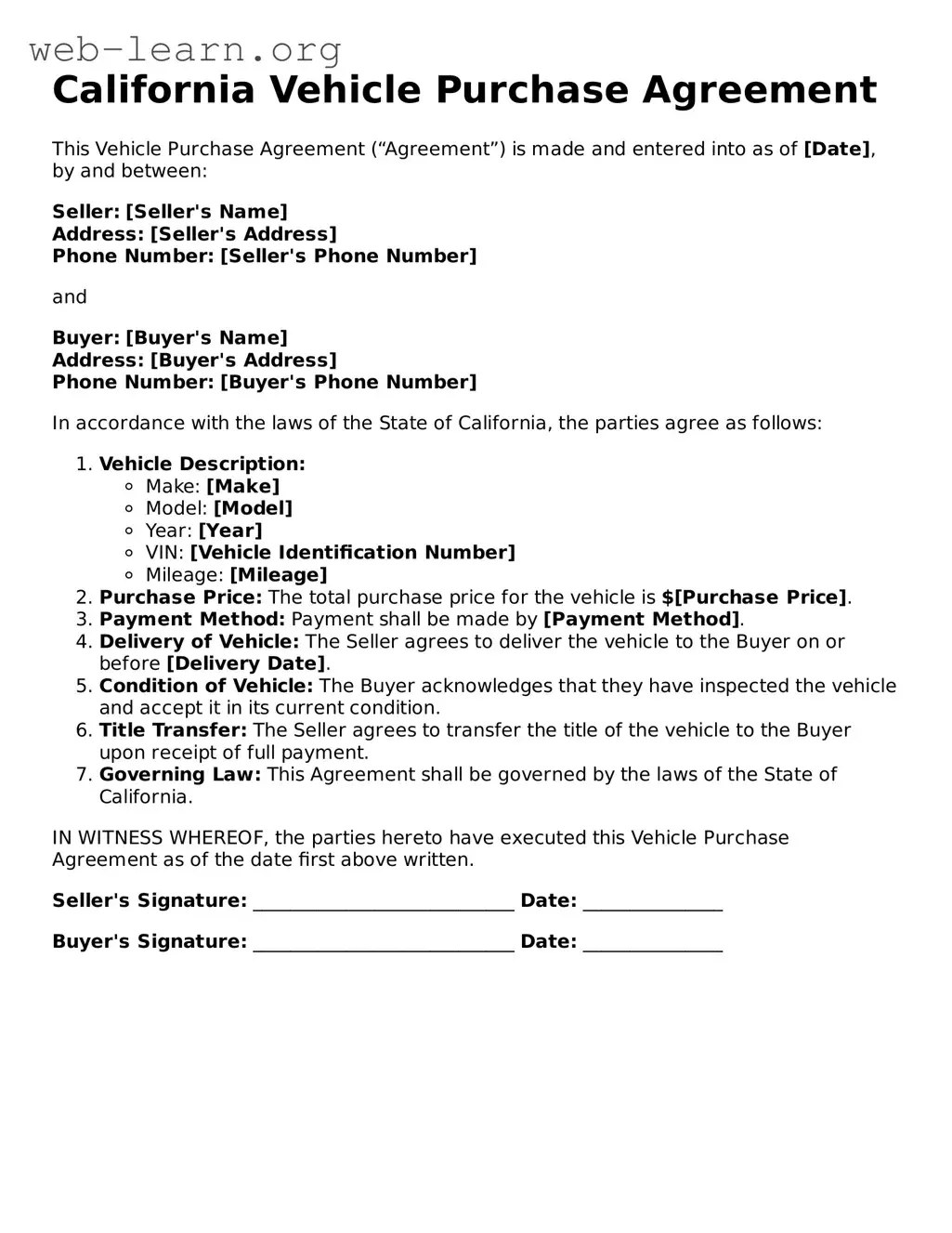
The California Vehicle Purchase Agreement form is an essential document that facilitates the sale of a vehicle between a buyer and a seller. This form outlines the terms of the sale, including the purchase price, vehicle identification details, and the condition of the vehicle at the time of sale. It also includes important disclosures regarding warranties and any existing liens on the vehicle. By detailing the responsibilities of both parties, the agreement helps to ensure a smooth transaction and provides legal protection should disputes arise. Additionally, the form may require signatures from both the buyer and seller, indicating their acceptance of the terms. Understanding the key components of this form is crucial for anyone involved in a vehicle purchase in California, as it serves to formalize the agreement and safeguard the interests of all parties involved.
California Vehicle Purchase Agreement
This Vehicle Purchase Agreement (“Agreement”) is made and entered into as of [Date], by and between:
Seller: [Seller's Name]
Address: [Seller's Address]
Phone Number: [Seller's Phone Number]
and
Buyer: [Buyer's Name]
Address: [Buyer's Address]
Phone Number: [Buyer's Phone Number]
In accordance with the laws of the State of California, the parties agree as follows:
IN WITNESS WHEREOF, the parties hereto have executed this Vehicle Purchase Agreement as of the date first above written.
Seller's Signature: ____________________________ Date: _______________
Buyer's Signature: ____________________________ Date: _______________
| Fact Name | Description |
|---|---|
| Purpose | The California Vehicle Purchase Agreement form outlines the terms of sale between the buyer and seller of a vehicle. |
| Parties Involved | The agreement includes information about both the buyer and the seller, ensuring clarity on who is involved in the transaction. |
| Governing Law | This agreement is governed by California state law, specifically the California Civil Code. |
| Payment Terms | The form specifies the payment method, amount, and any financing arrangements if applicable. |
| Vehicle Information | Details about the vehicle, including make, model, year, and VIN, are required to ensure proper identification. |
After obtaining the California Vehicle Purchase Agreement form, it is essential to fill it out accurately to ensure a smooth transaction. This document serves as a record of the sale between the buyer and the seller. Follow the steps below to complete the form correctly.
Once the form is filled out completely, both parties should retain a copy for their records. This agreement will serve as a legal document in case of any disputes or questions regarding the sale.
What is a California Vehicle Purchase Agreement?
A California Vehicle Purchase Agreement is a legal document that outlines the terms and conditions of the sale of a vehicle between a buyer and a seller. This agreement serves as a record of the transaction, detailing important information such as the purchase price, vehicle identification number (VIN), and the responsibilities of both parties. Having this document in place helps protect the rights of both the buyer and the seller, ensuring that the sale proceeds smoothly.
Why is it important to have a Vehicle Purchase Agreement?
Having a Vehicle Purchase Agreement is crucial for several reasons:
In essence, this agreement acts as a safeguard for both the buyer and the seller, promoting transparency and accountability.
What should be included in the Vehicle Purchase Agreement?
A comprehensive Vehicle Purchase Agreement should include the following key elements:
Including these details helps ensure that both parties are on the same page and can refer back to the agreement if needed.
How can I obtain a Vehicle Purchase Agreement form?
Obtaining a Vehicle Purchase Agreement form is relatively simple. You can find templates online through various legal resources or websites that specialize in vehicle sales. Many auto dealerships also provide their own versions of this agreement. When using a template, make sure to customize it to fit your specific transaction and ensure that it complies with California laws. If you have any doubts, consulting with a legal professional can provide additional peace of mind.
Completing the California Vehicle Purchase Agreement form is a critical step in the vehicle buying process. However, many individuals make mistakes that can lead to complications down the line. One common error occurs when buyers fail to provide accurate personal information. This includes not only their name and address but also the correct driver's license number. Inaccuracies can lead to delays in registration and potential legal issues.
Another frequent mistake is overlooking the vehicle identification number (VIN). The VIN is essential for identifying the specific vehicle being purchased. If the VIN is incorrect or missing, it can create confusion and may even invalidate the agreement. Buyers should double-check this information to ensure it matches the vehicle's title and registration documents.
Additionally, many people neglect to read the terms and conditions outlined in the agreement. This oversight can lead to misunderstandings regarding warranties, fees, and other important details. Buyers should take the time to understand their rights and obligations before signing. Ignoring these terms can result in unexpected costs or complications later on.
Finally, failing to include all necessary signatures is a mistake that can jeopardize the validity of the agreement. Both the buyer and seller must sign the document for it to be legally binding. Without these signatures, the agreement may not hold up in court if disputes arise. Ensuring all parties have signed is crucial for a smooth transaction.
When purchasing a vehicle in California, several documents complement the Vehicle Purchase Agreement. These documents ensure that the transaction is clear, legal, and protects both the buyer and seller. Below is a list of commonly used forms and documents in this process.
Having these documents ready can streamline the vehicle purchase process and help avoid potential issues down the line. Always ensure that all forms are completed accurately to protect your interests in the transaction.
Sales Agreement: Similar to a Vehicle Purchase Agreement, a sales agreement outlines the terms and conditions under which a buyer agrees to purchase a product or service. It includes details such as price, delivery, and warranties.
Lease Agreement: This document specifies the terms under which one party agrees to rent property owned by another party. While it focuses on rental rather than purchase, it shares similarities in detailing payment terms and responsibilities.
Bill of Sale: A bill of sale serves as a legal document that transfers ownership of an item from one person to another. It often accompanies the Vehicle Purchase Agreement to provide proof of the transaction.
Purchase Order: A purchase order is a document created by a buyer to authorize a purchase transaction. It includes details like quantity, price, and delivery terms, making it similar in function to a Vehicle Purchase Agreement.
Financing Agreement: When a vehicle is financed, a financing agreement outlines the terms of the loan, including interest rates and payment schedules. This document is closely related to the Vehicle Purchase Agreement as it often accompanies it.
Warranty Agreement: A warranty agreement provides assurance regarding the condition of the vehicle and outlines the terms of repair or replacement. This document often complements the Vehicle Purchase Agreement by addressing post-purchase concerns.
Trade-In Agreement: If a buyer trades in a vehicle as part of the purchase, a trade-in agreement will detail the terms of that transaction. It is similar in nature to the Vehicle Purchase Agreement as it also involves the transfer of ownership.
Service Agreement: This document outlines the terms for services provided after the purchase, such as maintenance or repairs. While it focuses on service rather than sale, it is related in that it often follows the purchase of a vehicle.
Consumer Credit Agreement: When financing a vehicle, this agreement outlines the terms of the credit extended to the buyer. It is similar to the Vehicle Purchase Agreement in that it lays out the financial obligations of the buyer.
When filling out the California Vehicle Purchase Agreement form, attention to detail is crucial. Here are some important dos and don'ts to keep in mind.
By following these guidelines, you can help ensure a smoother vehicle purchasing experience. Make sure to take this process seriously, as it involves significant financial and legal commitments.
Understanding the California Vehicle Purchase Agreement form is essential for both buyers and sellers in the vehicle market. However, several misconceptions often arise. Here’s a list of eight common misunderstandings:
By understanding these misconceptions, both buyers and sellers can navigate the vehicle purchasing process more effectively and ensure a smoother transaction.
Filling out the California Vehicle Purchase Agreement form is an essential step in the vehicle buying process. Here are some key takeaways to keep in mind:
By paying attention to these key points, you can navigate the vehicle purchase process more smoothly and confidently.
Indiana Vehicle Bill of Sale - May include a clause for the buyer's right to a refund under specific conditions.
How Do You Write a Bill of Sale for a Car - Sets the date of the sale and the transfer of ownership.