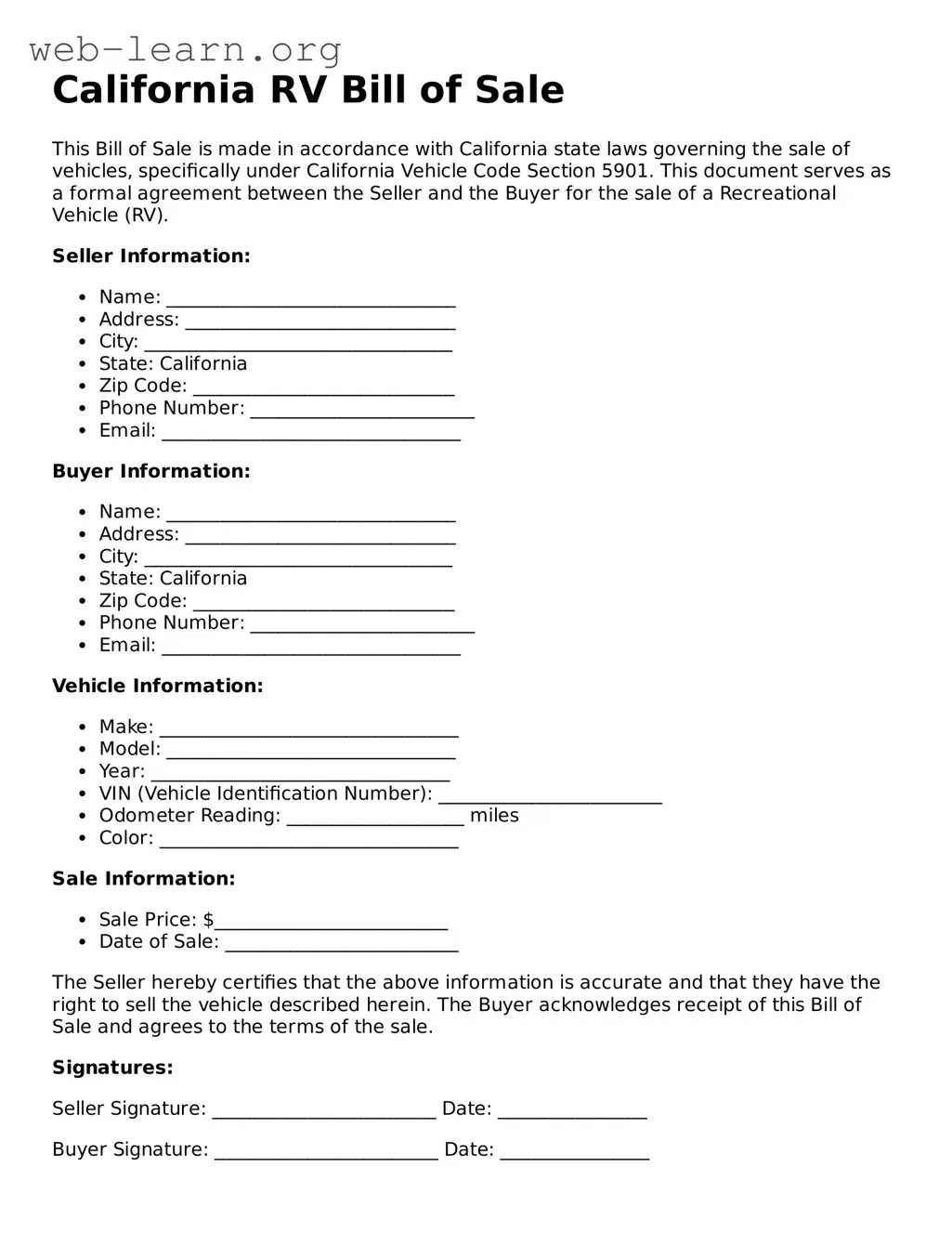
When purchasing or selling a recreational vehicle (RV) in California, a crucial document comes into play: the RV Bill of Sale form. This form serves as a written record of the transaction, capturing essential details such as the buyer's and seller's information, vehicle identification number (VIN), make, model, year, and sale price. Not only does it provide proof of ownership transfer, but it also outlines any warranties or conditions agreed upon by both parties. Having a properly completed RV Bill of Sale is vital for registering the vehicle with the Department of Motor Vehicles (DMV) and can protect both the buyer and seller in case of disputes. Additionally, the form may need to be notarized, depending on the specifics of the sale, ensuring that the transaction is legally binding. Understanding the importance of this document and how to fill it out correctly can make the buying or selling process smoother and more secure.
California RV Bill of Sale
This Bill of Sale is made in accordance with California state laws governing the sale of vehicles, specifically under California Vehicle Code Section 5901. This document serves as a formal agreement between the Seller and the Buyer for the sale of a Recreational Vehicle (RV).
Seller Information:
Buyer Information:
Vehicle Information:
Sale Information:
The Seller hereby certifies that the above information is accurate and that they have the right to sell the vehicle described herein. The Buyer acknowledges receipt of this Bill of Sale and agrees to the terms of the sale.
Signatures:
Seller Signature: ________________________ Date: ________________
Buyer Signature: ________________________ Date: ________________
This document serves as a legal record of the sale and should be retained by both parties for their records.
| Fact Name | Description |
|---|---|
| Purpose | The California RV Bill of Sale serves as a legal document to transfer ownership of a recreational vehicle. |
| Governing Law | This form is governed by California Vehicle Code Section 5901. |
| Required Information | The form must include details such as the buyer's and seller's names, addresses, and the RV's VIN. |
| Notarization | Notarization is not required, but it is recommended for added security in the transaction. |
| Tax Implications | Sales tax may apply to the transaction based on the purchase price of the RV. |
| Record Keeping | Both parties should keep a copy of the completed Bill of Sale for their records. |
| Usage | This form is used not only for sales but also for gifting or trading RVs. |
After obtaining the California RV Bill of Sale form, you will need to complete it accurately to ensure a smooth transfer of ownership. This document serves as proof of the transaction between the buyer and the seller. Follow these steps to fill out the form correctly.
A California RV Bill of Sale is a legal document that records the transfer of ownership of a recreational vehicle (RV) from one party to another. This form serves as proof of the transaction and includes important details about the RV, such as its make, model, year, and Vehicle Identification Number (VIN). It also includes information about the buyer and seller, making it a vital part of the buying and selling process.
Having a Bill of Sale is essential for several reasons:
The California RV Bill of Sale should include the following key details:
In California, notarization of the Bill of Sale is not required. However, having it notarized can add an extra layer of authenticity and protection for both parties. It may also be beneficial if you plan to use the document for legal purposes or if you want to ensure that the transaction is formally recognized.
While you can use a generic Bill of Sale form, it is advisable to use a specific California RV Bill of Sale. This ensures that all necessary details are included and complies with state regulations. A specialized form will also help avoid any potential issues during the registration process at the DMV.
Filling out the California RV Bill of Sale form can seem straightforward, but many people make common mistakes that can lead to complications down the line. One frequent error is not providing complete information about the RV. This includes failing to include the Vehicle Identification Number (VIN), which is crucial for identifying the specific vehicle. Without this number, the transaction may be questioned, and the new owner might face issues when trying to register the RV.
Another mistake often seen is neglecting to include the purchase price. While it might seem obvious, omitting this detail can lead to confusion and potential disputes between the buyer and seller. The purchase price serves not only as a record of the transaction but also impacts taxes and registration fees. It's essential to be clear and accurate in this section.
People also frequently overlook the importance of signatures. Both the buyer and seller must sign the form for it to be valid. A missing signature can invalidate the sale, leaving both parties in a tricky situation. It’s a simple step, but one that can easily be forgotten in the excitement of the sale.
Additionally, failing to date the form is another common oversight. The date of the transaction is important for legal and tax purposes. Without it, there may be confusion about when the sale took place, which can affect ownership rights and responsibilities.
Some individuals may also forget to provide their contact information. Including a phone number or email address ensures that both parties can reach each other if any issues arise after the sale. This small detail can save a lot of trouble later on.
Finally, not keeping a copy of the completed Bill of Sale can lead to problems. After the transaction, both the buyer and seller should retain a copy for their records. This document serves as proof of the sale and can be essential if any disputes arise in the future. Always remember: keeping a record is just as important as filling out the form correctly.
The California RV Bill of Sale form serves as a crucial document in the transfer of ownership for recreational vehicles. However, several other forms and documents may accompany it to ensure a smooth transaction and compliance with state regulations. Below is a list of these related documents, each playing a significant role in the process.
In summary, these documents work in conjunction with the California RV Bill of Sale to facilitate a legal and efficient transfer of ownership. Ensuring that all necessary forms are completed and submitted can help prevent complications in the future.
When filling out the California RV Bill of Sale form, it’s important to ensure accuracy and completeness. Here are seven essential tips on what to do and what to avoid:
Many people have misunderstandings about the California RV Bill of Sale form. Here are seven common misconceptions:
Some believe that a Bill of Sale is only needed for dealership transactions. However, it is important for private sales as well, as it provides proof of the transaction.
While notarization can add an extra layer of security, it is not a requirement for the California RV Bill of Sale to be valid.
Both the buyer and the seller should sign the Bill of Sale. This ensures that both parties agree to the terms of the sale.
Some think a verbal agreement is sufficient. However, having a written document is crucial for clarity and legal protection.
It is essential to include specific details about the RV, such as the make, model, year, and VIN. This helps avoid confusion in the future.
While it is best to fill it out accurately from the start, corrections can be made if both parties agree and initial the changes.
The Bill of Sale is applicable for both new and used RVs. It serves as proof of ownership transfer regardless of the RV's condition.
Filling out and using the California RV Bill of Sale form is an important step in the process of buying or selling a recreational vehicle. Here are some key takeaways to keep in mind:
By following these guidelines, you can ensure a smooth and legally sound transfer of ownership for your RV in California.
Trailer Bill of Sale Colorado - Buyers should ensure that the form is filled out completely before signing.
How to Write a Bill of Sale for a Car in Alabama - A simple document to record the sale of an RV.
Do You Need a Bill of Sale in Florida - Allows for the inclusion of any accessories or additional items sold with the RV.
Where Do I Get a Bill of Sale - Helps establish a legal record of ownership transfer.