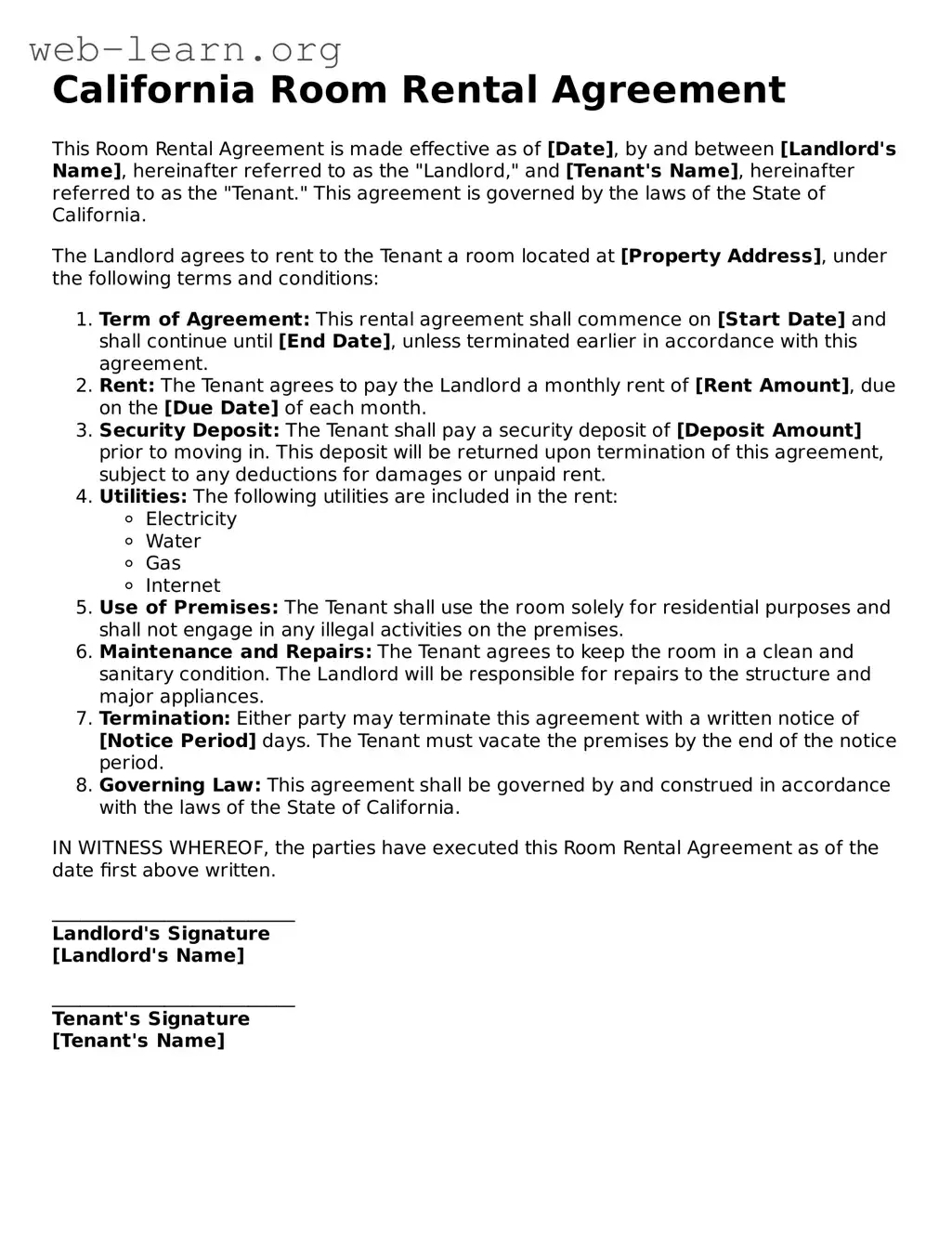
The California Room Rental Agreement form serves as a crucial document for both landlords and tenants, outlining the terms and conditions of renting a room within a residential property. This agreement covers essential aspects such as rental payment details, security deposits, and the duration of the lease. It also specifies the responsibilities of both parties, including maintenance obligations and rules regarding property use. Additionally, the form addresses the procedures for terminating the agreement, ensuring that both landlords and tenants understand their rights and obligations. By clearly delineating expectations, the Room Rental Agreement helps to prevent misunderstandings and disputes, fostering a more harmonious living arrangement. This document is not only a legal safeguard but also a foundation for a respectful landlord-tenant relationship.
California Room Rental Agreement
This Room Rental Agreement is made effective as of [Date], by and between [Landlord's Name], hereinafter referred to as the "Landlord," and [Tenant's Name], hereinafter referred to as the "Tenant." This agreement is governed by the laws of the State of California.
The Landlord agrees to rent to the Tenant a room located at [Property Address], under the following terms and conditions:
IN WITNESS WHEREOF, the parties have executed this Room Rental Agreement as of the date first above written.
__________________________
Landlord's Signature
[Landlord's Name]
__________________________
Tenant's Signature
[Tenant's Name]
| Fact Name | Description |
|---|---|
| Purpose | The California Room Rental Agreement form outlines the terms and conditions for renting a residential property in California. |
| Governing Laws | This agreement is governed by California Civil Code Sections 1940-1954.1, which cover landlord-tenant relationships. |
| Parties Involved | The form identifies the landlord and tenant, ensuring both parties are clearly named and their roles defined. |
| Rental Amount | The agreement specifies the monthly rent amount, payment due date, and acceptable payment methods. |
| Security Deposit | Details regarding the security deposit, including the maximum amount and conditions for its return, are included. |
| Lease Term | The form outlines the duration of the lease, whether it is month-to-month or a fixed-term agreement. |
| Maintenance Responsibilities | Responsibilities for maintenance and repairs are defined, clarifying what is expected of both the landlord and tenant. |
| Termination Conditions | The agreement includes the conditions under which either party can terminate the lease, along with the required notice period. |
| Dispute Resolution | Provisions for resolving disputes, such as mediation or arbitration, may also be outlined in the agreement. |
Filling out the California Room Rental Agreement form is an important step in establishing a rental relationship. This document outlines the terms and conditions of the rental arrangement between the landlord and tenant. Following these steps will help ensure that all necessary information is accurately provided.
A California Room Rental Agreement is a legal document that outlines the terms and conditions between a landlord and a tenant for renting a room in a residential property. This agreement specifies the responsibilities of both parties, including rent payment, duration of the rental, and rules for the property.
Both the landlord and the tenant must sign the Room Rental Agreement. If there are multiple tenants, each tenant should also sign the agreement to ensure that everyone is aware of their rights and obligations.
The agreement typically includes:
The duration of the agreement can vary. It can be a fixed term, such as six months or a year, or it can be month-to-month. The specifics should be clearly stated in the agreement to avoid any confusion.
The agreement should outline the process for termination. Typically, a notice period is required, which can range from 30 to 60 days, depending on the terms agreed upon. It’s essential to follow this process to avoid potential legal issues.
Yes, but both parties must agree to any changes. It’s advisable to document any amendments in writing and have both parties sign the updated agreement. This ensures clarity and protects everyone involved.
If a dispute arises, it’s best to try to resolve it through communication. If that doesn’t work, mediation or arbitration may be options. As a last resort, legal action can be taken, but this should be avoided if possible to save time and costs.
When filling out the California Room Rental Agreement form, individuals often overlook critical details that can lead to misunderstandings or disputes later on. One common mistake is failing to provide accurate personal information. This includes names, addresses, and contact numbers. Inaccuracies can complicate communication and create challenges in enforcing the agreement.
Another frequent error is neglecting to specify the rental term. Whether the arrangement is for a month-to-month lease or a fixed-term agreement, clarity is essential. Without a defined rental period, both parties may have different expectations, leading to potential conflicts.
Many people also forget to include the security deposit details. The amount, conditions for its return, and any deductions should be clearly outlined. A lack of transparency regarding the security deposit can result in disputes when the tenant moves out.
Additionally, tenants sometimes overlook the importance of documenting the condition of the room at the time of rental. A detailed inspection report, including photographs, can serve as valuable evidence if disputes arise regarding damages or cleanliness upon vacating the premises.
Another mistake involves not reading the entire agreement before signing. Skimming through the document may lead to missing important clauses or obligations. Understanding the terms of the agreement is crucial for both landlords and tenants to ensure compliance and avoid future issues.
Furthermore, individuals may fail to include essential provisions, such as rules regarding pets, smoking, or guests. These stipulations help set clear expectations and can prevent conflicts between landlords and tenants.
Lastly, many people do not keep a copy of the signed agreement. Retaining a copy is vital for reference and can help resolve disputes should they arise. Without a copy, it becomes challenging to prove the agreed-upon terms.
When entering into a Room Rental Agreement in California, it's essential to consider several other documents that can help clarify terms, protect rights, and ensure a smooth rental experience. These documents serve various purposes, from outlining specific responsibilities to providing legal protections for both landlords and tenants.
Having these documents in place can significantly enhance the rental experience for both landlords and tenants. They provide clarity and protection, which is crucial in any rental relationship. It is advisable to review and understand each document thoroughly to ensure compliance and safeguard your interests.
Lease Agreement: A lease agreement is similar to a room rental agreement, as both documents outline the terms under which a tenant can occupy a property. They specify the duration of the stay, rent amount, and responsibilities of both parties.
Rental Application: A rental application is often used before a rental agreement is finalized. It collects information about potential tenants, including their background and financial status, which helps landlords make informed decisions.
Security Deposit Agreement: This document details the terms surrounding the security deposit, including the amount, conditions for its return, and any deductions that may be made. It complements the room rental agreement by addressing financial protections for the landlord.
House Rules Document: A house rules document outlines the expectations for behavior and use of common areas within a rental property. It works in conjunction with the room rental agreement to ensure a harmonious living environment.
Notice to Quit: This document is used to inform a tenant that they must vacate the property. While it serves a different purpose, it relates to the room rental agreement by addressing the termination of the rental arrangement.
When filling out the California Room Rental Agreement form, it's important to approach the process carefully. Here’s a list of dos and don’ts to guide you:
Many people have misunderstandings about the California Room Rental Agreement form. Here are six common misconceptions, along with clarifications to help you better understand this important document.
While signatures are important, a rental agreement can still be legally binding even if one party has not signed it, provided that both parties have acted in accordance with the terms.
While it is advisable to have a written agreement for clarity, verbal agreements can also be enforceable, depending on the circumstances and local laws.
Both landlords and tenants can propose changes. Any modifications should be agreed upon and documented to avoid confusion.
No agreement can cover every situation. It is crucial for both parties to communicate openly and address specific concerns that may not be included in the document.
Terms can be changed if both parties agree to the modifications. It’s best to document any changes in writing to ensure clarity.
Oral agreements can be valid in California, but they can be harder to enforce. Written agreements provide a clearer record of the terms.
Understanding these misconceptions can help both landlords and tenants navigate their rental agreements more effectively.
When it comes to renting a room in California, understanding the Room Rental Agreement form is essential. Here are some key takeaways to keep in mind:
Understanding these key points can make the rental process smoother and help foster a positive landlord-tenant relationship. Always consider seeking legal advice if you have specific questions or concerns regarding your agreement.
Georgia Room Rental Agreement - It may outline the process for handling property damage or theft.
Room Lease Template - It may outline the landlord's right to enter the property for inspections.
Roommate Lease - It includes contact information for both the landlord and tenant.