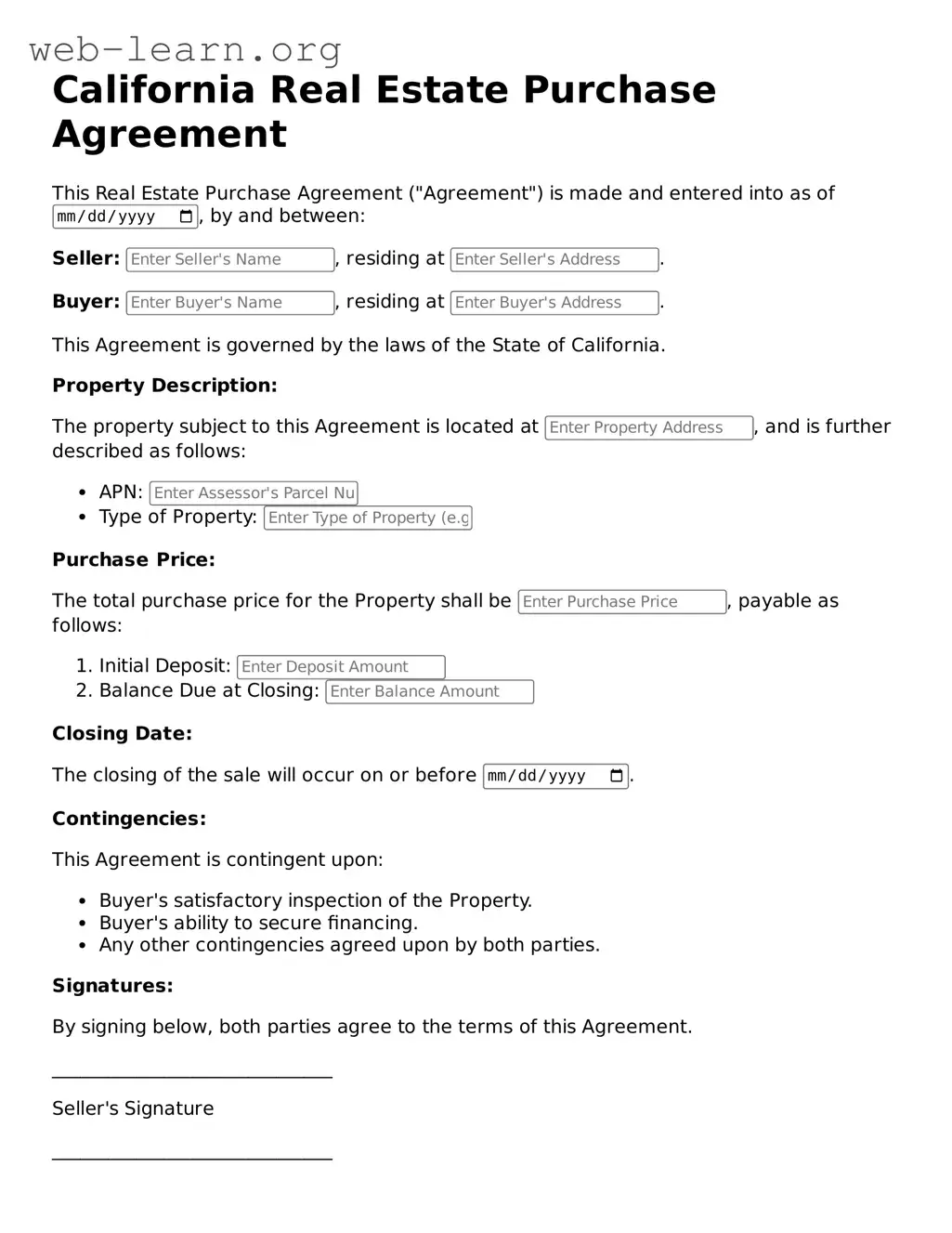
The California Real Estate Purchase Agreement form serves as a vital tool in the home-buying process, ensuring that both buyers and sellers are aligned on the terms of a property transaction. This comprehensive document outlines essential details such as the purchase price, property description, and closing date, providing clarity and structure to the agreement. It includes provisions for contingencies, allowing buyers to conduct inspections and secure financing before finalizing the sale. Additionally, the form addresses earnest money deposits, which demonstrate a buyer's commitment to the purchase. With sections dedicated to disclosures and the responsibilities of both parties, this agreement fosters transparency and helps prevent misunderstandings. By utilizing this standardized form, individuals can navigate the complexities of real estate transactions with greater confidence and ease.
California Real Estate Purchase Agreement
This Real Estate Purchase Agreement ("Agreement") is made and entered into as of , by and between:
Seller: , residing at .
Buyer: , residing at .
This Agreement is governed by the laws of the State of California.
Property Description:
The property subject to this Agreement is located at , and is further described as follows:
Purchase Price:
The total purchase price for the Property shall be , payable as follows:
Closing Date:
The closing of the sale will occur on or before .
Contingencies:
This Agreement is contingent upon:
Signatures:
By signing below, both parties agree to the terms of this Agreement.
______________________________
Seller's Signature
______________________________
Buyer's Signature
Date:
| Fact Name | Description |
|---|---|
| Governing Law | The California Real Estate Purchase Agreement is governed by California state law. |
| Purpose | This form is used to outline the terms of a real estate transaction between a buyer and a seller. |
| Offer and Acceptance | The agreement requires an offer from the buyer and acceptance by the seller to create a binding contract. |
| Contingencies | Buyers can include contingencies, such as financing or inspection, to protect their interests. |
| Deposit | A deposit, often referred to as "earnest money," is typically required to demonstrate the buyer's commitment. |
| Disclosure Requirements | Sellers must provide disclosures regarding the property's condition and any known issues. |
| Closing Process | The agreement outlines the closing process, including the timeline and responsibilities of each party. |
Completing the California Real Estate Purchase Agreement form is an important step in the home-buying process. This document outlines the terms of the sale and protects the interests of both the buyer and the seller. It is essential to fill it out accurately to avoid any potential disputes later on.
Once the form is completed, it should be reviewed carefully by all parties involved. This will help ensure that everyone understands the terms before moving forward with the transaction.
What is a California Real Estate Purchase Agreement?
The California Real Estate Purchase Agreement (RPA) is a legal document used in real estate transactions. It outlines the terms and conditions under which a buyer agrees to purchase a property from a seller. This agreement serves as a binding contract once both parties sign it, detailing essential aspects such as the purchase price, closing date, and any contingencies that may apply.
What key elements are included in the RPA?
The RPA typically includes several important components:
What are contingencies in the RPA?
Contingencies are conditions that must be met for the sale to proceed. Common contingencies include:
If any contingency is not satisfied, the buyer may have the option to withdraw from the agreement without penalty.
How does the RPA protect both buyers and sellers?
The RPA is designed to protect the interests of both parties. For buyers, it outlines their rights and obligations, ensuring they have the opportunity to conduct due diligence. Sellers benefit from the agreement by having a clear understanding of the terms of sale and the buyer’s commitments. This mutual protection helps minimize disputes and misunderstandings during the transaction process.
Can the RPA be modified after it is signed?
Yes, the RPA can be modified after it is signed, but any changes must be agreed upon by both parties. Modifications should be documented in writing and signed by both the buyer and seller to ensure they are enforceable. This process allows for flexibility in addressing unforeseen circumstances or changes in the transaction.
What should I do if I have questions about the RPA?
If you have questions about the California Real Estate Purchase Agreement, it is advisable to consult with a qualified real estate agent or an attorney who specializes in real estate law. They can provide guidance tailored to your specific situation, helping you understand the terms and implications of the agreement. Seeking professional advice can help ensure a smoother transaction and protect your interests.
Filling out the California Real Estate Purchase Agreement can be a daunting task, especially for first-time homebuyers. One common mistake is failing to include all necessary parties in the agreement. If a spouse or co-owner is omitted, it can lead to complications down the line, including disputes over ownership. Always ensure that all individuals with a legal interest in the property are included to avoid future headaches.
Another frequent error involves not specifying the purchase price clearly. While it may seem straightforward, ambiguity can lead to misunderstandings. Make sure to write the price in both numerical and written form. This dual representation helps eliminate any confusion about the agreed-upon amount.
Many buyers overlook the importance of contingencies. These are conditions that must be met for the sale to proceed. Neglecting to include contingencies related to financing, inspections, or appraisals can leave buyers vulnerable. Without these protections, they may find themselves locked into a deal that doesn’t suit their needs.
Additionally, failing to provide accurate property descriptions is a common pitfall. A vague description can create confusion about what is actually being sold. It’s essential to include the correct address, legal description, and any relevant details about the property’s boundaries and features.
People also often forget to include the closing date. Specifying when the transaction will be finalized is crucial for both parties. If this date is left blank, it can lead to disagreements and delays. Clear timelines help ensure that everyone is on the same page.
Another mistake is neglecting to disclose any known issues with the property. Sellers have a legal obligation to inform buyers about any significant defects or problems. Failing to do so can result in legal repercussions and financial losses. Transparency is vital for building trust in the transaction.
Moreover, buyers sometimes skip over the financing section. It’s important to clearly outline how the purchase will be funded. Whether through a mortgage, cash, or another method, detailing this information helps prevent misunderstandings regarding payment expectations.
Lastly, many individuals forget to consult with a real estate professional or attorney before submitting the agreement. While it may seem like an unnecessary step, having an expert review the document can catch errors and ensure that all legal requirements are met. This extra layer of scrutiny can save significant time and stress in the long run.
When engaging in a real estate transaction in California, the Real Estate Purchase Agreement is just one piece of the puzzle. Several other forms and documents are often used to ensure a smooth process and protect the interests of all parties involved. Here’s a brief overview of some of these essential documents.
Each of these documents plays a crucial role in the real estate transaction process. Understanding their purpose helps buyers and sellers navigate the complexities of real estate deals in California, promoting a smoother and more informed experience.
When filling out the California Real Estate Purchase Agreement form, it is important to follow certain guidelines to ensure accuracy and compliance. Below is a list of things you should and shouldn't do.
Here are five common misconceptions about the California Real Estate Purchase Agreement form:
While the agreement becomes legally binding when both parties sign, it may still be contingent on various factors, such as inspections or financing. Understanding these contingencies is crucial.
Any changes to the agreement after it has been signed require mutual consent from both parties. Modifications should be documented in writing to avoid disputes.
The agreement is designed to protect the interests of both parties, but it may favor one side depending on the terms negotiated. Buyers and sellers should be aware of their rights and obligations.
While the California Real Estate Purchase Agreement is common, not all transactions use this form. Different types of agreements may be appropriate depending on the situation.
There are circumstances under which a buyer or seller can cancel the agreement, especially if contingencies are not met. It is important to understand the cancellation rights included in the agreement.
Filling out and using the California Real Estate Purchase Agreement form is a crucial step in the home buying process. Here are some key takeaways to consider:
By following these takeaways, buyers and sellers can navigate the California Real Estate Purchase Agreement with greater confidence.
How to Write a Purchase Agreement - The agreement may require the seller to provide a property survey prior to closing.
Purchasing Agreements - Addresses any special agreements or arrangements between the parties.