In California, a Promissory Note is a vital financial document that outlines the terms of a loan between a lender and a borrower. This form serves as a written promise from the borrower to repay a specified amount of money, typically with interest, within a designated timeframe. Key components of the Promissory Note include the principal amount, interest rate, repayment schedule, and any penalties for late payments. Additionally, it often specifies whether the loan is secured or unsecured, which can significantly impact the lender's rights in the event of default. Understanding the nuances of this form is essential for both parties involved, as it not only establishes the legal obligations but also provides clarity and protection throughout the lending process. By ensuring that all terms are clearly defined and agreed upon, a California Promissory Note can help foster trust and transparency in financial transactions.
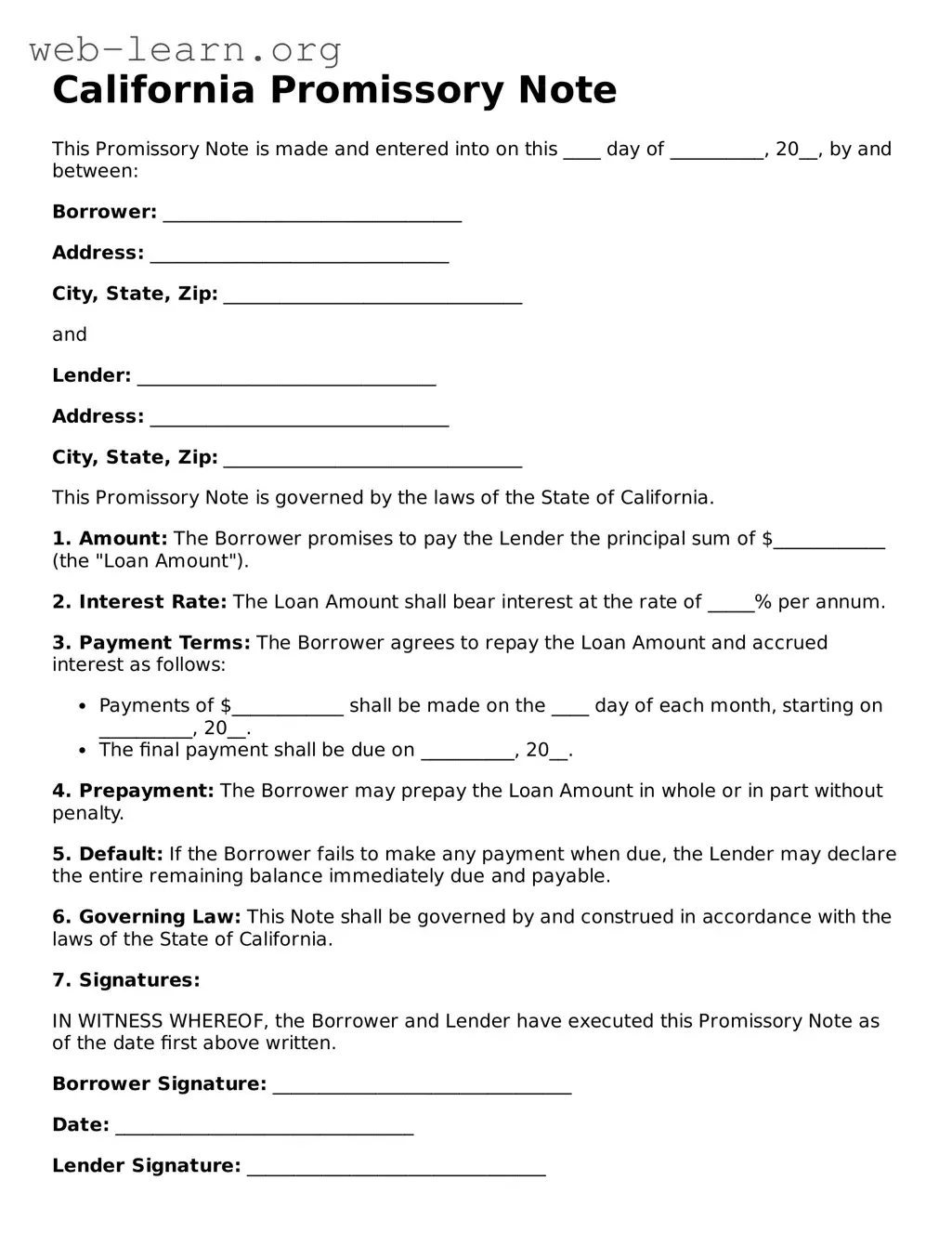
California Promissory Note
This Promissory Note is made and entered into on this ____ day of __________, 20__, by and between:
Borrower: ________________________________
Address: ________________________________
City, State, Zip: ________________________________
and
Lender: ________________________________
Address: ________________________________
City, State, Zip: ________________________________
This Promissory Note is governed by the laws of the State of California.
1. Amount: The Borrower promises to pay the Lender the principal sum of $____________ (the "Loan Amount").
2. Interest Rate: The Loan Amount shall bear interest at the rate of _____% per annum.
3. Payment Terms: The Borrower agrees to repay the Loan Amount and accrued interest as follows:
4. Prepayment: The Borrower may prepay the Loan Amount in whole or in part without penalty.
5. Default: If the Borrower fails to make any payment when due, the Lender may declare the entire remaining balance immediately due and payable.
6. Governing Law: This Note shall be governed by and construed in accordance with the laws of the State of California.
7. Signatures:
IN WITNESS WHEREOF, the Borrower and Lender have executed this Promissory Note as of the date first above written.
Borrower Signature: ________________________________
Date: ________________________________
Lender Signature: ________________________________
Date: ________________________________
| Fact Name | Details |
|---|---|
| Definition | A California Promissory Note is a written promise to pay a specific amount of money to a designated person or entity at a specified time or on demand. |
| Governing Law | The California Uniform Commercial Code (UCC) governs promissory notes in California. |
| Parties Involved | Typically, there are two main parties: the maker (borrower) and the payee (lender). |
| Interest Rates | Interest rates can be fixed or variable, and they must comply with California usury laws. |
| Repayment Terms | The note should clearly outline repayment terms, including the payment schedule and any late fees. |
| Default Conditions | Conditions under which the borrower is considered in default must be explicitly stated in the note. |
| Signatures | Both parties must sign the promissory note for it to be legally binding. |
| Enforceability | A properly executed promissory note is enforceable in a court of law, provided it meets all legal requirements. |
After you gather all necessary information, you can begin filling out the California Promissory Note form. This document will outline the terms of the loan agreement between the lender and the borrower, ensuring that both parties understand their obligations.
Once the form is completed, both parties should retain a copy for their records. This ensures that everyone has access to the agreed-upon terms and can refer back to them if necessary.
What is a California Promissory Note?
A California Promissory Note is a written agreement between a borrower and a lender. It outlines the terms under which the borrower promises to repay a specific amount of money to the lender, usually with interest. This document is legally binding and serves as evidence of the loan. It can be used for various purposes, such as personal loans, business loans, or real estate transactions.
What information is typically included in a Promissory Note?
A typical California Promissory Note includes several key pieces of information:
This information ensures that both parties clearly understand their obligations and rights under the agreement.
Do I need a lawyer to create a Promissory Note?
While it is not required to have a lawyer draft a Promissory Note, it can be beneficial. A lawyer can help ensure that the document complies with California laws and meets your specific needs. However, many people successfully create Promissory Notes on their own using templates or forms available online. Just make sure to include all necessary information and have both parties sign the document.
What happens if the borrower defaults on the Promissory Note?
If the borrower fails to make payments as agreed, this is known as defaulting on the note. In such cases, the lender has several options:
It’s important for both parties to communicate openly to resolve any issues before they escalate.
When filling out the California Promissory Note form, individuals often overlook key details that can lead to complications down the line. One common mistake is failing to include the correct names of the parties involved. The lender and borrower must be clearly identified. If the names are misspelled or incomplete, it can create confusion and potentially invalidate the agreement.
Another frequent error is neglecting to specify the loan amount. While it may seem obvious, explicitly stating the amount borrowed is crucial. Without this detail, disputes may arise regarding how much is owed. Additionally, it can complicate the enforcement of the note if the loan amount is not clearly documented.
People also tend to forget about the interest rate. If the interest rate is not mentioned, the note may be considered a gift rather than a loan. This oversight can have significant tax implications for both parties. Clearly stating the interest rate helps define the terms of repayment and ensures that both parties are on the same page.
Finally, many individuals fail to include a repayment schedule. It is important to outline when payments are due and the method of payment. Without a repayment schedule, the borrower may not understand their obligations, leading to missed payments and potential legal issues. A well-defined schedule helps avoid misunderstandings and provides clarity for both parties involved.
When dealing with a California Promissory Note, several other forms and documents often accompany it to ensure clarity and legal protection for all parties involved. Each of these documents serves a specific purpose in the lending process.
Understanding these documents can help borrowers and lenders navigate the complexities of borrowing and lending money. Each form plays a crucial role in protecting the interests of all parties involved in the transaction.
A Promissory Note is a financial document that outlines a promise to pay a specified amount of money to a designated party under agreed-upon terms. It shares similarities with several other legal documents. Below is a list of eight documents that have characteristics similar to a Promissory Note:
When filling out the California Promissory Note form, it is essential to follow specific guidelines to ensure accuracy and legality. Below is a list of things you should and shouldn't do.
Understanding the California Promissory Note form is essential for anyone involved in lending or borrowing money. However, several misconceptions can lead to confusion. Below are five common misconceptions explained:
Many believe that a verbal agreement is sufficient. However, California law requires that promissory notes be in writing to be enforceable. This written documentation helps clarify the terms and conditions of the loan.
This is not true. Individuals and businesses can also create promissory notes. As long as the terms are clearly defined, any party can issue a promissory note.
While they are related, they are not the same. A promissory note is a promise to repay a specific amount, whereas a loan agreement outlines the terms of the loan, including interest rates, repayment schedules, and other conditions.
This misconception is misleading. Parties can amend a promissory note if both agree to the changes. It is crucial to document any amendments in writing to avoid future disputes.
While some promissory notes can be interest-free, many include interest rates. The specific terms should be clearly stated in the note to avoid misunderstandings.
When filling out and using the California Promissory Note form, it is essential to understand several key aspects to ensure clarity and legality. Below are important takeaways to consider:
By paying attention to these elements, individuals can create a clear and enforceable promissory note that serves its intended purpose.
New York Promissory Note Requirements - A promissory note is a written promise to pay a specified amount of money to a designated person or entity.
Promissory Note Hawaii - Interest rates on promissory notes can vary widely based on the agreement.
Free Promissory Note Template Georgia - It can include a grace period for late payments before penalties apply.
Oregon Promissory Note - The promissory note includes details such as the loan amount, interest rate, and repayment schedule.