Entering into a marriage is often one of the most significant decisions in a person's life, and for many couples in California, a prenuptial agreement serves as an essential tool for establishing financial clarity and security before tying the knot. This legal document outlines how assets and debts will be managed during the marriage and addresses what happens in the event of a divorce or separation. A California Prenuptial Agreement can cover various aspects, such as the division of property, spousal support, and the management of debts. It allows couples to have open discussions about their financial expectations and responsibilities, ultimately fostering a healthier relationship. The form itself must meet specific legal requirements to be enforceable, including full disclosure of assets and the voluntary consent of both parties. Understanding the nuances of this agreement can empower couples to make informed decisions that protect their interests and set a solid foundation for their future together.
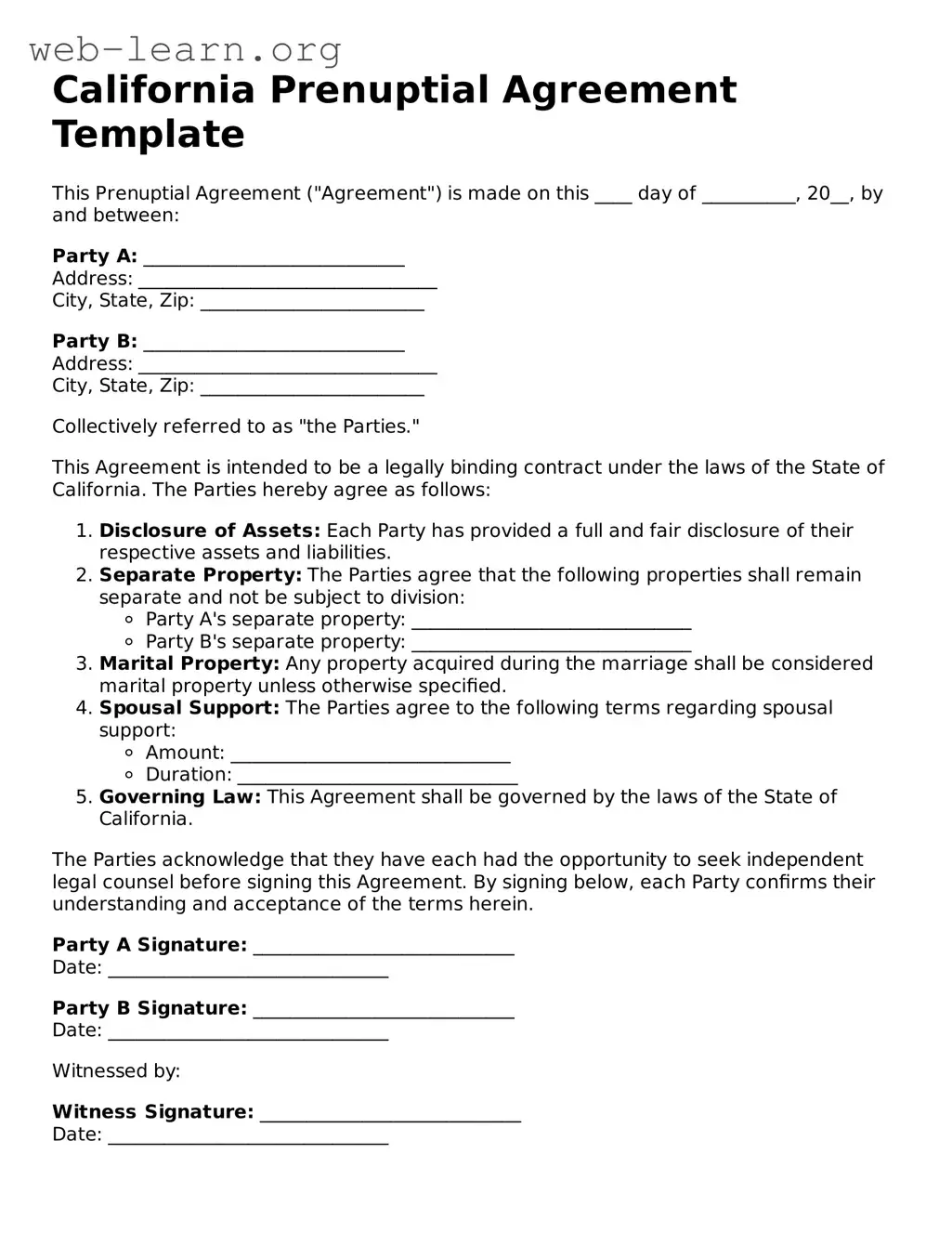
California Prenuptial Agreement Template
This Prenuptial Agreement ("Agreement") is made on this ____ day of __________, 20__, by and between:
Party A: ____________________________
Address: ________________________________
City, State, Zip: ________________________
Party B: ____________________________
Address: ________________________________
City, State, Zip: ________________________
Collectively referred to as "the Parties."
This Agreement is intended to be a legally binding contract under the laws of the State of California. The Parties hereby agree as follows:
The Parties acknowledge that they have each had the opportunity to seek independent legal counsel before signing this Agreement. By signing below, each Party confirms their understanding and acceptance of the terms herein.
Party A Signature: ____________________________
Date: ______________________________
Party B Signature: ____________________________
Date: ______________________________
Witnessed by:
Witness Signature: ____________________________
Date: ______________________________
This document is intended to outline the terms agreed upon by both Parties. It is recommended that each Party retains a copy for their records.
| Fact Name | Description |
|---|---|
| Governing Law | The California Prenuptial Agreement is governed by the California Family Code, specifically sections 1600-1617. |
| Purpose | This agreement allows couples to outline the distribution of assets and financial responsibilities in the event of a divorce or separation. |
| Requirements | For a prenuptial agreement to be enforceable in California, it must be in writing and signed by both parties. |
| Disclosure | Full financial disclosure is required from both parties prior to signing the agreement to ensure fairness and transparency. |
Completing the California Prenuptial Agreement form requires careful attention to detail. This document is essential for couples looking to outline their financial rights and responsibilities before marriage. Following the steps below will help ensure that the form is filled out correctly.
What is a prenuptial agreement?
A prenuptial agreement, often called a prenup, is a legal document created by two individuals before they marry. It outlines the distribution of assets and responsibilities in the event of a divorce or separation. This agreement can help clarify financial expectations and protect individual interests.
Why should I consider a prenuptial agreement?
Many couples choose to create a prenup to safeguard their financial interests. This can be especially important for those entering a marriage with significant assets, debts, or children from previous relationships. A prenup can also help reduce conflict and provide clarity during a difficult time, should the marriage end.
What can be included in a prenuptial agreement?
In California, a prenup can cover various topics, including:
However, certain matters, such as child custody and child support, cannot be included in a prenup as these decisions must be made in the child's best interest at the time of divorce.
How do I create a prenuptial agreement in California?
To create a valid prenuptial agreement in California, follow these steps:
Is a prenuptial agreement enforceable in California?
Yes, a properly executed prenuptial agreement is generally enforceable in California. However, it must meet specific legal requirements. These include being in writing, signed by both parties, and entered into voluntarily. Additionally, the agreement should be fair and not unconscionable at the time of enforcement.
Can I change or revoke a prenuptial agreement?
Yes, you can change or revoke a prenuptial agreement at any time, as long as both parties agree to the modifications. It is advisable to document any changes in writing and have both parties sign the revised agreement. Consulting with legal counsel is recommended to ensure the changes are valid and enforceable.
What happens if we don’t have a prenuptial agreement?
If a couple does not have a prenuptial agreement, California's community property laws will govern the division of assets and debts upon divorce. This means that any property acquired during the marriage is typically considered community property and will be divided equally, while separate property remains with the original owner.
How much does a prenuptial agreement cost?
The cost of a prenuptial agreement can vary widely based on factors such as the complexity of the agreement and the attorney’s fees. Generally, you might expect to pay anywhere from a few hundred to several thousand dollars. Investing in a well-drafted prenup can save you money and stress in the long run.
Do I need a lawyer for a prenuptial agreement?
While it is not legally required to have a lawyer, it is highly recommended. An attorney can help ensure that the agreement is fair, legally sound, and tailored to your specific needs. Additionally, having separate legal representation for both parties can help prevent future disputes and ensure that both individuals fully understand the terms.
Filling out a California Prenuptial Agreement form can be a complex task. Many individuals make mistakes that can lead to misunderstandings or complications later. One common error is failing to fully disclose assets. Each party should provide a complete list of their financial holdings, including property, bank accounts, and investments. Omitting any significant asset can lead to disputes down the line.
Another mistake is not considering future changes in circumstances. Life events such as job changes, inheritance, or the birth of children can affect financial situations. It is crucial to include provisions that account for potential changes, ensuring the agreement remains relevant over time.
People often overlook the importance of legal representation. While it is possible to create a prenuptial agreement without an attorney, having legal guidance can help ensure that the document complies with California laws. An attorney can also provide insights into the implications of certain clauses, which can be invaluable.
Additionally, some individuals fail to address spousal support adequately. In California, courts may enforce agreements regarding spousal support, but if the terms are unclear or unfair, they may be challenged. It is essential to discuss and clearly outline any expectations regarding support in the event of a divorce.
Lastly, couples sometimes rush through the process. Taking the time to review and discuss each section of the agreement is vital. Both parties should understand the terms and feel comfortable with the final document. Rushing can lead to misunderstandings and potential legal issues in the future.
A California Prenuptial Agreement is an essential document for couples looking to clarify their financial rights and responsibilities before marriage. However, several other forms and documents can complement this agreement, ensuring that all aspects of the couple's financial relationship are addressed. Below is a list of some commonly used documents that may accompany a prenuptial agreement.
Utilizing these documents alongside a California Prenuptial Agreement can provide clarity and security for both partners. Each document serves a unique purpose, helping to create a comprehensive framework for managing financial matters before and during marriage.
When filling out the California Prenuptial Agreement form, it is essential to approach the process with care and consideration. Here are some guidelines to follow:
Following these guidelines can help create a fair and clear agreement that protects both parties' interests.
When considering a prenuptial agreement in California, several misconceptions can cloud judgment. Understanding these misconceptions can help couples make informed decisions about their future. Below is a list of common misunderstandings regarding the California Prenuptial Agreement form.
By recognizing these misconceptions, couples can approach the topic of prenuptial agreements with clarity and confidence. Open discussions about financial matters can pave the way for a healthier relationship.
When considering a prenuptial agreement in California, it’s essential to understand the key elements involved. Here are some important takeaways:
These takeaways provide a solid foundation for understanding the essentials of a California prenuptial agreement. Proper preparation can lead to a more secure future for both parties.
Georgia Prenup - A prenuptial agreement can specify how to handle property acquired before marriage.
Indiana Prenup - This document can be customized to fit the couple's unique situation.
New York Prenup - It can help ensure that both spouses are treated fairly in a divorce scenario.