Homepage Blank California Petition Mandate Form
Outline

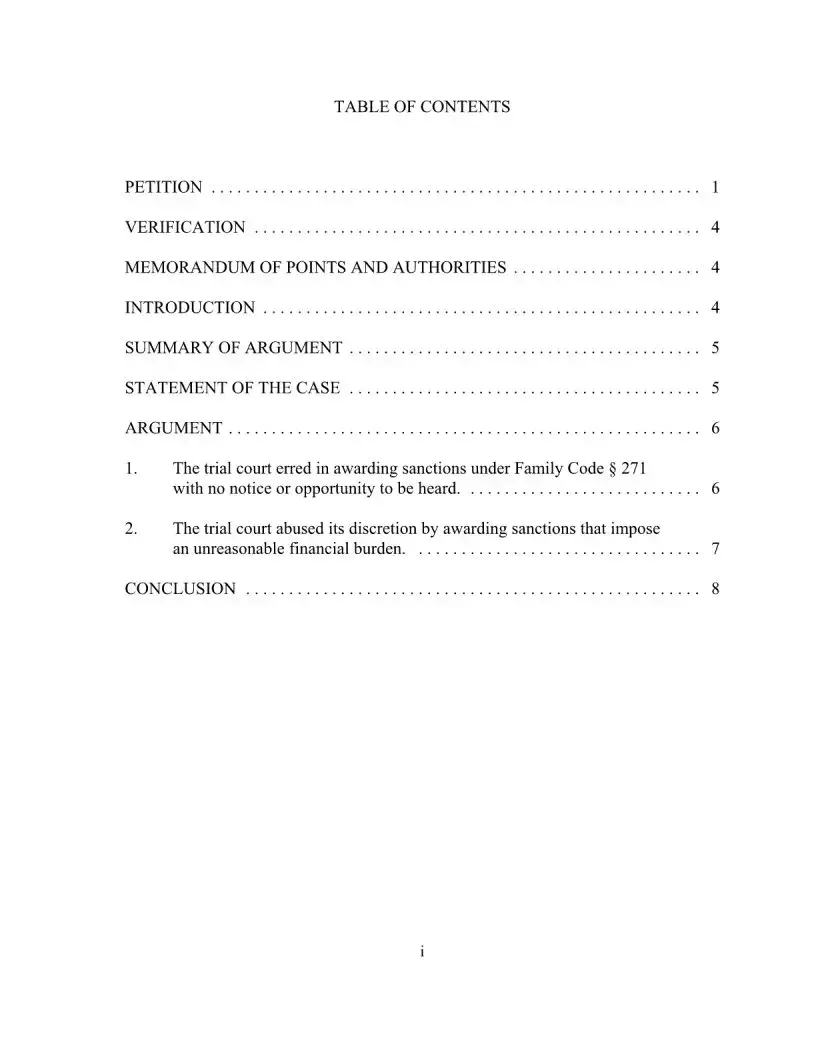
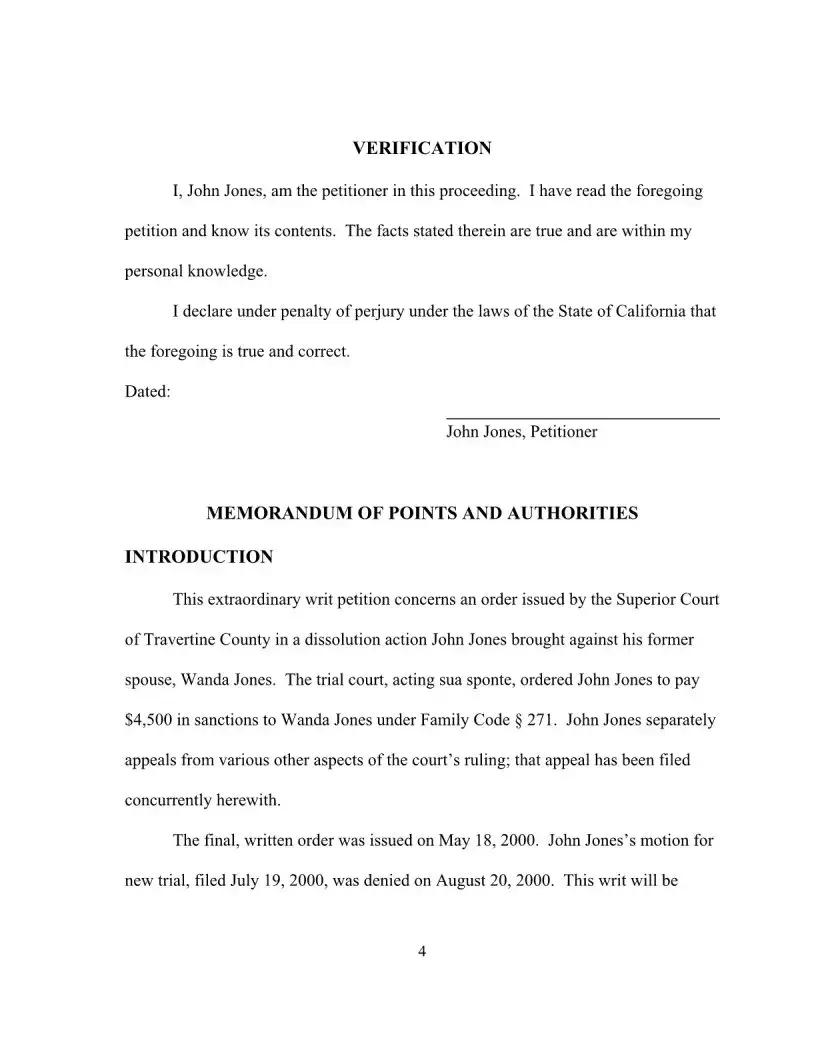
The California Petition Mandate form serves as a vital tool for individuals seeking judicial review of decisions made by lower courts, particularly in family law cases. This form is essential for petitioners who believe that a trial court has made an error or acted beyond its authority. In the context of a family law dispute, such as the case of John Jones versus Wanda Jones, the petition outlines specific grievances, including issues related to child support and spousal support modifications. It provides a structured format for presenting the case to the Court of Appeal, detailing the grounds for the petition, the relief sought, and the legal basis for the claims. The document includes various sections, such as a verification statement, a memorandum of points and authorities, and a summary of the argument, ensuring that all necessary information is clearly presented. By utilizing this form, petitioners can effectively communicate their concerns and seek appropriate relief, making it an indispensable resource in navigating the complexities of family law in California.
Sample - California Petition Mandate Form

Form Information

Fact Name Fact Description
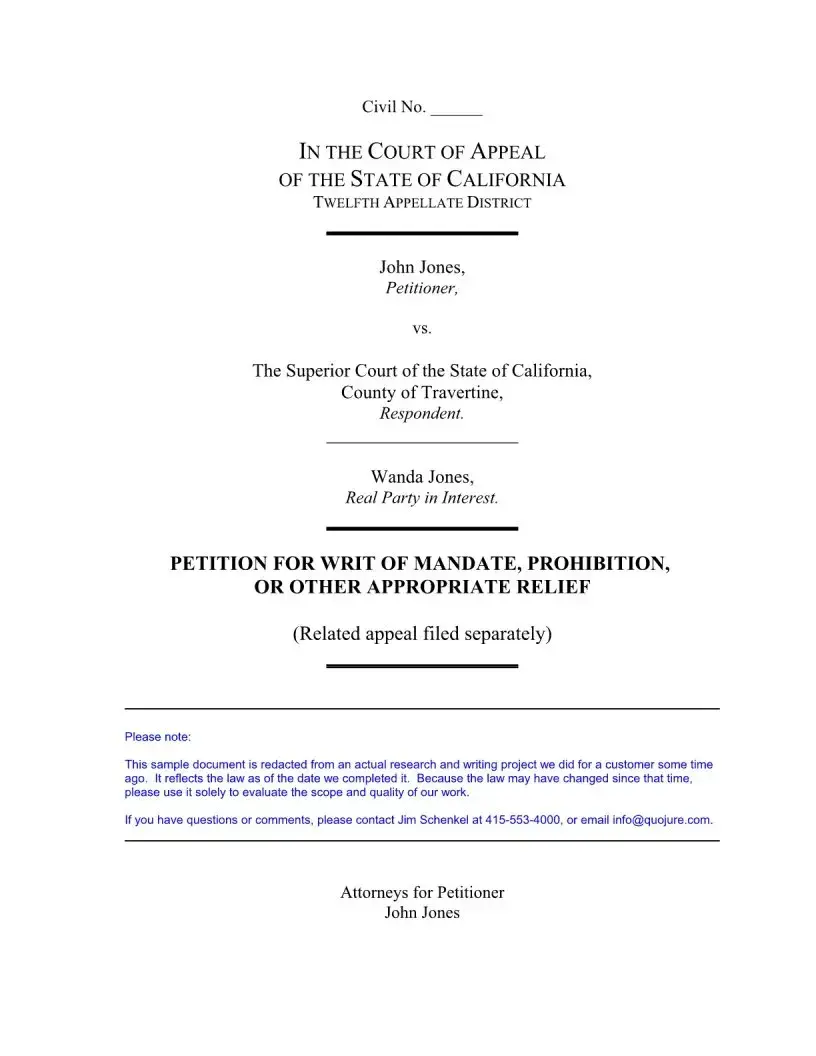
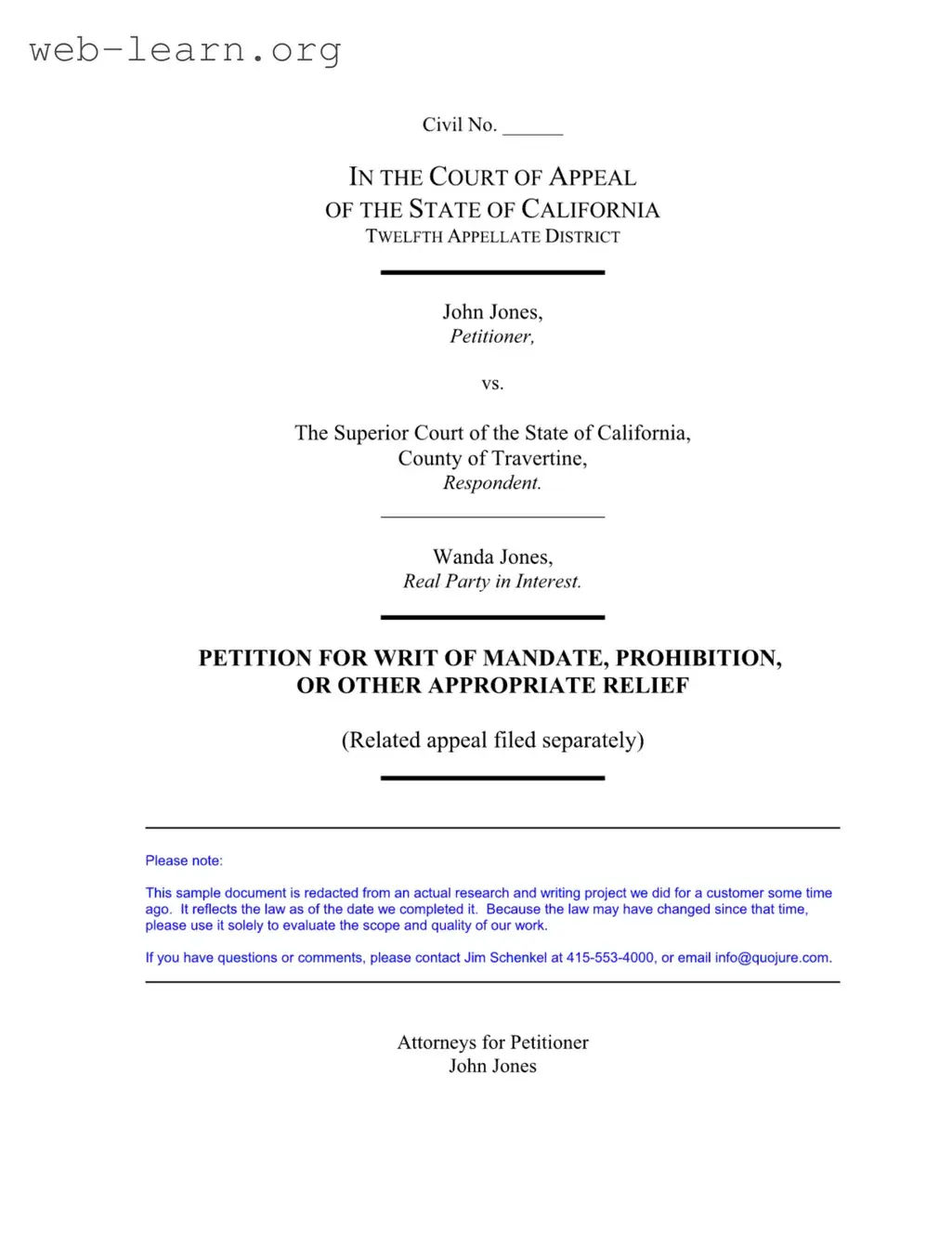
Court Jurisdiction The form is filed in the Twelfth Appellate District of the California Court of Appeal.
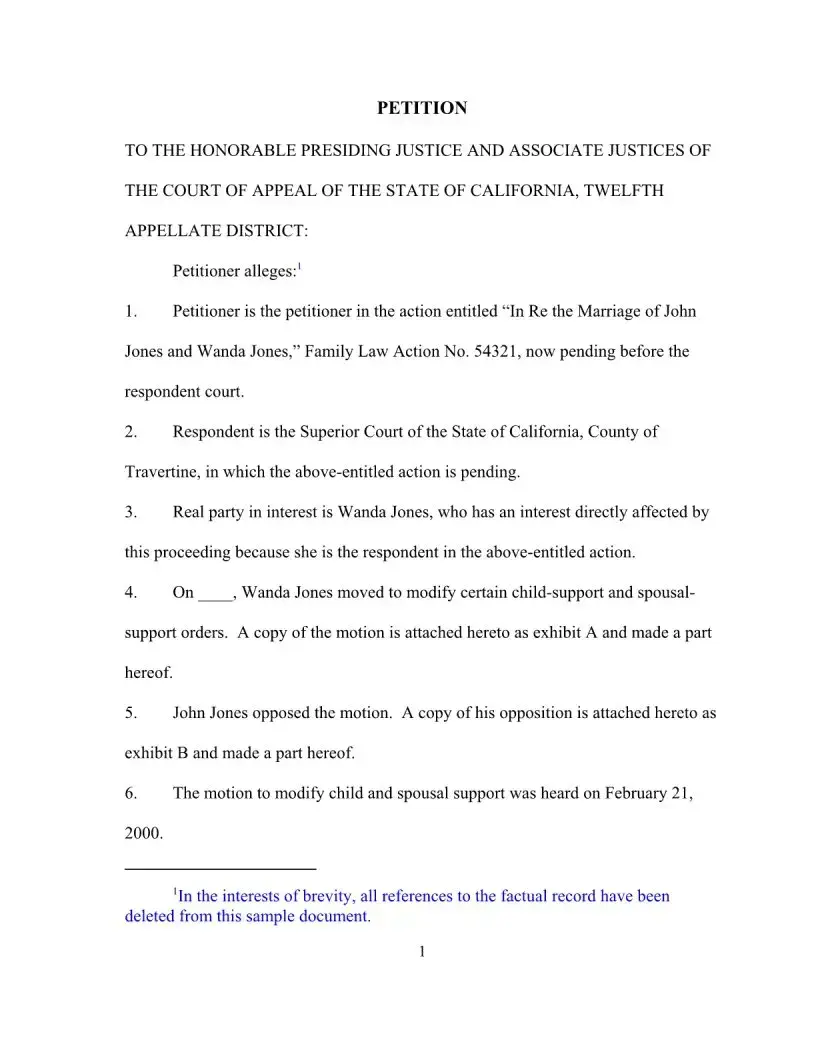
Petitioner John Jones is the petitioner seeking relief through the writ of mandate.
Respondent The respondent is the Superior Court of California, County of Travertine.
Real Party in Interest Wanda Jones is identified as the real party in interest, directly affected by the proceedings.
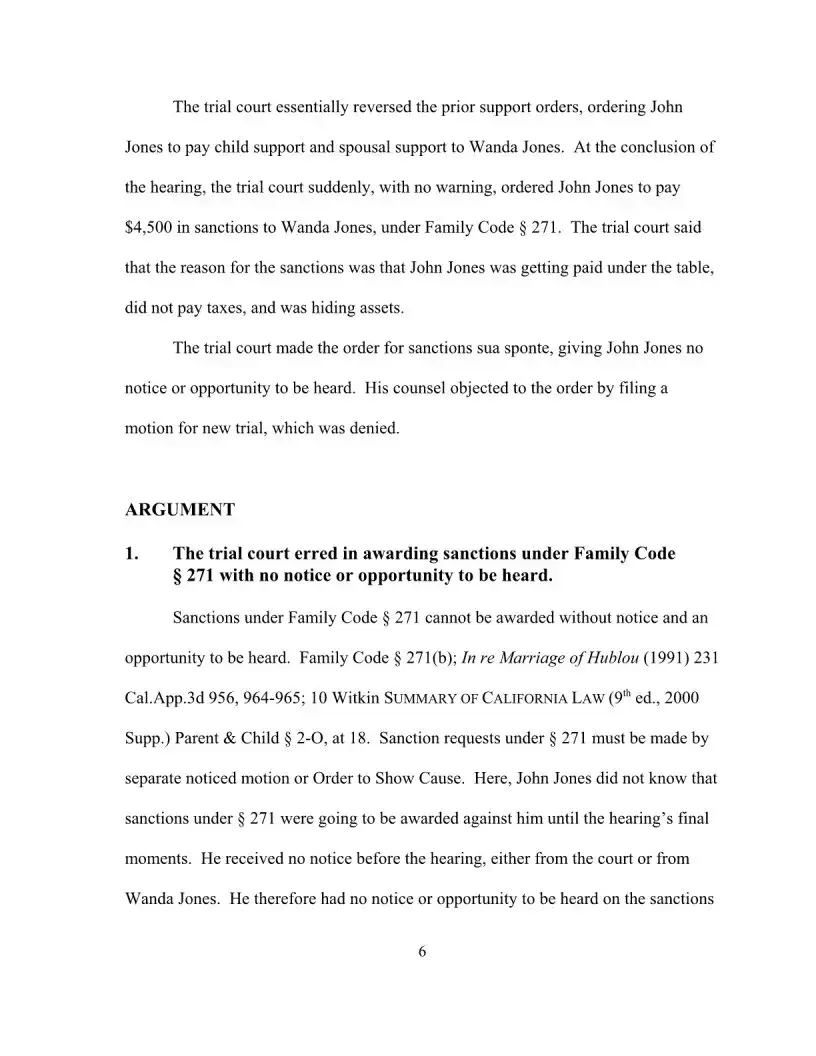
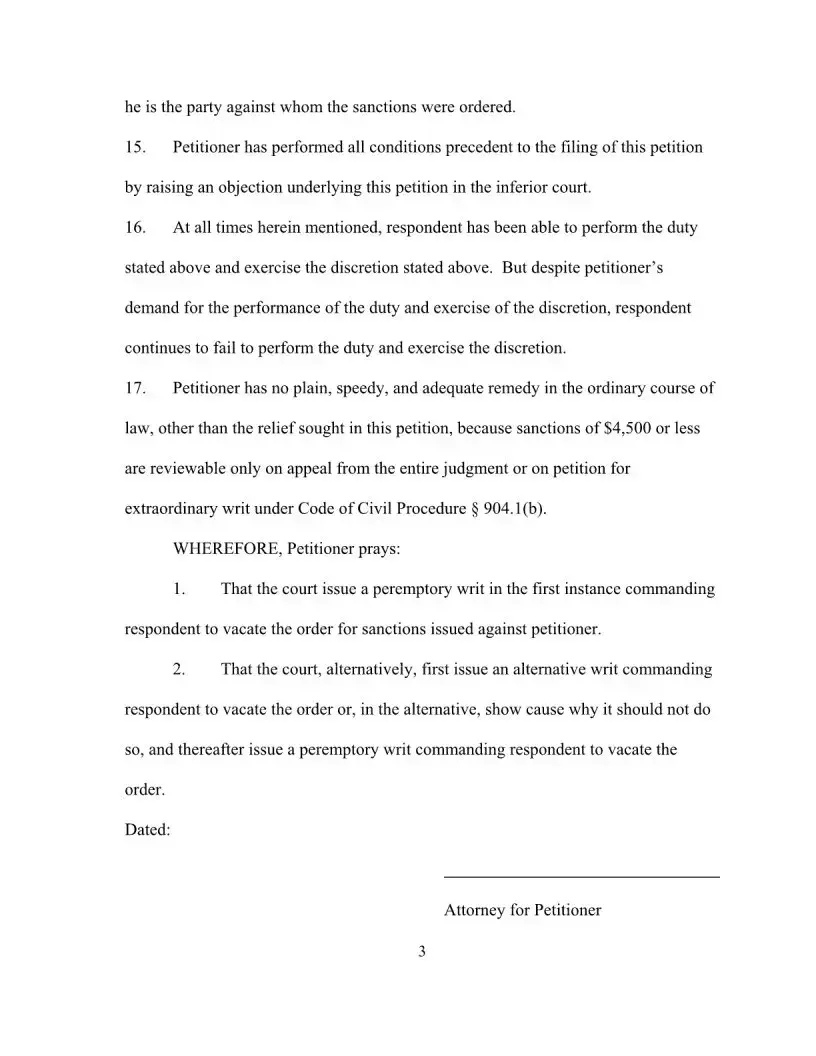
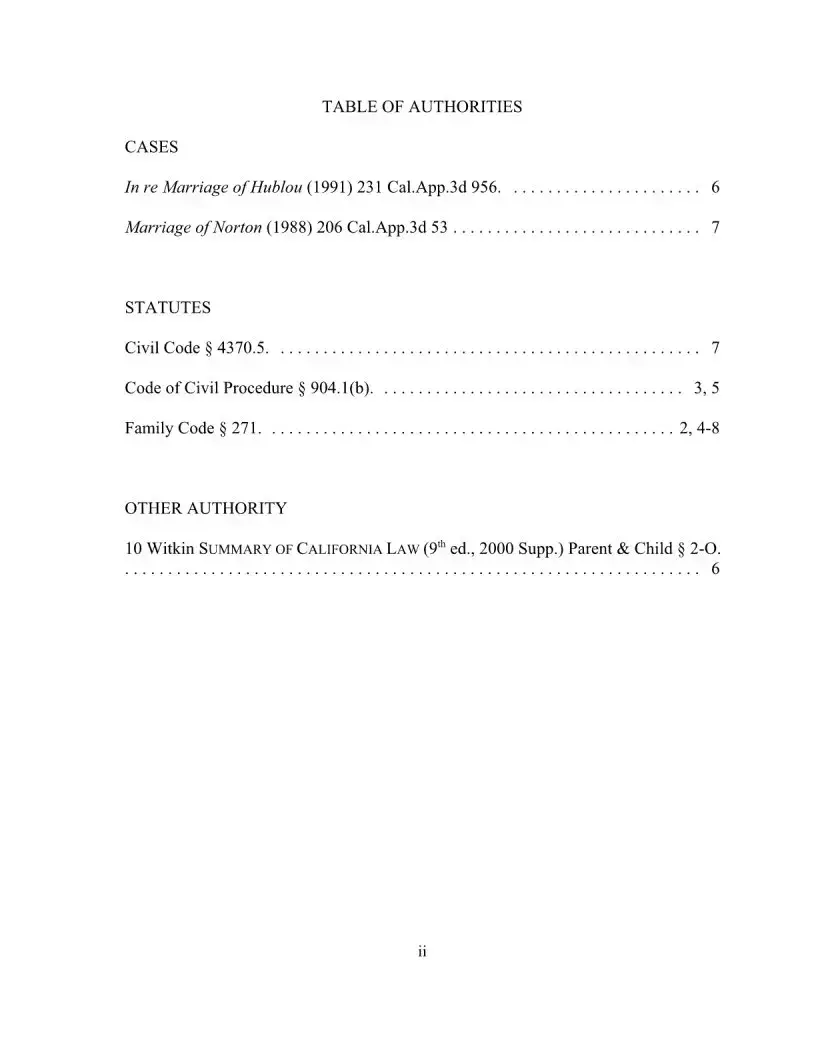
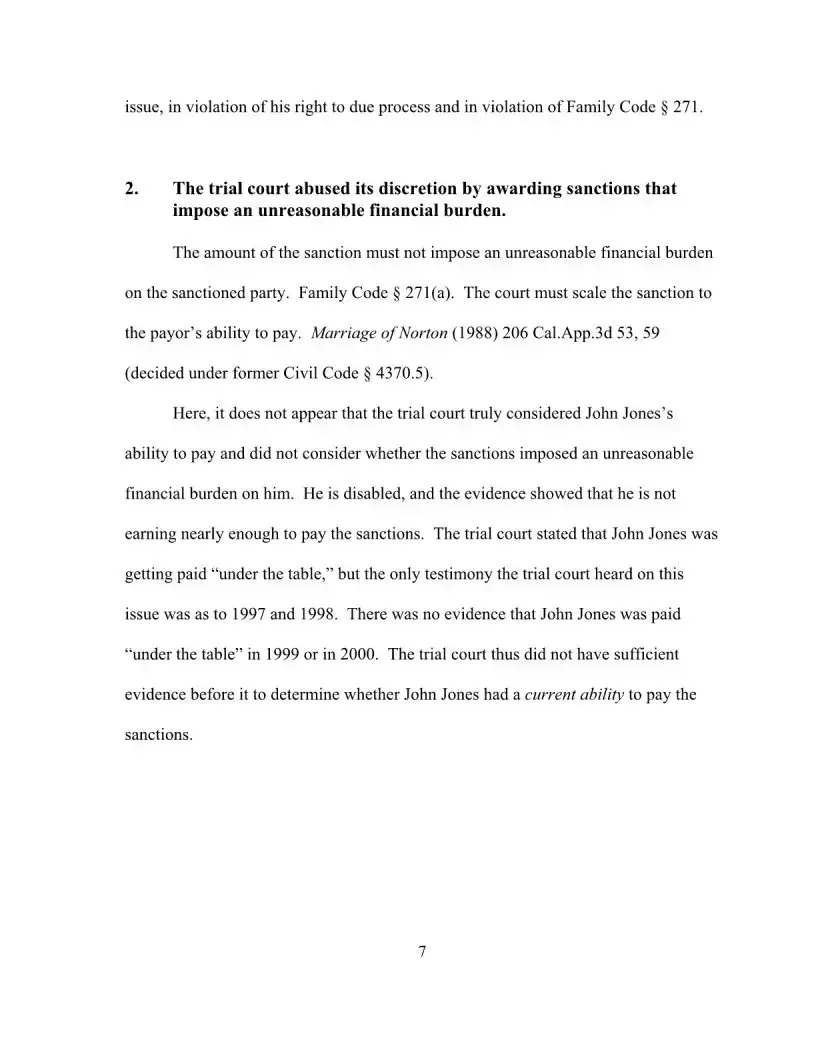
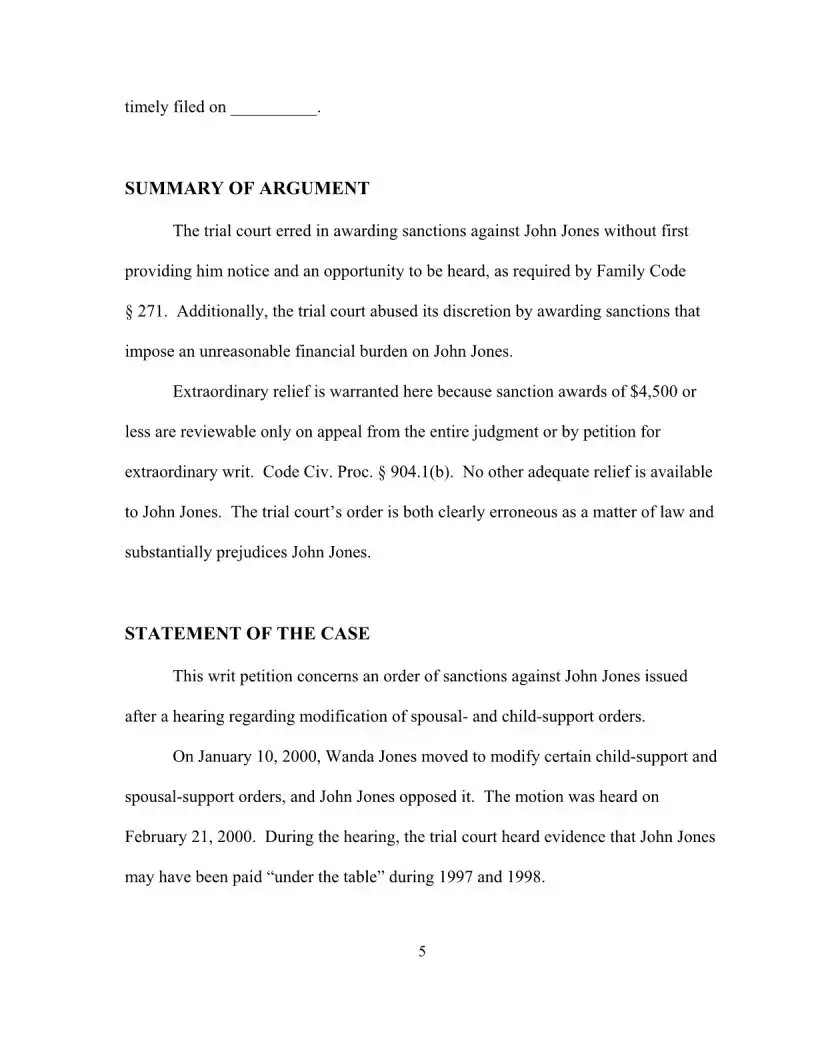
Governing Law The petition is governed by Family Code § 271, which addresses sanctions in family law cases.
Related Appeal A related appeal is filed separately, indicating ongoing legal proceedings.
Sanction Details The trial court ordered John Jones to pay $4,500 in sanctions without prior notice.
Hearing Date The motion to modify support orders was heard on February 21, 2000.

Detailed Guide for Filling Out California Petition Mandate

Filling out the California Petition Mandate form requires careful attention to detail. After completing the form, it will need to be filed with the appropriate court, and you may have to serve it to the involved parties. Be prepared to provide additional documents as necessary, such as exhibits or proof of service.

  1. Begin by filling in the Civil No. at the top of the form. This number is assigned by the court and can usually be found on previous court documents related to your case.
  2. In the section labeled In the Court of Appeal of the State of California, write “Twelfth Appellate District.”
  3. Next, enter the name of the Petitioner, which is “John Jones.”
  4. For the Respondent, write “The Superior Court of the State of California, County of Travertine.”
  5. In the section for Real Party in Interest, write “Wanda Jones.”
  6. In the Petition section, clearly state your allegations and the reasons for your petition. Use concise language and provide relevant details.
  7. Complete the Verification section, where you affirm that the information provided is true and correct. Sign and date this section.
  8. Prepare the Memorandum of Points and Authorities by outlining the legal arguments supporting your petition. Include citations to relevant laws and cases.
  9. Summarize your arguments in the Summary of Argument section. Keep it brief and focused.
  10. In the Statement of the Case, provide a clear overview of the background and context of your case.
  11. Detail your Arguments in a numbered list, addressing specific points regarding the trial court's actions.
  12. Finally, add a Conclusion that summarizes your request for relief and the reasons supporting it.

Obtain Answers on California Petition Mandate

  1. What is the purpose of the California Petition Mandate form?

    The California Petition Mandate form is used to request a higher court, specifically the Court of Appeal, to review a lower court's decision. This petition seeks to correct errors made by the lower court, particularly when a party believes that their rights were violated or that the court acted beyond its authority.

  2. Who can file a Petition for Writ of Mandate?

    Any individual or entity involved in a legal case can file a Petition for Writ of Mandate. In the context of family law, for example, one spouse may challenge a ruling made by the court regarding support orders or custody arrangements. The petitioner must demonstrate a legitimate interest in the case and show that the lower court's decision has negatively impacted them.

  3. What should be included in the Petition for Writ of Mandate?

    The petition should contain several key components:

    • A clear statement of the facts surrounding the case.
    • The specific legal errors made by the lower court.
    • Arguments supporting why the appellate court should grant the petition.
    • A conclusion summarizing the relief sought.

    Supporting documents, such as previous court orders and relevant evidence, should also be attached to bolster the petition.

  4. What happens after filing the Petition for Writ of Mandate?

    Once the petition is filed, the appellate court will review the document and determine whether to grant or deny the request for a hearing. If granted, both parties may be asked to submit additional arguments or attend a hearing where they can present their cases. The court will then issue a ruling, which can either uphold or overturn the lower court's decision.

Common mistakes

Filling out the California Petition Mandate form can be a daunting task, and mistakes can lead to delays or even rejection of the petition. One common error is not including all necessary parties. The form requires that you clearly identify the petitioner, respondent, and any real parties in interest. Omitting a party, such as a co-petitioner or a relevant respondent, can result in complications. Ensure that everyone involved in the case is properly named to avoid any issues.

Another frequent mistake is failing to provide accurate case details. The petition must reference the correct civil number and the court where the action is pending. If you misstate these details, it could lead to confusion or a misdirected petition. Always double-check the case number and court information to ensure accuracy before submission.

Additionally, many people overlook the importance of attaching supporting documents. The form may require exhibits, such as prior court orders or motions that are relevant to your case. Neglecting to include these documents can weaken your argument and may even lead to a dismissal of your petition. Always review the form’s instructions to confirm what attachments are necessary.

Finally, not adhering to formatting requirements is a common pitfall. The petition should be typed and follow specific guidelines regarding font size, margins, and spacing. Submitting a poorly formatted document can create a negative impression and may result in delays. Pay close attention to these details to ensure your petition is presented professionally.

Documents used along the form

The California Petition Mandate form is a critical document used in legal proceedings to request a higher court to review a decision made by a lower court. Alongside this form, several other documents are commonly utilized to support the petitioner's case. Each of these documents serves a unique purpose and contributes to the overall argument presented in the petition. Below is a list of these essential forms and documents.

  • Verification: This document serves as a sworn statement confirming that the information contained in the petition is true to the best of the petitioner's knowledge. It adds credibility to the claims made in the petition.
  • Memorandum of Points and Authorities: This is a detailed legal argument that outlines the legal basis for the petition. It references relevant laws, statutes, and case law that support the petitioner's position.
  • Exhibits: These are supporting documents attached to the petition, such as previous court orders, motions, or transcripts. Exhibits provide evidence that bolsters the claims made in the petition.
  • Notice of Appeal: If the petition is related to an appeal, this document formally notifies the court and the opposing party of the intention to appeal a lower court's decision.
  • Proof of Service: This document verifies that all parties involved in the case have been properly notified about the petition. It ensures that the legal process is transparent and fair.
  • Opposition to Motion: In cases where the respondent may contest the petition, this document outlines the reasons for opposing the petition and presents counterarguments.
  • Reply Brief: This is a response to the opposition, allowing the petitioner to address the arguments made by the respondent and reinforce their original claims.
  • Request for Judicial Notice: This document asks the court to accept certain facts or documents as evidence without requiring formal proof. It can streamline the process by eliminating the need for additional evidence on commonly accepted facts.

Each of these documents plays a vital role in the legal process surrounding a Petition for Writ of Mandate. Understanding their functions can help ensure that the petition is well-supported and that the arguments presented are as compelling as possible. Proper preparation and organization of these documents can significantly impact the outcome of the case.

Similar forms

The California Petition Mandate form shares similarities with several other legal documents. Each of these documents serves a specific purpose in legal proceedings. Here are six documents that are similar:

  • Petition for Writ of Habeas Corpus: This document requests a court to determine whether a person's detention is lawful. Like the Petition Mandate, it seeks judicial review and relief from a decision made by a lower court.
  • Notice of Appeal: This document formally initiates an appeal process. Both the Notice of Appeal and the Petition Mandate involve challenging a decision made by a lower court, but the former does so through an appellate process.
  • Motion to Compel: This document asks the court to order a party to comply with a request or obligation. Similar to the Petition Mandate, it seeks to enforce rights or obligations through court intervention.
  • Request for Restraining Order: This document seeks protection from harassment or harm. Both documents aim to provide immediate relief from a situation, though the context and specific legal standards differ.
  • Complaint: This is the initial document filed in a lawsuit. Like the Petition Mandate, it outlines grievances and requests relief, though it typically initiates a new case rather than challenging an existing ruling.
  • Motion for Summary Judgment: This document asks the court to rule in favor of one party without a full trial. Both the Motion for Summary Judgment and the Petition Mandate aim to resolve legal issues efficiently, seeking a definitive ruling based on the presented facts.

Dos and Don'ts

When filling out the California Petition Mandate form, there are several important considerations to keep in mind. Below is a list of things to do and avoid, ensuring that your petition is completed accurately and effectively.

  • Do ensure all information is accurate and complete. Take the time to double-check names, dates, and case numbers. Inaccuracies can lead to delays or complications.
  • Do attach all necessary documents. Include any exhibits that support your petition. This may include previous court orders or evidence relevant to your case.
  • Do follow the required format and guidelines. Adhere to the specifications outlined by the court, including font size and margin requirements. This can help your petition be taken seriously.
  • Do seek assistance if needed. If you are unsure about any part of the process, consider consulting with a legal professional or a paralegal for guidance.
  • Don't rush through the form. Take your time to understand each section and what is being asked. Hasty mistakes can be costly.
  • Don't leave sections blank. If a question does not apply, indicate that clearly rather than omitting it entirely. This shows that you have considered all aspects of the form.
  • Don't use unclear or ambiguous language. Be as precise as possible in your explanations. Vague statements can lead to misunderstandings.
  • Don't forget to sign and date your petition. An unsigned petition is not valid and will be rejected by the court.

By following these guidelines, you can enhance the clarity and effectiveness of your petition, which is crucial in legal proceedings. It is always best to approach this process thoughtfully and carefully.

Misconceptions

Understanding the California Petition Mandate form can be challenging. Here are six common misconceptions that people often have about this legal document:

  • Misconception 1: The Petition Mandate is only for family law cases.
  • This is not true. While the example provided involves a family law matter, the Petition Mandate can apply to various legal issues across different areas of law.

  • Misconception 2: You must be a lawyer to file a Petition Mandate.
  • Although legal representation can be beneficial, individuals can file a Petition Mandate on their own. It is crucial to understand the requirements and procedures involved.

  • Misconception 3: The Petition Mandate guarantees a favorable outcome.
  • Filing a Petition Mandate does not ensure success. The outcome depends on the merits of the case and the arguments presented.

  • Misconception 4: There is no deadline for filing a Petition Mandate.
  • In reality, there are strict deadlines. Failing to file within the designated time frame can result in losing the right to seek relief.

  • Misconception 5: The Petition Mandate can be used to appeal a court decision.
  • This is misleading. A Petition Mandate is not an appeal but a request for a higher court to review a lower court's decision. It serves a different purpose.

  • Misconception 6: You do not need to provide evidence when filing a Petition Mandate.
  • On the contrary, supporting evidence is essential. The petition must include relevant facts and documentation to substantiate the claims made.

By clarifying these misconceptions, individuals can better navigate the complexities of the California Petition Mandate form and understand their legal options.

Key takeaways

When filling out and using the California Petition Mandate form, consider the following key takeaways:

  • Understand the Purpose: The form is used to request a writ of mandate, which is a court order directing a lower court or government agency to perform a duty required by law.
  • Identify the Parties: Clearly identify the petitioner, respondent, and real party in interest. This ensures that the court knows who is involved in the case.
  • Attach Relevant Documents: Include all pertinent documents, such as motions and oppositions, as exhibits. This supports your claims and provides context for the court.
  • Follow the Structure: Adhere to the prescribed structure of the petition, including sections for the introduction, summary of arguments, and conclusion. This organization aids clarity.
  • Be Concise: While thoroughness is important, ensure that your arguments are concise and directly related to the issues at hand. Avoid unnecessary information.
  • Verify Information: Before submission, double-check all facts and figures. Inaccuracies can lead to delays or dismissal of the petition.
  • Know the Law: Familiarize yourself with relevant statutes, such as Family Code § 271, to understand the legal basis for your arguments. This knowledge strengthens your position.

By keeping these takeaways in mind, you can effectively navigate the process of filling out and utilizing the California Petition Mandate form.