Homepage Blank California Mc 011 Form
Outline

When navigating the complexities of the legal system in California, understanding the financial aspects of a case is crucial. The California MC-011 form, also known as the Memorandum of Costs Worksheet, plays a pivotal role in this process. It allows parties involved in litigation to itemize and claim various costs associated with their case. From filing fees and jury costs to deposition expenses and witness fees, this form captures a comprehensive overview of allowable costs. Each section of the MC-011 is designed to provide clarity, ensuring that all expenses are properly documented and justified. Whether you are a plaintiff or defendant, accurately completing this form can significantly impact the recovery of your costs. Additionally, the form includes attachments for further detailing specific expenses, making it easier to present a complete financial picture to the court. Understanding how to effectively utilize the MC-011 form can empower you to manage your case more efficiently, while also ensuring that you are fully aware of the financial commitments involved in your legal journey.

Sample - California Mc 011 Form

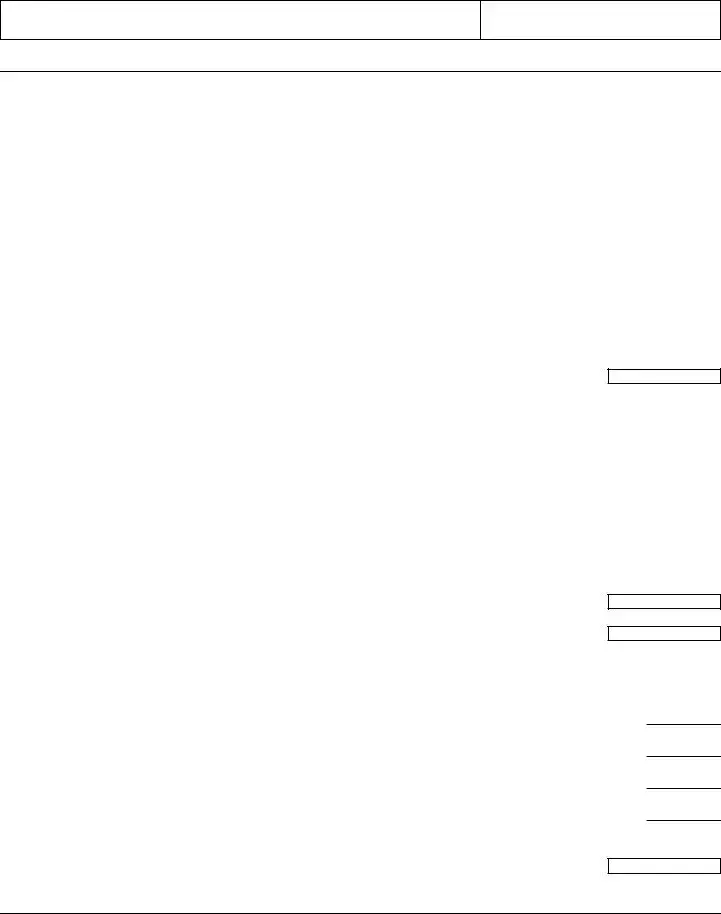
MEMORANDUM OF COSTS (WORKSHEET)
1. Filing and motion fees
Filing fee
Paper filed
a.
b.
c.
d.
e.
f.
g.
TOTAL
1.
2.
Jury fees
Date
Fee & mileage
a.
b.
c.
d.
e.
2.TOTAL
3.
3.
and lodging:Juror food:
4. Deposition costs
Videotaping
Name of deponent Taking
Transcribing Subtotals
a.
b.
c.
d.
e.
TOTAL 4.
(Continued on reverse)
Form Approved for Optional Use
Judicial Council of California MC-011
[Rev. September 1, 2017]
Code of Civil Procedure,
§§ 1032, 1033.5
MEMORANDUM OF COSTS (WORKSHEET)
Travel
TOTAL
$
$
$
$
$
$
$
$
CASE NUMBER:SHORT TITLE
MC-011
Information about additional filing and motion fees is contained in Attachment 1g.
$
$
$
$
$
Information about additional jury fees is contained in Attachment 2e.
$ $
Information about additional deposition costs is contained in Attachment 4e.
$
$
$
$
$
$
$
$
$
$
$
$
$
$
$
$
$
$
$
$
$
Page of
MEMORANDUM OF COSTS (WORKSHEET)
(Continued on next page)
MC-011 [Rev. September 1, 2017]
5.
Service of process
Other (specify)
Public officer
Registered
process
Publication
a.
b.
c.
d.
5.TOTAL
6.6.
7. 7.
$
Ordinary witness fees8.
MileageName of witness
(1)
$
(2)
(3)
(4)
(6)
SUBTOTAL 8a.
TotalDaily fee
(5)
Attachment expenses (specify):
Surety bond premiums (itemize bonds and amounts):
CASE NUMBER:SHORT TITLE
MC-011
Name of person served
$
$
$
$
$
$
$
$
$
$
$
$
$
Information about additional costs for service of process is contained in Attachment 5d.
a.
$
$
$
$
$
days at $/day
days at
days at
days at
days at
$/day
$/day
$/day
$/day
miles at ¢/mile:
miles at
miles at
miles at
miles at
Information about additional ordinary witness fees is contained in Attachment 8a(6).
$
¢/mile:
¢/mile:
¢/mile:
¢/mile:
Page of
8.
Expert fees (per Code of Civil Procedure section 998)
b.
Fee
(1)
(2)
(3)
(4)
(5)
SUBTOTAL 8b.
TOTAL (8a, 8b, & 8c) 8.
9. 9.
10. 10.
11.
11.
16. 16.
TOTAL COSTS
(Additional information may be supplied on the reverse)
MEMORANDUM OF COSTS (WORKSHEET)
MC-011 [Rev. September 1, 2017]
12.TOTAL
Name of witness
12.
Court reporter fees (as established by statute)
Court-ordered expert feesc.
(3)
a.
b.
c.
$
$
$
$hours at $ /hr
hours at $
hours at $
hours at $ /hr
Information about additional expert fees is contained in Attachment 8b(5).
$
Information about additional court-ordered expert fees is contained in Attachment 8c(3).
Fee
(1)
(2)
Name of witness
$
$hours at $
/hr
hours at $
SUBTOTAL 8c.
$
$
$
$
/hr
/hr
/hr
$
$
$
Information about additional court-reporter fees is contained in Attachment 12c.
(Name of reporter):
(Name of reporter):
Fees: $
Fees: $
$
Court-ordered transcripts (specify):
Attorney fees (enter here if contractual or statutory fees are fixed without necessity of a court
determination; otherwise a noticed motion is required):
Models, enlargements, and photocopies of exhibits (specify):
Other (specify):
Page of
13.TOTAL
13. Interpreter fees
a.
b.
c.
$
Information about additional court-reporter fees is contained in Attachment 13c.
(Name of interpreter):
Fees: $
Fees: $
14. Fees for electronic filing or service of documents through an electronic filing service provider
(enter here if required or ordered by the court):
15. Fees for hosting electronic documents through an electronic filing service provider (enter here
if required or ordered by the court):
14.
$
15.
$
Fees of a certified or registered interpreter for the deposition of a party or witness
Fees for a qualified court interpreter authorized by the court for an indigent
person represented by a qualified legal services project or a pro bono attorney
(Name of interpreter):
Fees: $
Fees: $
CASE NUMBER:SHORT TITLE
MC-011
MEMORANDUM OF COSTS (WORKSHEET)
1
2
3
4
5
6
7
8
9
10
11
12
13
14
15
16
17
18
19
20
21
22
23
24
25
26
27
28
29
MC-011 [Rev. September 1, 2017]
Page of
CASE NUMBER:SHORT TITLE
MC-011
Print this form
Save this form
Clear this form
For your protection and privacy, please press the Clear
This Form button after you have printed the form.

Form Information

Fact Name Description
Form Title The MC-011 form is officially titled "Memorandum of Costs (Worksheet)." It is used to itemize costs incurred in legal proceedings.
Governing Laws This form is governed by the California Code of Civil Procedure, specifically sections 1032 and 1033.5.
Filing Fees Section 1 of the form allows for the listing of various filing and motion fees, which must be documented accurately.
Jury Fees Section 2 details jury fees, including any mileage expenses related to juror attendance.
Deposition Costs Section 4 provides a space to list costs associated with depositions, including taking, transcribing, and travel expenses.
Service of Process Section 5 covers costs related to the service of process, including fees for registered process servers.
Expert Fees Sections 8a and 8b allow for the entry of ordinary and expert witness fees, respectively, along with any court-ordered fees.
Total Costs The form concludes with a total costs section, summarizing all expenses incurred during the legal process.

Detailed Guide for Filling Out California Mc 011

Completing the California MC-011 form is a straightforward process. This form serves as a worksheet for detailing costs incurred during litigation. After filling out the form, it is essential to ensure that all costs are accurately documented and supported by appropriate receipts or records. Once completed, you will submit the form as part of your court filings.

  1. Begin by entering the short title of your case at the top of the form.
  2. Input the case number next to the short title.
  3. In the section for filing and motion fees, list each fee under the appropriate letter (a, b, c, etc.) and provide the total in the designated box.
  4. Proceed to the jury fees section. Fill in the date and the fee for each entry, then calculate the total.
  5. Document any juror food and lodging costs in the next section and provide the total.
  6. For deposition costs, record the name of the deponent and all related expenses, including taking, transcribing, travel, and videotaping costs.
  7. In the service of process section, specify the type of service and the associated costs.
  8. List any attachment expenses in the designated area.
  9. Detail the surety bond premiums if applicable.
  10. For witness fees, include the names of witnesses, daily fees, and mileage. Calculate the total.
  11. Record any expert fees in the respective section, including ordinary and court-ordered expert fees.
  12. Document any court-ordered transcripts and the fees associated with them.
  13. Include attorney fees if they are fixed without needing court determination.
  14. List any costs related to models, enlargements, and photocopies of exhibits.
  15. Fill in the court reporter fees for each reporter as needed.
  16. Document any interpreter fees for certified or registered interpreters.
  17. Complete the sections for electronic filing fees and hosting fees if applicable.
  18. Finally, list any other costs that do not fit into the previous categories.
  19. Calculate the TOTAL COSTS at the bottom of the form.

Obtain Answers on California Mc 011

  1. What is the purpose of the California MC-011 form?

    The California MC-011 form, also known as the Memorandum of Costs (Worksheet), is designed to help individuals itemize and document various costs incurred during a legal proceeding. This form is essential for claiming reimbursement for expenses such as filing fees, jury fees, deposition costs, and other related expenditures. By providing a clear record of these costs, the form supports the request for recovery of expenses in civil cases.

  2. Who is required to file the MC-011 form?

    Any party in a civil case who seeks to recover costs associated with the litigation is required to file the MC-011 form. This typically includes plaintiffs and defendants who have incurred costs that are recoverable under California law. It is important to submit this form within the specified time frame after the conclusion of the case to ensure that all eligible expenses are considered.

  3. What types of costs can be included on the MC-011 form?

    The MC-011 form allows for a wide range of costs to be documented, including but not limited to:

    • Filing and motion fees
    • Jury fees
    • Deposition costs, including transcription and travel
    • Service of process fees
    • Expert witness fees
    • Court reporter fees
    • Interpreter fees
    • Electronic filing or service fees

    Each category provides space to detail the specific costs incurred, ensuring a comprehensive overview of expenses related to the case.

  4. How should I complete the MC-011 form?

    To complete the MC-011 form, carefully fill in each section with accurate information regarding the costs incurred. Start by entering the short title and case number at the top of the form. Then, proceed to list each type of cost in the designated sections, providing detailed information such as dates, amounts, and any necessary explanations. Attach additional documentation as needed to support your claims, and ensure that all totals are calculated accurately. Finally, review the form for completeness before submitting it to the court.

  5. What happens after I submit the MC-011 form?

    After submission, the court will review the MC-011 form along with any supporting documents. If the costs are deemed reasonable and allowable under California law, the court may grant your request for reimbursement. The opposing party may also have the opportunity to contest the claimed costs, so be prepared to provide further justification if necessary. Ultimately, the court will issue a ruling regarding the recovery of costs, which will be included in the final judgment of the case.

Common mistakes

Filling out the California MC-011 form can be a daunting task, and many individuals make mistakes that can lead to delays or complications in their legal proceedings. One common error is failing to provide complete information. Each section of the form requires specific details, and omitting even a small piece can result in the form being returned or rejected. Ensure that all fields are filled in accurately and completely.

Another frequent mistake involves miscalculating costs. The form requires precise figures for various expenses, such as filing fees, jury fees, and deposition costs. Double-checking your math can save time and prevent issues later on. It’s essential to ensure that subtotals and totals reflect the correct amounts, as errors can lead to disputes over what costs are recoverable.

Many people also overlook the importance of supporting documentation. The MC-011 form often requires attachments to substantiate the costs claimed. Failing to include necessary documents can weaken your position and may result in the court questioning your claims. Be diligent in gathering and attaching all relevant receipts and invoices.

In addition, individuals sometimes neglect to follow the specific instructions outlined in the form. Each section may have unique requirements, and not adhering to these guidelines can create confusion. Carefully read through the instructions provided with the MC-011 form to ensure compliance with all procedural aspects.

Another pitfall is using outdated forms. Legal documents can change, and it’s crucial to use the most current version of the MC-011 form. Using an older version may lead to complications, as courts may not accept outdated forms. Always check the date on the form and ensure it aligns with the latest revisions.

People also frequently misidentify costs that are recoverable versus those that are not. Understanding what expenses can be claimed is vital. For instance, certain fees may be considered non-recoverable under California law. Familiarizing yourself with the rules surrounding recoverable costs can help in accurately completing the form.

Lastly, many individuals fail to sign the form. A signature is essential for the document to be valid. Without it, the court may reject the submission, leading to unnecessary delays. Always remember to sign and date the form before submission.

Documents used along the form

The California MC-011 form, known as the Memorandum of Costs (Worksheet), is an essential document used in civil cases to outline various costs incurred during litigation. It helps parties itemize expenses and provides a clear overview of the financial aspects of the case. Alongside the MC-011 form, several other forms and documents may be necessary to support the claims made. Below is a list of commonly used forms and documents that complement the MC-011.

  • MC-012 - This form is used to request a hearing for costs. It allows the party to formally seek the court's approval for the costs listed in the MC-011.
  • MC-013 - This is a declaration of costs that provides additional details about specific costs incurred, which may not be fully covered in the MC-011.
  • MC-020 - The Request for Dismissal form is often filed when a case is settled or no longer needs to proceed. It helps finalize the case and clear the court's docket.
  • MC-050 - The Notice of Motion form is used when a party needs to formally request a court hearing for various motions, including those related to costs.
  • MC-051 - This is a supporting declaration form that can accompany motions, providing further context or evidence regarding costs or other claims.
  • MC-060 - The Application for Waiver of Court Fees and Costs form is used by parties who cannot afford court fees. It requests a waiver based on financial hardship.
  • MC-070 - The Statement of Costs form is a summary of all costs incurred in a case, often submitted to the court after a judgment has been made.
  • MC-080 - This form is a request for a court reporter transcript, which may be necessary to document proceedings that support cost claims.
  • MC-090 - The Proof of Service form verifies that documents have been properly served to all parties involved in the case.
  • MC-100 - This is a form for attorney fees, detailing the legal costs incurred during the case, which can be submitted alongside the MC-011.

Using these forms in conjunction with the MC-011 can help ensure that all costs are accurately reported and supported. Proper documentation is crucial in the legal process, as it provides clarity and helps avoid disputes over expenses. Always consult with legal counsel to ensure that the appropriate forms are completed and submitted correctly.

Similar forms

  • California MC-012: This form is similar as it also serves as a worksheet for detailing costs incurred during litigation. It includes sections for filing fees, jury fees, and deposition costs, much like the MC-011.
  • California MC-013: Like the MC-011, this form is used to request reimbursement for various litigation expenses. It covers costs associated with witness fees and expert fees, ensuring a comprehensive overview of financial outlays.
  • California MC-020: This document is designed for the same purpose of itemizing costs in civil cases. It has sections for attorney fees and court reporter fees, paralleling the MC-011 in its focus on financial accountability.
  • California MC-021: This form functions similarly by allowing parties to report costs related to court proceedings. It includes categories for service of process and expert witness fees, mirroring the structure of the MC-011.
  • California MC-022: This document is also a cost memorandum, detailing expenses incurred in litigation. It includes provisions for electronic filing fees, akin to the MC-011's sections on electronic service costs.
  • California MC-023: This form is used for documenting costs associated with depositions and transcripts. It shares similarities with the MC-011 in its breakdown of deposition-related expenses.
  • California MC-024: Similar to the MC-011, this form itemizes costs for expert witnesses and court-ordered fees. It provides a clear outline of financial obligations in legal proceedings.
  • California MC-025: This form is another cost worksheet, focusing on attorney fees and other related expenses. It aligns with the MC-011 in its aim to provide transparency in litigation costs.
  • California MC-026: This document is comparable as it summarizes costs associated with court services and processes. It emphasizes the importance of accurately reporting financial expenditures in legal matters.

Dos and Don'ts

When filling out the California MC-011 form, consider the following guidelines:

  • Do read the instructions carefully before starting.
  • Do provide accurate figures for all costs.
  • Do include all required attachments as specified.
  • Do double-check for any missing information.
  • Do sign and date the form before submission.
  • Don't leave any sections blank unless instructed.
  • Don't use abbreviations or shorthand that may cause confusion.
  • Don't submit the form without reviewing it for errors.
  • Don't forget to keep a copy for your records.

Misconceptions

Misconceptions about the California MC-011 form can lead to confusion for those navigating the legal process. Below are some common misunderstandings:

  • The MC-011 form is only for attorneys. Many believe that only legal professionals can use this form. In reality, self-represented litigants can also complete and submit the MC-011 to recover costs incurred during litigation.
  • All costs must be pre-approved by the court. Some individuals think that every expense listed on the MC-011 requires prior court approval. While certain costs, like attorney fees, may need court determination, many expenses can be claimed without prior approval.
  • The form is only relevant after a case is concluded. A common misconception is that the MC-011 can only be submitted after a case has ended. In fact, costs can be claimed at various stages of litigation, not just at the conclusion.
  • Filing the MC-011 guarantees reimbursement of costs. Some believe that simply filing the form ensures that all claimed costs will be reimbursed. However, reimbursement is contingent upon the court's review and approval of the claimed expenses.

Key takeaways

Understanding the California MC-011 form is crucial for accurately documenting costs in legal proceedings. Here are key takeaways to keep in mind:

  • Purpose: The MC-011 form serves as a worksheet for detailing costs incurred during litigation, allowing parties to recover expenses.
  • Filing Fees: Include all relevant filing and motion fees. Ensure that you check the specific amounts and categories listed on the form.
  • Jury Fees: Document jury fees separately, including any mileage and food or lodging costs for jurors.
  • Deposition Costs: List costs associated with depositions, such as taking, transcribing, and travel expenses.
  • Service of Process: Include costs related to serving legal documents. This may involve registered process servers or publication fees.
  • Expert Witness Fees: Itemize ordinary and expert witness fees, ensuring to capture the number of hours worked and rates charged.
  • Total Costs: At the end of the form, calculate and clearly indicate the total costs incurred to ensure transparency and accuracy.

By following these guidelines, you can effectively complete the MC-011 form and facilitate the recovery of costs in your legal matters.