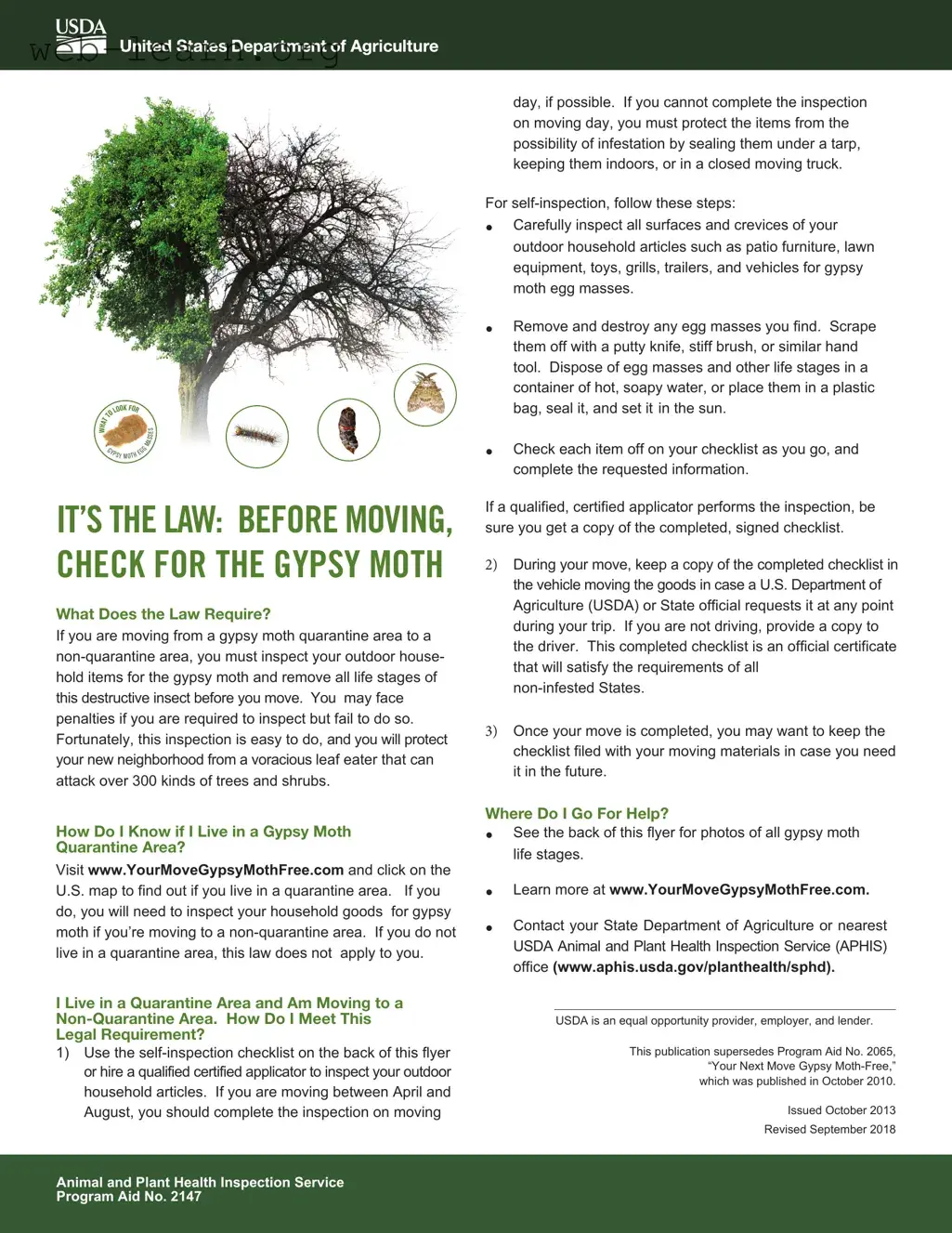
The California Gypsy Moth Checklist form is an essential tool for individuals planning to move from areas affected by gypsy moth infestations to regions free from this invasive pest. This checklist serves as a legal requirement, ensuring that outdoor household items are thoroughly inspected for any signs of gypsy moth life stages before relocation. The form outlines the steps necessary for self-inspection, including checking various outdoor articles such as patio furniture, lawn equipment, and vehicles. It emphasizes the importance of removing and destroying any egg masses found during the inspection process, as these can lead to significant ecological damage. For those living in quarantine areas, the checklist provides guidance on how to meet legal obligations, including the option to hire a certified applicator for inspection. Additionally, it stresses the need to keep a copy of the completed checklist during the move, which may be requested by officials from the U.S. Department of Agriculture or state agencies. Resources for further assistance are also included, making it easier for individuals to comply with the law and protect their new neighborhoods from potential infestations.
| Fact Name | Details |
|---|---|
| Legal Requirement | Individuals moving from a gypsy moth quarantine area to a non-quarantine area must inspect their outdoor household items for gypsy moths and remove all life stages before moving. |
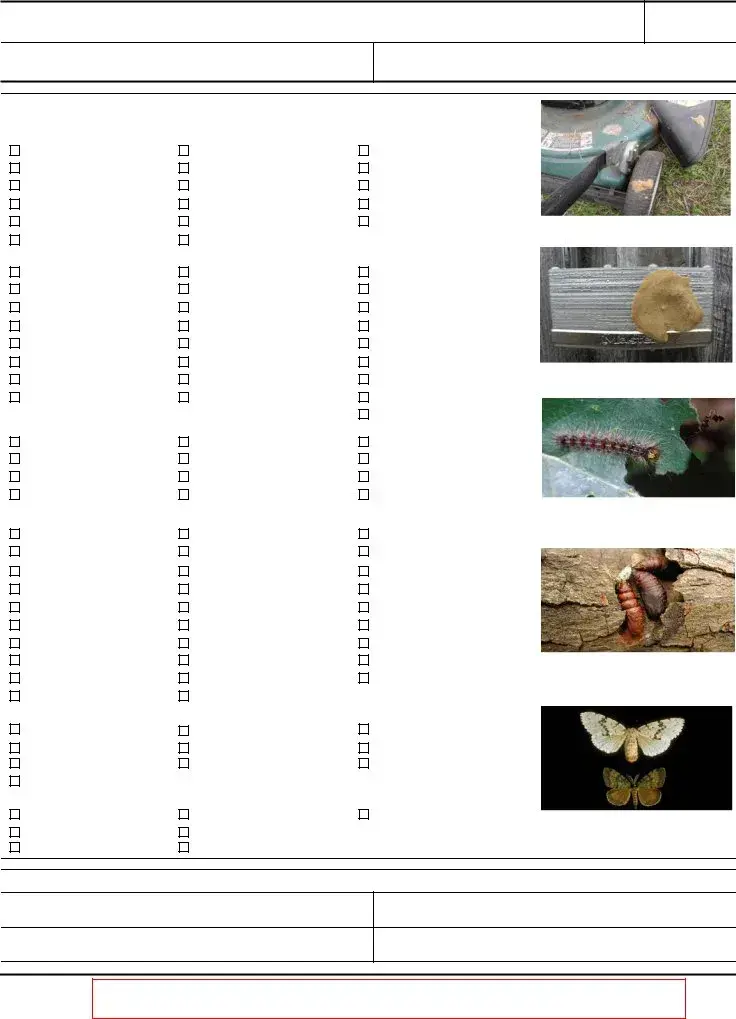
| Inspection Process | Inspect outdoor items such as furniture and equipment for gypsy moth egg masses, using tools like putty knives or stiff brushes to remove them. |
| Checklist Importance | The completed checklist serves as an official certificate that satisfies the requirements of non-infested states during transport. |
| Quarantine Area Verification | Residents can verify their quarantine status by visiting www.YourMoveGypsyMothFree.com and checking the U.S. map provided. |
| Governing Law | This checklist is governed by Title 7, Code of Federal Regulations, Part 301.45-4(a), which outlines the inspection requirements for gypsy moths. |
Filling out the California Gypsy Moth Checklist form is an important step when moving from a gypsy moth quarantine area to a non-quarantine area. This checklist helps ensure that you have inspected your outdoor household items for gypsy moths, protecting your new neighborhood from potential infestations. Follow these steps to complete the form accurately.
After completing the checklist, keep a copy with you during your move. This document may be requested by officials, and it serves as proof that you have fulfilled the inspection requirement. Once settled, consider filing the checklist with your moving materials for future reference.
What is the California Gypsy Moth Checklist form?
The California Gypsy Moth Checklist form is a document that individuals must complete when moving from a gypsy moth quarantine area to a non-quarantine area. It serves as proof that you have inspected your outdoor household items for gypsy moth life stages and have taken necessary actions to prevent their spread.
Who needs to fill out the checklist?
If you live in a gypsy moth quarantine area and are planning to move to a non-quarantine area, you are required to fill out the checklist. This requirement is in place to protect new neighborhoods from the potential damage caused by gypsy moths.
How do I know if I live in a quarantine area?
To determine if you reside in a gypsy moth quarantine area, visit www.YourMoveGypsyMothFree.com. This website provides an interactive U.S. map that indicates the quarantine status of different regions.
What steps should I take to inspect my items?
When inspecting your outdoor household items, follow these steps:
What should I do with the completed checklist?
Keep a copy of the completed checklist in the vehicle transporting your items during the move. This document serves as an official certificate that may be requested by USDA or State officials. After your move, it’s wise to keep the checklist filed with your moving materials for future reference.
What if I cannot complete the inspection on moving day?
If you’re unable to conduct the inspection on the day of your move, protect your items from potential infestation. You can do this by sealing them under a tarp, keeping them indoors, or storing them in a closed moving truck until the inspection can be completed.
Can I hire someone to inspect my items?
Yes, you can hire a qualified certified applicator to perform the inspection for you. If you choose this option, ensure that you receive a copy of the completed and signed checklist from the applicator.
Where can I find more information or help?
For additional resources, visit www.YourMoveGypsyMothFree.com. You can also contact your State Department of Agriculture or the nearest USDA Animal and Plant Health Inspection Service (APHIS) office for assistance.
What happens if I don’t comply with the law?
Failing to inspect your items when required can result in penalties. It's essential to comply with the law not only to avoid fines but also to protect the environment and your new community from the gypsy moth's destructive impact.
Filling out the California Gypsy Moth Checklist form is essential for anyone moving from a quarantine area. However, many people make common mistakes that can lead to complications. One of the most frequent errors is failing to inspect all items thoroughly. It’s important to check every surface and crevice of outdoor household items. Overlooking even a small area can result in penalties, so take the time to inspect everything carefully.
Another common mistake is not completing the checklist during the inspection. Some individuals forget to check off items as they go. This can create confusion later on. Keeping a detailed record of what has been inspected is crucial. Remember, the checklist serves as an official certificate. If it’s incomplete, it may not satisfy the requirements of non-infested states.
Many people also neglect to keep a copy of the completed checklist during the move. This is a significant oversight. Having the checklist on hand is important in case a USDA or state official requests it. If you’re not driving, ensure that the driver has a copy. This simple step can save you from unnecessary delays or penalties.
Some individuals mistakenly believe that they can complete the inspection at any time. However, it’s recommended to conduct the inspection on moving day, especially if you’re moving between April and August. Delaying the inspection can increase the risk of infestation. If you can’t inspect on the day of the move, ensure that the items are properly protected, such as by sealing them under a tarp.
Another frequent error is not disposing of found egg masses correctly. It’s essential to remove and destroy any egg masses discovered during the inspection. Simply scraping them off is not enough; they must be disposed of in hot, soapy water or sealed in a plastic bag and placed in the sun. Proper disposal helps prevent the spread of these pests.
Some people also overlook the importance of understanding whether they live in a quarantine area. It’s crucial to check the U.S. map at www.YourMoveGypsyMothFree.com before moving. If you mistakenly believe you’re not in a quarantine area, you may skip the inspection altogether, which can lead to serious consequences.
Lastly, many individuals fail to keep the checklist filed with their moving materials after the move. This document can be useful in the future, especially if any questions arise about your compliance with the gypsy moth inspection requirements. Keeping it organized can save you time and hassle down the road.
The California Gypsy Moth Checklist form is a critical document for individuals moving from a gypsy moth quarantine area to a non-quarantine area. To ensure compliance with the law, several other forms and documents may be utilized in conjunction with this checklist. Below is a list of these related documents, along with brief descriptions of their purposes.
Utilizing these documents in conjunction with the California Gypsy Moth Checklist form helps ensure compliance with state and federal regulations. Proper inspection and documentation protect both the individual and the community from the potential threats posed by the gypsy moth.
When filling out the California Gypsy Moth Checklist form, it is essential to follow specific guidelines to ensure compliance with the law and protect your new neighborhood. Below is a list of ten things you should and shouldn't do during this process.
By adhering to these guidelines, you can help prevent the spread of the gypsy moth and ensure a smooth transition to your new home.
Misconceptions about the California Gypsy Moth Checklist form can lead to confusion and potential penalties. Here are ten common misunderstandings:
Understanding these points can help ensure a smooth moving process and compliance with the law.
Key Takeaways for Filling Out and Using the California Gypsy Moth Checklist Form: