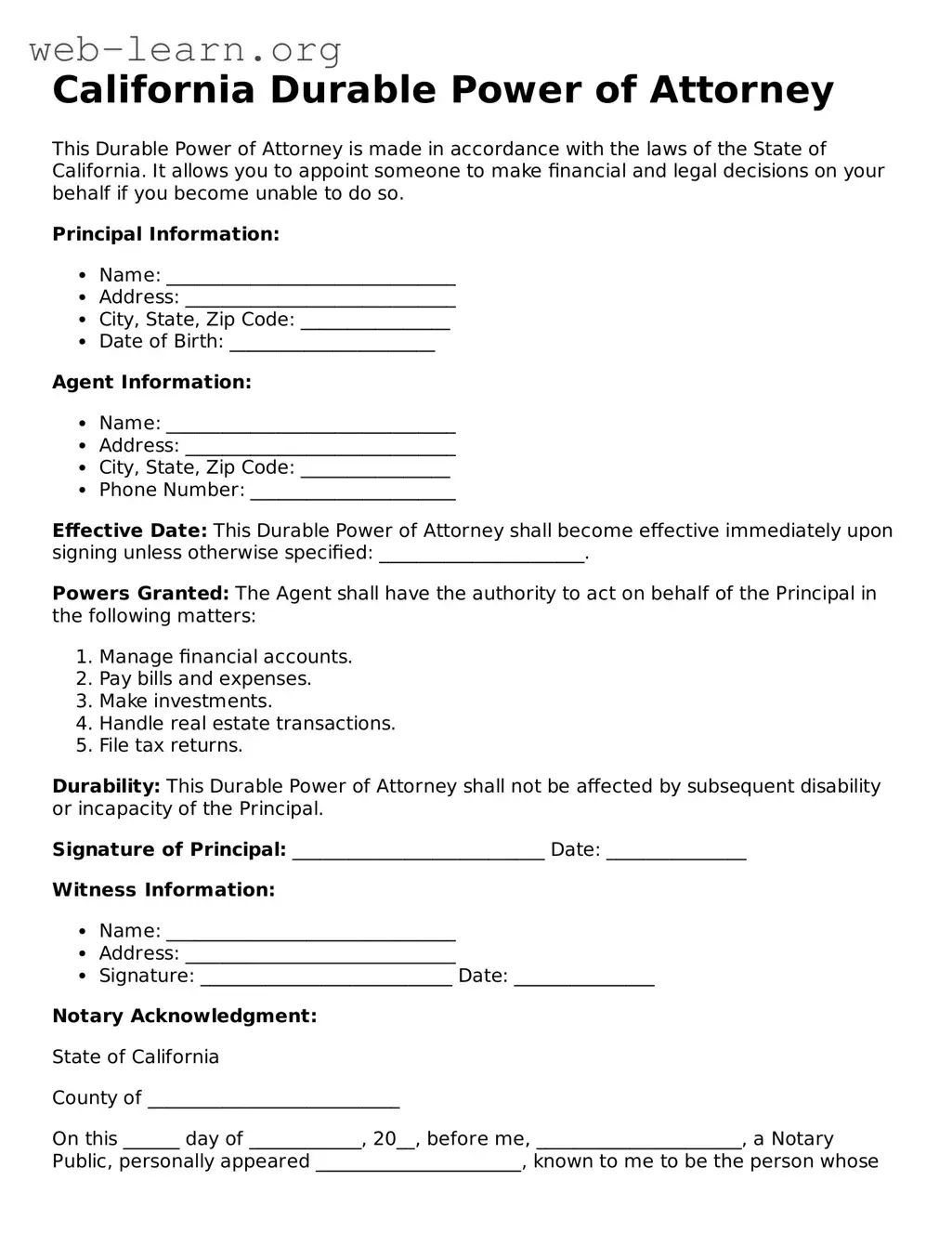
In the state of California, planning for the future involves making important decisions about your health and finances, especially in the event that you become unable to make those decisions yourself. A Durable Power of Attorney (DPOA) is a crucial legal document that empowers a trusted individual, known as your agent or attorney-in-fact, to act on your behalf regarding financial and legal matters. This form remains effective even if you become incapacitated, ensuring that your affairs can be managed without interruption. It allows you to specify the extent of your agent's authority, whether it be broad or limited, and can include various powers such as managing bank accounts, paying bills, or handling real estate transactions. Additionally, the DPOA can be tailored to reflect your wishes and can include specific instructions about your care and preferences. Understanding the nuances of this document is essential, as it provides peace of mind knowing that your affairs will be handled according to your wishes, even when you are unable to communicate them yourself.
California Durable Power of Attorney
This Durable Power of Attorney is made in accordance with the laws of the State of California. It allows you to appoint someone to make financial and legal decisions on your behalf if you become unable to do so.
Principal Information:
Agent Information:
Effective Date: This Durable Power of Attorney shall become effective immediately upon signing unless otherwise specified: ______________________.
Powers Granted: The Agent shall have the authority to act on behalf of the Principal in the following matters:
Durability: This Durable Power of Attorney shall not be affected by subsequent disability or incapacity of the Principal.
Signature of Principal: ___________________________ Date: _______________
Witness Information:
Notary Acknowledgment:
State of California
County of ___________________________
On this ______ day of ____________, 20__, before me, ______________________, a Notary Public, personally appeared ______________________, known to me to be the person whose name is subscribed to the within instrument, and acknowledged that he/she executed the same.
Notary Signature: ___________________________
My Commission Expires: ____________________
| Fact Name | Description |
|---|---|
| Definition | A California Durable Power of Attorney allows you to appoint someone to manage your financial affairs if you become unable to do so. |
| Governing Law | The form is governed by the California Probate Code, specifically sections 4000 to 4545. |
| Durability | This power of attorney remains effective even if you become incapacitated, which is a key feature of "durable" powers of attorney. |
| Revocation | You can revoke a Durable Power of Attorney at any time as long as you are mentally competent to do so. |
Filling out the California Durable Power of Attorney form is a straightforward process. This document allows you to designate someone to make decisions on your behalf regarding financial matters. Follow these steps to complete the form accurately.
After completing the form, ensure that your agent understands their responsibilities. Keep the original document in a safe place and provide copies to relevant parties as necessary.
What is a Durable Power of Attorney in California?
A Durable Power of Attorney is a legal document that allows you to appoint someone to make financial or legal decisions on your behalf. This authority remains in effect even if you become incapacitated. It is a crucial tool for ensuring that your financial affairs are managed according to your wishes when you are unable to do so yourself.
Who can be appointed as an agent under a Durable Power of Attorney?
You can choose any adult as your agent, provided they are of sound mind and not your healthcare provider or an employee of your healthcare provider. This person should be someone you trust, as they will have significant control over your financial matters. It is wise to have open discussions with your chosen agent about your preferences and expectations.
How does a Durable Power of Attorney become effective?
A Durable Power of Attorney typically becomes effective immediately upon signing, unless you specify a different date or condition. If you prefer for it to only take effect upon your incapacitation, you can include a clause stating that. It is essential to communicate your wishes clearly in the document to avoid any confusion in the future.
Can a Durable Power of Attorney be revoked?
Yes, you can revoke a Durable Power of Attorney at any time as long as you are mentally competent. To revoke it, you should create a written notice stating your intention to revoke the document and inform your agent and any relevant financial institutions. It is advisable to keep a copy of the revocation for your records. If you create a new Durable Power of Attorney, it automatically revokes any previous versions.
Filling out a California Durable Power of Attorney (DPOA) form can seem straightforward, but many people stumble along the way. One common mistake is failing to specify the powers granted to the agent. It's crucial to clearly outline what decisions your agent can make on your behalf. Without this clarity, your agent may face challenges when trying to act in your best interest.
Another frequent error is neglecting to sign the document in front of a notary public or witnesses. California law requires that the DPOA be notarized or signed by two witnesses to be valid. Skipping this step can render the document ineffective, leaving your wishes unfulfilled when you need them most.
Many individuals also overlook the importance of choosing the right agent. Selecting someone who may not have your best interests at heart or lacks the ability to make sound decisions can lead to complications. It's essential to choose someone trustworthy, responsible, and capable of handling the responsibilities outlined in the DPOA.
Some people mistakenly believe that a DPOA is only necessary for older adults or those with health issues. In reality, anyone can benefit from having a durable power of attorney, regardless of age or health status. Life can be unpredictable, and having a DPOA in place ensures that someone you trust can manage your affairs if you become unable to do so.
Another common pitfall involves not updating the DPOA when circumstances change. Life events such as marriage, divorce, or the death of an agent can necessitate changes to the document. Failing to update the DPOA can lead to confusion and potential disputes down the line.
Finally, many individuals do not discuss their wishes with their chosen agent before completing the form. Open communication is vital. Your agent should understand your preferences and values to make decisions that align with your wishes. Without this discussion, your agent may inadvertently make choices that do not reflect your intentions.
When establishing a California Durable Power of Attorney, it is often beneficial to consider other related documents that can complement your estate planning needs. Each of these forms serves a unique purpose and can enhance your overall legal strategy. Below are five important documents frequently used alongside the Durable Power of Attorney.
By considering these documents in conjunction with your Durable Power of Attorney, you can create a comprehensive plan that addresses both your healthcare and financial needs. Taking these steps now can help ensure that your wishes are honored and your loved ones are protected in the future.
When considering a Durable Power of Attorney (DPOA), it's essential to understand how it compares to other important legal documents. Each of these documents serves a unique purpose but shares similarities with the DPOA in terms of authority and decision-making capabilities.
Understanding these documents can help you make informed decisions about your legal planning. Each serves a critical role in ensuring that your wishes are honored and that someone you trust is empowered to act on your behalf when needed.
When filling out the California Durable Power of Attorney form, it is essential to approach the task with care. The following list outlines important dos and don’ts to ensure the document is completed correctly.
By following these guidelines, you can help ensure that your Durable Power of Attorney is valid and effective. Taking the time to complete the form correctly is crucial for your peace of mind and for the protection of your interests.
Understanding the California Durable Power of Attorney (DPOA) form is crucial for anyone looking to plan for the future. However, several misconceptions can cloud people's understanding. Here’s a list of common myths and the truths behind them.
This is false. Anyone, regardless of age, can benefit from having a DPOA. Unexpected events can happen at any age, making it wise to have a plan in place.
Not quite. A DPOA is a legal document that allows someone to make decisions on your behalf while you are alive, whereas a will takes effect after your death.
This misconception is misleading. You retain control over your decisions as long as you are capable of making them. The DPOA only comes into effect when you are unable to make decisions yourself.
While many use a DPOA for financial decisions, it can also cover health care decisions if specified. This flexibility is one of its key benefits.
You can, but it's advisable to seek legal guidance. An attorney can ensure that the document meets all legal requirements and reflects your wishes accurately.
This is not true. You can revoke a DPOA at any time as long as you are mentally competent. It’s important to communicate this revocation clearly.
Each state has its own specific requirements and forms. California has its own DPOA form that must comply with state laws to be valid.
A DPOA does not provide asset protection. Creditors can still pursue debts, regardless of who is managing your finances through the DPOA.
By debunking these myths, individuals can make informed decisions about their legal planning. A Durable Power of Attorney can be a powerful tool when understood correctly.
Filling out and using a California Durable Power of Attorney (DPOA) form is an important step in planning for the future. Below are key takeaways to keep in mind:
How to Get Power of Attorney in Florida - The Durable Power of Attorney is a proactive way to plan for the future.
Power of Attorney Form Colorado - This document can facilitate smooth transitions in case of emergencies.
Durable Power of Attorney Indiana - Having this document in place can reduce stress for family members during times of crisis.
General Power of Attorney Hawaii - This form can help avoid potential conflicts among family members regarding care decisions.