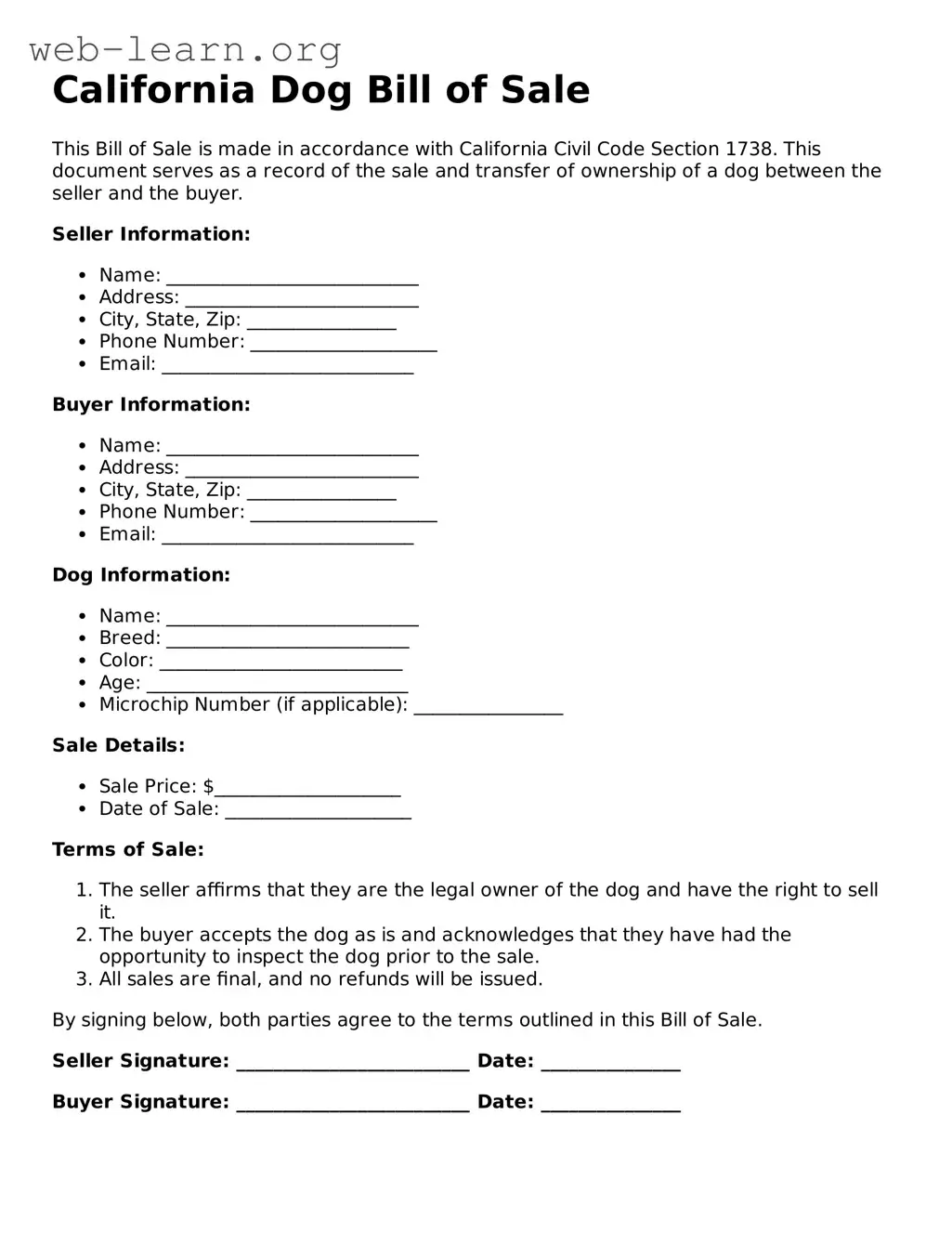
When considering the purchase or sale of a dog in California, having a well-drafted Dog Bill of Sale form is essential. This document serves as a legal record of the transaction between the seller and the buyer, providing clarity and protection for both parties. It typically includes important details such as the names and addresses of both the buyer and seller, a description of the dog—including breed, age, and any distinguishing features—and the agreed-upon sale price. Additionally, the form may outline any warranties or guarantees regarding the dog's health and behavior, which can help prevent misunderstandings down the line. By utilizing a Dog Bill of Sale, both parties can ensure that their rights are protected and that the transfer of ownership is documented properly, fostering a smooth transition for the new pet owner.
California Dog Bill of Sale
This Bill of Sale is made in accordance with California Civil Code Section 1738. This document serves as a record of the sale and transfer of ownership of a dog between the seller and the buyer.
Seller Information:
Buyer Information:
Dog Information:
Sale Details:
Terms of Sale:
By signing below, both parties agree to the terms outlined in this Bill of Sale.
Seller Signature: _________________________ Date: _______________
Buyer Signature: _________________________ Date: _______________
| Fact Name | Details |
|---|---|
| Purpose | The California Dog Bill of Sale form serves as a legal document to record the sale or transfer of a dog from one party to another. |
| Governing Law | This form is governed by California Civil Code Section 1738.1, which outlines the requirements for animal sales. |
| Seller Information | The seller must provide their name, address, and contact information to ensure transparency in the transaction. |
| Buyer Information | The buyer's name, address, and contact information are also required to complete the form and establish ownership. |
| Dog Description | A detailed description of the dog, including breed, age, color, and any identification numbers, must be included for identification purposes. |
| Purchase Price | The agreed-upon purchase price for the dog should be clearly stated to avoid any misunderstandings. |
| Health Guarantee | It is advisable to include any health guarantees or warranties related to the dog's condition at the time of sale. |
| Signatures | Both the seller and buyer must sign the form to validate the transaction and acknowledge the terms outlined within. |
Once you have the California Dog Bill of Sale form ready, you will need to fill it out accurately. This process involves gathering the necessary information and completing each section carefully. Make sure to double-check your entries for accuracy.
Once you have completed the form, keep a copy for your records. It is also advisable to provide a copy to the buyer. This ensures both parties have proof of the transaction.
What is a California Dog Bill of Sale?
A California Dog Bill of Sale is a legal document that records the transfer of ownership of a dog from one person to another. This form serves as proof that the seller has sold the dog and that the buyer has purchased it. It includes important details about the dog and the parties involved in the transaction.
Why do I need a Dog Bill of Sale?
This document is essential for several reasons. First, it provides a written record of the sale, which can help prevent disputes between the buyer and seller in the future. Additionally, it may be required by certain local laws or regulations when registering the dog with animal control or obtaining a license.
What information should be included in the Dog Bill of Sale?
The Dog Bill of Sale should include the following information:
Is the Dog Bill of Sale required by law in California?
While a Dog Bill of Sale is not legally mandated in California, it is highly recommended. Having this document can protect both the buyer and seller by providing clear evidence of the transaction. Some local jurisdictions may have specific requirements, so it’s wise to check local laws.
Can I create my own Dog Bill of Sale?
Yes, you can create your own Dog Bill of Sale. However, it is crucial to ensure that all necessary information is included and that the document is clear and understandable. Many templates are available online that can help guide you in drafting a comprehensive bill of sale.
What if the dog has health issues?
If the dog has known health issues, it is important to disclose this information in the Dog Bill of Sale. Including any warranties or guarantees regarding the dog’s health can protect the seller from potential liability. Buyers should be aware of any conditions before completing the sale.
Do I need to have the Dog Bill of Sale notarized?
Notarization is not a requirement for a Dog Bill of Sale in California. However, having the document notarized can add an extra layer of authenticity and may be beneficial in case of future disputes.
What should I do after completing the Dog Bill of Sale?
Once the Dog Bill of Sale is completed and signed by both parties, each party should keep a copy for their records. The buyer may also need to register the dog with local authorities, so it is advisable to check with local animal control for any additional requirements.
Can I cancel the sale after signing the Dog Bill of Sale?
Once the Dog Bill of Sale is signed, it typically signifies a binding agreement. Cancelling the sale may be difficult unless both parties agree to it. It’s essential to discuss any concerns with the other party promptly to resolve any issues amicably.
When completing the California Dog Bill of Sale form, many individuals make common mistakes that can lead to complications down the line. One frequent error is failing to provide accurate information about the dog being sold. This includes the dog's breed, age, and any identifying features. If the details are incorrect or incomplete, it can create confusion for both the buyer and seller, especially if disputes arise later.
Another mistake often seen is neglecting to include the seller's and buyer's contact information. This information is crucial for future communication and may be required for registration purposes. Without accurate contact details, it can be difficult to resolve any issues that may come up after the sale, such as health concerns or questions about the dog's behavior.
People also sometimes overlook the importance of signatures. Both the seller and buyer must sign the form to validate the transaction. Failing to obtain both signatures can render the document ineffective, leaving both parties without legal protection. It’s essential to ensure that all required signatures are present before finalizing the sale.
Additionally, many individuals forget to provide a clear description of the sale terms. This includes the sale price and any conditions that may apply, such as whether the dog is sold as-is or if there are any guarantees regarding health. A lack of clarity in these terms can lead to misunderstandings and disputes, which can be easily avoided with proper documentation.
Lastly, not keeping a copy of the completed Dog Bill of Sale form is a common oversight. Both parties should retain a copy for their records. This document serves as proof of the transaction and can be important for future reference, such as when registering the dog or addressing any health issues that may arise. Keeping a copy ensures that both the buyer and seller have access to the same information should any questions come up later.
The California Dog Bill of Sale form is an essential document for transferring ownership of a dog. However, several other forms and documents can accompany it to ensure a smooth transaction. Below is a list of commonly used documents that may be relevant in this context.
Having these documents ready can facilitate a smooth transition of ownership and ensure that all legal and health-related aspects are properly addressed. It is advisable to review each document carefully before completing the sale.
The Dog Bill of Sale form serves a specific purpose in the transfer of ownership of a dog. However, it shares similarities with several other documents that facilitate the exchange of ownership for various types of property. Below are four documents that are akin to the Dog Bill of Sale form:
When filling out the California Dog Bill of Sale form, it’s important to ensure that all information is accurate and complete. Here are five things you should and shouldn’t do during this process:
By following these guidelines, you can ensure that the transaction is smooth and that both parties are protected.
The California Dog Bill of Sale form is an important document for anyone buying or selling a dog in California. However, several misconceptions surround this form. Here are ten common misunderstandings:
Understanding these misconceptions can help ensure a smoother transaction when buying or selling a dog in California. Always prioritize clear communication and proper documentation.
When filling out and using the California Dog Bill of Sale form, there are several important points to keep in mind. This document serves as a legal record of the transfer of ownership of a dog from one party to another. Below are some key takeaways to consider:
Puppy Sale Contract Free - This form can include a clause regarding the return policy for the dog if needed.
Free Printable Simple Bill of Sale for Dog - Serves as a legal document that can be referenced in case of disputes.
Puppy Bill of Sale Template - Helps to ensure that the buyer is aware of the dog's temperament and behavior.