When navigating the complexities of divorce in California, a Divorce Settlement Agreement form serves as a crucial document that outlines the terms of the separation between spouses. This form addresses essential aspects such as the division of assets and debts, child custody arrangements, and spousal support obligations. By clearly detailing how property will be divided and what financial responsibilities each party will assume, the agreement helps to minimize disputes and misunderstandings. Additionally, it establishes a framework for parenting plans, ensuring that the best interests of any children involved are prioritized. Completing this form accurately and comprehensively is vital, as it becomes part of the final divorce decree and can significantly impact both parties' futures. Understanding the key components of this agreement can empower individuals to make informed decisions and foster a smoother transition into the next chapter of their lives.
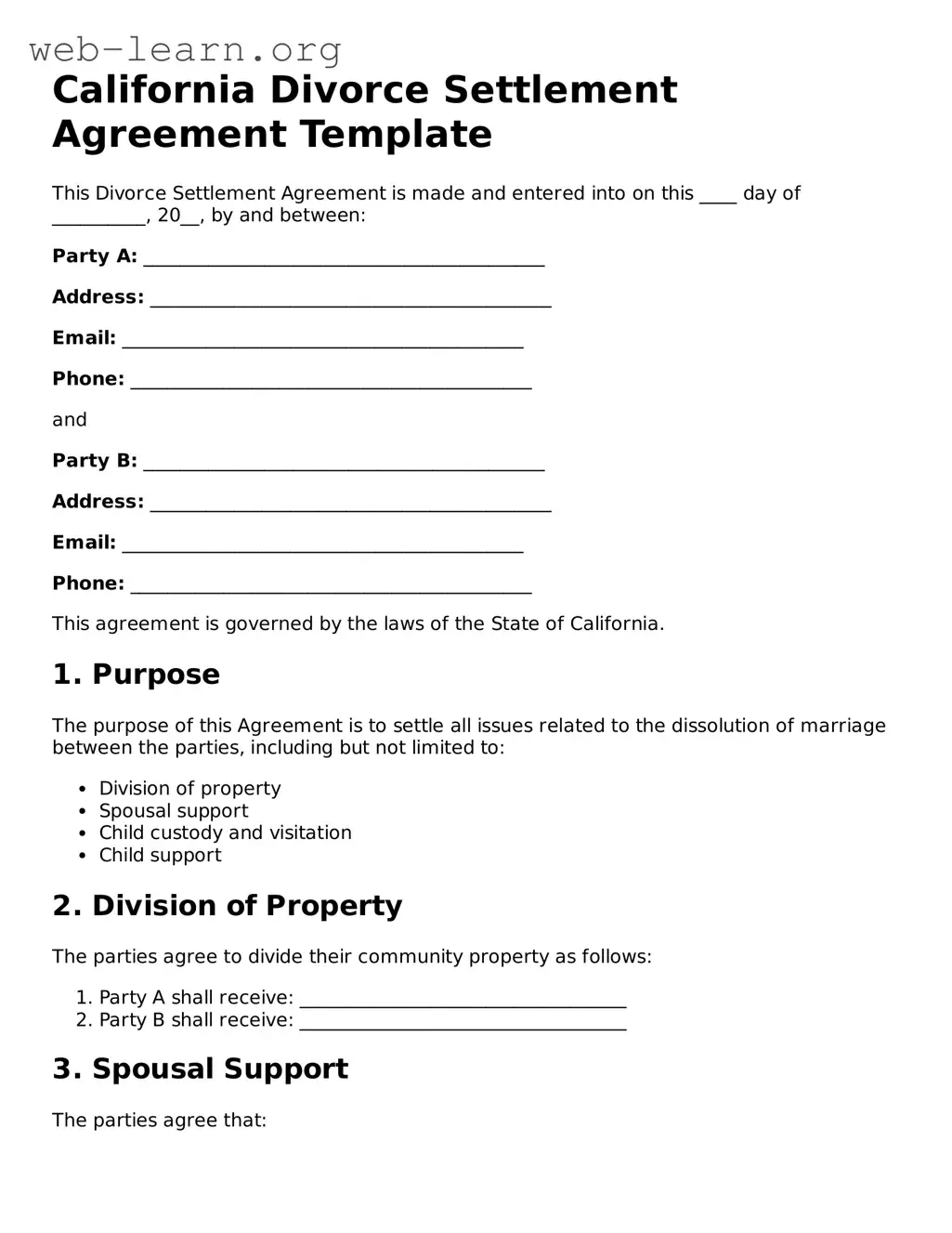
California Divorce Settlement Agreement Template
This Divorce Settlement Agreement is made and entered into on this ____ day of __________, 20__, by and between:
Party A: ___________________________________________
Address: ___________________________________________
Email: ___________________________________________
Phone: ___________________________________________
and
Party B: ___________________________________________
Address: ___________________________________________
Email: ___________________________________________
Phone: ___________________________________________
This agreement is governed by the laws of the State of California.
1. Purpose
The purpose of this Agreement is to settle all issues related to the dissolution of marriage between the parties, including but not limited to:
2. Division of Property
The parties agree to divide their community property as follows:
3. Spousal Support
The parties agree that:
4. Child Custody and Visitation
The parties agree to the following custody and visitation arrangements for their minor children:
5. Child Support
Party A shall pay Party B child support in the amount of $________ per month, in accordance with California law.
6. Miscellaneous
This Agreement constitutes the entire understanding between the parties. Any modifications must be made in writing and signed by both parties.
7. Signatures
By signing below, both parties acknowledge that they have read and understood this Agreement and voluntarily agree to its terms.
Party A Signature: _______________________________ Date: ___________
Party B Signature: _______________________________ Date: ___________
This Agreement is effective as of the date signed by both parties.
| Fact Name | Description |
|---|---|
| Purpose | The California Divorce Settlement Agreement form outlines the terms of a divorce settlement between spouses. |
| Governing Law | This form is governed by the California Family Code. |
| Property Division | The agreement includes provisions for the division of community and separate property. |
| Child Custody | It addresses child custody arrangements and visitation rights, ensuring the best interest of the child. |
| Spousal Support | The form may outline any spousal support obligations or waivers between the parties. |
| Signatures Required | Both parties must sign the agreement to make it legally binding. |
| Filing | The completed agreement must be filed with the court as part of the divorce proceedings. |
Once you have your California Divorce Settlement Agreement form ready, it’s time to fill it out carefully. This form is crucial for outlining the terms of your divorce, including property division, child custody, and support arrangements. Completing it accurately will help ensure a smoother process as you move forward.
After filling out the form, review it carefully for any errors or omissions. Once everything is in order, you can submit it to the court as part of your divorce proceedings. This will help finalize the terms you've agreed upon.
What is a California Divorce Settlement Agreement?
A California Divorce Settlement Agreement is a legal document that outlines the terms of a divorce between two parties. It covers important aspects such as the division of property, spousal support, child custody, and child support. This agreement is crucial for ensuring that both parties are on the same page regarding their rights and responsibilities after the divorce.
Who needs to complete this form?
Both spouses involved in a divorce should complete the Divorce Settlement Agreement. It is particularly important for those who have children or significant assets. By creating this agreement, both parties can avoid potential disputes in the future and ensure a smoother transition post-divorce.
How do I fill out the Divorce Settlement Agreement?
Filling out the Divorce Settlement Agreement involves several steps:
Is the Divorce Settlement Agreement legally binding?
Yes, once both parties sign the Divorce Settlement Agreement and it is filed with the court, it becomes a legally binding contract. This means that both spouses are obligated to adhere to the terms outlined in the agreement. If either party fails to comply, the other can seek legal recourse.
Can I modify the Divorce Settlement Agreement after it is signed?
Yes, modifications can be made to the Divorce Settlement Agreement, but both parties must agree to the changes. It’s important to document any modifications in writing and, if necessary, have them notarized. If the changes involve child custody or support, you may need to file a motion with the court.
What happens if we cannot agree on the terms?
If you and your spouse cannot reach an agreement on the terms of the Divorce Settlement Agreement, you may need to consider mediation or legal representation. A mediator can help facilitate discussions and find common ground. If mediation fails, the case may go to court, where a judge will make the final decisions.
Where can I find the Divorce Settlement Agreement form?
The Divorce Settlement Agreement form can typically be found on the California court website or obtained from your local courthouse. Many legal aid organizations also provide resources and templates that can help you get started. It’s essential to use the correct form for your specific county, as requirements may vary.
Filling out the California Divorce Settlement Agreement form can be a daunting task. Many individuals find themselves making common mistakes that can lead to delays or complications in their divorce process. Understanding these pitfalls can help ensure that your agreement is completed accurately and efficiently.
One frequent mistake is not providing complete information. When you leave out essential details, it can create confusion and necessitate additional paperwork. Each section of the form is important, and it’s crucial to provide all requested information, including your personal details and those of your spouse.
Another common error is failing to be specific about assets and debts. Vague descriptions can lead to misunderstandings later on. Be clear about what each party is entitled to, and list all assets and debts explicitly. This clarity will help avoid disputes down the line.
Many people also overlook the importance of not consulting with a legal professional. While it’s possible to fill out the form on your own, having a knowledgeable person review your agreement can catch mistakes you might have missed. They can provide insights that ensure your rights are protected.
Additionally, neglecting to consider tax implications can be a significant oversight. Certain decisions made during the divorce can have tax consequences that impact your financial future. It’s wise to think about how asset division will affect your taxes before finalizing the agreement.
Another mistake is not keeping copies of everything. After submitting your form, it’s essential to maintain copies of all documents for your records. This practice can save you time and stress if any questions arise later.
Some individuals also forget to include provisions for future changes. Life is unpredictable, and your circumstances may change after the divorce is finalized. Including clauses that address potential future modifications can save both parties from unnecessary complications.
Moreover, overlooking the importance of timelines can lead to frustration. Make sure to understand the deadlines associated with your divorce process. Missing a deadline can delay your case and create additional stress for both parties involved.
Finally, not being honest can have serious repercussions. Full disclosure of all assets and debts is required. Hiding information can lead to legal penalties and can impact the fairness of the settlement. Transparency is key to a smooth divorce process.
By being aware of these common mistakes, you can navigate the California Divorce Settlement Agreement form with greater confidence. Take your time, double-check your work, and consider seeking guidance if needed. Your future self will thank you!
When navigating a divorce in California, several forms and documents may accompany the Divorce Settlement Agreement. Each of these documents serves a specific purpose and helps ensure a smoother process for both parties involved. Below is a list of commonly used forms that you may encounter.
Each of these documents plays a crucial role in the divorce process. Understanding their purpose can help make the experience less overwhelming and more manageable. It is important to approach this journey with care and consideration for all parties involved.
Separation Agreement: This document outlines the terms agreed upon by both parties while they are living separately. Like a Divorce Settlement Agreement, it covers issues such as property division, child custody, and support, aiming to minimize conflict during the separation process.
Child Custody Agreement: This specific agreement focuses solely on the arrangements for children involved in a divorce. Similar to a Divorce Settlement Agreement, it details custody arrangements, visitation schedules, and child support obligations, ensuring the best interests of the child are prioritized.
Property Settlement Agreement: This document is created to detail how marital property will be divided between spouses. Much like a Divorce Settlement Agreement, it ensures both parties agree on the distribution of assets and liabilities, reducing potential disputes later on.
Marital Settlement Agreement: This comprehensive document is similar to a Divorce Settlement Agreement in that it addresses all aspects of the divorce, including financial matters, child custody, and support. It serves as a final agreement that both parties must adhere to once the divorce is finalized.
When filling out the California Divorce Settlement Agreement form, it's important to approach the process with care and attention. Here are some key do's and don'ts to keep in mind:
By following these guidelines, you can help ensure a smoother process in your divorce settlement agreement.
When navigating the California Divorce Settlement Agreement form, several misconceptions can arise. Understanding these can help ensure a smoother process. Here are five common misconceptions:
Being aware of these misconceptions can help individuals approach the divorce process with a clearer understanding and better preparation.
Understanding the California Divorce Settlement Agreement form is crucial for a smooth divorce process. This document outlines the terms of the divorce, including asset division, child custody, and support arrangements.
Both parties must fully disclose their financial information. Transparency is essential to ensure that the agreement is fair and legally binding.
Consider seeking legal advice before finalizing the agreement. An attorney can provide valuable insights and help avoid potential pitfalls.
Once completed, the agreement must be filed with the court. This step is necessary for the court to recognize the terms and make them enforceable.
Modifications to the agreement can be made later, but both parties must agree to any changes. Keeping communication open is key to addressing future needs.
Divorce Templates - It typically includes details about shared debts and how they will be handled post-divorce.
Typical Divorce Settlement Connecticut - The document can help to avoid misunderstandings in the future.