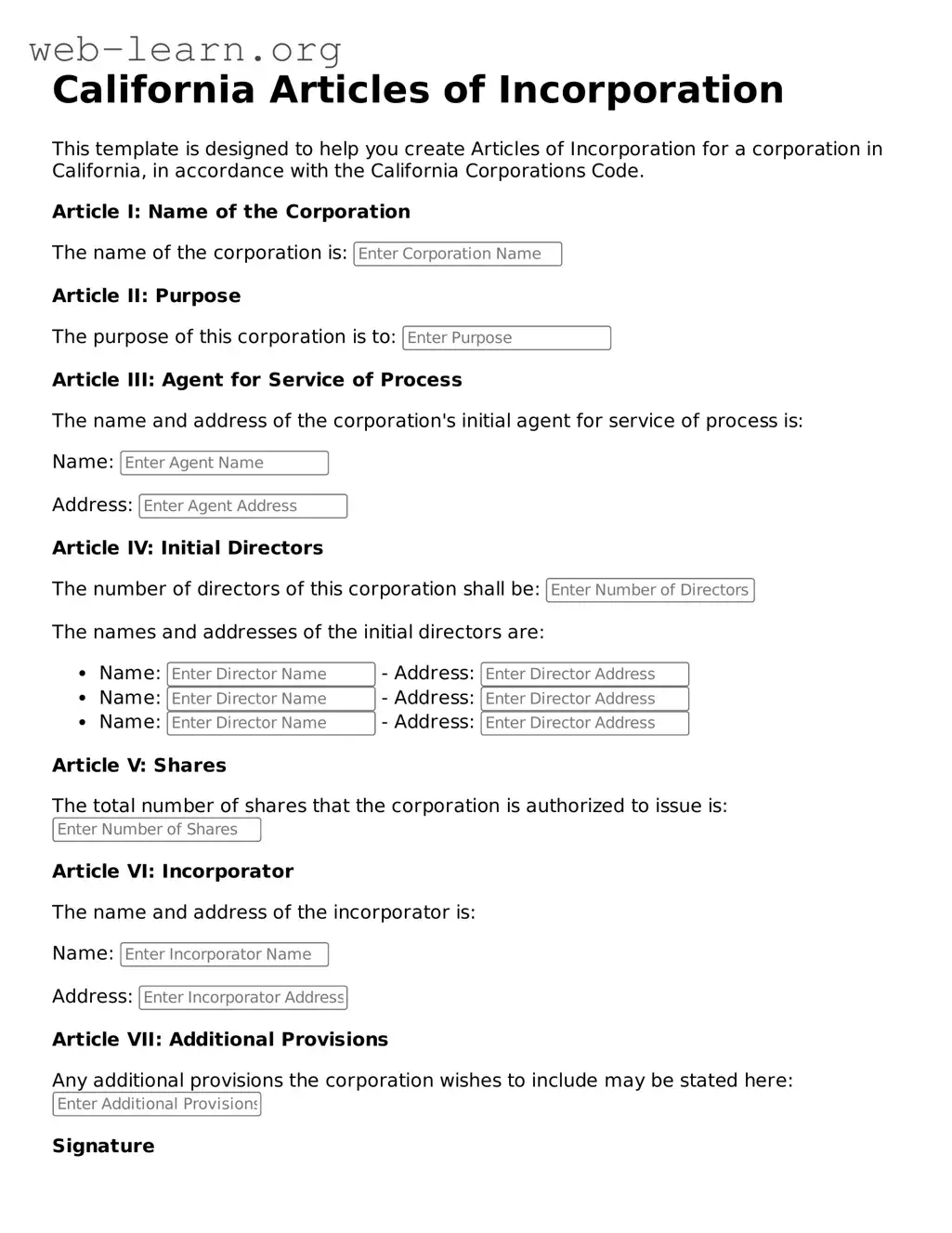
Starting a business in California involves several important steps, one of which is filing the Articles of Incorporation. This form serves as the official document that establishes your corporation's existence in the state. When completing the Articles of Incorporation, you will need to provide key information, including the corporation's name, the purpose of the business, and the address of its principal office. Additionally, the form requires details about the initial directors and the number of shares the corporation is authorized to issue. Understanding these components is crucial, as they lay the foundation for your corporation's legal structure and operations. Filing the Articles of Incorporation correctly ensures compliance with state laws and helps protect your personal assets from business liabilities. Whether you're starting a small business or a larger enterprise, mastering this form is an essential step in your entrepreneurial journey.
California Articles of Incorporation
This template is designed to help you create Articles of Incorporation for a corporation in California, in accordance with the California Corporations Code.
Article I: Name of the Corporation
The name of the corporation is:
Article II: Purpose
The purpose of this corporation is to:
Article III: Agent for Service of Process
The name and address of the corporation's initial agent for service of process is:
Name:
Address:
Article IV: Initial Directors
The number of directors of this corporation shall be:
The names and addresses of the initial directors are:
Article V: Shares
The total number of shares that the corporation is authorized to issue is:
Article VI: Incorporator
The name and address of the incorporator is:
Name:
Address:
Article VII: Additional Provisions
Any additional provisions the corporation wishes to include may be stated here:
Signature
Incorporator Signature:
Date:
By completing and filing these Articles of Incorporation, you are taking an important step in establishing your corporation in California. Ensure all information is accurate and complete before submission.
| Fact Name | Description |
|---|---|
| Purpose | The California Articles of Incorporation form is used to officially create a corporation in the state of California. |
| Governing Law | This form is governed by the California Corporations Code, specifically Sections 200-220. |
| Filing Requirement | To legally establish a corporation, the completed form must be filed with the California Secretary of State. |
| Information Required | Key details such as the corporation's name, purpose, and address must be provided in the form. |
| Fees | A filing fee is required when submitting the Articles of Incorporation, which varies based on the type of corporation. |
After completing the California Articles of Incorporation form, you will need to submit it to the Secretary of State along with the required filing fee. Ensure that all information is accurate to avoid delays in processing your application.
What are Articles of Incorporation?
Articles of Incorporation are legal documents that establish a corporation in California. They outline basic information about the corporation, including its name, purpose, and the address of its registered agent. This document is filed with the California Secretary of State.
Why do I need to file Articles of Incorporation?
Filing Articles of Incorporation is essential for creating a legal entity. It provides liability protection for the owners and allows the corporation to conduct business under its own name. Without this filing, the corporation does not exist in the eyes of the law.
What information is required in the Articles of Incorporation?
The Articles of Incorporation must include:
How do I file the Articles of Incorporation?
You can file the Articles of Incorporation online, by mail, or in person at the Secretary of State's office. If filing by mail, send the completed form along with the required filing fee. Make sure to keep a copy for your records.
What is the filing fee for the Articles of Incorporation?
The filing fee varies based on the type of corporation. As of October 2023, the fee for a standard corporation is $100. Additional fees may apply for expedited processing or other services.
How long does it take to process the Articles of Incorporation?
Processing times can vary. Typically, it takes about 2 to 4 weeks for the Secretary of State to process the Articles of Incorporation. If you need faster processing, consider requesting expedited service for an additional fee.
Can I amend the Articles of Incorporation after filing?
Yes, you can amend the Articles of Incorporation. To do this, you must file an amendment form with the Secretary of State. This form will require details about the changes being made and may also involve a filing fee.
What happens if I don’t file Articles of Incorporation?
If you do not file Articles of Incorporation, your business will not be recognized as a corporation. This means that you will not have the legal protections that come with incorporation, and you may be personally liable for any debts or legal issues that arise from the business.
Do I need a lawyer to file Articles of Incorporation?
While it is not legally required to hire a lawyer, consulting with one can be beneficial. A lawyer can help ensure that your Articles of Incorporation are completed correctly and that you understand your obligations as a corporation.
What is the difference between Articles of Incorporation and bylaws?
Articles of Incorporation establish the corporation's existence and basic structure, while bylaws outline the internal rules and procedures for managing the corporation. Bylaws are not filed with the state but are essential for guiding the corporation's operations.
Filling out the California Articles of Incorporation form can be a straightforward process, but many individuals make common mistakes that can lead to delays or complications. One frequent error is not providing a clear business name. The name must be unique and not too similar to existing businesses. If someone chooses a name that is already taken, the state will reject the application. Always check the California Secretary of State’s database to ensure the name is available.
Another mistake is failing to include the correct address for the corporation's principal office. This address must be a physical location and cannot be a P.O. Box. Providing an incorrect or incomplete address can result in important legal documents not reaching the corporation, which may lead to further issues down the line.
People often overlook the necessity of designating an agent for service of process. This agent is responsible for receiving legal documents on behalf of the corporation. If this information is missing or incorrect, it can complicate legal proceedings. It is crucial to select someone who is reliable and available during business hours.
Additionally, many individuals forget to specify the purpose of the corporation. While California allows a general statement of purpose, being too vague can lead to confusion. A clear and concise purpose helps define the corporation's activities and can be beneficial in the future.
Another common error is neglecting to include the names and addresses of the initial directors. This information is essential for the formation of the corporation. Without it, the application may be incomplete, causing delays in the approval process.
Some people also fail to sign the Articles of Incorporation. The form requires the signature of the incorporator, and without it, the application cannot be processed. This simple oversight can lead to unnecessary delays and frustration.
Lastly, individuals sometimes forget to pay the required filing fee. Each submission must include the correct payment, or the state will not process the application. It is important to check the current fee schedule to ensure compliance.
When forming a corporation in California, several additional documents may be necessary alongside the Articles of Incorporation. Each of these documents plays a vital role in ensuring compliance with state regulations and establishing the corporation's framework. Below is a list of common forms and documents that may be required.
Incorporating a business involves more than just filing the Articles of Incorporation. Each document serves a specific purpose and contributes to the overall structure and compliance of the corporation. It is essential to understand the importance of each form to ensure a smooth incorporation process.
Bylaws: Bylaws outline the internal rules and procedures for managing a corporation. Like the Articles of Incorporation, they establish the framework for how the organization will operate.
Operating Agreement: An operating agreement is similar for limited liability companies (LLCs). It details the management structure and operating procedures, much like how Articles of Incorporation define a corporation's structure.
Certificate of Formation: This document is often used interchangeably with Articles of Incorporation in some states. It serves to officially create a corporation or LLC and includes similar information about the entity.
Partnership Agreement: For partnerships, this agreement lays out the roles and responsibilities of each partner. It shares the same purpose of defining how the business will operate, similar to the Articles of Incorporation.
Business License: A business license is required to operate legally in many jurisdictions. While it does not establish a business entity, it is essential for compliance, much like the Articles of Incorporation are for corporations.
Employer Identification Number (EIN): An EIN is necessary for tax purposes and is often obtained after filing the Articles of Incorporation. Both documents are crucial for a corporation's legal and financial identity.
Stock Certificates: These documents represent ownership in a corporation. They are issued after the Articles of Incorporation are filed, linking ownership to the established entity.
Minutes of Meetings: Minutes serve as the official record of decisions made during meetings. They are important for corporate governance, similar to how Articles of Incorporation set the foundational structure.
Annual Report: Corporations are often required to file annual reports to maintain good standing. This document updates information about the company, which is initially provided in the Articles of Incorporation.
Franchise Agreement: If a corporation operates as a franchise, this agreement outlines the relationship between the franchisor and franchisee. It is similar in that it establishes the terms of operation for the business.
When filling out the California Articles of Incorporation form, it is essential to approach the process with care. Here are five important things to consider:
By following these guidelines, you can help ensure a smoother filing process for your corporation in California.
When it comes to the California Articles of Incorporation form, many people hold misconceptions that can lead to confusion and mistakes. Understanding the facts can help streamline the incorporation process. Here are ten common misconceptions:
By clearing up these misconceptions, you can better navigate the incorporation process in California and ensure that your business starts on the right foot.
When filling out and using the California Articles of Incorporation form, consider the following key takeaways:
Ct Incorporation - They can specify the corporation's initial capital structure.
Michigan Llc Filing - Specifies how corporate profits will be allocated.
Illinois Articles of Incorporation - Filing the Articles of Incorporation is a crucial step in legally establishing a corporation.