Homepage Blank California 540 C1 Form
Outline

The California 540 C1 form is a crucial document for residents filing their state income tax returns. Designed specifically for individuals who are filing on a fiscal year basis, this form requires taxpayers to provide essential personal information, including names, Social Security Numbers (SSNs), and addresses. It also includes sections for determining filing status, exemptions, and taxable income. Taxpayers must indicate whether they are filing jointly or separately and disclose any dependents. The form further outlines calculations for California adjusted gross income, deductions, and credits, which play a significant role in determining tax liability. Additionally, it provides spaces for contributions to various state funds, along with instructions for direct deposit of refunds. Understanding the details of the 540 C1 form is essential for ensuring compliance with California tax laws and optimizing tax outcomes.
Sample - California 540 C1 Form

3101123
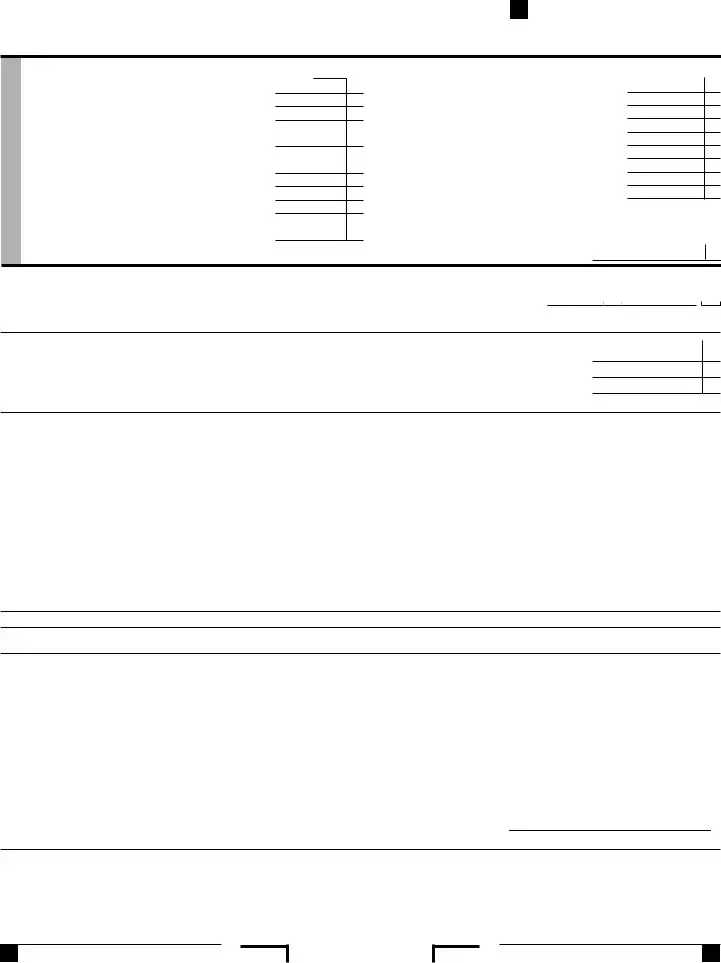
12 State wages from your Form(s) W-2, box 16 .............................. 12 00
13 Enter federal adjusted gross income from Form 1040, line 37; 1040A, line 21; or 1040EZ, line 4 ...........
13 00
14 California adjustments – subtractions. Enter the amount from Schedule CA (540), line 37, column B ....... 14 00
15 Subtract line 14 from line 13. If less than zero, enter the result in parentheses (see page 9)................. 15 00
16 California adjustments – additions. Enter the amount from Schedule CA (540), line 37, column C .......... 16 00
17 California adjusted gross income. Combine line 15 and line 16 ..................................... 17 00
18 Enter the Your California itemized deductions from Schedule CA (540), line 44; OR
larger of: Your California standard deduction shown below for your filing status:
•฀Single or Married/RDP filing separately.............................$3,841
•฀Married/RDP filing jointly, Head of household, or Qualifying widow(er) ....$7,682
If the box on line 6 is checked, STOP (see page 9) .................................... 18 00
19 Subtract line 18 from line 17. This is your taxable income. If less than zero, enter -0-...................
19 00
For Privacy Notice, get form FTB 1131.
California Resident Income Tax Return 2012
FORM
540
C1
Side 1
Filing
Status
Exemptions
Fiscal year filers only: Enter month of year end: month________ year 2013.
Taxable Income
P
AC
A
R
RP
Your first name Last name
Initial
If joint tax return, spouse’s/RDP’s first name Last name
Initial
Address (number and street, PO Box, or PMB no.)
City (If you have a foreign address, see page 7.)
Spouse’s/RDP’s SSN or ITIN
Your SSN or ITIN
PBA Code
State ZIP Code
Apt. no./Ste. no.
{
{
6 If someone can claim you (or your spouse/RDP) as a dependent, check the box here (see page 7) .......... 6
1 Single 4 Head of household (with qualifying person) (see page 3)
2 Married/RDP filing jointly (see page 3) 5 Qualifying widow(er) with dependent child. Enter year spouse/RDP died _________
3 Married/RDP filing separately. Enter spouse’s/RDP’s SSN or ITIN above and full name here______________________________________
If your California filing status is different from your federal filing status, check the box here ...........
For line 7, line 8, line 9, and line 10: Multiply the amount you enter in the box by the pre-printed dollar amount for that line.
Whole dollars only
7 Personal: If you checked box 1, 3, or 4 above, enter 1 in the box. If you checked box 2 or 5,
enter 2, in the box. If you checked the box on line 6, see page 7 .......................... 7
X $104 = $ _________________
8 Blind: If you (or your spouse/RDP) are visually impaired, enter 1;
if both are visually impaired, enter 2
............................................... 8
X $104 = $ _________________
9 Senior: If you (or your spouse/RDP) are 65 or older, enter 1; if both are 65 or older, enter 2 ...
9
X $104 =
$ _________________
10 Dependents: Do not include yourself or your spouse/RDP.
First name Last name
Dependent’s
relationship to you
Total dependent exemptions...................................................10
X $321 =
$ _________________
11 Exemption amount: Add line 7 through line 10. Transfer this amount to line 32 ...........
11 $ _________________
Prior
Name
If you filed your 2011 tax return under a different last name, write the last name only from the 2011 tax return.
Taxpayer _______________________________________________ Spouse/RDP_____________________________________________
Date of
Birth
Your DOB (mm/dd/yyyy) ______/______/___________ Spouse’s/RDP’s DOB (mm/dd/yyyy) ______/______/___________
Side 2 Form 540 C1 2012
3102123
Your name: __________________________________ Your SSN or ITIN: ____________________________
Payments
Overpaid Tax/
Tax Due
71 California income tax withheld (see page 13)................................................... 71 00
72 2012 CA estimated tax and other payments (see page 13)......................................... 72 00
73 Real estate and other withholding (see page 13) ................................................ 73 00
74 Excess SDI (or VPDI) withheld (see page 13) .................................................. 74 00
75 Add line 71, line 72, line 73, and line 74. These are your total payments (see page 14)...................
75 00
91 Overpaid tax. If line 75 is more than line 64, subtract line 64 from line 75.............................
91 00
92 Amount of line 91 you want applied to your 2013 estimated tax .................................... 92 00
93 Overpaid tax available this year. Subtract line 92 from line 91 ...................................... 93 00
94 Tax due. If line 75 is less than line 64, subtract line 75 from line 64. .................................
94 00
Special Credits Other Taxes
61 Alternative minimum tax. Attach Schedule P (540) .............................................. 61 00
62 Mental Health Services Tax (see page 13) ..................................................... 62 00
63 Other taxes and credit recapture (see page 13) ................................................. 63 00
64 Add line 48, line 61, line 62, and line 63. This is your total tax...................................... 64 00
40 Nonrefundable Child and Dependent Care Expenses Credit (see page 11). Attach form FTB 3506........... 40 00
41 New jobs credit, amount generated (see page 11) ..................... 41 00
42 New jobs credit, amount claimed (see page 11)................................................. 42 00
43 Enter credit name
_______________________________code number________ and amount ........... 43 00
44 Enter credit name
_______________________________code number________ and amount ........... 44 00
45 To claim more than two credits (see page 12). Attach Schedule P (540) .............................. 45 00
46 Nonrefundable renter’s credit (see page 12).................................................... 46 00
47 Add line 40 and line 42 through line 46. These are your total credits.................................
47 00
48 Subtract line 47 from line 35. If less than zero, enter -0- ..........................................
48 00
Use
Tax
95 Use Tax. This is not a total line (see page 14) ....................... 95 00
Tax
31 Tax. Check the box if from:
Tax Table
Tax Rate Schedule
FTB 3800
FTB 3803.......... 31 00
32 Exemption credits. Enter the amount from line 11. If your federal AGI is more than $169,730 (see page 10) ..
32 00
33 Subtract line 32 from line 31. If less than zero, enter -0- ..........................................
33 00
34 Tax (see page 11). Check the box if from:
Schedule G-1
FTB 5870A ......................... 34 00
35 Add line 33 and line 34....................................................................
35 00
Form 540 C1 2012 Side 33103123
115 REFUND OR NO AMOUNT DUE. Subtract line 95 and line 110 from line 93 (see page 17).
Mail to: FRANCHISE TAX BOARD, PO BOX 942840, SACRAMENTO CA 94240-0001 ...........
115
Fill in the information to authorize direct deposit of your refund into one or two accounts. Do not attach a voided check or a deposit slip (see page 17).
Have you verified the routing and account numbers? Use whole dollars only.
All or the following amount of my refund (line 115) is authorized for direct deposit into the account shown below:
Checking
Savings
Routing number Type Account number 116 Direct deposit amount
The remaining amount of my refund (line 115) is authorized for direct deposit into the account shown below:
Checking
Savings
Routing number Type Account number 117 Direct deposit amount
111 AMOUNT YOU OWE. Add line 94, line 95, and line 110 (see page 15). Do not send cash.
Mail to: FRANCHISE TAX BOARD, PO BOX 942867, SACRAMENTO CA 94267-0001 .......... 111
Pay online – Go to ftb.ca.gov for more information.
Your name: __________________________________ Your SSN or ITIN: ____________________________
Amount
You Owe
Refund and Direct Deposit Interest and
Penalties
.
,
,
00
.
,
,
00
.
,
,
00
.
,
,
00
112 Interest, late return penalties, and late payment penalties...........................................112 00
113 Underpayment of estimated tax. Check the box: FTB 5805 attached FTB 5805F attached .......113 00
114 Total amount due (see page 17). Enclose, but do not staple, any payment ..............................114 00
Your signature Spouse’s/RDP’s signature Daytime phone number (optional)
(if a joint tax return, both must sign)
X X Date
IMPORTANT: See the instructions to find out if you should attach a copy of your complete federal tax return.
Under penalties of perjury, I declare that I have examined this tax return, including accompanying schedules and statements, and to the best of my
knowledge and belief, it is true, correct, and complete.
Paid preparer’s signature (declaration of preparer is based on all information of which preparer has any knowledge)
Firm’s name (or yours, if self-employed) Firm’s address
PTIN
(
)
FEIN
Sign
Here
I
t is unlawful
to forge a
spouse’s/RDP’s
signature.
Joint tax return?
(see page 17)
Do you want to allow another person to discuss this tax return with us? (see page 17) ......... Yes No
__________________________________________________________________ __________________________________
Print Third Party Designee’s Name Telephone Number
( )
Your email address (optional). Enter only one email address.
Contributions
110 Add code 400 through code 423. This is your total contribution ...................................110 00
Code Amount
California Seniors Special Fund (see page 23) ....
400 00
Alzheimer’s Disease/Related Disorders Fund .....
401 00
California Fund for Senior Citizens .............
402 00
Rare and Endangered Species
Preservation Program.....................
403 00
State Children’s Trust Fund for the Prevention
of Child Abuse...........................
404 00
California Breast Cancer Research Fund .........
405 00
California Firefighters’ Memorial Fund ..........
406 00
Emergency Food for Families Fund .............
407 00
California Peace Officer Memorial
Foundation Fund .........................
408 00
Code Amount
California Sea Otter Fund ....................
410 00
Municipal Shelter Spay-Neuter Fund............
412 00
California Cancer Research Fund ..............
413 00
ALS/Lou Gehrig’s Disease Research Fund........
414 00
Child Victims of Human Trafficking Fund ........
419 00
California YMCA Youth and Government Fund ....
420 00
California Youth Leadership Fund ..............
421 00
School Supplies for Homeless Children Fund .....
422 00
State Parks Protection Fund/Parks Pass Purchase
423 00

Form Information

Fact Name Details
Purpose The California 540 C1 form is used for filing state income taxes for residents of California who are fiscal year filers.
Filing Year This specific version of the form is for the tax year 2012, with a filing deadline typically in April 2013.
Eligibility Only individuals or couples who file on a fiscal year basis should use this form, as opposed to calendar year filers.
Privacy Notice For information on privacy, taxpayers should refer to form FTB 1131, which outlines the California Franchise Tax Board's privacy practices.
Filing Status Options The form allows for various filing statuses, including Single, Married/RDP filing jointly, and Head of Household, among others.
Exemptions Taxpayers can claim exemptions for themselves, their spouse, and dependents, which can reduce taxable income.
California Adjusted Gross Income Calculating California adjusted gross income involves adjustments to federal income, which are reported on this form.
Tax Credits The form includes sections for various tax credits, which can lower the overall tax liability for eligible taxpayers.
Payment Information Taxpayers can report their total payments, including withholdings and estimated tax payments, on the form.
Governing Law The California 540 C1 form is governed by the California Revenue and Taxation Code, which outlines the state's tax laws and requirements.

Detailed Guide for Filling Out California 540 C1

Filling out the California 540 C1 form requires careful attention to detail. This form is essential for residents who need to report their income and calculate their tax obligations for the year. Follow these steps to ensure accurate completion of the form.

  1. At the top of the form, enter the month and year of your fiscal year end.
  2. Fill in your first name, initial, and last name, along with your Social Security Number (SSN) or Individual Taxpayer Identification Number (ITIN).
  3. If filing jointly, provide your spouse’s or Registered Domestic Partner’s (RDP’s) first name, initial, last name, and SSN or ITIN.
  4. Complete your address, including the apartment or suite number, city, state, and ZIP code.
  5. Input your date of birth in the specified format (mm/dd/yyyy), and do the same for your spouse/RDP.
  6. If you filed your previous year’s tax return under a different last name, enter that last name.
  7. Select your filing status by checking the appropriate box (Single, Married/RDP filing jointly, etc.).
  8. If applicable, check the box indicating if someone can claim you or your spouse/RDP as a dependent.
  9. For exemptions, follow the instructions to calculate and enter the amounts for personal, blind, senior, and dependents.
  10. Add the exemption amounts and transfer the total to the designated line.
  11. Report your state wages from Form(s) W-2, and enter your federal adjusted gross income from your federal tax return.
  12. Complete the California adjustments for subtractions and additions as instructed.
  13. Calculate your California adjusted gross income and enter it on the form.
  14. Decide between itemizing deductions or taking the standard deduction for your filing status, and enter that amount.
  15. Subtract your deductions from your adjusted gross income to find your taxable income.
  16. Check the appropriate box for how you will calculate your tax.
  17. Calculate any exemption credits and subtract them from your tax amount.
  18. Add any additional taxes and credits as required.
  19. Report any California income tax withheld and other payments.
  20. Determine if you have an overpayment or tax due by comparing your total payments to your total tax.
  21. If you are due a refund, fill out the direct deposit information if desired.
  22. Sign and date the form, ensuring both spouses/RDPs sign if filing jointly.

Obtain Answers on California 540 C1

  1. What is the California 540 C1 form?

    The California 540 C1 form is a tax return specifically for residents of California who are filing their state income taxes. This form is used to report income, claim deductions, and determine tax liability for the tax year. It is particularly designed for those who are filing for a fiscal year rather than a calendar year.

  2. Who needs to file the California 540 C1 form?

    Individuals who are residents of California and have income that exceeds the filing threshold must file the California 540 C1 form. This includes single filers, married couples filing jointly, and heads of household. If you have a different filing status on your federal return, you may still be required to use this form for your California taxes.

  3. How do I determine my filing status on the California 540 C1 form?

    Your filing status is determined by your marital status and family situation as of the last day of the tax year. The form provides options such as:

    • Single
    • Married/RDP filing jointly
    • Married/RDP filing separately
    • Head of household
    • Qualifying widow(er) with dependent child

    Choose the status that best reflects your situation to ensure accurate tax calculations.

  4. What information do I need to complete the California 540 C1 form?

    To complete the form, you will need personal information such as your name, Social Security Number (SSN) or Individual Taxpayer Identification Number (ITIN), and your filing status. Additionally, gather information on your income, deductions, and any exemptions you qualify for. This includes W-2 forms, 1099s, and any other relevant financial documents.

  5. What are exemptions, and how do I claim them on the California 540 C1 form?

    Exemptions reduce your taxable income. On the California 540 C1 form, you can claim exemptions for yourself, your spouse, and any dependents. The form provides specific lines to enter the number of exemptions and calculates the total exemption amount based on your filing status. Ensure you provide accurate information to maximize your deductions.

  6. How do I submit the California 540 C1 form?

    You can submit the California 540 C1 form either electronically or by mail. If you choose to file electronically, use the California Franchise Tax Board's website or an approved tax software. For paper submissions, mail the completed form to the address specified for your situation on the form. Make sure to keep a copy for your records.

Common mistakes

Filling out the California 540 C1 form can be a daunting task, and many individuals make common mistakes that can lead to complications. One frequent error is failing to include all required personal information. For instance, some taxpayers forget to provide their Social Security Number (SSN) or Individual Taxpayer Identification Number (ITIN). This oversight can delay processing and potentially lead to penalties. Always double-check that all names, SSNs, and addresses are accurately entered.

Another common mistake involves selecting the incorrect filing status. Taxpayers often misinterpret their situation and choose a status that does not reflect their true circumstances. Whether you are single, married filing jointly, or head of household, selecting the wrong status can affect your tax rate and eligibility for certain credits. Take a moment to review the definitions of each filing status to ensure you select the one that accurately describes your situation.

Many individuals also struggle with the exemption calculations. It is essential to understand how to properly calculate exemptions for yourself, your spouse, and any dependents. Some people mistakenly enter the wrong number of exemptions or fail to multiply the number of exemptions by the correct dollar amount. This can lead to an inaccurate taxable income figure, which can ultimately affect your overall tax liability. Careful attention to these details can prevent errors that may require amendments later.

Lastly, taxpayers frequently overlook the importance of signing the form. A signature is not just a formality; it is a legal affirmation that the information provided is accurate to the best of your knowledge. Both spouses must sign if filing jointly. Forgetting this step can result in the form being rejected or delayed. Always remember to review the entire form before submission, ensuring that all required signatures are present.

Documents used along the form

The California 540 C1 form is an essential document for residents filing their state income tax returns. However, it is often accompanied by several other forms and documents that help clarify, support, or supplement the information provided. Understanding these additional documents can streamline the filing process and ensure compliance with California tax laws.

  • Form 540: This is the primary California Resident Income Tax Return form. The 540 C1 is a variation for fiscal year filers, while the standard 540 is used for calendar year filers.
  • Schedule CA (540): This form is used to report adjustments to income and deductions that differ from federal tax returns. It helps taxpayers calculate their California adjusted gross income.
  • Form W-2: Issued by employers, this form reports annual wages and the taxes withheld from employees' paychecks. It is crucial for accurately reporting income on the tax return.
  • Form 1099: This form reports various types of income other than wages, such as freelance earnings or interest income. Taxpayers must include this information when calculating their total income.
  • Form FTB 3506: This is the Nonrefundable Child and Dependent Care Expenses Credit form. Taxpayers can use it to claim credits for eligible child and dependent care expenses.
  • Form FTB 5805: This form is used to report underpayment of estimated tax. Taxpayers may need it if they did not pay enough tax throughout the year.
  • Schedule P (540): Taxpayers use this form to claim various credits and deductions that may reduce their tax liability. It is particularly important for those with multiple credits to report.
  • Form FTB 5870A: This form is for calculating the Mental Health Services Tax. It is applicable to certain income levels and must be included if applicable.
  • Form FTB 1131: This Privacy Notice form informs taxpayers about how their personal information is handled. It is a critical document for understanding privacy rights.
  • Form FTB 3800: This form is used to claim various nonrefundable tax credits. Taxpayers can attach it to their return to maximize their credits.

By familiarizing oneself with these additional forms and documents, taxpayers can navigate the complexities of filing their California tax returns with greater confidence. Each form serves a specific purpose, ensuring that all income, deductions, and credits are accurately reported, ultimately leading to a smoother tax filing experience.

Similar forms

The California 540 C1 form is an essential document for residents filing their state income tax returns. Several other forms share similarities with it, often serving related purposes in tax reporting. Here are seven documents that are similar to the California 540 C1 form:

  • Form 1040: This is the standard federal income tax return form for individuals. Like the 540 C1, it collects personal information, filing status, and income details, making it essential for taxpayers at both state and federal levels.
  • Form 540: This is the primary California Resident Income Tax Return form. The 540 C1 is a variation of this form, specifically for fiscal year filers, and both require similar information about income, deductions, and credits.
  • Form 1040A: This is a simplified version of the federal tax return form. It shares similarities with the 540 C1 in terms of ease of use and the types of income and deductions reported, though it has fewer options than the full 1040.
  • Form 1040EZ: This is the simplest federal tax return form, designed for those with straightforward tax situations. Like the 540 C1, it focuses on basic personal information and income, making it accessible for many taxpayers.
  • Form W-2: While not a tax return form, the W-2 is critical in reporting wages and taxes withheld. The information from W-2 forms is often transferred to the 540 C1 to calculate taxable income.
  • Schedule CA (540): This schedule is used to report adjustments to income for California tax purposes. It is closely related to the 540 C1, as it helps determine the adjusted gross income that is reported on the main form.
  • Form 8862: This form is used to claim the Earned Income Tax Credit after it has been disallowed in previous years. It shares a focus on specific credits and deductions, much like the 540 C1 does for California residents.

Understanding these forms can help ensure that you accurately report your income and take advantage of any available deductions or credits. Always consult with a tax professional if you have questions about which forms to use or how to fill them out.

Dos and Don'ts

When filling out the California 540 C1 form, it's important to be careful and thorough. Here’s a list of things you should and shouldn’t do:

  • Do double-check all personal information, including names and Social Security Numbers (SSNs).
  • Don't forget to indicate your filing status accurately; it affects your tax calculations.
  • Do ensure that you are using the correct year for your tax return, especially if you are filing for a fiscal year.
  • Don't leave any sections blank; if a question doesn’t apply, write “N/A” instead.
  • Do review the instructions carefully for any specific line items that may require additional documentation.
  • Don't submit your form without signing it; both spouses must sign if filing jointly.

Misconceptions

  • Misconception 1: The California 540 C1 form is only for high-income earners.

    This form is used by all California residents who need to file a state income tax return, regardless of their income level. It is essential for anyone who has earned income in California, whether they are low, middle, or high earners.

  • Misconception 2: Filing the 540 C1 form is optional for California residents.

    In reality, California residents are required to file this form if they meet certain income thresholds. Failing to file can result in penalties and interest on any taxes owed.

  • Misconception 3: The 540 C1 form is the same as the federal tax return.

    While both forms serve the purpose of reporting income and calculating taxes owed, they are distinct. The 540 C1 form is specifically for California state taxes and includes state-specific deductions and credits.

  • Misconception 4: You cannot claim any deductions or credits on the 540 C1 form.

    This is incorrect. The form allows for various deductions and credits, such as personal exemptions and credits for dependents. Taxpayers should carefully review the instructions to maximize their potential savings.

  • Misconception 5: Once submitted, you cannot make changes to the 540 C1 form.

    In fact, if errors are discovered after submission, taxpayers can file an amended return. This process allows individuals to correct mistakes and ensure that their tax filings are accurate.

Key takeaways

  • The California 540 C1 form is specifically for residents filing their state income tax returns. Ensure you are using the correct version for the year you are filing.

  • Fill out your personal information accurately. This includes your name, Social Security Number (SSN) or Individual Taxpayer Identification Number (ITIN), and your address.

  • Your filing status is important. Choose the correct option, whether you are single, married filing jointly, or another status. This affects your tax calculations.

  • Calculate your exemptions carefully. Depending on your situation, you may qualify for personal exemptions, blind exemptions, or senior exemptions, which can reduce your taxable income.

  • Review the instructions thoroughly before submitting. Make sure all required sections are completed and check for any additional forms that may need to be attached.