Homepage Blank California 3528 A Form
Outline

The California 3528 A form, officially known as the Application for New Home Credit, is a critical document for individuals purchasing a newly constructed home that has never been occupied. This form is specifically designed for transactions occurring between March 1, 2009, and March 1, 2010. It enables eligible buyers to claim a tax credit against their net tax, equal to 5% of the purchase price or a maximum of $10,000, whichever is lower. The form consists of several parts, including a Seller’s Certification, which requires the seller to affirm that the property is a single-family residence that has not been previously occupied. Buyers must complete their sections, providing personal information and confirming their intent to occupy the home as their principal residence for a minimum of two years. Escrow information is also required, detailing the escrow number, closing date, and total purchase price. Proper completion and timely submission of the form to the Franchise Tax Board (FTB) are essential for claiming the credit. Failure to adhere to these guidelines can result in the loss of potential tax benefits.
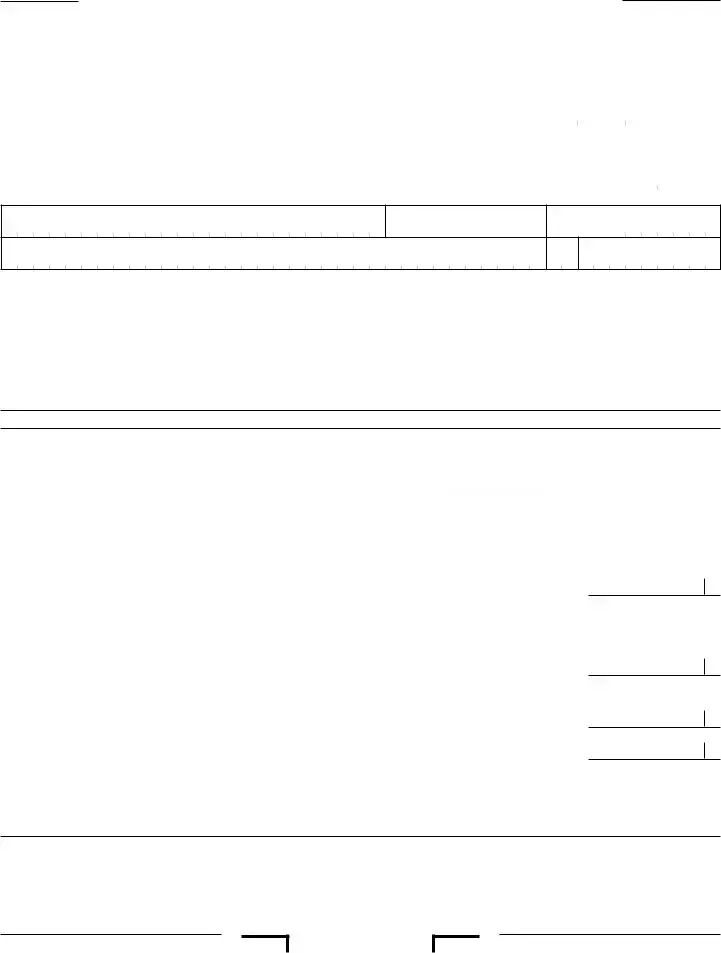
Sample - California 3528 A Form

For Privacy Notice, get form FTB 1131.
-
Seller’s Name
FEIN or CA Corp no. Secretary of State (SOS) file number SSN or ITIN
Address (including suite, room, PO Box, or PMB no.)
City State ZIP Code
Address of Property Sold Parcel Number County
City State ZIP Code
Perjury Statement
Under penalties of perjury, I hereby certify that the property is a single family residence that has never been previously occupied. I certify that the
information provided above is, to the best of my knowledge, true and correct.
Seller’s Signature: ___________________________________________________________________________ Date: _________________________
Seller’s Contact Name: _____________________________________________________ Telephone Number (________) ________ - ______________
Part II Escrow Information
1 Escrow Number . . . . . . . . . . . . . . . . . . . . . . . . . . . . . . . . . . . . . . . . . . . . . . . I฀1 ____________________
2 Date Escrow Closed. . . . . . . . . . . . . . . . . . . . . . . . . . . . . . . . . . . . . . . . . . . . . I฀2 ____________________
Escrow Company Name _______________________________________________________________________
Contact Person ______________________________________________________________________________
Contact Person Telephone Number (_____) _____-______
3 Total Purchase Price . . . . . . . . . . . . . . . . . . . . . . . . . . . . . . . . . . . . . . . . . . . . . . . . . . . . . . . . . . . . . . . . . . . . . . . . . . . .I฀3 00
4 Will all the buyers be living in the home as their principal residence? Check applicable box. If Yes, go to line 5.
If No, skip line 5 and see line 6 instructions . . . . . . . . . . . . . . . . . . . . . . . . . . . . . . . . . . . . . . . . . . . . . . . . . . . . . . . . . . . . . . . . . . . . . . m฀Yes m No
5. Enter 5% (.05) of the Total Purchase Price (line 3) or $10,000, whichever is less. This is the total credit amount. . . . .I฀5 00
Do not complete Line 6 or Line 7 if you checked Yes to Line 4.
6
Enter the Qualified Purchase Price. See instructions
. . . . . . . . . . . . . . . . . . . . . . . . . . . . . . . . . . . . . . . . . . . . . . . . . . . . .I฀6 00
7 Enter 5% (.05) of the Qualified Purchase Price (line 6) or $10,000, whichever is less.
This is the total credit amount . . .I฀7 00
FAX completed Form (Side 1 and Side 2) to: 916.845.9754
-
- -
8161093
Application for New Home Credit
CALIFORNIA FORM
3528-A
TAXABLE YEAR
2009
Part I Seller’s Certification (Important: Use this form only with the sale of a home that has never been occupied) PRINT CLEARLY
MM / DD / YYYY
FTB 3528-A C2 2009 (REV.2 03-09) Side 1
Side 2 FTB 3528-A C2 2009 (REV.2 03-09)
- -
- -
-
8162093
Part III Qualified Buyer’s Information
Escrow Number: __________________________
Perjury Statement
By completing and signing, the Buyer is acknowledging that he/she is purchasing a single family residence in which he/she intends to live for a
minimum of two years as his/her principal residence and which is eligible for the homeowner’s exemption under R&TC Section 218.
Buyer 1. PRINT CLEARLY
Buyer’s First Name
Initial
Buyer’s Last Name
Buyer’s SSN or ITIN
*
Buyer’s Ownership Percent
______ _____ _____
_____ _____%
Buyer’s Individual Credit
$
.00
Spouse’s/RDP’s First Name (if applicable)
Initial
Spouse’s/RDP’s Last Name
Spouse’s/RDP’s SSN or ITIN Buyer’s Telephone Number
( __________ ) __________ – _______________________
Mailing Address
City State Zip Code
Buyer’s Signature Date
Spouse/s/RDP’s Signature (if applicable) Date
Buyer 2.
Buyer’s First Name
Initial
Buyer’s Last Name
Buyer’s SSN or ITIN
*
Buyer’s Ownership Percent
______ _____ _____
_____ _____%
Buyer’s Individual Credit
$ .00
Spouse’s/RDP’s First Name (if applicable)
Initial
Spouse’s/RDP’s Last Name
Spouse’s/RDP’s SSN or ITIN Buyer’s Telephone Number
( __________ ) __________ – _______________________
Mailing Address
City State Zip Code
Buyer’s Signature Date
Spouse/s/RDP’s Signature (if applicable) Date
Buyer 3.
Buyer’s First Name
Initial
Buyer’s Last Name
Buyer’s SSN or ITIN
*
Buyer’s Ownership Percent
______ _____ _____
_____ _____%
Buyer’s Individual Credit
$ .
00
Spouse’s/RDP’s First Name (if applicable)
Initial
Spouse’s/RDP’s Last Name
Spouse’s/RDP’s SSN or ITIN Buyer’s Telephone Number
( __________ ) __________ – _______________________
Mailing Address
City State Zip Code
Buyer’s Signature Date
Spouse/s/RDP’s Signature (if applicable) Date
* Married/RDP couples are considered to be one buyer. If married/RDP, enter the combined percentage in the Buyer’s Ownership Percent field.
- -
- -
-
-
-
-
-
-
FTB 3528-A Instructions 2009 (REV.2 03-09) Page 1
Instructions for 3528-A
Application for New Home Credit
General Information
A Purpose
Use form FTB 3528-A, Application for New
Home Credit, if you are a seller of a new home
which has never been occupied and are selling
to any individual who purchases the residence
on or after March 1, 2009, and before March 1,
2010. The seller must first complete Part I of
form FTB 3528-A, certifying that the home
has never been occupied, and provide a copy
to the buyer or escrow person. The buyer will
complete the rest of form FTB 3528-A. The
escrow person will FAX the completed form
FTB 3528-A to the Franchise Tax Board (FTB)
within one week of the close of escrow, at
916.845.9754, and provide a copy to the buyer.
The copy received from the seller or escrow
person does not constitute an allocation of
the credit to the Buyer; instead the Buyer will
receive confirmation from the FTB certifying
the allocation of tax credit. The Buyer cannot
claim this credit unless they receive an
allocation of the credit from the FTB.
Upon receipt of form FTB 3528-A, the FTB will
allocate the credit on a first-come first-served
basis. The total amount of credit that may
be allocated by the FTB must not exceed one
hundred million dollars ($100,000,000).
Registered Domestic Partner For purposes
of California income tax, references to a
spouse, a husband, or a wife also refer to a
California Registered Domestic Partner (RDP),
unless otherwise specified.
Round Cents to Dollars – Round cents to the
nearest whole dollar. For example, round $50.50
up to $51 or round $25.49 down to $25.
B Qualifications
California allows a credit against net tax equal
to the lesser of 5% (.05) of the purchase
price of the qualified principal residence or ten
thousand dollars ($10,000).
The credit shall be:
Allocated for the purchase of only one
qualified principal residence with respect to
any taxpayer.
Claimed only on a timely filed return,
including returns filed on extension.
Applied in equal amounts over the three
successive taxable years beginning with
the taxable year in which the purchase of
the qualified principal residence is made
(maximum of $3,333 per year.)
The credit will not be allocated:
If the residence has been previously
occupied.
If the taxpayer does not intend to take
occupancy of the principal residence for at
least two years immediately following the
purchase.
If the application is not received within one
week after the close of escrow.
The FTB may request documentation to
ensure the parties have complied with the
requirements of the credit under Revenue and
Taxation Code (R&TC) Section 17059.
The credit must be apportioned equally for
two married taxpayers filing separate tax
returns, even if their ownership percentage
is not equal. For two or more taxpayers who
are not married, the credit shall be allocated
among the taxpayers who will occupy the
home as their principal residence using their
percentage of ownership in the property. The
total amount of the credits allocated to all of
these taxpayers shall not exceed ten thousand
dollars ($10,000).
C Definitions
A “qualified principal residence” means a
single-family residence, whether detached or
attached, that has never been occupied and
is purchased to be the principal residence of
the taxpayer for a minimum of two years and
is eligible for the property tax homeowner’s
exemption.
Types of residence: Any of the following can
qualify if it is your principal residence and
is subject to property tax, whether real or
personal property: a single family residence,
a condominium, a unit in a cooperative
project, a houseboat, a manufactured home,
or a mobile home.
Owner-built property: A home constructed
by an owner-taxpayer is not eligible for the
New Home Credit because the home has not
been “purchased.”
“One week” means a 7 calendar day period. We
will count the day after escrow closes as the
first full day.
Example: Escrow closes March 1, 2009. We
will accept an application filed March 1, 2009
through March 8, 2009.
A “qualified buyer” is an individual who
purchases a single-family residence, whether
detached or attached, and intends to live in the
qualified principal residence for a minimum of
two years.
“Total purchase price” is the price before
reduction of ownership percentage.
“Qualified purchase price” is the price after
reduction of the non-qualifed buyers ownership
percentage.
“Purchase date” is the date escrow closes.
D Limitations
The credit cannot reduce regular tax below
the tentative minimum tax (TMT). This credit
cannot be carried over.
This credit is nonrefundable.
E Claiming the Credit
The credit is applied against the net tax in equal
amounts (1/3 each year) over three successive
taxable years, beginning with the taxable year
in which the purchase of the qualified principal
residence is made, on a timely filed original
return. If the available credit exceeds the
current year net tax, the unused credit may not
be carried over to the following year.
F Filing Form FTB 3528-A
The escrow person will FAX a copy of the form
FTB 3528-A to the FTB and send one copy to
the buyer within one week after the close of
escrow. If a seller has several buyers, send
only one application per FAX.
Do not mail the form.
FTB’s FAX Number is 916.845.9754
The FAX number will be disconnected once the
$100,000,000 total allocation amount has been
reached. Do not use any other FAX number.
Applications sent to any other FTB FAX number
will not be be processed.
We will post a notice on our website at
ftb.ca.gov when the credit has been fully
allocated.
For more information, contact Withholding
Services and Compliance at:
888.792.4900
916.845.4900 (not toll-free)
Specific Instructions
Part I – Seller’s Certification
Enter the name, address, and identification
number of the seller. If the seller is an
individual, enter the SSN or ITIN. If the seller
is a corporation or partnership, enter the FEIN
or CA Corporation number. If the seller is a
Limited Liability Company (LLC), enter the
Secretary of State (SOS) file number. Include
the Private Mail Box (PMB) in the address
field. Write “PMB” first, then the box number.
Example: 111 Main Street PMB 123.
Enter the address of the property sold,
including parcel number and county.
Complete the Seller’s Certification, sign and date.
Part II – Escrow Information
Line 1 – Escrow Number
Enter the escrow number for the property
purchased, if any.
Line 2 – Date Escrow Closed
Enter the date escrow closed. Complete the
escrow information including the escrow
company name, contact person, and telephone
number.
Line 3 – Total Purchase Price
Enter the total purchase price of the property.
If there is more than one buyer, this amount is
the total paid by all buyers.
Line 4
Check whether all of the buyers will be living
in the home as their principal residence.
Disregard any buyers on title for incidental
purposes who do not have an ownership
interest. Check the applicable box. If Yes, go to
line 5. If No, go to line 6 of the instructions.
Page 2 FTB 3528-A Instructions 2009 (REV.2 03-09)
Line 5
Do not complete line 5 if you checked No on
line 4.
Enter 5% (.05) of the Total Purchase Price, from
line 3, or $10,000, whichever is less. This is
the total credit amount. Do not complete line 6
or line 7. Go to the instructions for Part III,
Qualified Buyer’s Information, on Page 2.
Example:
Total Purchase Price . . . . . . . . . . . $250,000
X 5%
$12,500
Since $12,500 is greater than the maximum
credit amount of $10,000, the total credit
amount is $10,000.
Line 6
To compute line 6, first complete Part III,
Qualified Buyer’s Information, on Side 2 of
the form, for each qualified buyer. However,
do not complete the Buyer’s Individual Credit
amount. This will be computed and entered
after completing line 6 and line 7 of form
FTB 3528-A. Do not enter information for
buyer(s) on the Qualified Buyer’s Information
schedule who will not be living in the home as
a principal residence for at least two years.
After completing the Qualified Buyer’s
Information (except for the Buyer’s Individual
Credit), compute the Qualified Purchase Price.
Qualified Purchase Price
Compute the Total Qualified Ownership
Percentage by adding the Ownership
Percentage for each Qualified Buyer from
Part III of the form.
Multiply the Total Qualified Ownership
Percentage by the Total Purchase Price amount
from line 3 on Side 1 of the form. This is the
Qualified Purchase Price. Enter this amount on
Line 6. See the following example.
Example:
The Total Purchase Price on line 3 is $180,000.
There is one non-qualified buyer who will not
occupy the home as a principal residence and
whose 10% ownership percentage will not be
included. There are three Qualified Buyers with
the following listed Ownership Percentages:
Qualified Buyer Ownership
Percentage
Buyer 1 50.00%
Buyer 2 20.00%
Buyer 3 20.00%
Total Qualified
Ownership
Percentage
90.00%
Multiply the Total Purchase Price from line 3
by the Total Qualified Ownership Percentage,
to compute the Qualified Purchase Price.
Total Purchase Price . . . . . . . . . . $180,000
Total Qualified Ownership
Percentage . . . . . . . . . . . . . . . X 90%
Qualified Purchase Price . . . . . . . .$162,000
The Qualified Purchase Price entered on
line 6 would be $162,000.
Line 7
Enter 5% (.05) of the Qualified Purchase Price
amount from line 6, or $10,000, whichever is
less.
This is the total credit amount.
Example:
Qualified Purchase Price . . . . . . . $162,000
Total Qualified Ownership
Percentage . . . . . . . . . . . . . . . . X 5%
Total Credit Amount . . . . . . . . . . . . .$8,100
Part III – Qualified Buyer’s
Information
Complete Part III, Qualified Buyer’s Information,
on Side 2 of the Form, for each qualified buyer.
If there are more than three qualified buyers,
attach additional copies of Side 2 of form
FTB 3528-A, as necessary. If the buyer is on
title as a grantor or revocable trust, enter the
first name, middle initial, and last name of the
grantor(s). Do not include buyers who are on
title for incidental purposes and do not have
an ownership interest. The example at the
bottom of the page shows how a married/RDP
couple would complete the Qualified Buyer’s
Information.
Computing the Individual Credit
Amount
If Yes is checked on line 4:
For each qualified buyer, multiply the Buyer’s
Ownership Percentage by the Total Credit
Amount, on line 5. Enter the Individual Credit
amount in Part III, in the repsective Buyer’s
Individual Credit box for each qualified buyer.
If No is checked on line 4:
Compute the Individual Credit for each
Qualified Buyer using the following formula:
Individual
Ownership Percentage
X Total credit amount
Total Qualified
Ownership Percentage
Enter the Individual Credit amount in Part III, in
the respective Buyer’s Individual Credit box for
each Qualified Buyer. Round your credit to the
nearest whole dollar.
Example:
There are three Qualified Buyers with the
following Ownership Percentages:
Buyer 1 (a married couple): 50%
Buyer 2 (a single person): 20%
Buyer 3 (a single person): 20%
The Total Qualified Ownership Percentage is
90% (50%+20%+20%). The total credit from
line 7 is $8,100. The individual credit amount
for each buyer will be:
Buyer 1: (50% / 90%) x $8,100 = $4,500
Buyer 2: (20% / 90%) x $8,100 = $1,800
Buyer 3: (20% / 90%) x $8,100 = $1,800
Total credit amount = $8,100
The total credit can never be more than
$10,000. If allocated, Buyer 1 will take a
$1,500 credit for each of the next three years.
Buyer 2 and Buyer 3 will take a $600 credit
each for each of the next three years. The
example below shows how Buyer 1 would
complete the Qualified Buyer’s Information.
Example: Buyer 1
Buyer’s First Name
Initial
Buyer’s Last Name
Buyer’s SSN or ITIN
*
Buyer’s Ownership Percent
______ _____ _____
_____ _____%
Buyer’s Individual Credit
$
.00
Spouse’s/RDP’s First Name (if applicable)
Initial
Spouse’s/RDP’s Last Name
Spouse’s/RDP’s SSN or ITIN Buyer’s Telephone Number
( _____ ) _____ - ______
Mailing Address
City State Zip Code
Buyer’s Signature Date
Spouse/s/RDP’s Signature (if applicable) Date
* Married/RDP couples are considered to be one buyer. If married/RDP, enter the combined percentage in the Buyer’s Ownership Percent field.
- -
- -
-
H U S B A N D X B U Y E R
W I F E X B U Y E R
1 2 3 4 5 6 7 8 9 5 0 0 0 4 5 0 0
1 2 3 4 5 6 7 8 9 5 5 5 5 5 5 5 5 5 5
1 2 3 4 B U Y E R W A Y
B U Y E R V I L L E C A 1 2 3 4 5 1 2 3 4

Form Information

Fact Name Details
Purpose The California Form 3528-A is used to apply for the New Home Credit for the sale of a home that has never been occupied.
Eligibility Only sellers of new homes can use this form. The buyer must intend to live in the home as their principal residence for at least two years.
Credit Amount The credit is equal to 5% of the purchase price or $10,000, whichever is less. This credit cannot be carried over to future years.
Governing Law The form is governed by the California Revenue and Taxation Code (R&TC) Section 17059.

Detailed Guide for Filling Out California 3528 A

Filling out the California 3528 A form is a straightforward process, but it requires attention to detail to ensure accuracy. This form is necessary for individuals selling a new home that has never been occupied. Once the form is completed, it will be submitted to the Franchise Tax Board (FTB) to apply for the New Home Credit. Below are the steps to guide you through filling out the form.

  1. Part I - Seller’s Certification: Begin by entering the seller's name, FEIN or CA Corporation number, Secretary of State (SOS) file number, and SSN or ITIN. Include the seller's address, city, state, and ZIP code.
  2. Provide the address of the property sold, including the parcel number and county.
  3. Sign the Perjury Statement, certifying that the property is a single-family residence that has never been occupied. Include the seller's signature and date.
  4. Enter the seller’s contact name and telephone number.
  1. Part II - Escrow Information: Enter the escrow number and the date escrow closed.
  2. Fill in the escrow company name, contact person, and their telephone number.
  3. Input the total purchase price of the property.
  4. Indicate whether all buyers will be living in the home as their principal residence by checking the appropriate box.
  5. If "Yes" is checked, skip to line 5. If "No," proceed to line 6.
  6. If "Yes," enter 5% of the total purchase price or $10,000, whichever is less, as the total credit amount.
  7. If "No," enter the Qualified Purchase Price on line 6 and then calculate 5% of this amount or $10,000, whichever is less, for line 7.
  1. Part III - Qualified Buyer’s Information: Complete this section for each qualified buyer. Provide their first name, middle initial, last name, SSN or ITIN, ownership percentage, and individual credit amount.
  2. Include the spouse's or RDP’s information if applicable.
  3. Each buyer must sign and date the form.

After completing the form, it is essential to fax it to the FTB at 916.845.9754 within one week of closing escrow. A copy should also be provided to the buyer. Ensure that all information is accurate and clearly written to avoid any delays in processing.

Obtain Answers on California 3528 A

  1. What is the California 3528 A form?

    The California 3528 A form, also known as the Application for New Home Credit, is a document used to apply for a tax credit when selling a new home that has never been occupied. This form is specifically designed for sellers who are selling a single-family residence to eligible buyers who intend to use the property as their principal residence.

  2. Who is eligible to use the 3528 A form?

    Eligibility for using the 3528 A form is limited to sellers of new homes that have never been occupied. Buyers must also qualify as individuals who intend to live in the home for at least two years as their principal residence. The credit is available for sales occurring between March 1, 2009, and March 1, 2010.

  3. How do I complete Part I of the form?

    In Part I, the seller must provide their name, address, and identification number (such as SSN or ITIN). Additionally, the seller certifies that the property being sold is a single-family residence that has never been occupied. This section must be signed and dated by the seller to validate the information provided.

  4. What information is required in Part II regarding escrow?

    Part II requires details about the escrow process, including the escrow number, the date escrow closed, and the name of the escrow company. Sellers must also provide the total purchase price of the home and indicate whether all buyers will be living in the home as their principal residence. This section helps establish the transaction's legitimacy and eligibility for the credit.

  5. What if not all buyers will occupy the home?

    If not all buyers will be living in the home as their principal residence, the seller must skip to line 6 to calculate the qualified purchase price. This requires determining the ownership percentages of only those buyers who will occupy the home. The credit will then be based on this adjusted figure.

  6. How is the credit amount determined?

    The credit amount is determined by calculating 5% of the total purchase price or $10,000, whichever is less. If all buyers will occupy the home, the seller can directly enter the credit amount. If not, the qualified purchase price must be calculated first, and then 5% of that amount will be taken or the $10,000 limit will apply.

  7. What happens after I submit the form?

    Once the form is completed, the escrow person must fax the form to the Franchise Tax Board (FTB) within one week of the close of escrow. A copy should also be provided to the buyer. The FTB will process the application on a first-come, first-served basis, and sellers will receive confirmation regarding the allocation of the tax credit.

  8. Can the credit be carried over to future years?

    No, the credit cannot be carried over to future years. It must be claimed on a timely filed tax return for the year in which the purchase of the qualified principal residence is made. The credit is nonrefundable and cannot reduce regular tax below the tentative minimum tax.

Common mistakes

Filling out the California Form 3528-A can be a straightforward process, but many people make common mistakes that can lead to delays or complications. Understanding these pitfalls can help ensure that your application is processed smoothly.

One frequent error occurs in the Seller’s Certification section. Sellers often forget to provide complete and accurate information, such as their full name, address, and identification numbers. Omitting or incorrectly entering these details can cause significant delays in processing. It's crucial to double-check that all fields are filled out clearly and correctly.

Another common mistake involves the Escrow Information. Many applicants fail to enter the correct escrow number or the date escrow closed. This information is essential for tracking your application. If the escrow company does not provide this information accurately, it could lead to complications down the line.

Additionally, people often misinterpret the Principal Residence question. Some applicants mistakenly check "Yes" when they should select "No." This can lead to errors in calculating the credit amount. Understanding the definitions and requirements for a principal residence is vital to avoid this mistake.

In the calculation of the Total Purchase Price, errors frequently occur. Buyers sometimes miscalculate the total, either including or excluding certain fees. This can lead to incorrect credit amounts being claimed. Always ensure that you are using the correct figures as outlined in the instructions.

Furthermore, many applicants overlook the requirement to submit the form within one week after closing escrow. Failing to meet this deadline can result in losing the opportunity to claim the credit. Mark your calendar and set reminders to avoid this issue.

Finally, some individuals neglect to round their figures correctly. The instructions specify rounding cents to the nearest whole dollar. Errors in rounding can lead to discrepancies in the credit claimed. Pay careful attention to this detail to ensure accuracy.

By being aware of these common mistakes, you can navigate the process more effectively and increase your chances of a successful application. Take your time, review the form thoroughly, and don’t hesitate to seek assistance if needed.

Documents used along the form

The California Form 3528 A serves a specific purpose in facilitating tax credits for the sale of newly constructed homes that have never been occupied. However, several other forms and documents often accompany this form to ensure a smooth transaction and compliance with state regulations. Below is a list of commonly used documents in conjunction with the California 3528 A form.

  • Form FTB 1131: This form provides a privacy notice that outlines how personal information is handled by the Franchise Tax Board (FTB). It ensures that individuals are aware of their rights regarding the confidentiality of their data.
  • Escrow Instructions: This document details the terms and conditions agreed upon by the buyer and seller during the escrow process. It outlines the responsibilities of the escrow company and the steps required to complete the sale.
  • Preliminary Change of Ownership Report (PCOR): Required by the county assessor's office, this form provides information about the property transfer. It helps assessors determine property tax assessments based on the sale.
  • Grant Deed: This legal document transfers ownership of the property from the seller to the buyer. It includes details about the property and is recorded with the county to formalize the change of ownership.
  • Homeowner’s Exemption Application: This application allows homeowners to claim a property tax exemption for their principal residence. It must be filed to benefit from reduced property taxes.
  • Form 540: California's individual income tax return form, which taxpayers must file to report income, claim deductions, and apply for credits, including those related to the home credit.
  • Loan Documents: These include the mortgage agreement and any related paperwork that outlines the terms of the financing for the home purchase. They are crucial for securing the loan necessary to buy the property.
  • Title Insurance Policy: This document protects the buyer and lender against any potential disputes over property ownership. It ensures that the title is clear of any liens or encumbrances.

In summary, the California 3528 A form is just one component of a broader set of documents necessary for a successful real estate transaction. Each document plays a vital role in ensuring compliance with state regulations and protecting the interests of all parties involved in the home buying process.

Similar forms

The California Form 3528-A is an important document used in real estate transactions, particularly for claiming the New Home Credit. Several other documents share similarities with this form, particularly in their purpose or the information they collect. Here is a list of eight documents that are similar to the California 3528-A form:

  • IRS Form 1040: This is the standard individual income tax return form used in the United States. Like the 3528-A, it requires personal information and details about income, deductions, and credits. Both forms aim to determine tax liability and eligibility for credits.
  • IRS Form 8862: This form is used to claim the Earned Income Tax Credit after it has been disallowed in a previous year. Similar to the 3528-A, it requires certification of eligibility and includes personal details about the taxpayer and dependents.
  • California Form 540: This is the state income tax return for California residents. It collects similar information regarding income, deductions, and credits, and is used to determine tax liability, much like the 3528-A does for specific credits related to home purchases.
  • IRS Form 4562: This form is used for depreciation and amortization. It requires detailed information about property and its use, akin to how the 3528-A requires information about the property being purchased and its intended use as a principal residence.
  • California Form 3506: This form is for the California New Home Credit. It is specifically designed for claiming a credit for new home purchases, similar to the 3528-A, which also aims to facilitate tax credits for homebuyers.
  • IRS Form 1040 Schedule A: This form is used to itemize deductions on the federal tax return. Like the 3528-A, it requires detailed financial information and can affect the taxpayer's overall tax liability.
  • California Form 540NR: This is the nonresident or part-year resident income tax return. Similar to the 3528-A, it collects information about residency status and income, which can impact eligibility for various tax credits.
  • IRS Form 8889: This form is used to report Health Savings Account (HSA) contributions and distributions. While focused on health savings, it also requires personal information and certification of eligibility, much like the 3528-A's requirement for seller and buyer information.

Each of these documents serves a specific purpose within the tax system, yet they share common elements with the California Form 3528-A, particularly in their focus on eligibility, certification, and the collection of personal and property-related information.

Dos and Don'ts

When filling out the California 3528 A form, it's essential to ensure accuracy and compliance. Here are seven important things to do and avoid during the process:

  • Do: Print all information clearly to avoid any misunderstandings.
  • Do: Ensure the property has never been occupied before certifying it as a single-family residence.
  • Do: Provide accurate identification numbers, including SSN or ITIN for individuals and FEIN for corporations.
  • Do: Check the appropriate boxes regarding the buyers' intent to occupy the home as their principal residence.
  • Do: Submit the form via fax to the correct number: 916.845.9754, within one week of closing escrow.
  • Do: Round all monetary amounts to the nearest whole dollar as instructed.
  • Do: Keep a copy of the completed form for your records.
  • Don't: Skip any sections of the form; each part must be completed as required.
  • Don't: Submit the form by mail; it must be faxed to ensure timely processing.
  • Don't: Include buyers who do not have an ownership interest in the property.
  • Don't: Forget to sign and date the form; missing signatures can lead to delays.
  • Don't: Assume that the form will be processed if sent to an incorrect fax number.
  • Don't: Leave any fields blank; provide all necessary information to avoid complications.
  • Don't: Claim the credit without receiving confirmation of the allocation from the FTB.

Misconceptions

Misconceptions about the California 3528 A form can lead to confusion for both sellers and buyers. Here are eight common misconceptions along with clarifications:

  • Only first-time homebuyers can use the form. This is not true. The form is specifically for the sale of a new home that has never been occupied, regardless of the buyer's previous homeownership status.
  • The form can be mailed to the FTB. The form must be faxed to the Franchise Tax Board (FTB) within one week of the close of escrow. Mailing it will not fulfill the requirement.
  • All buyers must occupy the home to qualify. Only the buyers who will be living in the home as their principal residence need to be listed. Non-occupying buyers do not need to be included in the application.
  • The credit can be claimed immediately. The credit is applied against net tax in equal amounts over three successive taxable years, starting with the year of purchase.
  • The maximum credit is $10,000 per buyer. The total credit amount allocated cannot exceed $10,000 for all buyers combined, not per individual buyer.
  • Any type of residence qualifies. Only single-family residences that have never been occupied are eligible. Other types of properties, such as condos or manufactured homes, may qualify if they meet specific criteria.
  • The form is for any home sale. The 3528 A form is only applicable for new homes that have never been occupied. Resale homes do not qualify.
  • Buyers can claim the credit without confirmation. Buyers must receive confirmation from the FTB certifying the allocation of the tax credit. Without this confirmation, they cannot claim the credit.

Key takeaways

Here are some key takeaways about filling out and using the California 3528 A form:

  • Eligibility: This form is specifically for the sale of new homes that have never been occupied. Make sure the property qualifies before proceeding.
  • Seller's Certification: The seller must complete Part I, certifying the home has never been occupied. This is crucial for the application.
  • Escrow Information: Fill out the escrow details accurately, including the escrow number and closing date. This information is essential for processing the application.
  • Credit Calculation: The credit amount is either 5% of the total purchase price or $10,000, whichever is less. Ensure to calculate this correctly.
  • Submission Process: The escrow person must fax the completed form to the Franchise Tax Board (FTB) within one week of closing escrow. Do not mail the form.
  • Principal Residence Requirement: Buyers must intend to live in the home as their principal residence for at least two years to qualify for the credit.