Homepage Blank California 109 Form
Outline

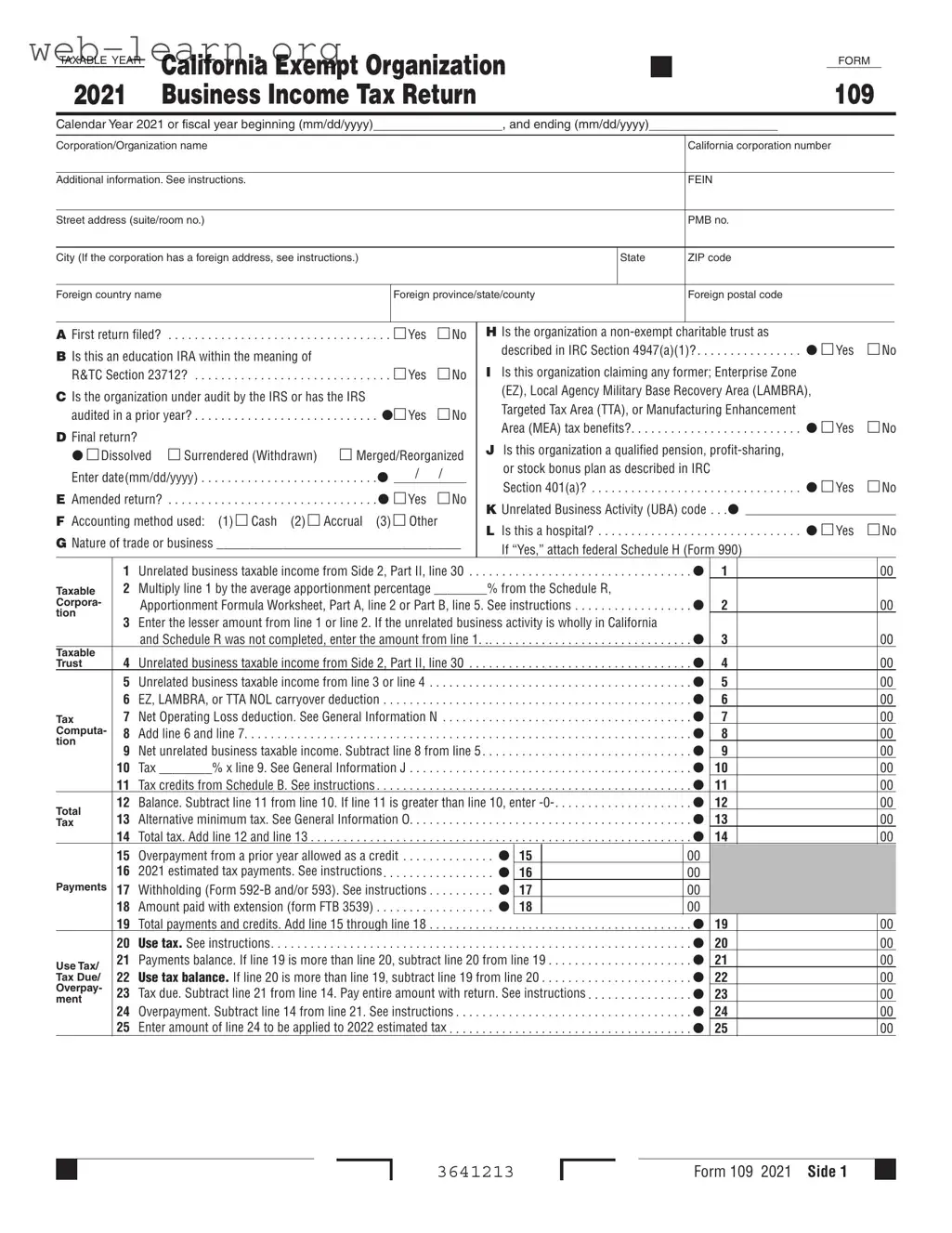
The California Form 109 is an essential document for organizations operating within the state that are classified as exempt entities. It serves as the California Exempt Organization Business Income Tax Return, specifically designed for the reporting of unrelated business income. This form is crucial for organizations that engage in activities not directly related to their exempt purposes, as it helps determine any tax liabilities stemming from those activities. The form includes various sections that require organizations to provide their basic information, such as their name, address, and federal employer identification number (FEIN). Additionally, it prompts organizations to indicate if they are filing their first return, claiming specific tax benefits, or undergoing an audit by the IRS. The form also addresses different accounting methods and includes sections for reporting unrelated business taxable income, deductions, and applicable tax credits. Organizations must carefully navigate the various schedules attached to the form, which detail income sources, deductions, and apportionment formulas necessary for accurate reporting. Understanding the nuances of Form 109 is vital for compliance and ensuring that organizations meet their tax obligations while maximizing their benefits under California law.


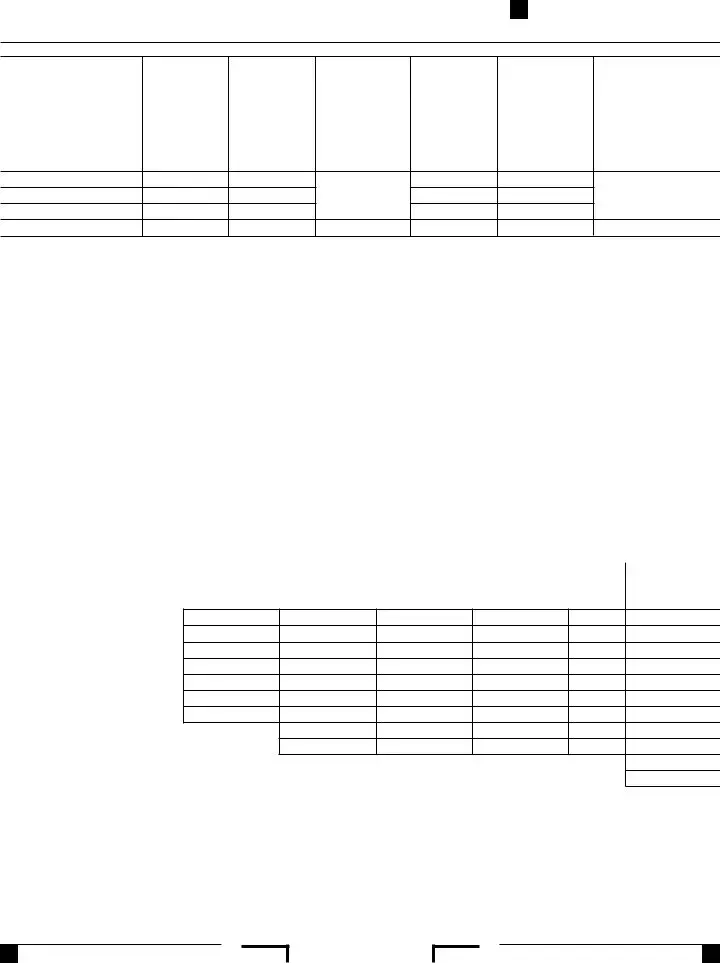
Sample - California 109 Form

TAXABLE YEAR
2021
California Exempt Organization
Business Income Tax Return
FORM
109
Calendar Year 2021 or fiscal year beginning (mm/dd/yyyy) , and ending (mm/dd/yyyy)
Corporation/Organization name California corporation number
Additional information. See instructions. FEIN
Street address (suite/room no.) PMB no.
City (If the corporation has a foreign address, see instructions.) State ZIP code
Foreign country name Foreign province/state/county Foreign postal code
A First return filed? Yes No
B Is this an education IRA within the meaning of
R&TC Section 23712? Yes No
C Is the organization under audit by the IRS or has the IRS
audited in a prior year?
Yes No
D Final return?
Dissolved
Surrendered (Withdrawn) Merged/Reorganized
Enter date (mm/dd/yyyy)
E Amended return? Yes No
F Accounting method used: (1) Cash (2) Accrual (3) Other
G Nature of trade or business
................
..........................
................................
...
...............................
H Is the organization a non-exempt charitable trust as
described in IRC Section 4947(a)(1)?
Yes No
I Is this organization claiming any former; Enterprise Zone
(EZ), Local Agency Military Base Recovery Area (LAMBRA),
Targeted Tax Area (TTA), or Manufacturing Enhancement
Area (MEA) tax benefits?
Yes No
J Is this organization a qualified pension, profit-sharing,
or stock bonus plan as described in IRC
Section 401(a)? Yes No
K Unrelated Business Activity (UBA) code
L Is this a hospital?
If “Yes,” attach federal Schedule H (Form 990)
Yes No
Taxable
Corpora
tion
-
1 Unrelated business taxable income from Side 2, Part II, line 30
2 Multiply line 1 by the average apportionment percentage % from the Schedule R,
Apportionment Formula Worksheet, Part A, line 2 or Part B, line 5. See instructions
3 Enter the lesser amount from line 1 or line 2. If the unrelated business activity is wholly in California
and Schedule R was not completed, enter the amount from line 1
Taxable
Trust
4 Unrelated business taxable income from Side 2, Part II, line 30
Tax
Computa
tion
-
5 Unrelated business taxable income from line 3 or line 4
6 EZ, LAMBRA, or TTA NOL carryover deduction
7 Net Operating Loss deduction. See General Information N
8 Add line 6 and line 7
9 Net unrelated business taxable income. Subtract line 8 from line 5
10
Tax % x line 9. See General Information J
11 Tax credits from Schedule B. See instructions
Total
Tax
12 Balance. Subtract line 11 from line 10. If line 11 is greater than line 10, enter 0
13 Alternative minimum tax. See General Information O
14 Total tax. Add line 12 and line 13
Payments
15 Overpayment from a prior year allowed as a credit
16
2021 estimated tax payments. See instructions
17 Withholding (Form 592-B and/or 593). See instructions
18 Amount paid with extension (form FTB 3539)
19 Total payments and credits. Add line 15 through line 18
Use Tax/
Tax Due/
Overpay
ment
-
20 Use tax. See instructions
21 Payments balance. If line 19 is more than line 20, subtract line 20 from line 19
22 Use tax balance. If line 20 is more than line 19, subtract line 19 from line 20
23 Tax due. Subtract line 21 from line 14. Pay entire amount with return. See instructions
24 Overpayment. Subtract line 14 from line 21. See instructions
25 Enter amount of line 24 to be applied to 2022 estimated tax
.................................. 1 00
________
.................. 2 00
. ................................ 3 00
..................................
..............................
............................
□ 
...........................
................................
_____________________________________
.................................. 4 00
........................................ 5 00
............................................... 6 00
......................................
7 00
.................................................................... 8 00
................................ 9 00
________ ........................................... 10 00
................................................ 11 00
- -..................... 12 00
........................................... 13 00
.......................................................... 14 00
.............. 15 00
................. 16 00
.......... 17 00
. . . . . . . . . . . . . . . . . . 18 00
........................................ 19 00
................................................................ 20 00
...................... 21 00
....................... 22 00
................ 23 00
.................................... 24 00
..................................... 25 00
/ /
Form 109 2021 Side 13641213
Refund or
Amount
Due
26 Refund. If line 25 is less than line 24, then subtract line 25 from line 24
a Fill in the account information to have the refund directly deposited. Routing number
b Type: Checking Savings c Account Number
27 Penalties and interest. See General Information M
28 Check if estimate penalty computed using Exception B or C and attach form FTB 5806
29 Total amount due. Add line 22, line 23, line 25, and line 27, then subtract line 24
Unrelated Business Taxable Income
Par
t I Unrelated Trade or Business Income
1 a Gross receipts or gross sales b Less returns and allowances c Balance
2 Cost of goods sold and/or operations (Schedule A, line 7)
3 Gross profit. Subtract line 2 from line 1c
4 a Capital gain net income. See Specific Line Instructions – Trusts attach Schedule D (541)
b Net gain (loss) from Part II, Schedule D-1
c Capital loss deduction for trusts
5 Income (or loss) from partnerships, limited liability companies, or S corporations. See Specific Line Instructions.
Attach Schedule K-1 (565, 568, or 100S) or similar schedule
6 Rental income (Schedule C)
7 Unrelated debt-financed income (Schedule D)
8 Investment income of an R&TC Section 23701g, 23701i, or 23701n organization (Schedule E)
9 Interest, Annuities, Royalties and Rents from controlled organizations (Schedule F)
10 Exploited exempt activity income (Schedule G)
11 Advertising income (Schedule H, Part III, Column A)
12 Other income. Attach schedule
13 Total unrelated trade or business income. Add line 3 through line 12
Part II Deductions Not Taken Elsewhere (Except for contributions, deductions must be directly connected with the unrelated business income.)
14 Compensation of officers, directors, and trustees from Schedule I
15 Salaries and wages
16 Repairs
17 Bad debts
18 Interest. Attach schedule
19 Taxes. Attach schedule
20 Contributions. See instructions and attach schedule
21 a Depreciation
(Corporations and Associations – Schedule J) (Trusts – form FTB 3885F)
b Less: depreciation claimed on Schedule A. See instructions
22 Depletion. Attach schedule
23 a Contributions to deferred compensation plans
b Employee benefit programs. See instructions
24 Other deductions. Attach schedule
25 Total deductions. Add line 14 through line 24
26 Unrelated business taxable income before allowable excess advertising costs. Subtract line 25 from line 13
27 Excess advertising costs (Schedule H, Part III, Column B)
28 Unrelated business taxable income before specific deduction. Subtract line 27 from line 26
29 Specific deduction. See instructions
30 Unrelated business taxable income. Subtract line 29 from line 28. If line 28 is a loss, enter line 28.
Sign
Here
Our privacy notice can be found in annual tax booklets or online. Go to ftb.ca.gov/privacy to learn about our privacy policy statement, or go to ftb.ca.gov/forms
and search for 1131 to locate FTB 1131 EN-SP, Franchise Tax Board Privacy Notice on Collection. To request this notice by mail, call 800.338.0505 and enter
form code 948 when instructed.
Under penalties of perjury, I declare that I have examined this return, including accompanying schedules and statements, and to the best of my knowledge and
belief, it is true, correct, and complete. Declaration of preparer (other than taxpayer) is based on all information of which preparer has any knowledge.
Signature
of officer
Title Date
Telephone
Paid
Preparers
Use Only
Preparer’s
signature
Date
Check if self-
employed
PTIN
Firm’s name (or yours,
if self-employed)
and address
Telephone
May the FTB discuss this return with the preparer shown above? See instructions
Firm’s FEIN
Yes No
______________ ______________ 1c 00
............................................... 2 00
............................................................. 3 00
..................... 4a 00
.......................................................... 4b 00
................................................................. 4c 00
............................................. 5 00
....................................................................... 6 00
......................................................... 7 00
................... 8 00
............................ 9 00
........................................................ 10 00
.................................................... 11 00
..................................................................... 12 00
....................................... 13 00
......................................... 14 00
.............................................................................. 15 00
....................................................................................... 16 00
..................................................................................... 17 00
......................................................................... 18 00
........................................................................... 19 00
.................................................... 20 00
21a 00
............... 21b 00 21 00
........................................................................ 22 00
......................................................... 23a 00
......................................................... 23b 00
.................................................................. 24 00
........................................................... 25 00
......... 26 00
............................................... 27 00
..................... 28 00
................................................................ 29 00
.................. 30 00
............................ 26 00
......... 26a
□  □  ............................. 26c
............................................. 27 00
.............
.....................
29 00
.............................
3642213Side 2 Form 109 2021
Schedule A Cost of Goods Sold and/or Operations.
Method of inventory valuation (specify)
1 Inventory at beginning of year
2 Purchases
3 Cost of labor
4 a Additional IRC Section 263A costs. Attach schedule
b Other costs. Attach schedule
5 T
otal. Add line 1 through line 4b
6 Inventory at end of year
7 Cost of goods sold and/or operations. Subtract line 6 from line 5. Enter here and on Side 2, Part I, line 2
Do the rules of IRC Section 263A (with respect to property produced or acquired for resale) apply to this organization? Yes No
Schedule B Tax Credits.
1 Enter credit name code
2 Enter credit name code
3 Enter credit name code
4 T
otal. Add line 1 through line 3. If claiming more than 3 credits, enter the total of all claimed credits,
on line 4. Enter here and on Side 1, line 11
Schedule K Add-On Taxes or Recapture of Tax. See instructions.
1 Interest computation under the look-back method for completed long-term contracts. Attach form FTB 3834
2 Interest on tax attributable to installment: a Sales of certain timeshares or residential lots
b Method for non-dealer installment obligations
3 IRC Section 197(f)(9)(B)(ii) election to recognize gain on the disposition of intangibles
4
Credit recapture. Credit name
5 T
otal. Combine the amounts on line 1 through line 4. See instructions
Schedule R Apportionment Formula Worksheet. Use only for unrelated trade or business amounts.
Part A. Standard Method – Single-Sales Factor Formula. Complete this part only if the corporation uses the single-sales factor formula.
(a)
Total within and
outside California
(b)
Total within
California
(c)
Percent within
California [(b) ÷ (a)] x 100
1 Total sales
2 Apportionment percentage. Divide total sales column (b) by total sales column (a) and
multiply the result by 100. Enter the result here and on Form 109, Side 1, line 2.
Part B. Three Factor Formula. Complete this part only if the corporation uses the three-factor formula.
(a)
Total within and
outside California
(b)
Total within
California
(c)
Percent within
California [(b) ÷ (a)] x 100
1 Property factor: See instructions
2 Payroll factor: Wages and other compensation of employees
3 Sales factor: Gross sales and/or receipts less returns and allowances
4 Total percentage: Add the percentages in column (c)
5 Average apportionment percentage: Divide the factor on line 4 by 3 and enter the
result here and on Form 109, Side 1, line 2. See instructions for exceptions.
Schedule C Rental Income from Real Property and Personal Property Leased with Real Property
For rental income from debt-financed property, use Schedule D, R&TC Section 23701g, Section 23701i, and Section 23701n organizations. See instructions for exceptions.
1 Description of property 2 Rent received
or accrued
3 Percentage of rent attributable
to personal property
%
%
%
4 Complete if any item in column 3 is more than 50%, or for any item
if the rent is determined on the basis of profit or income
(a) Deductions directly connected
(attach schedule)
(b) Income includible, column 2
less column 4(a)
5 Complete if any item in column 3 is more than 10%, but not more than 50%
(a) Gross income reportable,
column 2 x column 3
(b) Deductions directly connected with
personal property (attach schedule)
(c) Net income includible, column 5(a)
less column 5(b)
Add columns 4(b) and column 5(c). Enter here and on Side 2, Part I, line 6
_______________________________________________
....................................................................... 1 00
...................................................................................... 2 00
................................................................................... 3 00
.................................................... 4a 00
.................................................................... 4b 00
...................................................................... 5 00
............................................................................ 6 00
............. 7 00
__________________________ __________....... 1 00
__________________________ __________....... 2 00
__________________________ __________....... 3 00
............................................................. 4 00
........ 1 00
..................... 2a 00
.................... 2b 00
......................... 3 00
___________________________________________........................... 4 00
........................................ 5 00
..............................................................
.......
.............................................
.......................
................
.............................
......................................
Form 109 2021 Side 33643213
Schedule D Unrelated Debt-Financed Income
1 Description of debt-financed property 2 Gross income from or
allocable to debt-financed
property
3 Deductions directly connected with or allocable to debt-financed property
(a) Straight-line depreciation
(attach schedule)
(b) Other deductions
(attach schedule)
4
Amount of average acquisition
indebtedness on or allocable
to debt-financed property
(attach schedule)
5 Average adjusted basis of or
allocable to debt-financed
property (attach schedule)
6 Debt basis
percentage,
column 4 ÷
column 5
7 Gross income reportable,
column 2 x column 6
8 Allocable deductions,
total of columns 3(a) and
3(b) x column 6
9 Net income (or loss) includible,
column 7 less column 8
%
%
%
Total. Enter here and on Side 2, Part I, line 7
Schedule E Investment Income of an R&TC Section 23701g, Section 23701i, or Section 23701n Organization
1 Description 2 Amount 3 Deductions directly connected
(attach schedule)
4 Net investment income,
column 2 less column 3
5 Set-asides
(attach schedule)
6 Balance of investment income,
column 4 less column 5
Total. Enter here and on Side 2, Part I, line 8
Enter gross income from members (dues, fees, charges, or similar amounts)
Schedule F Interest, Annuities, Royalties and Rents from Controlled Organizations
...........................................
Exempt Controlled Organizations
1 Name of controlled organizations 2 Employer
identification
number
3 Net unrelated income
(loss)
4 Total of specified
payments made
5 Part of column (4) that is
included in the controlling
organization’s gross
income
6 Deductions directly
connected with income in
column (5)
1
2
3
Nonexempt Controlled Organizations
7 Taxable income 8 Net unrelated income
(loss)
9 Total of specified payments
made
10 Part of column (9) that is
included in the controlling
organization’s gross
income
11 Deductions directly
connected with income in
column (10)
1
2
3
4 Add columns 5 and 10
5 Add columns 6 and 11
6 Subtract line 5 from line 4. Enter here and on Side 2, Part I, line 9
Schedule G Exploited Exempt Activity Income, other than Advertising Income
1 Description of exploited activity (attach schedule if
more than one unrelated activity is exploiting the
same exempt activity)
2 Gross unrelated
business income
from trade or
business
3 Expenses directly
connected with
production
of unrelated
business income
4 Net income from
unrelated trade or
business, column 2
less column 3
5 Gross income from
activity that is not
unrelated business
income
6 Expenses
attributable to
column 5
7 Excess exempt
expense, column
6 less column 5
but not more than
column 4
8 Net income
includible, column
4 less column 7
but not less than
zero
Total. Enter here and on Side 2, line 10
.................................................................
....................................................................
...............................................................................................
.......................................................................................................................
......................................................................................
.................................................................................
3644213Side 4 Form 109 2021
Schedule H Advertising Income and Excess Advertising Costs
Part I Income from Periodicals Reported on a Consolidated Basis
1 Name of periodical 2 Gross
advertising
income
3 Direct
advertising
costs
4 Advertising income
or excess advertising
costs. If column 2 is
greater than column 3,
complete columns 5,
6, and 7. If column 3
is greater than
column 2, enter the
excess in Part III,
column B(b). Do not
complete columns 5,
6, and 7.
5 Circulation
income
6 Readership
costs
7 If column 5 is greater than
column 6, enter the income
shown in column 4, in
Part III, column A(b). If
column 6 is greater than
column 5, subtract the sum
of column 6 and column 3
from the sum of column 5
and column 2. Enter amount
in Part III, column A(b). If the
amount is less than zero,
enter 0 .
Totals
Part II Income from Periodicals Reported on a Separate Basis
1 Name of periodical 2 Gross
advertising
income
3 Direct
advertising
costs
4 Advertising income
or excess advertising
costs. If column 2 is
greater than column 3,
complete columns 5,
6, and 7. If column 3
is greater than
column 2, enter the
excess in Part III,
column B(b). Do not
complete columns 5,
6, and 7.
5 Circulation
income
6 Readership
costs
7 If column 5 is greater than
column 6, enter the income
shown in column 4, in
Part III, column A(b). If
column 6 is greater than
column 5, subtract the sum
of column 6 and column 3
from the sum of column 5
and column 2. Enter amount
in Part III, column A(b). If the
amount is less than zero,
enter 0 .
Part III
Column A – Net Advertising Income
(a) Enter “consolidated periodical” and/or
names of non-consolidated periodicals
(b) Enter total amount from Part I, columns 4 or 7,
and amount listed in Part II, columns 4 or 7
Enter total here and on Side 2, Part I, line 11
Part III Column B – Excess Advertising Costs
(a) Enter “consolidated periodical” and/or
names of non-consolidated periodicals
(b) Enter total amount from Part I, column 4,
and amounts listed in Part II, column 4
Enter total here and on Side 2, Part II, line 27
Schedule I Compensation of Ofcers, Directors, and Trustees
1 Name of officer 2 SSN or ITIN 3 Title 4 Percent of time devoted
to business
5 Compensation attributable
to unrelated business
6 Expense account allowances
%
%
%
%
%
Total. Enter here and on Side 2, Part II, line 14
Schedule J Depreciation (Corporations and Associations only. Trusts use form FTB 3885F.)
1 Group and guideline class or description
of property
2 Date acquired (dd/mm/yyyy) 3 Cost or other basis 4 Depreciation allowed
or allowable in prior
years
5 Method of computing
depreciation
6 Life or rate 7 Depreciation for
this year
1 Total additional first-year depreciation (do not include in items below)
2 Other depreciation:
Buildings
Furniture and fixtures
Transportation equipment
Machinery and other equipment
Other (specify)
3 Other depreciation
4
Total
5 Amount of depreciation claimed elsewhere on return
6 Balance. Subtract line 5 from line 4. Enter here and on Side 2, Part II, line 21a
- -
...................
.................................................
...................................................
....................
...........
.......
...
________________
___________________________
..............................
.........................................
................................................................
.............................................
Form 109 2021 Side 5
3645213

Form Information

Fact Name Fact Description
Purpose The California 109 form is used by exempt organizations to report unrelated business income and calculate any applicable taxes for the taxable year.
Taxable Year The form can be completed for either the calendar year or a fiscal year, which must be specified at the top of the document.
Filing Requirement Organizations must file this form if they have any unrelated business taxable income, as defined by the Internal Revenue Code.
Governing Laws This form is governed by the California Revenue and Taxation Code, specifically under Sections 23701g, 23701i, and 23701n.
Non-Exempt Status Organizations must indicate if they are a non-exempt charitable trust, which affects their tax obligations and filing requirements.
Amendments If an organization needs to correct a previously filed return, they can indicate this by checking the 'Amended return' box on the form.

Detailed Guide for Filling Out California 109

Filling out the California 109 form requires careful attention to detail. It’s important to gather all necessary information before you start. This form is crucial for organizations to report their taxable income and related details for the year. Follow the steps below to complete the form accurately.

  1. Begin by entering the taxable year at the top of the form.
  2. Fill in the corporation or organization name, along with the California corporation number and FEIN.
  3. Provide the street address, city, state, and ZIP code. If applicable, include foreign country details.
  4. Indicate if this is the first return filed by checking "Yes" or "No."
  5. Answer the questions about the organization's status, such as if it is a non-exempt charitable trust or under IRS audit.
  6. Specify the accounting method used by selecting either Cash, Accrual, or Other.
  7. Complete the section for unrelated business taxable income by entering the amounts as instructed.
  8. Calculate the tax by multiplying the unrelated business taxable income by the applicable tax rate.
  9. List any tax credits from Schedule B and subtract them from the calculated tax.
  10. Determine if there is an overpayment or balance due by comparing total payments and credits with the tax owed.
  11. Complete the refund section if applicable, providing bank account information for direct deposit if desired.
  12. Sign and date the form, ensuring all information is accurate and complete.

Obtain Answers on California 109

  1. What is the California Form 109?

    The California Form 109 is a tax return specifically designed for exempt organizations, including charities and non-profits, to report their unrelated business income. This form allows these organizations to comply with California tax regulations while ensuring that they accurately report any income that may be subject to taxation.

  2. Who needs to file Form 109?

    Organizations that are classified as tax-exempt under federal law but engage in unrelated business activities must file Form 109. If your organization generates income from activities that are not substantially related to its exempt purpose, you will need to report that income using this form.

  3. What information is required on Form 109?

    Form 109 requires various pieces of information, including:

    • The name and address of the organization
    • Federal Employer Identification Number (FEIN)
    • Details about unrelated business income and expenses
    • Tax credits being claimed
    • Any deductions related to the unrelated business activities

    Accurate and complete information is crucial to ensure compliance and avoid potential penalties.

  4. What are the deadlines for filing Form 109?

    Typically, Form 109 must be filed by the 15th day of the 5th month after the end of the organization’s taxable year. For organizations operating on a calendar year, this means the deadline is May 15. If the deadline falls on a weekend or holiday, it is extended to the next business day.

  5. Can Form 109 be amended?

    Yes, if an organization discovers an error after filing Form 109, it can submit an amended return. This is done by marking the box indicating that it is an amended return and providing the corrected information. It’s important to file the amendment as soon as possible to avoid penalties.

  6. What happens if Form 109 is not filed?

    Failing to file Form 109 can lead to significant consequences, including penalties and interest on any unpaid taxes. Additionally, the organization may lose its tax-exempt status if it consistently fails to comply with tax filing requirements. It’s crucial for organizations to meet their filing obligations to maintain their exempt status and avoid financial repercussions.

Common mistakes

Completing the California 109 form can be a daunting task, and many people make common mistakes that can lead to delays or penalties. One frequent error occurs when individuals fail to provide accurate information about their organization. This includes incorrect names, addresses, or tax identification numbers. Such inaccuracies can cause significant issues, including the potential for miscommunication with tax authorities.

Another common mistake is neglecting to indicate whether the organization is filing its first return. Marking this box incorrectly can lead to confusion regarding the organization's status and tax obligations. It is crucial to ensure that this section is completed accurately to avoid complications.

Many filers also overlook the importance of selecting the correct accounting method. The California 109 form allows for cash, accrual, or other methods. Choosing the wrong method can affect the reported income and, consequently, the tax liability. Therefore, it is essential to review the accounting methods carefully before making a selection.

In addition, some individuals mistakenly assume that they do not need to attach additional schedules or documents when required. For example, if the organization is a hospital, it must include federal Schedule H. Failing to provide necessary attachments can result in the return being deemed incomplete, leading to delays in processing.

Another pitfall is related to the calculation of unrelated business taxable income. Many filers miscalculate this figure, either by not including all relevant income sources or by incorrectly applying deductions. This error can significantly impact the overall tax liability and should be approached with caution.

Furthermore, it is not uncommon for individuals to misreport tax credits. The California 109 form allows for various credits, but failing to calculate or report these accurately can lead to overpayment or underpayment of taxes. Filers should ensure they understand the credits available and how to apply them correctly.

People also often forget to sign and date the form. An unsigned return is considered invalid and may lead to penalties or rejection by the tax authorities. It is a simple yet critical step that should not be overlooked.

Lastly, many filers fail to keep copies of their completed forms and supporting documents. This can create problems if questions arise later or if the organization is audited. Maintaining thorough records is essential for future reference and compliance.

Documents used along the form

The California 109 form is an essential document for organizations that need to report their business income for tax purposes. Along with this form, several other documents may be required to ensure compliance and accuracy in reporting. Below is a list of commonly used forms and documents that complement the California 109 form, each serving a specific purpose in the tax reporting process.

  • Schedule A: This document details the cost of goods sold and operational expenses. Organizations must report their inventory, purchases, and any costs associated with producing goods or services.
  • Schedule B: Used to claim tax credits, this schedule allows organizations to list various credits they are eligible for, helping to reduce their overall tax liability.
  • Schedule C: This form is specifically for reporting rental income from real property. It helps organizations detail income derived from leasing property, along with any associated deductions.
  • Schedule D: This document focuses on unrelated debt-financed income. It requires organizations to report income from debt-financed properties and any deductions related to that income.
  • Schedule E: This schedule is for reporting investment income. Organizations must detail their investment earnings and any deductions that are directly connected to those earnings.
  • Schedule F: This form is used to report income from controlled organizations. It requires organizations to disclose net unrelated income and any payments made to or from controlled entities.
  • Schedule G: This document details income from exploited exempt activities, excluding advertising income. It helps organizations report income generated from activities that may not be classified as unrelated business income.
  • Schedule H: This schedule focuses on advertising income and excess advertising costs. Organizations must report their advertising income and any related expenses, ensuring proper accounting for both.

In summary, these additional forms and schedules work in conjunction with the California 109 form to provide a comprehensive view of an organization’s financial activities. By carefully preparing and submitting these documents, organizations can ensure they meet tax obligations while maximizing potential benefits.

Similar forms

  • Form 990: This form is used by tax-exempt organizations to report their financial information to the IRS. Like the California 109 form, it includes details about income, expenses, and activities of the organization, ensuring transparency and compliance with federal regulations.
  • Form 990-EZ: A shorter version of Form 990, this form is for smaller organizations. It shares similarities with the California 109 form in that it also summarizes income, expenses, and provides a snapshot of the organization’s financial health.
  • Form 990-PF: This form is specifically for private foundations. It requires information about the foundation's income, expenses, and distributions, much like the California 109 form, which focuses on unrelated business income and expenses.
  • Form 1040: While primarily for individual taxpayers, Form 1040 also requires reporting of income and deductions. Similar to the California 109, it ensures that all taxable income is reported accurately to the IRS.
  • Form 1065: This form is used for partnerships to report income, deductions, and credits. It parallels the California 109 form in that it requires a breakdown of income sources and expenses related to the business activities.
  • Form 1120: Corporations use this form to report their income, gains, losses, and deductions. Like the California 109, it involves calculating taxable income and tax liability, ensuring compliance with tax obligations.
  • Form 5471: This form is for U.S. citizens and residents who are officers, directors, or shareholders in certain foreign corporations. It requires reporting of income and expenses, similar to the California 109 form, focusing on transparency and accurate reporting.

Dos and Don'ts

When filling out the California 109 form, here are nine important things to do and avoid:

  • Do ensure all information is accurate and complete.
  • Do double-check the corporation or organization name for spelling errors.
  • Do indicate whether this is the first return filed.
  • Do attach any required schedules or forms as instructed.
  • Do use the correct accounting method (cash, accrual, or other).
  • Don't leave any sections blank; fill in all applicable fields.
  • Don't forget to sign and date the form before submission.
  • Don't mix personal and business information on the form.
  • Don't ignore the instructions; refer to them for specific guidance.

Misconceptions

  • Misconception 1: The California 109 form is only for for-profit organizations.

    In reality, this form is specifically designed for exempt organizations, including non-profits. It helps them report unrelated business taxable income, which is important for maintaining their tax-exempt status.

  • Misconception 2: Filing the California 109 form is optional for all organizations.

    This is not true. If an exempt organization has unrelated business income, it is required to file the California 109 form. Failing to do so can lead to penalties and loss of tax-exempt status.

  • Misconception 3: The form is the same as the federal 990 form.

    While both forms serve similar purposes, they are distinct documents. The California 109 form is tailored to meet state requirements, whereas the federal 990 form is for federal tax reporting. Each has its own set of instructions and requirements.

  • Misconception 4: All income reported on the California 109 form is taxable.

    This is misleading. Only unrelated business income is taxable. Income generated from the organization’s primary exempt activities is not subject to tax and should not be reported on this form.

  • Misconception 5: Once filed, the California 109 form cannot be amended.

    In fact, organizations can file an amended return if they discover errors or need to make changes. It’s important to correct any mistakes to ensure compliance and maintain accurate records.

Key takeaways

When filling out and using the California 109 form, organizations should keep the following key takeaways in mind:

  • Understand the Purpose: The California 109 form is specifically designed for exempt organizations to report their unrelated business income and calculate any associated taxes.
  • Accurate Information: Ensure that all information provided, such as the organization name, address, and federal employer identification number (FEIN), is accurate and complete to avoid processing delays.
  • Identify Tax Benefits: Be aware of potential tax benefits, such as those related to Enterprise Zones or Military Base Recovery Areas, and indicate if the organization qualifies for any of these on the form.
  • Review and Sign: Before submitting, carefully review the completed form for errors. The form must be signed under penalties of perjury, affirming that the information is true and correct.