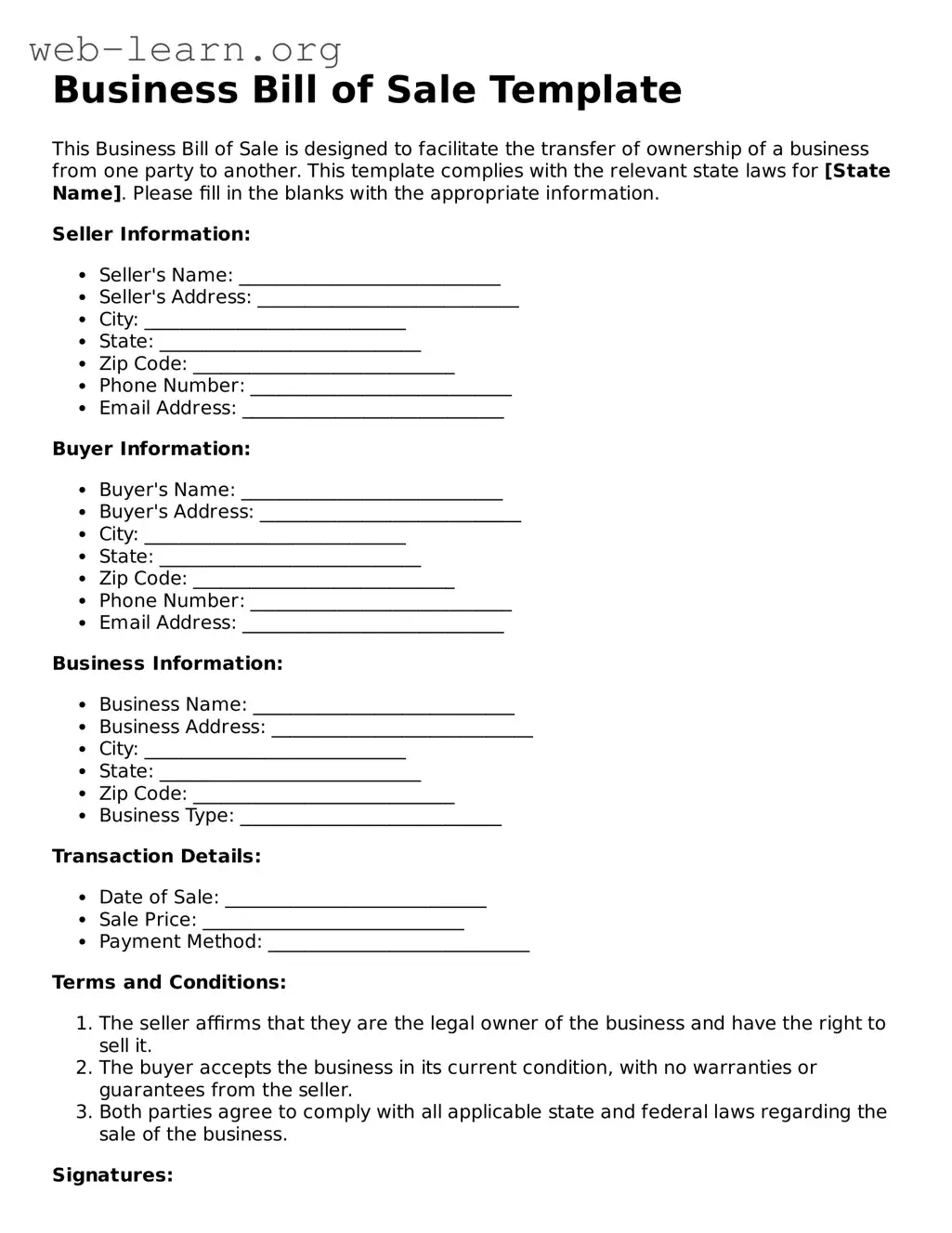
The Business Bill of Sale form serves as a crucial document in the transfer of ownership for a business or its assets. This form not only facilitates the legal exchange of property but also provides essential details that protect both the seller and the buyer. Key components typically include the names and addresses of the parties involved, a description of the business or assets being sold, and the purchase price. Additionally, it may outline any warranties or representations made by the seller, ensuring that the buyer is fully informed about what they are acquiring. By clearly documenting the transaction, this form helps to prevent misunderstandings and disputes in the future. Understanding the importance of this document is vital for anyone engaged in a business sale, as it lays the groundwork for a smooth and transparent transfer process.
Business Bill of Sale Template
This Business Bill of Sale is designed to facilitate the transfer of ownership of a business from one party to another. This template complies with the relevant state laws for [State Name]. Please fill in the blanks with the appropriate information.
Seller Information:
Buyer Information:
Business Information:
Transaction Details:
Terms and Conditions:
Signatures:
By signing below, both parties agree to the terms outlined in this Business Bill of Sale.
Seller's Signature: ____________________________ Date: ____________________________
Buyer's Signature: ____________________________ Date: ____________________________
| Fact Name | Description |
|---|---|
| Definition | A Business Bill of Sale is a legal document that transfers ownership of a business from one party to another. |
| Purpose | This form serves to provide proof of the transaction and details the assets being sold. |
| Governing Law | The specific laws governing the Business Bill of Sale vary by state. For example, in California, it is governed by the California Commercial Code. |
| Key Components | Typically includes the names of the buyer and seller, a description of the business, and the sale price. |
| Signatures | Both parties must sign the document for it to be legally binding. |
| Record Keeping | It is important to keep a copy of the Bill of Sale for future reference and legal protection. |
Once you have the Business Bill of Sale form ready, you will need to fill it out carefully. This document is essential for the transfer of ownership of a business. Ensure you have all necessary information at hand to complete the form accurately.
What is a Business Bill of Sale?
A Business Bill of Sale is a legal document that records the sale of a business. It outlines the terms and conditions of the sale, including the purchase price and any assets being transferred. This document serves as proof of the transaction for both the buyer and the seller.
Why do I need a Business Bill of Sale?
This document is important for several reasons. First, it protects both parties by clearly stating the terms of the sale. Second, it can be used for tax purposes, as it provides evidence of the transaction. Lastly, it helps prevent disputes by documenting what was agreed upon during the sale.
What information should be included in a Business Bill of Sale?
A complete Business Bill of Sale should include:
Is a Business Bill of Sale required by law?
While a Business Bill of Sale is not always legally required, it is highly recommended. Having this document can help protect your interests and provide clarity in case of any future disputes. Local laws may vary, so it's a good idea to check with a legal professional.
Can I create a Business Bill of Sale myself?
Yes, you can create a Business Bill of Sale on your own. Many templates are available online that can guide you through the process. However, if the sale involves significant assets or complex terms, it may be wise to consult with a legal professional to ensure everything is in order.
What happens after the Business Bill of Sale is signed?
Once the Business Bill of Sale is signed, the transaction is considered complete. The buyer should keep a copy for their records, and the seller should also retain a copy. If any assets were transferred, the buyer may need to update registrations or licenses to reflect the new ownership.
How does a Business Bill of Sale affect taxes?
The Business Bill of Sale can have tax implications for both the buyer and the seller. The seller may need to report the sale as income, while the buyer may be able to deduct certain expenses related to the purchase. It's advisable to consult a tax professional to understand the specific tax consequences of the sale.
Can a Business Bill of Sale be modified after it is signed?
Once a Business Bill of Sale is signed, it is generally considered a binding agreement. However, if both parties agree to modifications, they can create an amendment to the original document. It's important to document any changes in writing and have both parties sign the amended agreement.
Filling out a Business Bill of Sale form can seem straightforward, but many people make critical errors that can lead to complications down the line. One common mistake is failing to include all necessary details about the business being sold. This includes the legal name of the business, its address, and any relevant identification numbers. Omitting this information can create confusion and disputes later.
Another frequent error is neglecting to specify the terms of the sale clearly. Buyers and sellers should outline the purchase price, payment method, and any contingencies. Without this clarity, misunderstandings can arise, potentially leading to legal disputes.
Many individuals also overlook the importance of both parties signing the document. A Business Bill of Sale is not valid unless it is signed by both the seller and the buyer. This signature serves as a confirmation of the agreement and protects both parties.
Additionally, some people fail to date the form. Including the date is crucial, as it establishes when the transaction took place. This can be particularly important for tax purposes or in the event of a dispute.
Another mistake involves not keeping a copy of the completed form. After filling out the Business Bill of Sale, it is essential for both parties to retain a copy for their records. This documentation can serve as proof of the transaction and can be invaluable if issues arise in the future.
Many individuals also do not verify the accuracy of the information provided before submitting the form. Errors in names, addresses, or other critical details can lead to significant problems. Taking the time to double-check the information can prevent headaches later.
Another common oversight is failing to include any warranties or guarantees related to the sale. If the seller offers any assurances regarding the condition or operation of the business, these should be explicitly stated in the Bill of Sale.
Some people may also forget to consult legal or financial advisors before completing the form. Seeking professional guidance can help ensure that all aspects of the sale are appropriately addressed and that both parties are protected.
Lastly, individuals sometimes neglect to understand the implications of the sale on existing contracts or liabilities. Before finalizing the Business Bill of Sale, it is crucial to review any existing agreements to ensure that the sale does not inadvertently violate any terms.
When completing a business transaction, several documents may accompany the Business Bill of Sale form to ensure all legal and operational aspects are addressed. Each of these documents serves a specific purpose and helps facilitate a smooth transfer of ownership.
Having these documents ready can streamline the sale process and protect both parties involved. It is crucial to ensure that all necessary paperwork is completed accurately to avoid potential disputes in the future.
Asset Purchase Agreement: This document outlines the terms of sale for specific assets of a business. Like the Business Bill of Sale, it serves as proof of transfer and details the items being sold, including their value.
Sales Agreement: A sales agreement is a broader document that can apply to various types of transactions. It includes details about the buyer, seller, and the items being sold, similar to how a Business Bill of Sale records essential information about the transaction.
Lease Agreement: While primarily used for property rental, a lease agreement can also include terms for purchasing the property at the end of the lease. This parallels the Business Bill of Sale in that both documents finalize a transaction and outline specific terms.
Purchase Order: A purchase order is a document that buyers send to sellers to confirm an order. It specifies what is being purchased and at what price, akin to the Business Bill of Sale, which confirms the sale of business assets.
Transfer of Ownership Document: This document is often used in vehicle sales but can apply to other assets as well. It serves to officially transfer ownership from one party to another, similar to the Business Bill of Sale, which formalizes the change in ownership of business assets.
When filling out a Business Bill of Sale form, attention to detail is crucial. Here’s a guide to help you navigate this important document effectively.
Things You Should Do:
Things You Shouldn't Do:
By following these guidelines, you can ensure a smoother transaction and protect your interests. Filling out a Business Bill of Sale form may seem straightforward, but diligence is key to avoiding potential pitfalls.
The Business Bill of Sale form is an important document in the transfer of business ownership. However, several misconceptions exist about its purpose and use. Below is a list of common misunderstandings.
Understanding these misconceptions can help ensure that individuals properly utilize the Business Bill of Sale form in their transactions.
When filling out and using a Business Bill of Sale form, there are several important points to consider. These takeaways can help ensure that the transaction is clear and legally binding.
By following these key takeaways, individuals can facilitate a smoother transaction and help prevent misunderstandings down the line.
Printable Trailer Bill of Sale Pdf - The form typically includes information such as the trailer's make, model, and vehicle identification number (VIN).
Printable Motorcycle Bill of Sale - Offers a clear outline of the sale process.
Atv Bill of Sale Printable - Acts as a receipt for the buyer’s payment.