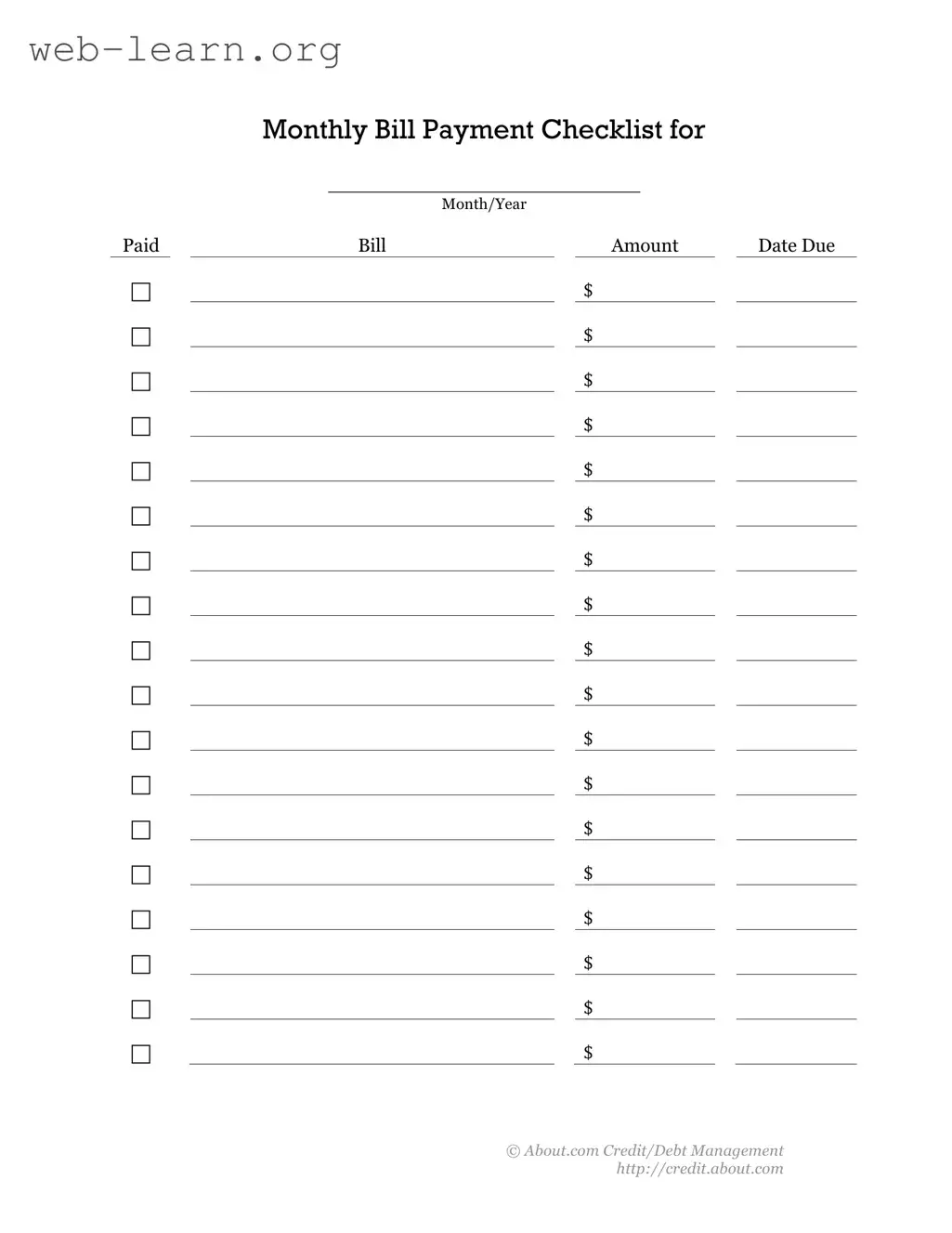
The Bill Payment Checklist form serves as a crucial tool for individuals and households aiming to manage their monthly expenses effectively. This form is designed to help users track various bills, ensuring that payments are made on time and in full. It includes sections for entering the month and year, along with spaces to record each bill's amount and due date. The checklist format allows users to mark off bills as they are paid, providing a clear visual confirmation of completed payments. Additionally, it encourages accountability by listing multiple bills, from utilities to credit cards, that require attention. By utilizing this form, individuals can reduce the risk of late payments, avoid potential fees, and maintain better control over their financial obligations.

| Fact Name | Description |
|---|---|
| Purpose | The Bill Payment Checklist is designed to help individuals track and manage their monthly bill payments effectively. |
| Format | This checklist includes fields for the bill amount, due date, and a checkbox to mark payments as completed. |
| Customization | Users can personalize the checklist by filling in the month, year, and specific bills they need to pay. |
| Governing Law | For state-specific forms, the governing laws may vary; for example, in California, the California Civil Code regulates consumer debt management practices. |
Completing the Bill Payment Checklist form is a straightforward process. This checklist will help you keep track of your monthly bills, ensuring that you record the necessary information for each payment. Follow the steps below to fill out the form accurately.
Once you have filled out the form, you can use it to track your payments and manage your budget effectively. Keep it in a safe place for future reference.
What is the purpose of the Bill Payment Checklist form?
The Bill Payment Checklist form helps individuals keep track of their monthly bills. It provides a structured way to list bills, their amounts, and due dates. This organization can prevent missed payments and help manage finances more effectively.
How should I fill out the Bill Payment Checklist?
To complete the checklist, write your name in the designated space at the top. Then, list each bill you need to pay along with the corresponding amount and due date. As you pay each bill, mark it as "PAID" to keep track of your progress.
Can I use this checklist for any type of bill?
Yes, the checklist is versatile and can be used for any monthly bills. This includes utilities, rent or mortgage, credit card payments, and other recurring expenses. It is designed to accommodate various financial obligations.
What should I do if I miss a payment?
If a payment is missed, review the checklist to identify which bill was overlooked. Contact the service provider as soon as possible to discuss late fees or payment arrangements. Update the checklist accordingly to reflect the new payment date.
Is there a specific time of the month to complete this checklist?
It is best to fill out the checklist at the beginning of each month. This allows you to plan your budget and payments for the upcoming month. However, you can update it anytime bills or due dates change.
How can this checklist help with budgeting?
The checklist provides a clear overview of your monthly expenses. By knowing the total amount due and the due dates, you can allocate your income more effectively. This can help prevent overspending and ensure you have enough funds available for all obligations.
Where can I find this form?
The Bill Payment Checklist form can typically be found on financial management websites or through personal finance resources. It may also be available as a downloadable template. Make sure to choose a format that suits your needs, whether digital or printed.
Filling out the Bill Payment Checklist form can seem straightforward, but mistakes often occur. One common error is leaving the month and year section blank. This information is crucial for tracking payments accurately. Without it, you may lose track of which bills have been paid and when.
Another frequent mistake is failing to enter the bill amounts correctly. Double-checking these figures is essential. Incorrect amounts can lead to budgeting issues and missed payments. Even a small error can have significant consequences over time.
People sometimes forget to fill in the due dates. This can create confusion and result in late payments. It’s important to have this information readily available to avoid penalties and maintain good standing with service providers.
Some individuals overlook marking the paid checkbox after completing a payment. This simple action helps keep track of what has been settled. Without this step, you might accidentally pay a bill twice or forget to pay one altogether.
Using inconsistent formats for the dates can also lead to confusion. Whether you choose MM/DD/YYYY or another format, consistency is key. Mixing formats can make it difficult to interpret the information later.
Another mistake is not reviewing the entire checklist before submitting it. Skimming through the form can result in overlooked errors. Taking a moment to review ensures that all necessary fields are filled out correctly.
Some users may neglect to keep a copy of the completed checklist. This can be problematic if discrepancies arise later. Having a record of what was submitted can help resolve any issues that may come up.
Lastly, failing to update the checklist regularly can lead to outdated information. Bills change over time, and keeping the checklist current is essential for effective financial management. Regular updates help ensure that you stay on top of your payments.
When managing your monthly bills, it's helpful to have a few additional forms and documents at your fingertips. These tools can simplify the process and ensure you stay organized. Below is a list of essential documents that often accompany the Bill Payment Checklist form.
Having these documents organized alongside your Bill Payment Checklist can make a significant difference in how you manage your finances. Staying proactive can help you avoid late fees and keep your financial health on track.
The Bill Payment Checklist form is an essential tool for managing monthly expenses. It helps individuals keep track of their bills and ensures timely payments. Several other documents serve a similar purpose, each with its unique features. Here’s a look at five documents that share similarities with the Bill Payment Checklist:
When filling out the Bill Payment Checklist form, certain practices can enhance accuracy and efficiency. Below are ten recommended actions and pitfalls to avoid.
Here are some common misconceptions about the Bill Payment Checklist form:
Using the Bill Payment Checklist form can streamline your monthly financial management. Here are some key takeaways to consider: