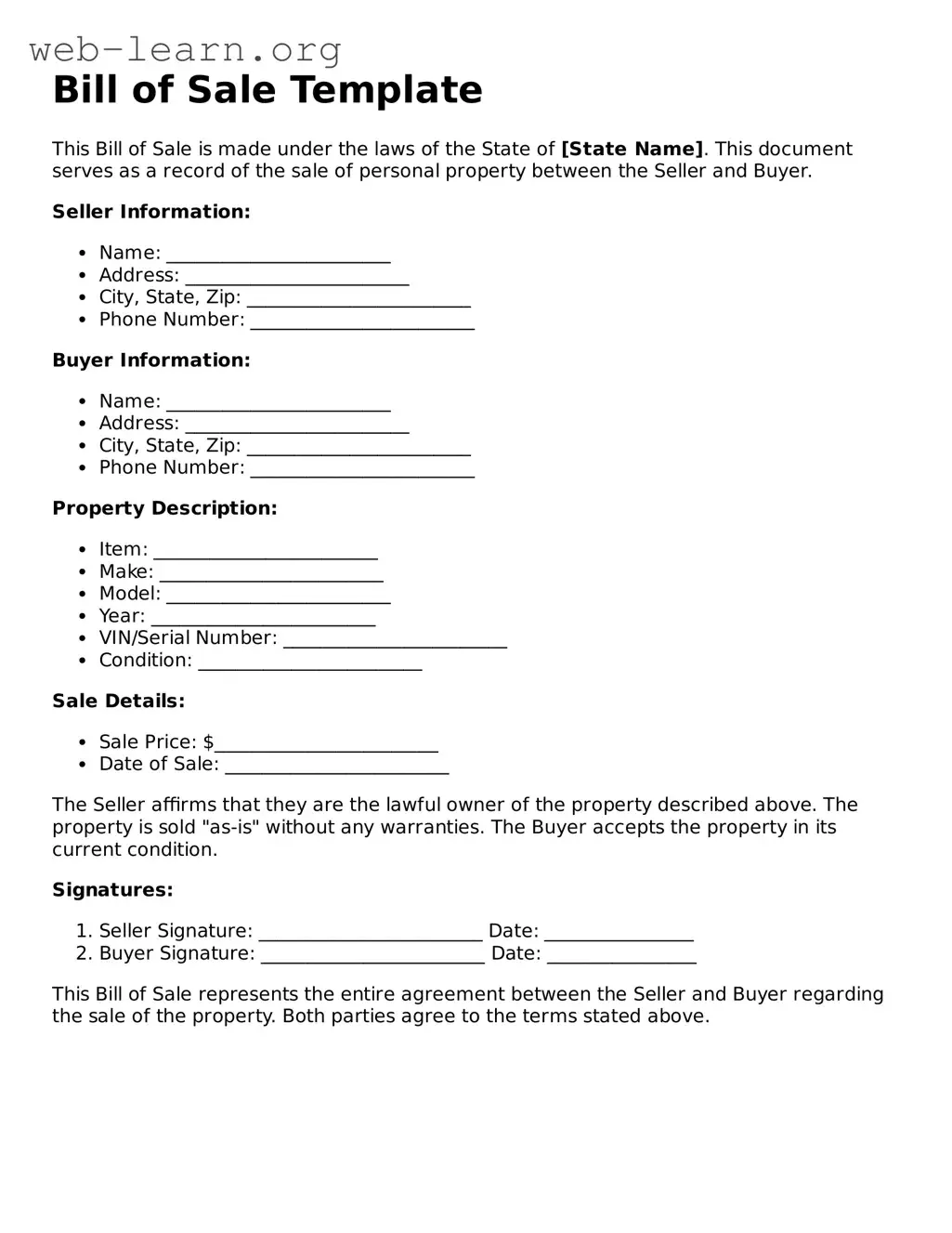
The Bill of Sale form serves as a vital document in the transfer of ownership for personal property, ensuring a smooth transition between buyer and seller. This form captures essential details such as the names and addresses of both parties, a clear description of the item being sold, and the purchase price. It may also include information about any warranties or guarantees associated with the item, providing added protection for the buyer. By documenting the transaction, the Bill of Sale acts as a receipt and can be invaluable in resolving any future disputes. Whether you are selling a vehicle, furniture, or equipment, having a well-structured Bill of Sale helps both parties feel secure in the transaction. Additionally, it can be tailored to meet specific state requirements, making it a versatile tool for anyone engaged in buying or selling personal property.
Bill of Sale Template
This Bill of Sale is made under the laws of the State of [State Name]. This document serves as a record of the sale of personal property between the Seller and Buyer.
Seller Information:
Buyer Information:
Property Description:
Sale Details:
The Seller affirms that they are the lawful owner of the property described above. The property is sold "as-is" without any warranties. The Buyer accepts the property in its current condition.
Signatures:
This Bill of Sale represents the entire agreement between the Seller and Buyer regarding the sale of the property. Both parties agree to the terms stated above.
| Fact Name | Description |
|---|---|
| Definition | A Bill of Sale is a legal document that transfers ownership of personal property from one person to another. |
| Purpose | This document serves as proof of the transaction and outlines the details of the sale, including the item, price, and parties involved. |
| State-Specific Forms | Different states may have specific requirements for Bill of Sale forms, so it's important to use the correct form for your state. |
| Governing Laws | In many states, the sale of personal property is governed by the Uniform Commercial Code (UCC), but local laws may also apply. |
| Importance of Signatures | Both the seller and buyer should sign the Bill of Sale to validate the transaction and protect their rights. |
Filling out a Bill of Sale form is a straightforward process that ensures a clear transfer of ownership. Once you have completed the form, you can proceed with the transaction, providing both parties with a record of the agreement.
What is a Bill of Sale?
A Bill of Sale is a legal document that serves as proof of the transfer of ownership of an item from one person to another. This document is commonly used for the sale of personal property, such as vehicles, furniture, or equipment. It provides important details about the transaction, including the names of the buyer and seller, a description of the item, and the sale price.
Why do I need a Bill of Sale?
Having a Bill of Sale is beneficial for several reasons. It protects both the buyer and seller by documenting the transaction. This can be crucial if any disputes arise later. Additionally, it may be required for registering the item, especially for vehicles. A Bill of Sale can also serve as a receipt, providing proof of purchase for the buyer.
What information should be included in a Bill of Sale?
A well-prepared Bill of Sale should include the following information:
Is a Bill of Sale required by law?
While a Bill of Sale is not always legally required, it is highly recommended for most transactions involving personal property. Some states may have specific requirements, especially for vehicles. It's wise to check local laws to ensure compliance and to protect your interests.
Can I create my own Bill of Sale?
Yes, you can create your own Bill of Sale! There are many templates available online that can guide you through the process. Just be sure to include all necessary information and keep the language clear and straightforward. Alternatively, you can seek assistance from a legal document preparer to ensure it meets all requirements.
What should I do with the Bill of Sale after the transaction?
After the transaction is complete, both the buyer and seller should keep a copy of the Bill of Sale for their records. This document serves as proof of the transaction and can be important for future reference, such as for tax purposes or if any issues arise regarding the item.
Can a Bill of Sale be used for gifts or trades?
Yes, a Bill of Sale can also be used for gifts or trades. In these cases, the document should reflect that no money was exchanged, or it should detail the terms of the trade. This helps clarify the transfer of ownership and can be useful for record-keeping.
When filling out a Bill of Sale form, accuracy is crucial. One common mistake is failing to include complete information about the buyer and seller. This includes names, addresses, and contact details. Incomplete information can lead to confusion or disputes later on.
Another frequent error is neglecting to provide a clear description of the item being sold. This should include the make, model, year, and any identifying numbers, such as a Vehicle Identification Number (VIN) for vehicles. Without a detailed description, it becomes difficult to establish what was sold, which can complicate future transactions or claims.
People often forget to specify the purchase price. Omitting this detail can create misunderstandings regarding the terms of the sale. It is important to clearly state the agreed-upon amount to ensure both parties are on the same page.
Not dating the Bill of Sale is another mistake that can have serious implications. The date serves as an important reference point for the transaction. Without it, there may be disputes over when the sale occurred, which can affect warranties or returns.
Some individuals overlook the need for signatures from both parties. A Bill of Sale is not legally binding without signatures, as they indicate that both the buyer and seller agree to the terms outlined in the document. This step is essential for protecting both parties involved.
Finally, failing to keep a copy of the Bill of Sale can lead to complications down the line. Both parties should retain a copy for their records. This ensures that there is evidence of the transaction should any issues arise in the future.
When engaging in a sale, particularly for vehicles, equipment, or personal property, the Bill of Sale is a crucial document. However, it is often accompanied by other forms and documents that help clarify the transaction, protect both parties, and ensure compliance with legal requirements. Here’s a list of essential documents that frequently accompany a Bill of Sale:
Understanding these accompanying documents can significantly enhance the security and clarity of your transaction. Each form plays a vital role in ensuring that both parties are protected and that the transfer of ownership is seamless and legally binding. Always consider consulting with a professional if you have questions about specific requirements in your state.
When filling out a Bill of Sale form, it’s important to ensure that all details are accurate and clear. Here are some guidelines to follow:
By following these dos and don’ts, you can help ensure a smooth transaction and protect both parties involved.
The Bill of Sale form is often misunderstood. Here are seven common misconceptions about this important document:
Many people believe that a Bill of Sale is only required when buying or selling a vehicle. In reality, this document can be used for a variety of transactions involving personal property, including boats, furniture, and equipment.
Some individuals think that a Bill of Sale holds no legal weight. However, when properly executed, it serves as a valid contract that can be enforced in a court of law.
It is a common belief that only the buyer should have a Bill of Sale. In fact, both the buyer and seller should retain a copy for their records to protect their interests.
While notarization can add an extra layer of authenticity, it is not always a requirement. Many states accept a simple signed Bill of Sale without the need for a notary.
Some people confuse a Bill of Sale with a receipt. A receipt merely confirms payment, while a Bill of Sale includes details about the transaction, such as the item description and terms of sale.
While generic forms are available, they may not cover specific requirements or laws in your state. It is often better to use a tailored Bill of Sale that meets local regulations.
Many believe that a Bill of Sale is unnecessary when giving a gift. However, documenting the transfer can help clarify ownership and prevent future disputes.
When dealing with the transfer of ownership for personal property, a Bill of Sale form is an essential document. Here are some key takeaways to keep in mind when filling out and using this form: