Homepage Blank Backflow Test Report Form
Outline

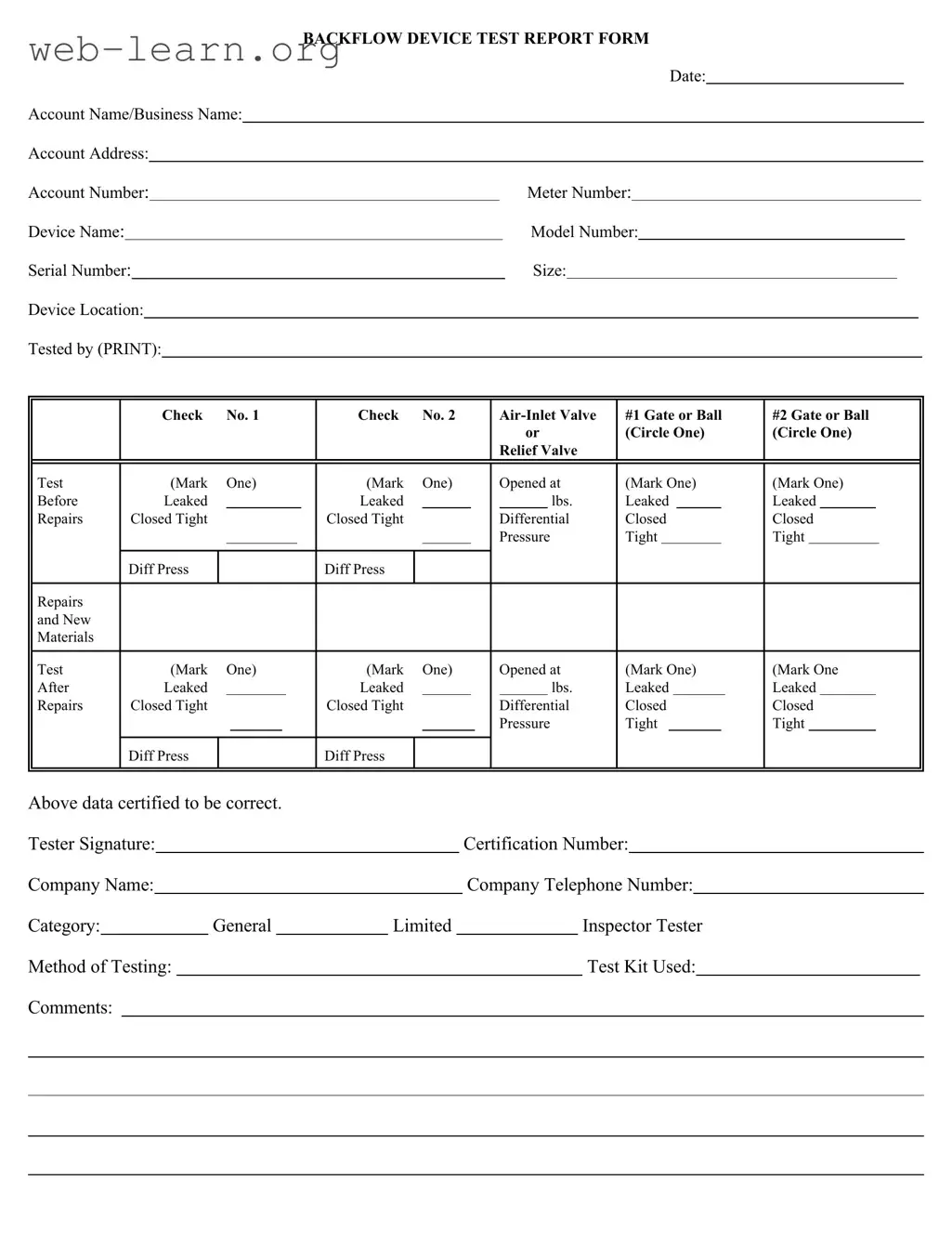
The Backflow Test Report form serves as an essential document in ensuring the safety and functionality of backflow prevention devices. This form captures critical information, including the date of the test, account details such as the name and address of the business, and specific device information like the model and serial numbers. It also outlines the location of the device and provides space for the tester's name and certification details. Various checks are conducted during the testing process, including assessments of air-inlet valves and relief valves, with clear markings indicating whether each component passed or failed. The form requires testers to note the pressure readings and any repairs made, ensuring a comprehensive record of the device's condition. By certifying that the provided data is accurate, the tester affirms their responsibility in maintaining public health standards. Additionally, the form includes sections for comments and the method of testing, allowing for further clarification of the test results. Overall, this report is a vital tool for both regulatory compliance and the ongoing maintenance of safe water systems.

Sample - Backflow Test Report Form

BACKFLOW DEVICE TEST REPORT FORM
Date:
Account Name/Business Name:
Account Address:
Account Number: Meter Number:
Device Name: Model Number:
Serial Number: Size:
Device Location:
Tested by (PRINT):
Check No. 1 Check No. 2 Air-Inlet Valve #1 Gate or Ball #2 Gate or Ball
or (Circle One) (Circle One)
Relief Valve
Test (Mark One) (Mark One) Opened at (Mark One) (Mark One)
Before Leaked Leaked lbs. Leaked Leaked
Repairs Closed Tight Closed Tight Differential Closed Closed
Pressure Tight Tight
Diff Press Diff Press
Repairs
and New
Materials
Test (Mark One) (Mark One) Opened at (Mark One) (Mark One
After Leaked Leaked lbs. Leaked Leaked
Repairs Closed Tight Closed Tight Differential Closed Closed
Pressure Tight Tight
Diff Press Diff Press
Above data certified to be correct.
Tester Signature:
Certification Number:
Company Name: Company Telephone Number:
Category: General Limited Inspector Tester
Method of Testing:
Test Kit Used:
Comments:

Form Information

Fact Name Description
Purpose of the Form The Backflow Test Report Form is used to document the testing of backflow prevention devices, ensuring they function correctly to prevent contamination of the potable water supply.
Required Information The form requires detailed information, including the account name, device specifications, test results, and tester credentials, to provide a comprehensive record of the testing process.
Governing Laws In many states, such as California and Florida, backflow testing is governed by local plumbing codes and regulations that mandate regular testing to maintain public health standards.
Test Results Documentation Test results must indicate whether the backflow device passed or failed, detailing any repairs made and the conditions under which the tests were conducted.
Certification Requirement The tester must sign the form and provide their certification number, confirming they are qualified to conduct backflow testing as per state regulations.

Detailed Guide for Filling Out Backflow Test Report

Completing the Backflow Test Report form is an essential step in ensuring that the backflow prevention device is functioning correctly. After filling out the form, it will be submitted to the appropriate authority for review and record-keeping. The following steps will guide you through the process of accurately completing the form.

  1. Begin by entering the Date at the top of the form.
  2. Next, fill in the Account Name/Business Name associated with the backflow device.
  3. Provide the Account Address where the device is located.
  4. Input the Account Number for reference.
  5. Fill in the Meter Number linked to the account.
  6. Specify the Device Name of the backflow prevention device.
  7. Enter the Model Number of the device.
  8. Record the Serial Number of the device.
  9. Indicate the Size of the device.
  10. Describe the Device Location to clarify where it is situated.
  11. Print the name of the individual who Tested by (PRINT).
  12. For CHECK NO. 1, indicate whether the AIR-INLET VALVE #1 leaked, closed tight, or requires repairs. Mark the appropriate option.
  13. For CHECK NO. 2, specify the status of the GATE OR BALL #2 (circle one) by marking if it leaked, closed tight, or requires repairs.
  14. Document the results for the RELIEF VALVE by marking whether it leaked, closed tight, or requires repairs.
  15. Record the Test results by marking the appropriate options for each check.
  16. Indicate the Opened at pressure for both checks.
  17. Fill in the Repairs and New Materials section, marking whether repairs were needed.
  18. Certify the accuracy of the data by signing in the Tester Signature section.
  19. Provide the Certification Number of the tester.
  20. Enter the Company Name of the testing entity.
  21. List the Company Telephone Number for contact purposes.
  22. Choose the Category from the options provided: General, Limited, Inspector, or Tester.
  23. Specify the Method of Testing used during the evaluation.
  24. Indicate the Test Kit Used for the test.
  25. Finally, add any relevant Comments that may assist in understanding the test results.

Obtain Answers on Backflow Test Report

  1. What is a Backflow Test Report Form?

    The Backflow Test Report Form is a document used to record the results of a backflow prevention device test. This form ensures that the device is functioning properly and protects the water supply from contamination.

  2. Why is backflow testing necessary?

    Backflow testing is essential to prevent contaminated water from flowing back into the clean water supply. Regular testing helps ensure public health and safety by verifying that backflow prevention devices are working as intended.

  3. Who can perform the backflow test?

    A certified tester, typically a licensed plumber or a backflow prevention specialist, must perform the backflow test. They have the training and knowledge to ensure the test is conducted properly.

  4. What information is required on the form?

    The form requires various details, including:

    • Date
    • Account Name/Business Name
    • Account Address
    • Account Number
    • Meter Number
    • Device Name and Model Number
    • Serial Number and Size
    • Device Location
    • Tester Information
  5. What do the test results indicate?

    The test results indicate whether the backflow prevention device is functioning correctly. The form includes checks for leaks, tightness, and differential pressure, all of which are crucial for the device's performance.

  6. What should I do if my device fails the test?

    If the device fails the test, repairs or replacements are necessary. The tester will usually provide recommendations for fixing the issue, and it’s important to address these promptly to ensure safety.

  7. How often should backflow testing be done?

    Backflow testing is typically required annually. However, local regulations may vary, so it’s essential to check with your local water authority for specific requirements.

  8. What is the significance of the tester's signature?

    The tester's signature on the form certifies that the information provided is accurate. It also confirms that the tester is qualified to perform the test and that the results are valid.

  9. Where should I keep the completed form?

    The completed Backflow Test Report Form should be kept on file at the business or property location. It may also need to be submitted to your local water authority for compliance purposes.

  10. Can I use the form for different types of backflow devices?

    Yes, the form can be used for various types of backflow prevention devices. It is important to fill out all relevant sections to ensure the specific device is accurately documented.

Common mistakes

When filling out the Backflow Test Report form, individuals often make several common mistakes that can lead to complications. One frequent error is neglecting to include the date of the test. This information is crucial for record-keeping and ensuring compliance with local regulations.

Another common mistake involves omitting the account name or business name. This detail is essential for identifying the property associated with the backflow device. Failing to provide this information can lead to confusion and delays in processing the report.

People sometimes forget to fill in the meter number. This number helps track water usage and is vital for accurate billing. Without it, discrepancies may arise, causing issues for both the property owner and the water utility.

Inaccurate entries in the device location section can create problems as well. This section should clearly indicate where the backflow device is situated. Mislabeling or leaving it blank can result in difficulties during inspections or maintenance.

Another mistake is failing to properly mark the test results. For example, when indicating whether the air-inlet valve or relief valve leaked, individuals may forget to check the appropriate boxes. This oversight can lead to misinterpretation of the device's condition.

Providing an incomplete or incorrect tester signature is also a common issue. The signature serves as a certification of the test's accuracy. If the signature is missing or illegible, it can invalidate the report.

People often overlook the method of testing and test kit used sections. These details are important for validating the test process. Not specifying this information can raise questions about the reliability of the results.

Lastly, failing to include comments can be detrimental. This section allows testers to note any irregularities or specific observations during the testing process. Omitting this information can lead to misunderstandings about the device's performance.

Documents used along the form

When dealing with backflow prevention systems, it's essential to understand the various forms and documents that accompany the Backflow Test Report. These documents help ensure compliance with regulations and facilitate communication between property owners, testers, and regulatory bodies. Below is a list of commonly used forms that often accompany the Backflow Test Report.

  • Backflow Prevention Assembly Registration Form: This document registers the backflow prevention device with the local water authority, ensuring that it is recognized and monitored for compliance.
  • Annual Backflow Testing Notification: Property owners receive this form to remind them of the annual testing requirement for their backflow prevention devices, promoting timely compliance.
  • Backflow Device Installation Permit: Before installing a backflow prevention device, this permit must be obtained, confirming that the installation meets local codes and standards.
  • Repair Report Form: If any repairs are made to the backflow device, this form documents the nature of the repairs, materials used, and the results of follow-up tests.
  • Water Quality Test Report: This report provides information about the water quality in the system, helping to identify any potential issues that may arise from backflow incidents.
  • Service Agreement: This agreement outlines the terms of service between the property owner and the testing company, including responsibilities for testing and maintenance.
  • Inspection Checklist: Used by testers, this checklist ensures that all necessary components of the backflow prevention system are inspected during the testing process.
  • Compliance Certificate: Once testing is complete, this certificate verifies that the backflow device meets all regulatory requirements and is functioning properly.
  • Emergency Contact Form: This form provides crucial contact information for emergencies related to backflow incidents, ensuring quick response and resolution.
  • Test Kit Calibration Certificate: This certificate confirms that the testing equipment used for the backflow test is properly calibrated, ensuring the accuracy of test results.

Understanding these forms is vital for anyone involved in managing backflow prevention systems. By keeping these documents organized and accessible, property owners can ensure compliance and maintain the safety of their water supply.

Similar forms

The Backflow Test Report form shares similarities with several other documents used in various compliance and inspection contexts. Below is a list of documents that resemble the Backflow Test Report form, along with explanations of their similarities.

  • Water Quality Test Report: This document records the results of water quality testing, including parameters such as pH, contaminants, and other relevant data. Like the Backflow Test Report, it certifies the condition of the water system and provides essential details about the testing process.
  • Fire Safety Inspection Report: This report outlines the findings from a fire safety inspection, detailing compliance with safety regulations. Both documents include information about the inspection date, location, and results, ensuring that safety standards are met.
  • HVAC Inspection Report: Similar to the Backflow Test Report, this document details the findings from an HVAC system inspection. It includes information about system performance and any necessary repairs, emphasizing the importance of maintaining operational standards.
  • Plumbing Inspection Report: This report provides an overview of plumbing system conditions, including any issues found during the inspection. It shares a common purpose with the Backflow Test Report in that both aim to ensure systems function correctly and comply with regulations.
  • Electrical Inspection Report: This document records the results of an electrical system inspection, noting compliance with safety codes. Like the Backflow Test Report, it includes details about the inspection and any repairs needed to ensure safety and functionality.
  • Environmental Compliance Report: This report assesses compliance with environmental regulations. It shares similarities with the Backflow Test Report by documenting testing results and certifying that systems adhere to required standards.
  • Building Code Inspection Report: This document outlines findings from a building code inspection, including compliance with local codes. Both reports detail inspection results and highlight areas needing attention to maintain safety and compliance.
  • Equipment Calibration Report: This report provides details on the calibration of testing equipment used in various inspections. Like the Backflow Test Report, it certifies that the equipment is functioning correctly and meets the necessary standards for accurate results.

Dos and Don'ts

When filling out the Backflow Test Report form, it's important to follow certain guidelines to ensure accuracy and compliance. Here are five things to do and five things to avoid:

  • Do fill in all required fields completely.
  • Do double-check the accuracy of the device information.
  • Do use clear and legible handwriting or type the information.
  • Do ensure that the tester's signature is included.
  • Do keep a copy of the completed report for your records.
  • Don't leave any fields blank unless they are not applicable.
  • Don't use abbreviations that may cause confusion.
  • Don't forget to mark the appropriate boxes for test results.
  • Don't submit the form without verifying the certification number.
  • Don't ignore the comments section; use it to clarify any issues.

Misconceptions

Understanding the Backflow Test Report form is essential for anyone involved in maintaining water safety and compliance. However, several misconceptions often arise regarding this document. Here are six common misunderstandings:

  • The form is only necessary for commercial properties. Many believe that only businesses require a Backflow Test Report. In reality, residential properties with irrigation systems or fire sprinkler systems may also need this report to ensure safe drinking water.
  • Once a backflow device is tested, it doesn’t need to be tested again. Some assume that passing a test means the device will function properly indefinitely. However, backflow devices should be tested annually or as required by local regulations to ensure they remain effective.
  • Any plumber can perform the backflow test. While many plumbers are skilled, only certified testers should conduct backflow tests. These professionals have specific training and certification to ensure accurate testing and reporting.
  • The report is only for regulatory compliance. Although the report is crucial for meeting legal requirements, it also serves as a valuable tool for property owners to understand the condition of their backflow prevention devices and address any issues promptly.
  • All backflow devices are the same, so one test is sufficient. This misconception overlooks the variety of backflow prevention devices. Each device may have different testing requirements and procedures, making it necessary to tailor the test to the specific device in use.
  • The test results are not important unless there is a problem. Many people think that the results only matter when a leak or failure occurs. However, regular testing and documentation can help identify potential issues before they escalate, ensuring ongoing water safety.

By addressing these misconceptions, property owners and managers can better understand the importance of the Backflow Test Report form and its role in safeguarding public health.

Key takeaways

When filling out the Backflow Test Report form, keep these key points in mind:

  • Accuracy is crucial. Ensure all information, such as account details and device specifications, is correct.
  • Mark the tests clearly. Indicate the results for each check and test method used, so there’s no confusion.
  • Document repairs. If any repairs were made, note them clearly in the designated section.
  • Certification matters. The tester must sign and provide their certification number to validate the report.
  • Keep a copy. Always retain a copy of the completed report for your records and future reference.

Following these takeaways will help ensure the report is completed correctly and is useful for all parties involved.