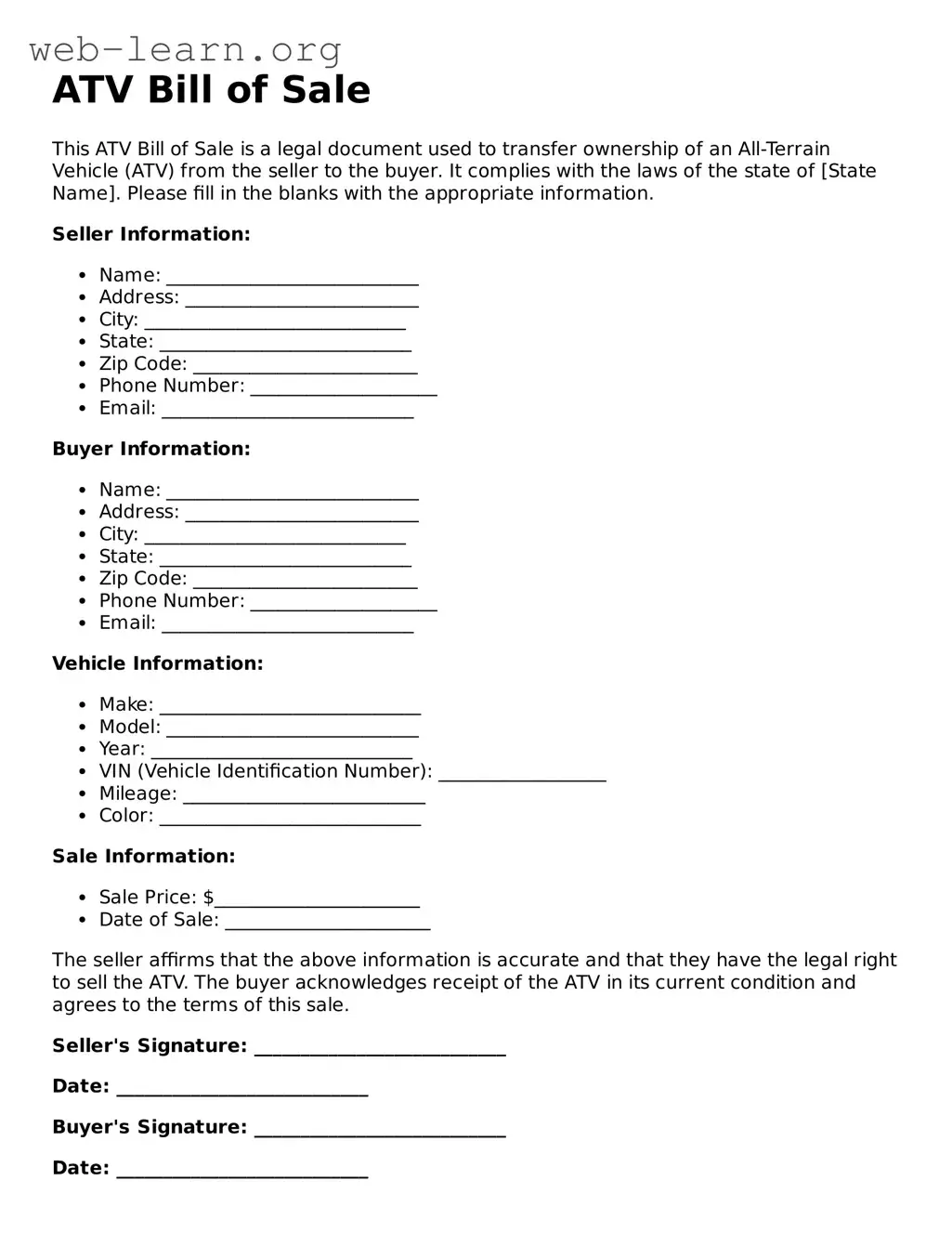
When buying or selling an all-terrain vehicle (ATV), having the right documentation is essential to ensure a smooth transaction. The ATV Bill of Sale form serves as a crucial record that outlines the details of the sale, including the names and addresses of both the buyer and seller, the description of the ATV, and the agreed-upon purchase price. This document not only provides proof of ownership transfer but also protects both parties in case of future disputes. Additionally, it may include information about any warranties or conditions of the sale, making it a comprehensive record of the transaction. By using an ATV Bill of Sale, you can ensure that all necessary information is captured, which can be beneficial for registration and insurance purposes. Whether you are a seasoned buyer or a first-time seller, understanding the importance of this form will help you navigate the process with confidence.
ATV Bill of Sale
This ATV Bill of Sale is a legal document used to transfer ownership of an All-Terrain Vehicle (ATV) from the seller to the buyer. It complies with the laws of the state of [State Name]. Please fill in the blanks with the appropriate information.
Seller Information:
Buyer Information:
Vehicle Information:
Sale Information:
The seller affirms that the above information is accurate and that they have the legal right to sell the ATV. The buyer acknowledges receipt of the ATV in its current condition and agrees to the terms of this sale.
Seller's Signature: ___________________________
Date: ___________________________
Buyer's Signature: ___________________________
Date: ___________________________
| Fact Name | Description |
|---|---|
| Purpose | The ATV Bill of Sale form serves as a legal document to transfer ownership of an all-terrain vehicle from one party to another. |
| State-Specific Requirements | Each state may have specific requirements for the Bill of Sale, including additional information or notarization. |
| Governing Laws | In most states, the sale of an ATV is governed by the Uniform Commercial Code (UCC), but specific state laws may apply. |
| Information Included | The form typically includes details such as the buyer's and seller's names, addresses, the ATV's make, model, year, and VIN. |
| Signatures | Both the buyer and seller must sign the Bill of Sale to make it valid and legally binding. |
| Record Keeping | It is advisable for both parties to keep a copy of the Bill of Sale for their records after the transaction is completed. |
| Transfer of Title | The Bill of Sale is often used in conjunction with the title transfer process, which varies by state. |
Completing the ATV Bill of Sale form is an important step in transferring ownership of an all-terrain vehicle. This document serves as proof of the sale and provides essential details about the transaction. After filling out the form, both the buyer and seller should keep a copy for their records.
After completing these steps, ensure that both parties retain a signed copy of the Bill of Sale for their records. This document can be helpful for future reference, especially for registration and title transfer purposes.
What is an ATV Bill of Sale?
An ATV Bill of Sale is a document that records the sale of an all-terrain vehicle (ATV) between a buyer and a seller. It serves as proof of the transaction and includes important details about the vehicle and the parties involved.
Why do I need an ATV Bill of Sale?
This document is essential for several reasons:
What information is included in an ATV Bill of Sale?
The form typically includes:
Is the ATV Bill of Sale a legally binding document?
Yes, once both parties sign the document, it becomes a legally binding agreement. It shows that the buyer has purchased the ATV and that the seller has received payment.
Do I need to have the ATV Bill of Sale notarized?
Notarization is not usually required, but it can add an extra layer of security. Some states may require it for certain transactions, so check local regulations.
Can I use a generic Bill of Sale for my ATV?
While a generic Bill of Sale can work, it’s best to use a specific ATV Bill of Sale form. This ensures that all necessary details are included and meets state requirements.
What if I lose my ATV Bill of Sale?
If the document is lost, it’s advisable to create a new one. Both parties should sign the new form to acknowledge the sale again. Keep copies in a safe place to avoid future issues.
Do I need to register my ATV after the sale?
Yes, most states require you to register your ATV after purchase. The Bill of Sale may be needed for this process, so keep it handy when visiting the DMV.
What should I do if there are issues after the sale?
If problems arise, refer to the Bill of Sale for details of the agreement. Contact the seller to discuss the issue. If necessary, legal action may be considered, but it’s best to resolve matters amicably first.
Filling out an ATV Bill of Sale form may seem straightforward, but many people make common mistakes that can lead to complications down the line. One of the most frequent errors is failing to include all necessary information. Buyers and sellers must provide complete details, such as names, addresses, and vehicle identification numbers. Omitting even one piece of information can create confusion and delay the transfer of ownership.
Another mistake is not accurately describing the ATV. It’s essential to include the make, model, year, and condition of the vehicle. A vague description can lead to disputes later, especially if the buyer feels misled about the ATV’s condition. Always be specific and honest in your description to avoid potential issues.
Many people overlook the importance of signatures. Both the buyer and the seller must sign the Bill of Sale for it to be valid. Without these signatures, the document may not hold up in legal situations. Ensure that both parties sign and date the form to confirm the transaction.
Additionally, some individuals forget to include the sale price. This detail is crucial for both parties. It not only confirms the agreed-upon amount but also serves as a record for tax purposes. Always clearly state the sale price to avoid misunderstandings.
Another common error is neglecting to check state-specific requirements. Different states may have unique regulations regarding the sale of ATVs. Failing to comply with local laws can result in fines or complications with registration. Make sure to research your state’s requirements before finalizing the sale.
People also often forget to keep copies of the Bill of Sale. Both the buyer and seller should retain a copy for their records. This document serves as proof of the transaction and can be vital if disputes arise later. Always make copies before handing over the original.
Lastly, some individuals rush through the process without reading the entire form. It’s crucial to review the Bill of Sale thoroughly before signing. Mistakes made in haste can lead to significant problems. Take your time to ensure all information is correct and complete.
When purchasing or selling an ATV, several additional documents may be necessary to ensure a smooth transaction. These documents help clarify ownership, protect both parties, and comply with state regulations. Here are some common forms that are often used alongside the ATV Bill of Sale:
Having these documents prepared and organized can facilitate a smoother transaction process. Always check your state’s specific requirements to ensure compliance. This diligence will help protect both the buyer and seller in the transaction.
Vehicle Bill of Sale: Similar to the ATV Bill of Sale, this document serves as proof of transfer of ownership for any motor vehicle. It includes details like the vehicle's make, model, year, and VIN, ensuring both parties have a record of the transaction.
Boat Bill of Sale: Just as with ATVs, a boat bill of sale provides a formal record of the sale of a watercraft. It outlines the terms of the sale and includes information about the boat, such as its hull identification number.
Motorcycle Bill of Sale: This document is akin to the ATV bill of sale, detailing the transfer of ownership for motorcycles. It includes specifics like the motorcycle's make, model, and VIN, protecting both the buyer and seller.
Trailer Bill of Sale: A trailer bill of sale functions similarly by documenting the sale of a trailer. It includes essential information such as the trailer's identification number and any warranties or representations made during the sale.
Mobile Home Bill of Sale: This document is used for the sale of mobile homes. It captures the details of the transaction, including the home's make, model, and serial number, ensuring legal protection for both parties.
Aircraft Bill of Sale: Similar to the ATV bill of sale, this document is used for the transfer of ownership of an aircraft. It includes detailed information about the aircraft, such as its registration number and any liens or encumbrances.
Farm Equipment Bill of Sale: This document serves to formalize the sale of agricultural machinery. It includes information about the equipment, such as its make, model, and condition, ensuring clarity in the transaction.
Personal Property Bill of Sale: This type of bill of sale can apply to a wide range of items, including furniture and electronics. It provides a record of the transaction and includes details about the item being sold.
Real Estate Bill of Sale: While typically used for property transactions, a real estate bill of sale can also include personal property associated with the sale. It formalizes the transfer of ownership and outlines any conditions agreed upon by the parties.
When filling out the ATV Bill of Sale form, attention to detail is crucial. Here are some things to keep in mind:
Following these guidelines will help ensure a smooth transaction when selling or buying an ATV.
When dealing with an ATV Bill of Sale form, several misconceptions can arise. Understanding these misconceptions can help ensure a smoother transaction. Here are seven common misunderstandings:
It is not necessary to have a Bill of Sale for an ATV. Many people believe that a Bill of Sale is optional. However, it serves as a legal document that provides proof of ownership and details the transaction between the buyer and seller.
A Bill of Sale is only needed for new ATVs. Some individuals think that only new purchases require a Bill of Sale. In reality, it is essential for both new and used ATVs to document the transfer of ownership.
Verbal agreements are sufficient. Many assume that a verbal agreement between the buyer and seller is enough. However, without a written Bill of Sale, disputes can arise, making it difficult to prove the terms of the sale.
All states have the same requirements for a Bill of Sale. Some people believe that the requirements are uniform across the country. In fact, each state has its own regulations regarding what must be included in a Bill of Sale.
Only the seller needs to sign the Bill of Sale. There is a misconception that only the seller's signature is necessary. Both the buyer and seller should sign the document to validate the transaction.
A Bill of Sale is not required if the ATV is a gift. Some think that gifting an ATV exempts them from needing a Bill of Sale. However, having a Bill of Sale can still provide a record of the transaction for future reference.
Once the Bill of Sale is signed, the transaction is complete. Many believe that signing the Bill of Sale concludes the process. In reality, the buyer may need to register the ATV with the state, which may involve additional paperwork.
When filling out and using the ATV Bill of Sale form, there are several important points to keep in mind. Here are key takeaways to consider:
Using the ATV Bill of Sale form correctly can help facilitate a smooth transaction and provide necessary documentation for both parties involved.
Bill of Sale for Dirt Bike - Having a bill of sale can facilitate smoother future transactions involving the dirt bike.
Printable Trailer Bill of Sale Pdf - In some cases, a Bill of Sale may be required to obtain a trailer registration or title.
Camper Bill of Sale - Acts as a receipt for the buyer's payment.