When artists and creators share their work with the world, they often encounter the need for a clear understanding of rights and permissions. The Artwork Release form plays a crucial role in this process. It serves as a legal document that outlines how an artwork can be used, ensuring that both the creator and the user have a mutual agreement on the terms. This form typically addresses important aspects such as the scope of usage, whether it’s for commercial or non-commercial purposes, and the duration of the rights granted. Additionally, it may include clauses regarding credit attribution, compensation, and the handling of any modifications to the original piece. By establishing these parameters, the Artwork Release form protects the interests of artists while providing users with the necessary permissions to utilize the artwork effectively. Understanding this form is essential for anyone involved in the creative industry, as it fosters respectful and lawful collaboration between creators and those who wish to showcase their work.
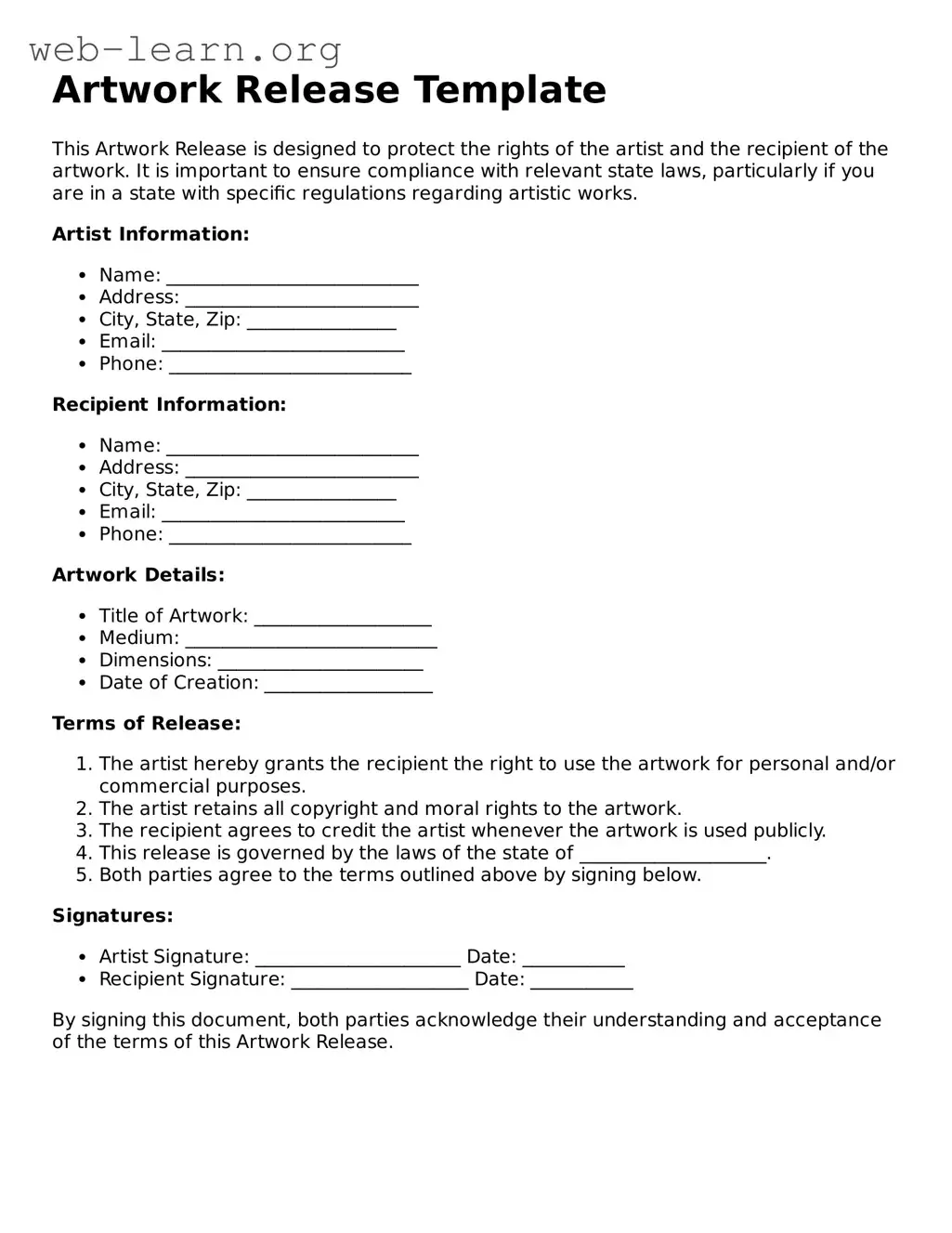
Artwork Release Template
This Artwork Release is designed to protect the rights of the artist and the recipient of the artwork. It is important to ensure compliance with relevant state laws, particularly if you are in a state with specific regulations regarding artistic works.
Artist Information:
Recipient Information:
Artwork Details:
Terms of Release:
Signatures:
By signing this document, both parties acknowledge their understanding and acceptance of the terms of this Artwork Release.
| Fact Name | Description |
|---|---|
| Purpose | The Artwork Release form grants permission for the use of artistic works in various media. |
| Parties Involved | This form typically involves the artist (creator) and the entity seeking to use the artwork. |
| Scope of Use | The form specifies how the artwork can be used, including commercial and non-commercial purposes. |
| Duration | The release may be for a specific time period or indefinite, depending on the agreement. |
| Compensation | It outlines whether the artist will receive payment or royalties for the use of their work. |
| State-Specific Forms | Some states have specific laws governing artwork releases, which may affect the form's requirements. |
| Governing Law | For example, California law may apply to releases in that state, emphasizing the importance of local regulations. |
| Modification Clause | The form often includes a clause about how modifications to the artwork can be handled. |
| Revocation Rights | Artists may have the right to revoke the release under certain conditions, which should be clearly stated. |
After completing the Artwork Release form, it will be submitted for processing. Ensure all information is accurate to avoid delays. Follow the steps below to fill out the form correctly.
An Artwork Release form is a legal document that grants permission for the use of artwork created by an artist. This form typically outlines the rights being transferred, the scope of use, and any compensation or credit the artist will receive. It protects both the artist and the entity using the artwork by clearly defining how the artwork can be used.
Having an Artwork Release form is essential to avoid any misunderstandings or disputes regarding the use of the artwork. It ensures that the artist retains certain rights while allowing others to use their work. This form also helps in maintaining professional relationships by establishing clear expectations and responsibilities for both parties.
A comprehensive Artwork Release form should include the following elements:
Generally, once an Artwork Release form is signed, it cannot be revoked unless both parties agree to the change. However, if the terms of the agreement are not followed, the artist may have grounds to dispute the use of their work. It’s important to read the form carefully and understand the terms before signing.
Both the artist and the entity or individual using the artwork should sign the Artwork Release form. This ensures that all parties involved are aware of and agree to the terms outlined in the document. Having both signatures also adds a layer of legal protection in case of any future disputes regarding the use of the artwork.
Filling out an Artwork Release form may seem straightforward, but there are common mistakes that can lead to complications down the line. One frequent error is neglecting to provide complete contact information. Without accurate details, it becomes challenging for the other party to reach out for clarifications or future communications. Always double-check that your name, email, and phone number are correct.
Another mistake involves failing to read the terms thoroughly. Many individuals skim through the document, missing crucial clauses that outline rights and responsibilities. This oversight can lead to misunderstandings about how the artwork will be used. Take the time to understand what you are agreeing to; it can save you from potential disputes later.
People often forget to specify the scope of the release. A vague description can create confusion regarding how the artwork may be used. Clearly define whether the release applies to specific projects, timeframes, or media formats. This clarity is essential to protect both parties involved.
Additionally, some individuals overlook the importance of signatures. An unsigned form is essentially useless. Ensure that all required parties sign the document. If you are representing an organization, confirm that the person signing has the authority to do so. This step is crucial for the validity of the release.
Another common pitfall is not keeping a copy of the completed form. After submitting the release, it is wise to retain a copy for your records. This document serves as proof of your agreement and can be invaluable in case of any future disputes or questions about the use of the artwork.
Lastly, many people fail to consult with a legal professional when unsure about the terms. While the form may appear simple, legal implications can be complex. Seeking advice can provide peace of mind and ensure that your rights are protected. Don’t underestimate the value of professional guidance in these situations.
When dealing with the distribution or use of artwork, various forms and documents play a crucial role in ensuring that all parties involved are protected and informed. Below is a list of documents commonly used alongside the Artwork Release form, each serving a specific purpose in the process.
Understanding these documents can help artists and parties involved in the art world navigate their rights and responsibilities effectively. Each form serves to clarify expectations and protect the interests of everyone involved in the creation, sale, and distribution of artwork.
Model Release Form: This document grants permission for the use of a person's likeness in various media. Similar to the Artwork Release form, it ensures that the individual understands how their image will be used and that they consent to it.
Property Release Form: This form is used when a photographer or artist wants to use images of private property. Like the Artwork Release form, it secures permission from the property owner, ensuring that the creator can legally use the images in their work.
Music Release Form: This document allows artists to use a piece of music in their projects. Similar to the Artwork Release form, it protects the rights of the original creator while granting permission for the work to be used in a specific manner.
Copyright Assignment Agreement: This agreement transfers ownership rights of a creative work from one party to another. Like the Artwork Release form, it outlines the terms of use and ensures that both parties are aware of their rights and responsibilities regarding the work.
When filling out an Artwork Release form, it is important to follow certain guidelines to ensure clarity and legality. Here are seven things you should and shouldn't do:
Many people have misunderstandings about the Artwork Release form. Here are seven common misconceptions:
This is not true. Anyone creating artwork, whether a hobbyist or a professional, should consider using an Artwork Release form to protect their rights.
This is a misconception. The form typically allows the artist to retain certain rights while granting specific permissions to others.
Not at all. The Artwork Release form can apply to digital art, photography, and other forms of creative work.
In reality, the form is often straightforward and designed to be user-friendly. Most artists can complete it without legal assistance.
This is incorrect. Different situations may require different terms, so it’s essential to tailor the form to your specific needs.
This is misleading. Parties can negotiate and modify the terms, but both sides must agree to any changes.
While it may not be legally required, using an Artwork Release form is highly recommended to protect your rights and clarify permissions.
When filling out and using the Artwork Release form, it is essential to keep several key points in mind to ensure clarity and legality.