When it comes to buying or selling artwork, having the right documentation is essential. One key document in this process is the Artwork Bill of Sale form. This form serves as a legal record of the transaction between the seller and the buyer, outlining important details such as the description of the artwork, the sale price, and the date of the transaction. It often includes information about the parties involved, ensuring that both the buyer and seller are clearly identified. Additionally, the form may provide details about the artwork’s provenance, or its history of ownership, which can be crucial for establishing authenticity and value. By using an Artwork Bill of Sale, both parties can protect their rights and interests, making the transaction smoother and more secure. Whether you are an artist, a collector, or a gallery owner, understanding this form is vital for a successful sale.
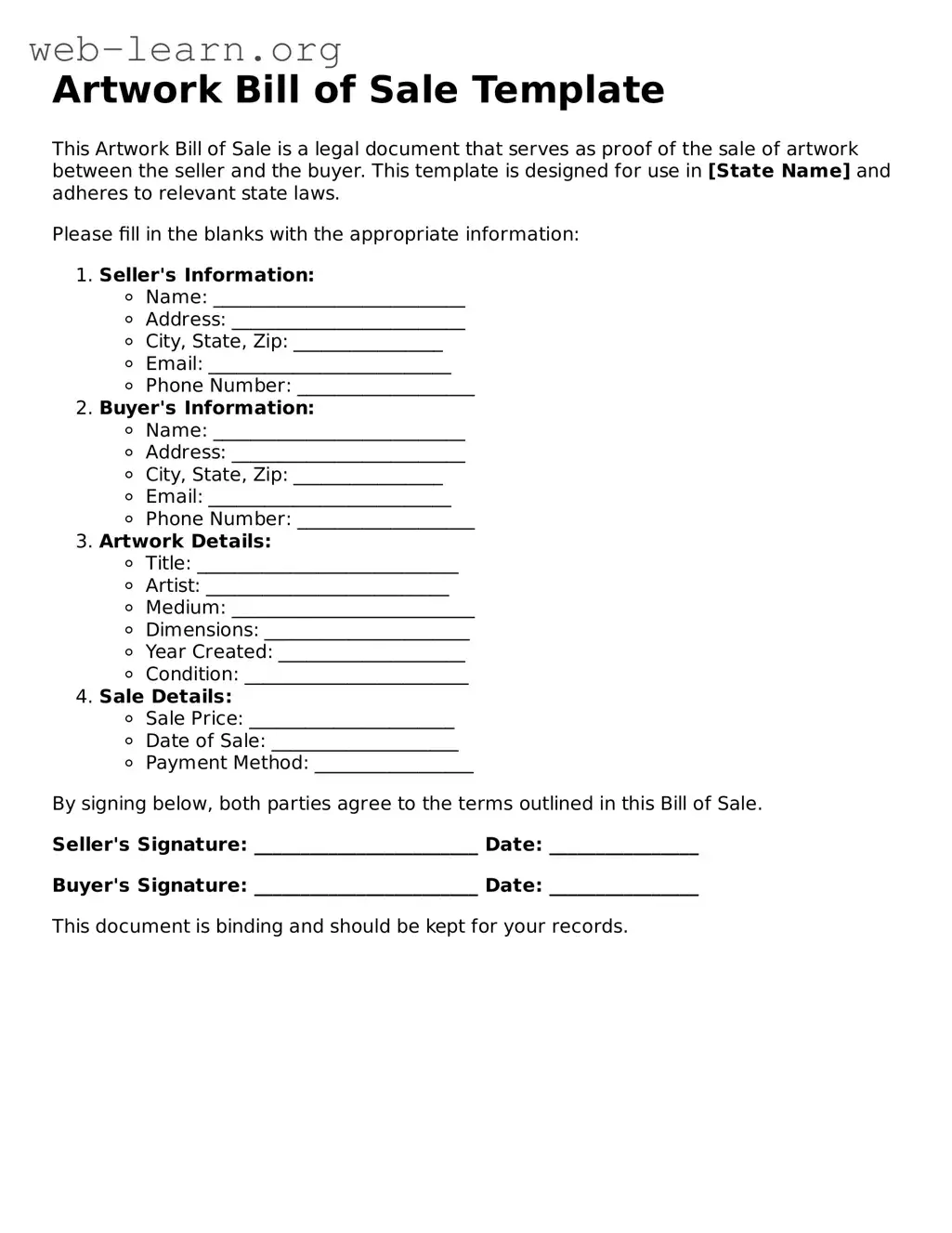
Artwork Bill of Sale Template
This Artwork Bill of Sale is a legal document that serves as proof of the sale of artwork between the seller and the buyer. This template is designed for use in [State Name] and adheres to relevant state laws.
Please fill in the blanks with the appropriate information:
By signing below, both parties agree to the terms outlined in this Bill of Sale.
Seller's Signature: ________________________ Date: ________________
Buyer's Signature: ________________________ Date: ________________
This document is binding and should be kept for your records.
| Fact Name | Description |
|---|---|
| Definition | An Artwork Bill of Sale is a legal document that transfers ownership of an artwork from the seller to the buyer. |
| Purpose | This form serves to provide proof of sale and document the details of the transaction for both parties. |
| Key Components | Typically includes details such as the names of the buyer and seller, a description of the artwork, the sale price, and the date of sale. |
| State-Specific Forms | Some states may have specific requirements for the Artwork Bill of Sale, so it is essential to check local laws. |
| Governing Law | The governing law for the Artwork Bill of Sale can vary by state, but it generally falls under contract law. |
| Signatures | Both the seller and buyer should sign the document to validate the sale and confirm the transfer of ownership. |
| Consideration | The sale price or consideration must be clearly stated, as it is a fundamental aspect of the contract. |
| Condition of Artwork | It is advisable to include the condition of the artwork at the time of sale to avoid future disputes. |
| Tax Implications | Sales tax may apply depending on the jurisdiction, and both parties should be aware of their tax obligations. |
| Record Keeping | Both parties should retain a copy of the Artwork Bill of Sale for their records, as it serves as proof of ownership and transaction. |
After obtaining the Artwork Bill of Sale form, you will need to complete it with specific details related to the transaction. Follow these steps to ensure all necessary information is accurately provided.
What is an Artwork Bill of Sale?
An Artwork Bill of Sale is a legal document that records the transfer of ownership of a piece of artwork from one person to another. This document serves as proof of the sale and can protect both the buyer and the seller in case of disputes.
Why do I need an Artwork Bill of Sale?
This document is important for several reasons. It provides a clear record of the transaction, helps establish the provenance of the artwork, and can be used for insurance purposes. It also protects the rights of both parties involved in the sale.
What information is included in the Artwork Bill of Sale?
The form typically includes:
Is the Artwork Bill of Sale legally binding?
Yes, once both parties sign the Artwork Bill of Sale, it becomes a legally binding agreement. This means that both the buyer and seller are obligated to follow the terms laid out in the document.
Do I need to have the Artwork Bill of Sale notarized?
Notarization is not typically required for an Artwork Bill of Sale. However, having it notarized can add an extra layer of security and authenticity to the document, which may be beneficial in certain situations.
Can I create my own Artwork Bill of Sale?
Yes, you can create your own Artwork Bill of Sale. Just make sure to include all necessary information and ensure that both parties sign it. There are also templates available online that can help you get started.
What if I lose the Artwork Bill of Sale?
If you lose the document, it can be challenging to prove ownership. It’s a good idea to keep a copy in a safe place. If you need a replacement, you may need to create a new bill of sale and have both parties sign it again.
Can the Artwork Bill of Sale be used for different types of artwork?
Yes, the Artwork Bill of Sale can be used for various types of artwork, including paintings, sculptures, photographs, and more. Just ensure that the description accurately reflects the specific piece being sold.
What should I do if I have questions about the Artwork Bill of Sale?
If you have questions, it’s best to consult with a legal professional or an art expert. They can provide guidance and ensure that you understand your rights and responsibilities regarding the sale.
When it comes to buying or selling artwork, the Artwork Bill of Sale form is essential. However, many people make mistakes while filling it out, which can lead to misunderstandings or even legal issues down the line. Here are six common mistakes to avoid.
First, one of the most frequent errors is not providing complete information about the artwork. Sellers often forget to include details such as the title, medium, dimensions, and year of creation. Without this information, the buyer may not fully understand what they are purchasing, and disputes can arise later. Always ensure that every detail is accurately captured.
Another common mistake is neglecting to include the names and contact information of both the buyer and the seller. This information is crucial for future reference. If any issues arise after the sale, having clear contact details can save both parties a lot of trouble. Double-check that all names are spelled correctly and that phone numbers and addresses are current.
Additionally, many people overlook the importance of signatures. Both parties must sign the form to make it legally binding. Without signatures, the agreement may not hold up in a dispute. It’s a simple step, but one that is often forgotten in the excitement of a sale.
Furthermore, failing to include the sale price is a significant oversight. It might seem obvious, but some sellers forget to write down the agreed-upon amount. This can lead to confusion later, especially if the buyer believes they paid a different price. Always ensure that the sale price is clearly stated and agreed upon by both parties.
Another mistake that frequently occurs is not dating the form. A date is essential as it marks when the transaction took place. Without it, proving the timeline of ownership can become complicated. Make it a habit to include the date right after signing.
Lastly, some individuals fail to keep a copy of the completed Artwork Bill of Sale. It’s important for both the buyer and seller to retain a copy for their records. This document serves as proof of the transaction and can be vital for future reference, especially if the artwork's value increases or if there are questions about ownership.
By avoiding these common pitfalls, you can ensure a smoother transaction and protect your interests in the art world. Take your time, double-check your work, and remember: a well-filled-out Artwork Bill of Sale is a key part of a successful sale.
When engaging in the sale or transfer of artwork, several important documents often accompany the Artwork Bill of Sale. Each of these documents serves a specific purpose, ensuring clarity and protection for both the buyer and the seller. Here’s a list of commonly used forms and documents that can enhance the transaction process.
Utilizing these documents alongside the Artwork Bill of Sale can streamline the transaction process, protect the interests of both parties, and foster a smoother exchange. Always consider consulting a professional to ensure that all necessary paperwork is in order for a successful sale.
When filling out the Artwork Bill of Sale form, it is essential to approach the task with care. Below are some important dos and don'ts to keep in mind.
By following these guidelines, you can ensure a smooth and effective transaction in the art world.
When it comes to the Artwork Bill of Sale form, several misconceptions can lead to confusion for both buyers and sellers. Understanding these misconceptions can clarify the purpose and importance of this document in art transactions.
Many believe that only high-value artworks require a bill of sale. However, even lower-value pieces benefit from this document, as it provides proof of ownership and can help prevent disputes in the future.
Some think that reproductions or prints do not require a bill of sale. In reality, any transfer of ownership, regardless of the artwork's nature, should be documented to ensure clarity in the transaction.
While verbal agreements can be made, they are often difficult to enforce. A written bill of sale provides a clear record of the transaction, making it easier to resolve any potential misunderstandings.
Buyers should also recognize the importance of this document. It serves as proof of purchase and can be crucial for future resale or insurance claims.
Some believe that a simple handwritten note suffices. However, a properly formatted bill of sale includes essential details such as the names of both parties, a description of the artwork, and the sale price, ensuring all necessary information is captured.
While both documents confirm a transaction, a bill of sale is more comprehensive. It outlines the terms of the sale and can include warranties or representations about the artwork's authenticity.
People often think that a signed bill of sale is set in stone. In fact, if both parties agree, amendments can be made to the document, provided they are documented and signed by both parties.
When it comes to buying or selling artwork, having a clear and well-structured Artwork Bill of Sale is essential. This document serves as a legal record of the transaction and protects both the buyer and the seller. Here are some key takeaways to consider:
Using an Artwork Bill of Sale not only formalizes the transaction but also provides peace of mind for both buyers and sellers. By following these key takeaways, you can navigate the process with greater confidence and clarity.
Bill of Sale for Dirt Bike - It serves as a formal acknowledgment that the transaction has taken place.
Free Printable Bill of Sale for Puppy - Ensures that both parties understand their obligations.