When navigating the world of real estate in Arkansas, understanding the Arkansas Real Estate Purchase Agreement form is essential for both buyers and sellers. This document serves as a cornerstone in any property transaction, detailing the terms and conditions under which a property will be sold. It typically outlines critical elements such as the purchase price, financing arrangements, and the closing date, ensuring that all parties are on the same page. Additionally, it addresses contingencies, which may include inspections, appraisals, or the sale of another property, providing a safety net for buyers. The agreement also specifies the responsibilities of both the buyer and seller, including disclosures and any repairs that may be required before the sale is finalized. By familiarizing yourself with this form, you can navigate the complexities of real estate transactions with greater confidence and clarity.
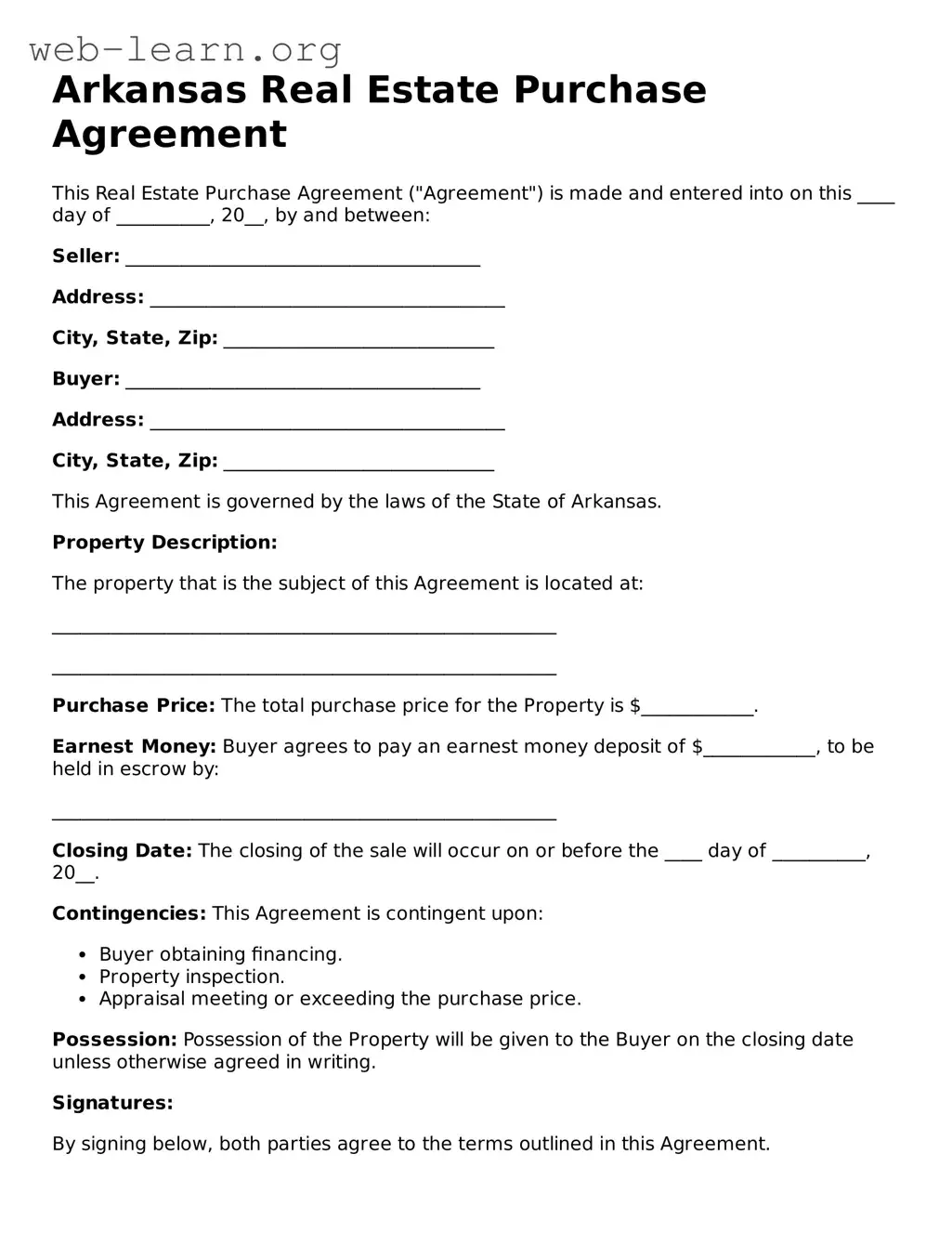
Arkansas Real Estate Purchase Agreement
This Real Estate Purchase Agreement ("Agreement") is made and entered into on this ____ day of __________, 20__, by and between:
Seller: ______________________________________
Address: ______________________________________
City, State, Zip: _____________________________
Buyer: ______________________________________
Address: ______________________________________
City, State, Zip: _____________________________
This Agreement is governed by the laws of the State of Arkansas.
Property Description:
The property that is the subject of this Agreement is located at:
______________________________________________________
______________________________________________________
Purchase Price: The total purchase price for the Property is $____________.
Earnest Money: Buyer agrees to pay an earnest money deposit of $____________, to be held in escrow by:
______________________________________________________
Closing Date: The closing of the sale will occur on or before the ____ day of __________, 20__.
Contingencies: This Agreement is contingent upon:
Possession: Possession of the Property will be given to the Buyer on the closing date unless otherwise agreed in writing.
Signatures:
By signing below, both parties agree to the terms outlined in this Agreement.
Seller's Signature: _______________________________ Date: ____________
Buyer's Signature: _______________________________ Date: ____________
This Agreement constitutes the entire understanding between the parties and supersedes all prior negotiations, representations, or agreements.
| Fact Name | Description |
|---|---|
| Purpose | The Arkansas Real Estate Purchase Agreement is used to outline the terms of a real estate transaction between a buyer and a seller. |
| Governing Laws | This agreement is governed by the laws of the State of Arkansas, specifically the Arkansas Code Title 18. |
| Parties Involved | The form includes sections for the buyer and seller to provide their names and contact information. |
| Property Description | A detailed description of the property being sold must be included, including the address and any legal descriptions. |
| Purchase Price | The agreement specifies the purchase price, including any earnest money deposit required from the buyer. |
| Contingencies | Common contingencies, such as financing and inspection, can be included to protect the buyer's interests. |
| Closing Date | The agreement outlines the expected closing date, which is when the property transfer will be finalized. |
| Signatures | Both the buyer and seller must sign the agreement for it to be legally binding. |
Completing the Arkansas Real Estate Purchase Agreement form is an essential step in the process of buying or selling property. Following the steps outlined below will ensure that all necessary information is accurately provided, facilitating a smoother transaction.
Once the form is completed, it is advisable to review all entries for accuracy. After ensuring that all information is correct, both parties should retain a copy for their records.
The Arkansas Real Estate Purchase Agreement is a legal document that outlines the terms and conditions under which a property is bought and sold in Arkansas. It serves as a binding contract between the buyer and seller, detailing important aspects such as the purchase price, financing arrangements, and contingencies.
This form is intended for use by individuals or entities involved in the sale or purchase of residential real estate in Arkansas. Both buyers and sellers should utilize this agreement to ensure that their interests are protected throughout the transaction.
The agreement typically includes:
Yes, the Arkansas Real Estate Purchase Agreement can be modified. Any changes must be agreed upon by both the buyer and seller and documented in writing. This ensures that all parties have a clear understanding of the updated terms.
If one party fails to fulfill their obligations under the agreement, it is considered a breach. The non-breaching party may have the right to seek remedies, which could include financial compensation or specific performance, where the breaching party is compelled to complete the transaction.
While it is not legally required to have an attorney complete the Arkansas Real Estate Purchase Agreement, it is highly recommended. An attorney can provide valuable guidance, ensure compliance with state laws, and help protect your interests throughout the transaction.
Contingencies are conditions that must be met for the agreement to be valid. Common contingencies include financing approval, satisfactory home inspections, and the sale of the buyer's current home. If these conditions are not met, the buyer may have the right to withdraw from the agreement without penalty.
The purchase price is typically negotiated between the buyer and seller. Factors influencing the price may include the property's market value, condition, location, and any recent comparable sales in the area. It’s essential for both parties to conduct thorough research to arrive at a fair price.
Earnest money is a deposit made by the buyer to demonstrate their commitment to purchasing the property. This amount is typically held in escrow and applied toward the purchase price at closing. If the buyer backs out of the deal without a valid reason, the seller may keep the earnest money as compensation.
The form can be obtained from various sources, including real estate agents, legal document preparers, or online legal services. It is important to ensure that you are using the most current version of the form to comply with Arkansas state laws.
When filling out the Arkansas Real Estate Purchase Agreement form, many individuals make common mistakes that can lead to complications later in the transaction. One frequent error is not providing accurate property details. Buyers and sellers must ensure that the property’s legal description is correct, including the address, lot number, and any relevant boundaries. A simple typo can create confusion and potentially derail the sale.
Another mistake involves overlooking the contingencies section. This part of the agreement allows buyers to set conditions that must be met for the sale to proceed, such as securing financing or completing a satisfactory home inspection. Failing to include these contingencies can leave buyers vulnerable, as they may find themselves committed to a purchase without adequate protections in place.
Additionally, many people neglect to specify the earnest money amount. This deposit shows the seller that the buyer is serious about the purchase. If this amount is left blank or is not reflective of the market, it could lead to misunderstandings. Sellers might interpret a low earnest money deposit as a lack of commitment, which could impact negotiations.
Finally, individuals often forget to include all necessary signatures. A purchase agreement is only valid when it is signed by all parties involved. If one party neglects to sign, it could render the entire agreement unenforceable. Double-checking for signatures can save time and prevent disputes down the line.
When engaging in a real estate transaction in Arkansas, several documents often accompany the Real Estate Purchase Agreement. Each of these forms plays a crucial role in ensuring that the transaction is clear, legal, and binding. Below is a list of commonly used documents that you may encounter during the process.
Understanding these documents can help you navigate the real estate process more effectively. Each form serves a specific purpose and contributes to a smoother transaction, ensuring that both buyers and sellers are protected and informed.
When navigating the Arkansas Real Estate Purchase Agreement form, it’s essential to approach the process with care. This document is crucial for outlining the terms of a real estate transaction. Here are some important do's and don'ts to consider.
By following these guidelines, you can help ensure that your experience with the Arkansas Real Estate Purchase Agreement is smooth and successful.
Misconceptions about the Arkansas Real Estate Purchase Agreement form can lead to confusion for both buyers and sellers. Understanding these misconceptions is crucial for anyone involved in a real estate transaction.
Many believe that the Arkansas Real Estate Purchase Agreement is exclusively for residential transactions. In reality, this form can also be used for commercial properties. It is adaptable to various types of real estate, making it a versatile tool for different transactions.
While signing the agreement indicates an intention to proceed with the transaction, it does not automatically create a legally binding contract. Certain conditions, such as the acceptance of terms by both parties and the fulfillment of contingencies, must be met before the agreement becomes binding.
Some people think that all real estate agents are required to use the Arkansas Real Estate Purchase Agreement. However, agents can choose from various forms or create customized agreements, provided they comply with state laws. The standard form is a common choice, but not the only one.
It is a common belief that the Real Estate Purchase Agreement encompasses every detail of a property transaction. However, this form primarily outlines the terms of the sale, such as price and closing date. Additional documents may be necessary to address specific issues, such as financing or inspections.
When dealing with the Arkansas Real Estate Purchase Agreement form, there are several important aspects to keep in mind. Here are some key takeaways to ensure a smooth process:
By following these guidelines, you can navigate the Arkansas Real Estate Purchase Agreement with greater confidence and clarity.
Real Estate Contract Kansas - Buyers should be aware of any contingencies that could affect their ability to close.
Agreement of Sale Hawaii - Specifies the consequences of failing to meet agreed-upon deadlines.
How to Make a Purchase Agreement - Indicates whether the property is being sold "as-is."