The Arkansas Power of Attorney form is a crucial document that allows one person to grant another the authority to make decisions on their behalf. This form can cover a wide range of responsibilities, from managing financial matters to making healthcare decisions. It is designed to ensure that your wishes are respected when you are unable to communicate them yourself. In Arkansas, the form can be tailored to fit specific needs, whether you want to give broad powers or limit the authority to certain tasks. Additionally, the form must be signed and witnessed to be valid, which adds a layer of protection for all parties involved. Understanding the nuances of this document is essential for anyone considering appointing an agent to act on their behalf, as it can help avoid potential disputes and ensure that your preferences are honored.
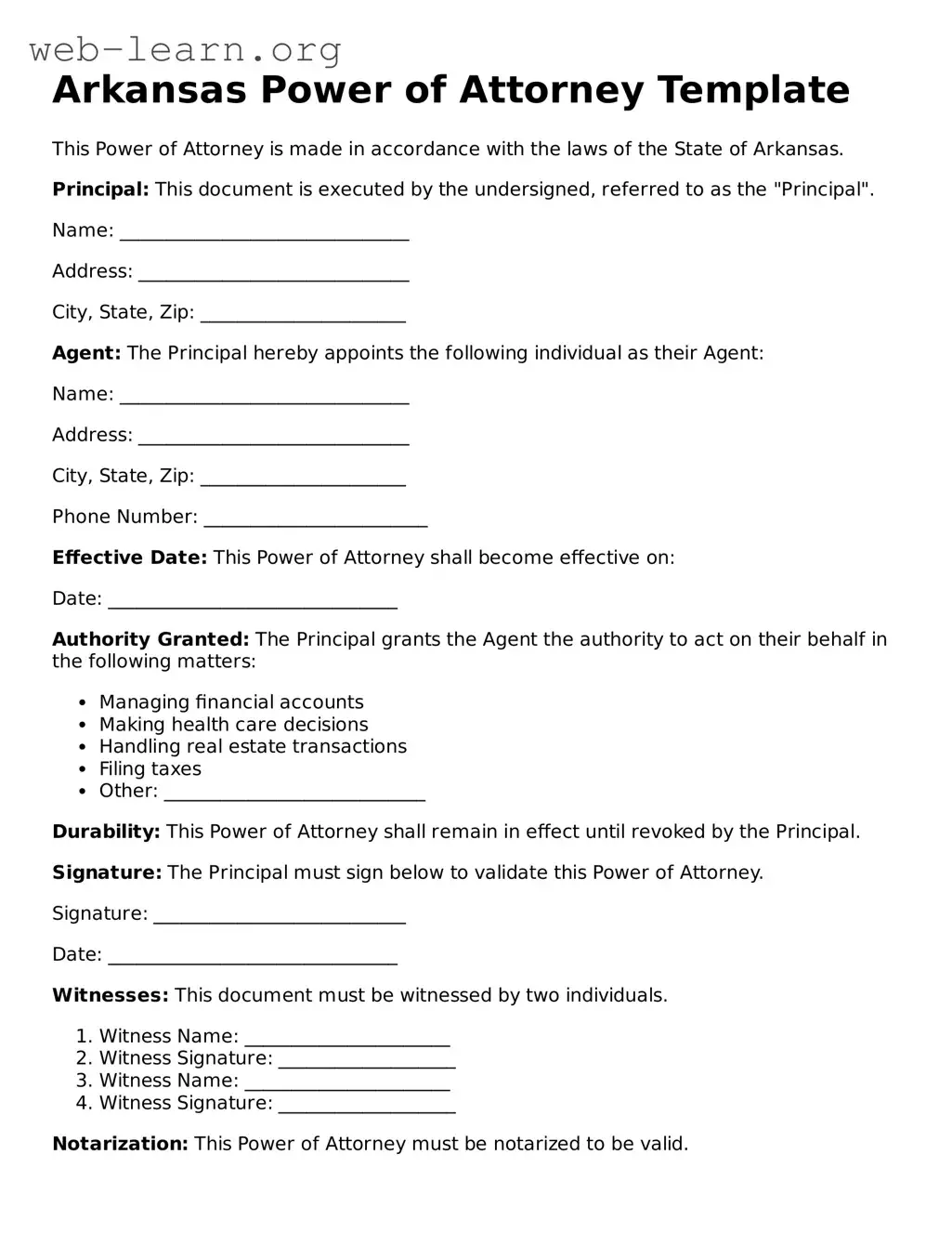
Arkansas Power of Attorney Template
This Power of Attorney is made in accordance with the laws of the State of Arkansas.
Principal: This document is executed by the undersigned, referred to as the "Principal".
Name: _______________________________
Address: _____________________________
City, State, Zip: ______________________
Agent: The Principal hereby appoints the following individual as their Agent:
Name: _______________________________
Address: _____________________________
City, State, Zip: ______________________
Phone Number: ________________________
Effective Date: This Power of Attorney shall become effective on:
Date: _______________________________
Authority Granted: The Principal grants the Agent the authority to act on their behalf in the following matters:
Durability: This Power of Attorney shall remain in effect until revoked by the Principal.
Signature: The Principal must sign below to validate this Power of Attorney.
Signature: ___________________________
Date: _______________________________
Witnesses: This document must be witnessed by two individuals.
Notarization: This Power of Attorney must be notarized to be valid.
Notary Public Signature: ________________
My Commission Expires: ________________
| Fact Name | Description |
|---|---|
| Governing Law | The Arkansas Power of Attorney form is governed by the Arkansas Code Annotated, Title 28, Chapter 68. |
| Types of Powers | This form can grant general or specific powers to the agent, allowing them to act on behalf of the principal in various matters. |
| Durability | The Arkansas Power of Attorney can be made durable, meaning it remains effective even if the principal becomes incapacitated. |
| Revocation | The principal can revoke the Power of Attorney at any time, provided they are of sound mind. |
After gathering the necessary information, you are ready to fill out the Arkansas Power of Attorney form. This document will allow you to designate someone to act on your behalf in financial or legal matters. Follow these steps carefully to ensure everything is completed correctly.
What is a Power of Attorney in Arkansas?
A Power of Attorney (POA) is a legal document that allows one person to act on behalf of another in legal or financial matters. In Arkansas, this document can be tailored to grant specific powers or can be broad, covering a wide range of decisions. It is often used when someone is unable to manage their affairs due to illness, absence, or other reasons.
Who can create a Power of Attorney in Arkansas?
Any adult who is mentally competent can create a Power of Attorney in Arkansas. This means the person must understand the nature and consequences of the document they are signing. It is crucial that the individual creating the POA is capable of making informed decisions.
What types of Powers of Attorney are available in Arkansas?
There are several types of Power of Attorney in Arkansas:
How do I choose an agent for my Power of Attorney?
Choosing an agent is a critical decision. The agent should be someone you trust completely, as they will have significant control over your financial and legal matters. Consider their reliability, integrity, and willingness to act in your best interest. It’s also wise to discuss your wishes with them beforehand.
Does a Power of Attorney need to be notarized in Arkansas?
Yes, in Arkansas, a Power of Attorney must be signed in the presence of a notary public to be valid. Notarization helps to ensure that the document is authentic and that the principal understood the implications of the POA.
Can I revoke a Power of Attorney in Arkansas?
Yes, you can revoke a Power of Attorney at any time as long as you are mentally competent. To do this, you should create a written revocation notice and notify your agent and any relevant institutions. It is advisable to also destroy any copies of the original POA to avoid confusion.
What happens if I do not have a Power of Attorney?
If you do not have a Power of Attorney and become incapacitated, your loved ones may need to go through the court system to obtain guardianship or conservatorship. This process can be lengthy, costly, and may not align with your wishes. Having a POA in place can prevent these complications and ensure your preferences are honored.
Filling out the Arkansas Power of Attorney form can be a straightforward process, but many people make common mistakes that can lead to confusion or invalidation of the document. One frequent error is failing to specify the powers granted. It's essential to clearly outline what the agent can and cannot do. Without this clarity, the agent may not have the authority needed to act on your behalf.
Another mistake is neglecting to sign and date the form properly. Both the principal and the agent must sign the document, and it should be dated to reflect when the authority begins. Omitting a signature or date can render the document ineffective. Always double-check that all required signatures are present.
People often overlook the importance of having the form notarized or witnessed. In Arkansas, while notarization is not always mandatory, it is highly recommended. Having a notary public or witnesses can help verify the authenticity of the document and protect against potential disputes in the future.
Additionally, individuals sometimes choose an agent who may not be suitable for the role. Selecting someone who is trustworthy and capable of handling your affairs is crucial. It’s wise to have open discussions with your chosen agent about your expectations and their willingness to take on this responsibility.
Another common issue arises when people fail to review the document after completing it. Changes in circumstances, such as a change in health or relationships, may necessitate updates to the Power of Attorney. Regularly reviewing the document ensures that it remains aligned with your current wishes.
Lastly, many individuals forget to inform their agent about the Power of Attorney. It’s important that the agent knows they have been appointed and understands their responsibilities. A lack of communication can lead to delays and complications when the agent needs to act on your behalf.
When creating a Power of Attorney in Arkansas, several other documents may complement or be used alongside it to ensure that your wishes are clearly articulated and legally binding. Understanding these documents can help you make informed decisions about your legal and financial affairs.
Utilizing these documents alongside the Power of Attorney form can provide a comprehensive approach to managing your legal and healthcare needs. Ensuring that you have the right documents in place can offer peace of mind for both you and your loved ones.
The Power of Attorney (POA) form is an important legal document that allows one person to act on behalf of another. Several other documents serve similar purposes in different contexts. Here are four documents that share similarities with the Power of Attorney:
When filling out the Arkansas Power of Attorney form, it's essential to approach the task with care. Here are ten important dos and don'ts to consider:
When it comes to the Arkansas Power of Attorney form, many people hold misconceptions that can lead to confusion. Understanding the facts can help you make informed decisions. Here are four common misconceptions:
This is not true. While many people associate a Power of Attorney with financial decisions, it can also cover medical and personal matters. You can choose to give someone authority to make health care decisions on your behalf, in addition to managing your finances.
This is a common misunderstanding. You can revoke a Power of Attorney at any time, as long as you are mentally competent. It’s important to communicate this revocation clearly to your agent and any institutions they may have dealt with on your behalf.
While you can choose anyone you trust, there are some restrictions. The person you appoint must be at least 18 years old and mentally competent. It’s crucial to select someone who will act in your best interest.
This is incorrect. A Power of Attorney is only valid while you are alive. Once you pass away, the authority granted to your agent ends. At that point, your estate will be handled according to your will or state laws.
Filling out and using the Arkansas Power of Attorney form can be straightforward, but it’s essential to understand a few key points to ensure it works effectively for your needs.
Being informed about these aspects will help you create a Power of Attorney that meets your needs and provides peace of mind.
How to Get Power of Attorney in Michigan - Can be used to appoint multiple agents if desired.
How to Get Power of Attorney in Idaho - It is advisable for the principal to discuss their wishes with the agent beforehand.
New York Power of Attorney - This form can help protect your interests when you are not able to act.
Power of Attorney Form Arizona Free - It can empower individuals to make choices that reflect the principal's values.