When it comes to managing your vehicle-related transactions in Arkansas, understanding the Motor Vehicle Power of Attorney form is essential. This legal document empowers a designated individual, often referred to as the agent, to act on your behalf in matters concerning your motor vehicle. Whether you need someone to handle the sale of your car, transfer title, or even register a vehicle, this form streamlines the process and ensures that your interests are protected. The Motor Vehicle Power of Attorney is particularly useful when you cannot be present for these transactions due to travel, health issues, or other commitments. It’s crucial to know that this form must be completed with specific details, including the names of both the principal and the agent, as well as the scope of authority granted. Additionally, understanding the limitations and responsibilities that come with this power can prevent potential disputes down the line. With the right information, you can navigate this important aspect of vehicle ownership with confidence and ease.
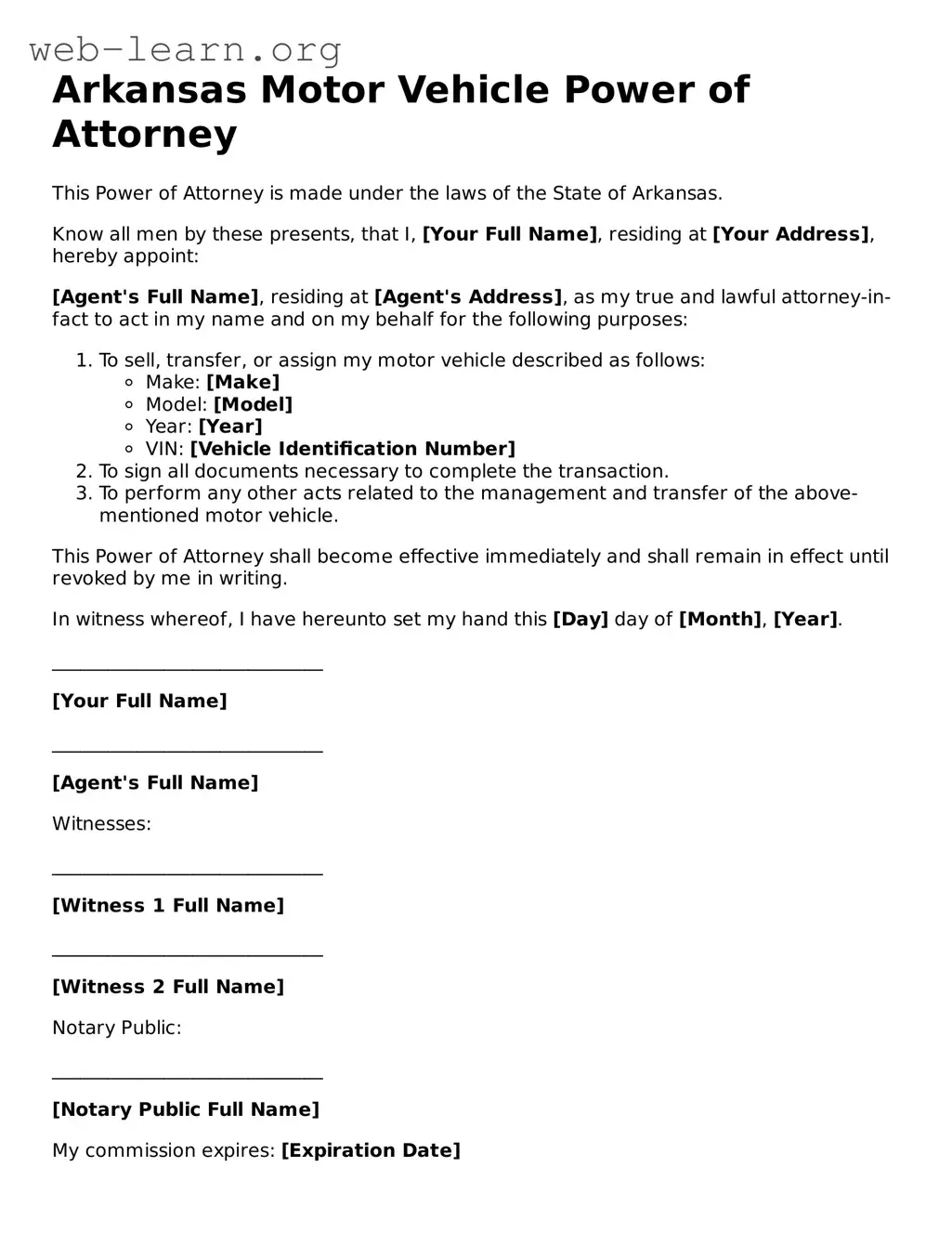
Arkansas Motor Vehicle Power of Attorney
This Power of Attorney is made under the laws of the State of Arkansas.
Know all men by these presents, that I, [Your Full Name], residing at [Your Address], hereby appoint:
[Agent's Full Name], residing at [Agent's Address], as my true and lawful attorney-in-fact to act in my name and on my behalf for the following purposes:
This Power of Attorney shall become effective immediately and shall remain in effect until revoked by me in writing.
In witness whereof, I have hereunto set my hand this [Day] day of [Month], [Year].
_____________________________
[Your Full Name]
_____________________________
[Agent's Full Name]
Witnesses:
_____________________________
[Witness 1 Full Name]
_____________________________
[Witness 2 Full Name]
Notary Public:
_____________________________
[Notary Public Full Name]
My commission expires: [Expiration Date]
| Fact Name | Description |
|---|---|
| Purpose | The Arkansas Motor Vehicle Power of Attorney form allows an individual to authorize another person to act on their behalf regarding motor vehicle transactions. |
| Governing Law | This form is governed by Arkansas Code Annotated § 27-14-101 et seq. |
| Principal | The individual granting authority is known as the principal. |
| Agent | The person receiving authority is referred to as the agent or attorney-in-fact. |
| Signature Requirement | The principal must sign the form for it to be valid. |
| Notarization | Notarization is not required, but it is recommended for added legal protection. |
| Duration | The power of attorney remains effective until revoked by the principal or until the specified expiration date. |
| Revocation | The principal can revoke the power of attorney at any time, provided they do so in writing. |
| Common Uses | This form is commonly used for vehicle title transfers, registration, and obtaining license plates. |
Filling out the Arkansas Motor Vehicle Power of Attorney form is a straightforward process. This document allows you to designate someone to act on your behalf regarding your vehicle matters. Once completed, you can submit the form to the appropriate authorities or share it with the person you have chosen to represent you.
What is the Arkansas Motor Vehicle Power of Attorney form?
The Arkansas Motor Vehicle Power of Attorney form is a legal document that allows one person, known as the "principal," to authorize another person, referred to as the "agent," to act on their behalf in matters related to motor vehicle transactions. This may include buying, selling, registering, or transferring ownership of a vehicle.
Why would someone need to use this form?
This form is particularly useful when the principal cannot be present to complete a transaction, whether due to distance, health issues, or other commitments. By designating an agent, the principal ensures that their interests are represented without needing to be physically present.
How do I complete the form?
To complete the Arkansas Motor Vehicle Power of Attorney form, follow these steps:
Does the form need to be notarized?
Yes, the Arkansas Motor Vehicle Power of Attorney form must be notarized to be valid. This requirement helps to ensure the authenticity of the signatures and the intentions of the parties involved.
Can I revoke the Power of Attorney once it is granted?
Yes, the principal has the right to revoke the Power of Attorney at any time, as long as they are of sound mind. To do this, a written notice of revocation should be provided to the agent and, if possible, to any third parties who may have relied on the original Power of Attorney.
Is there a specific duration for which the Power of Attorney is valid?
The Power of Attorney remains effective until the principal revokes it or until the principal passes away. It is important to keep this in mind when granting authority to an agent, as the agent will have the power to act until the principal takes action to revoke it.
Are there any limitations on what the agent can do?
Yes, the principal can specify limitations in the Power of Attorney form. For example, they may allow the agent to sell a specific vehicle but not to purchase any new ones. Clearly outlining these limitations helps to ensure that the agent acts within the principal's wishes.
What happens if the agent misuses their authority?
If an agent misuses their authority, the principal can take legal action against them. This may include seeking damages or pursuing criminal charges, depending on the nature of the misuse. It is crucial for the principal to choose a trustworthy individual as their agent.
Where can I obtain the Arkansas Motor Vehicle Power of Attorney form?
The form can typically be obtained from the Arkansas Department of Finance and Administration's website or from local motor vehicle offices. It is important to ensure that you are using the most current version of the form to comply with state requirements.
Filling out the Arkansas Motor Vehicle Power of Attorney form can be straightforward, but mistakes often occur. One common error is failing to provide complete information about the principal and the agent. Both names, addresses, and contact details must be accurate and current. Incomplete information can lead to delays in processing or even rejection of the document.
Another frequent mistake is neglecting to specify the powers granted to the agent. The form requires clear definitions of what the agent is authorized to do. Without this clarity, the agent may not have the authority to perform necessary actions on behalf of the principal, which can cause significant complications.
Additionally, many individuals overlook the requirement for signatures. The principal must sign the document, and in some cases, a witness signature may also be necessary. Failing to include these signatures can render the form invalid. It is crucial to review all signature requirements carefully before submitting the form.
Lastly, individuals often forget to date the document. A date is essential as it indicates when the powers were granted. Without a date, there may be confusion regarding the validity of the powers, especially if the form is contested later. Ensuring that all sections of the form are completed and accurate is vital for a smooth process.
The Arkansas Motor Vehicle Power of Attorney form allows an individual to authorize another person to act on their behalf regarding motor vehicle transactions. Several other forms and documents may accompany this form to ensure a smooth and legal process. Below is a list of commonly used documents related to motor vehicle transactions in Arkansas.
These documents work together to facilitate the legal transfer and management of vehicle ownership in Arkansas. Having the correct forms prepared can help avoid delays and ensure compliance with state regulations.
When filling out the Arkansas Motor Vehicle Power of Attorney form, it is essential to approach the task with care. Here are some important dos and don'ts to keep in mind:
By following these guidelines, you can help ensure that the Power of Attorney form is completed correctly and efficiently. Take the time to review your entries before submission to avoid any potential issues.
Understanding the Arkansas Motor Vehicle Power of Attorney form is essential for anyone dealing with vehicle transactions. However, several misconceptions can lead to confusion. Here’s a list of common misunderstandings:
Being aware of these misconceptions can help you navigate the process more effectively. Always ensure you understand the specific requirements and implications of using a Power of Attorney for your vehicle needs.
Filling out and using the Arkansas Motor Vehicle Power of Attorney form can seem daunting, but it’s quite straightforward once you understand the key points. Here are some important takeaways to keep in mind:
Understanding these points can help ensure that the process goes smoothly and that your wishes are clearly communicated. Always keep a copy of the completed form for your records, and consider discussing your plans with your agent to avoid any misunderstandings.
Power of Attorney Car Title Transfer - This form can be beneficial for family members who need to manage a loved one’s vehicle affairs.
Ct Dmv Registration Form Online - It allows someone to act as your agent for vehicle-related legal documents.
Appointment of Agent Form Michigan - This form can help you manage your vehicle's sale, purchase, or registration.